Urticaria: Start with the topics you are curious about
Points to check first
Hives: Symptoms and When to Seek Immediate Care
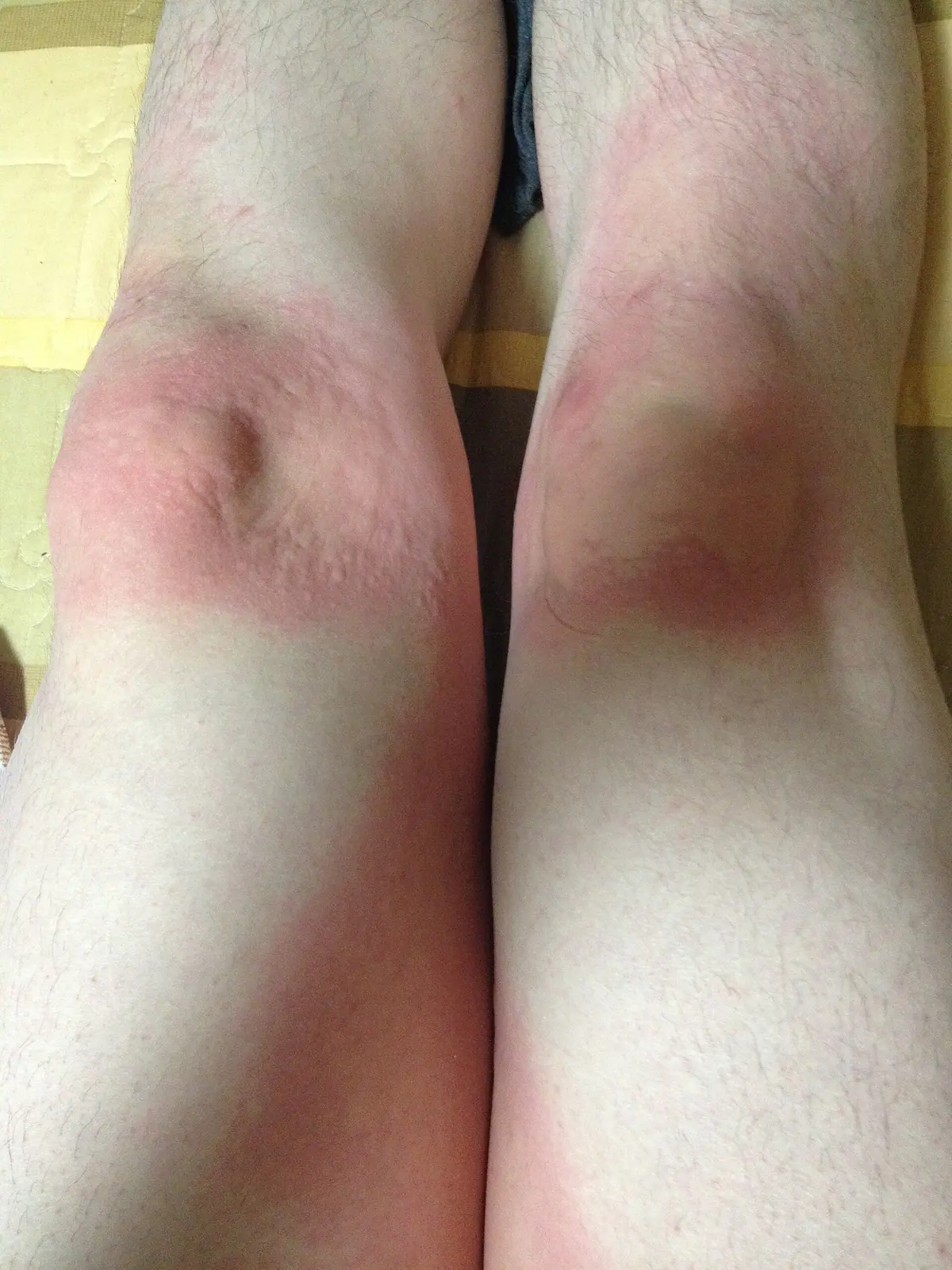
The representative symptom of hives is the sudden appearance of itchy wheals. These may appear as round bumps, wide plates, or linear shapes and can merge together; depending on skin tone, they may look red, pink, or similar to the surrounding skin color. A single wheal usually disappears within a day, but new skin changes appear in other locations, making it feel as though the rash is moving. In addition to itching, it may sting or burn, and deep swelling of the skin in areas such as the eyelids, lips, hands, or feet, Angioedemamay also occur. Swelling of the face, inside the mouth, tongue, or throat, difficulty breathing or swallowing, dizziness, or a feeling of fainting require immediate emergency assistance.
Distinguishing Symptoms from Emergencies
Determine when to seek medical evaluation based on the mobility of wheals, deep swelling, and symptoms appearing across the entire body
Check for changes in breathing, swallowing, and consciousness before assessing the extent of the skin area.
| Visible or felt symptoms | What to check | Priority action |
|---|---|---|
| Itchy, raised bumps or plates that appear and disappear | Possibility of typical wheals | Record photos, time of onset, and time of disappearance |
| Moves to new locations and merges together | Mobility of hives | Check for immediate prior exposure and recurrence patterns |
| Deep swelling of the eyelids, lips, hands, or feet | Possibility of angioedema | Quickly check for involvement of the face or inside the mouth |
| Same skin changes persist for a long time and become painful or bruised | Possibility of other inflammatory skin changes | Differentiate during a dermatology evaluation |
| Tongue or throat swelling, shortness of breath, difficulty swallowing, or feeling of fainting | Possibility of severe allergic reaction | Immediate emergency assistance |
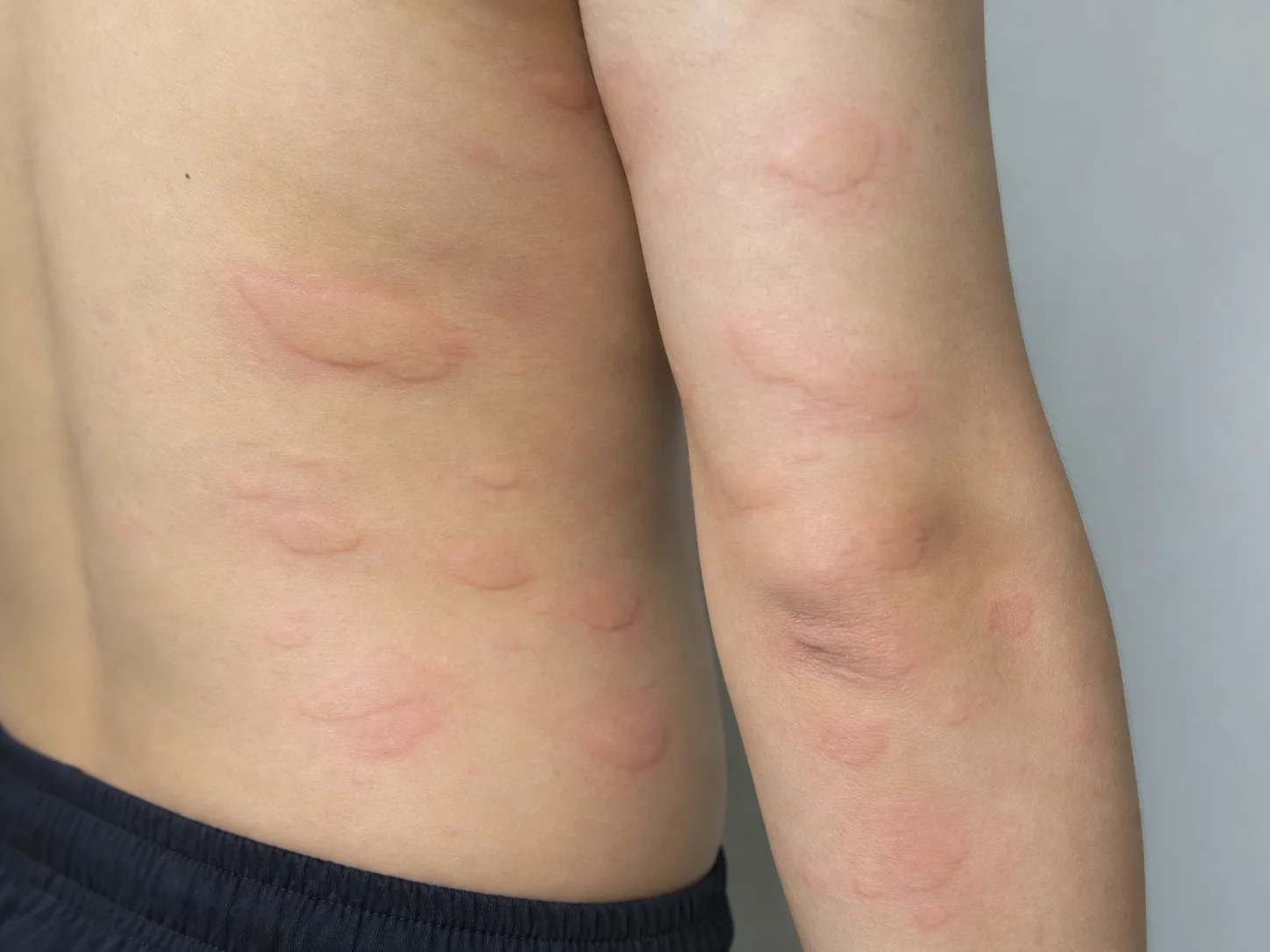
This reproduces one possible distribution of wheals seen in hives. Please check the duration of a single lesion and any respiratory or mucosal symptoms before reviewing the photos.
Actual clinical photos and educational close-up examples are materials for comparing possible patterns and cannot be used for diagnosis alone. Mechanism diagrams have simplified complex processes.If these discomforts have recurred
For those whose itchy wheals spread at night and disappear by morning
If symptoms subside when taking medication but reappear when skipping doses, or if the skin swells easily due to minor changes such as heat, exercise, pressure, or fatigue, the conditions causing the body's hypersensitivity must be categorized more specifically.
For those whose red or skin-colored elevations grow and merge together
antihistamineswhen symptoms are fine while taking the medication but reappear on the same day after skipping a dose
For those concerned about angioedema, where eyelids, lips, hands, and feet swell together
night itching when you wake up due to itching and find it difficult to concentrate the next day
For those seeking to distinguish symptoms requiring immediate medical evaluation, such as a feeling of throat tightening or difficulty breathing and swallowing
When there are recurring triggers such as heat, exercise, pressure, or tension
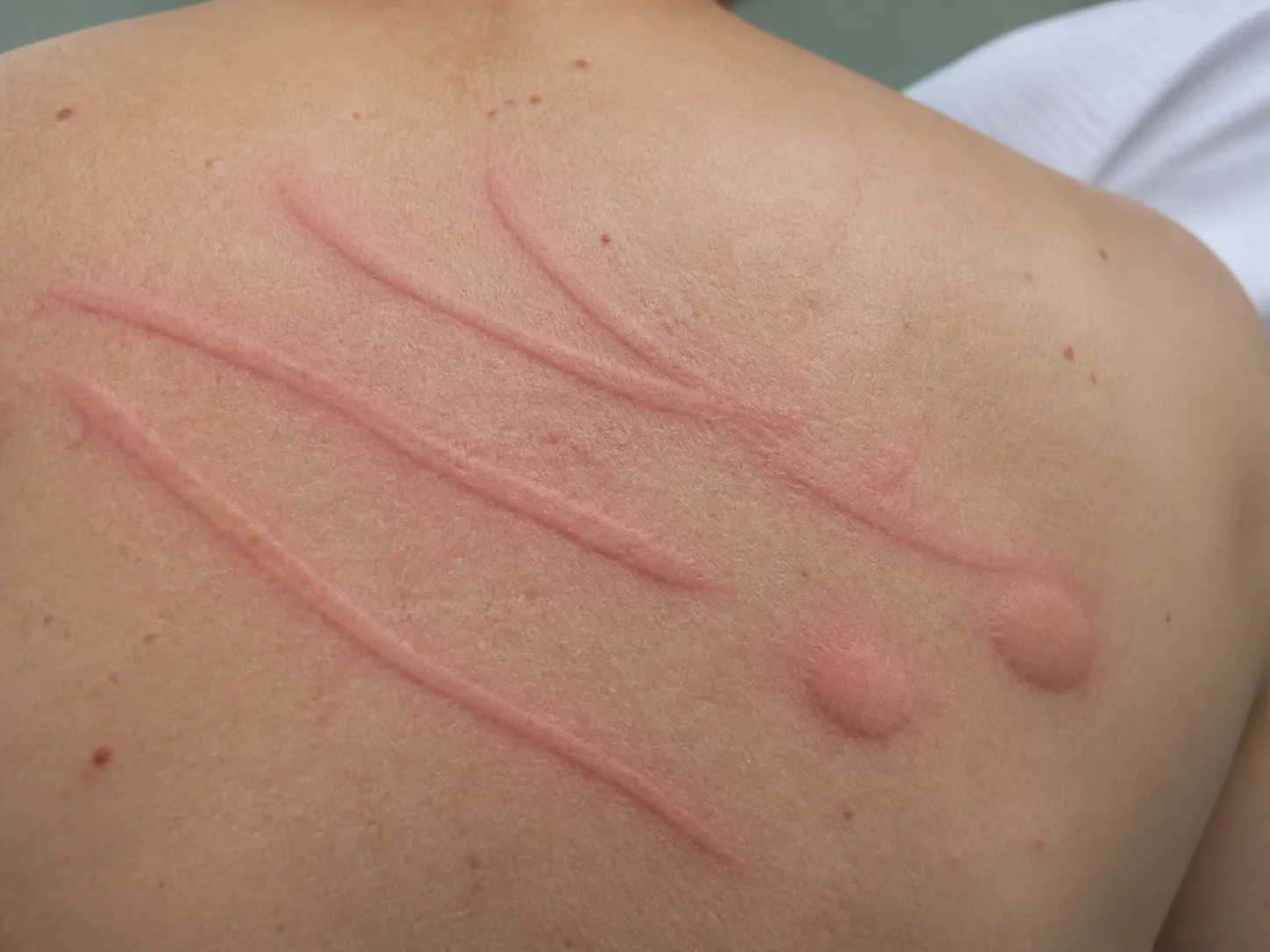
Hives do not only appear as round rashes; they can also rise in linear patterns following friction or pressure. A key clue is how quickly the swelling disappears without leaving any surface scaling or wounds.
Points to distinguish first
How to distinguish hives from similar-looking skin conditions
Seek emergency help immediately if your throat or tongue swells, you experience shortness of breath, or your consciousness becomes clouded
If you experience shortness of breath, difficulty swallowing, or a feeling of fainting, seek emergency help immediately rather than measuring the extent of the skin rash.
Check photos along with the time of onset and disappearance
Mark the duration of a single wheal, its movement to a new location, and any angioedema on the same timeline.
Please let us know how many times you wake up at night and how tired you feel the next day
While maintaining dermatological treatment, we track whether awakenings during sleep and discomfort during work or exercise are reduced.
Why does it keep getting worse?
Reasons why hives persist or recur
Distinguish whether they appear after exposure to heat, cold, or pressure
Depending on whether the reaction occurs after a hot shower and exercise, after cold wind or water, or at sites pressed by clothing or bag straps, the body heat and skin reactions are diagnosed differently through pattern identification (Byeonjeung).
Check if the swollen skin subsides more quickly during treatment
We do not only look for the complete absence of wheals, but also whether the area is smaller and disappears faster when they do occur, and whether you wake up less during the night.
Check both the hypersensitivity of the immune response and the recovery power
We examine sensitivity (swelling immediately even with small stimuli), prolonged itching after fatigue or lack of sleep, and whether digestive discomfort overlaps with a decline in general physical condition, using overall immune balance as the axis for Korean herbal medicine treatment.
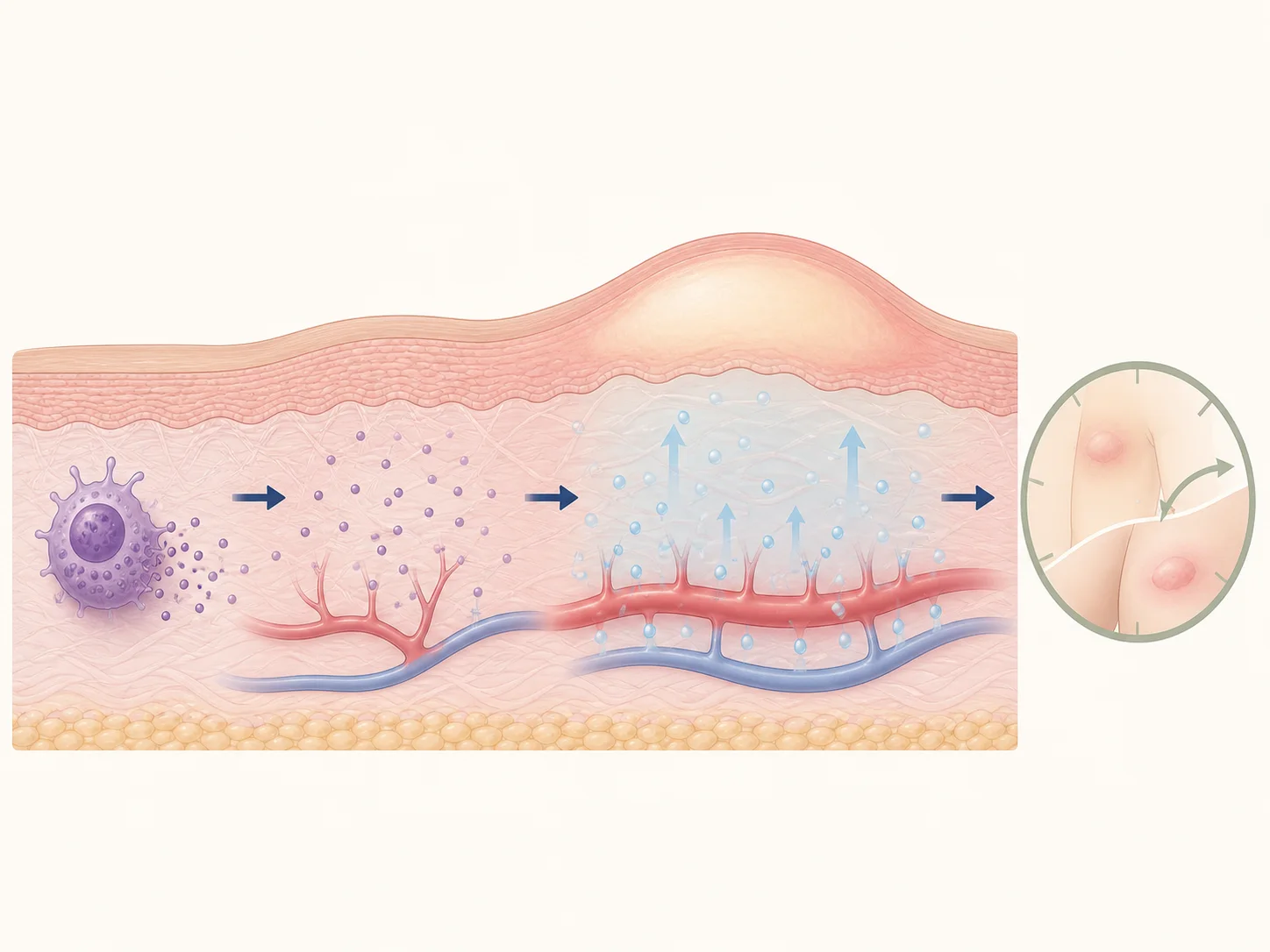
This is a simplified flow showing how temporary edema occurs around blood vessels after the release of mediators, causing wheals to rise. This does not mean all hives have the same triggering cause.
Conceptual reference · AAD Hives: CausesThings to prepare before your visit
What photos and records should I prepare before the medical evaluation?
Please prepare photos of the wheals, the time of onset and disappearance, details of itching or pain, edema of the eyelids, lips, hands, or feet, any changes in breathing, swallowing, or consciousness, and a list of medications you are taking.
They can be round, wide, or linear in shape
They vary from small elevations to wide plaques and may merge to form irregular shapes.
The color may appear different depending on skin tone
They may appear red or pink; on brown or black skin, they may look similar to the surrounding skin tone, making the borders and the swelling more noticeable.
In addition to itching, there may be stinging or burning sensations.
Please record the intensity of the sensation and whether it interferes with sleep, work, or exercise.
Changes to monitor during treatment
What changes should I monitor during treatment?
The time the wheals started and how long they stayed in one spot
Please record when it started and how it has changed, including the dates. To make it easier to compare before and after, take photos of the same area from a similar distance and under similar lighting.
Recent exercise, showering, alcohol consumption, pressure, or medications taken
Please leave a brief note. Compare not only the visible changes but also whether your sleep, pain, and daily life have become less uncomfortable.
Timing of antihistamine intake and changes in itching or sleep
Please also include the dates of any medications, ointments, or procedures you are currently using. This makes it easier to compare what led to improvement or worsening.
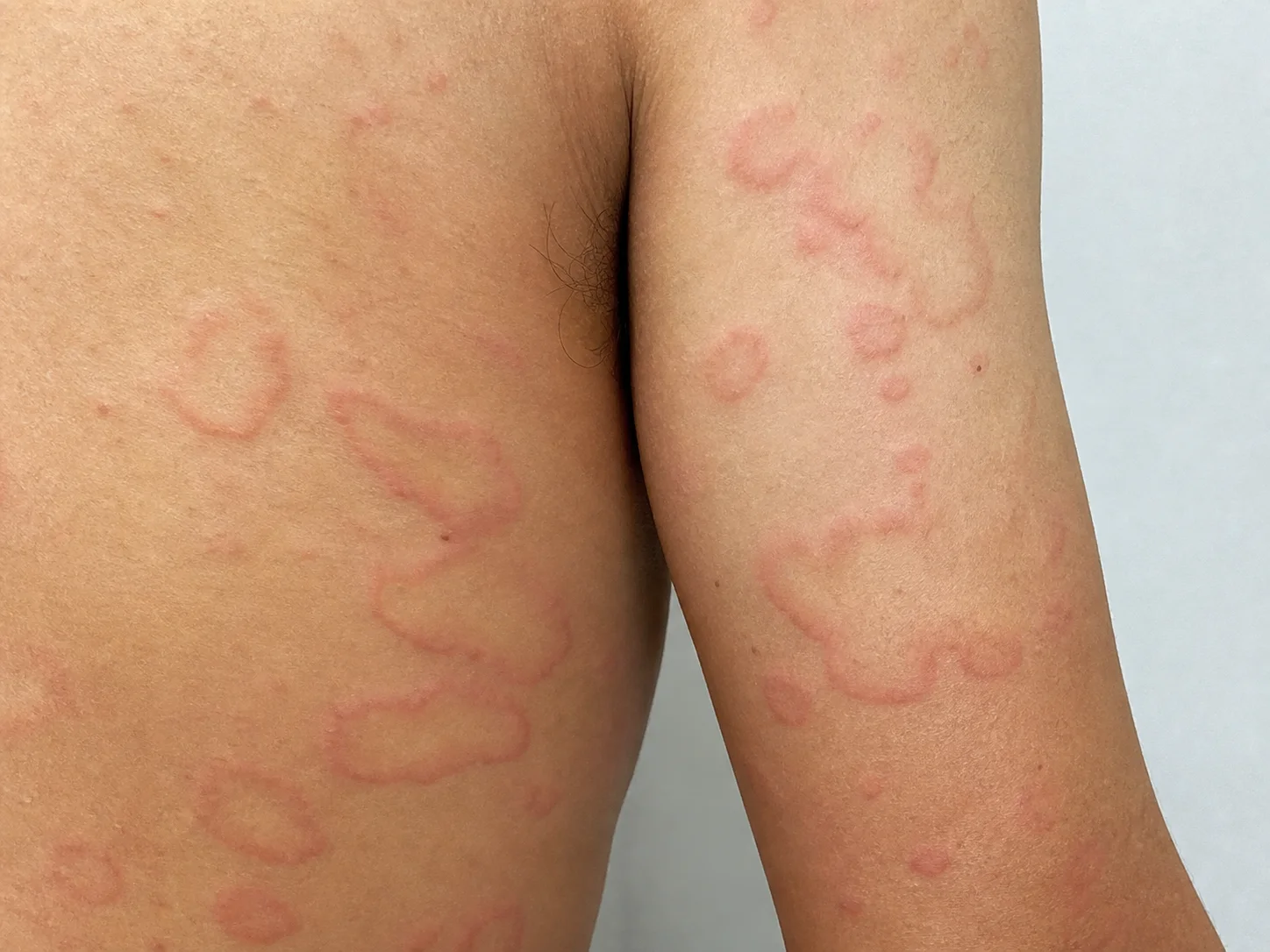
Chronic urticaria is difficult to diagnose with a single photo. Please provide information on whether it has recurred for over 6 weeks, the time the rash appeared and disappeared, and whether the lips or eyelids were swollen.
When planning herbal medicine treatment
For hives, the direction of Korean herbal medicine treatment is determined based on your current symptoms
For hives, the situation immediately before they appear and the time they take to disappear are more critical clues for differential diagnosis than a single photo. We determine the direction of body heat and immune response by distinguishing whether they are red and hot wheals, pale swellings after cold stimulation, linked to food or digestion, or overlapping with chronic dryness and fatigue.
Pattern identification (Byeon-jeung) in Korean medicine is not about giving a different name to a disease. Multiple patterns can overlap in one person, and as the skin changes, for example, as oozing and heat decrease and dryness or cracking remain, the prescription is adjusted accordingly.
When red wheals appear after heat, exercise, or a hot shower
- Primary skin observations
- We check if red, hot wheals spread quickly and if the itching is intense.
- Overall body condition to check alongside skin
- We check if symptoms worsen with sweating when body heat rises, and if thirst, upper body heat, or poor sleep are present.
- Primary considerations for herbal medicine prescription
- Treatment focuses on clearing heat and removing wind to reduce rising heat, itching, and hypersensitivity.
When pale swellings appear after exposure to cold wind or cold water
- Primary skin observations
- We check if the exposed areas swell white or red and if itching increases as the area warms up again.
- Overall body condition to check alongside skin
- We ask about usual coldness in the hands and feet, sensitivity to cold, cold digestion, or loose stools.
- Primary considerations for herbal medicine prescription
- Rather than prescriptions to lower heat, the focus is on dispersing cold and harmonizing the body to reduce hypersensitivity to cold stimuli and help with temperature adaptation.
When wheals recur along with post-meal bloating
- Primary skin observations
- Rather than a single specific food, we observe whether the range and duration of symptoms increase after overeating, drinking alcohol, or eating late-night snacks.
- Overall body condition to check alongside skin
- We check if abdominal bloating, heartburn, dry mouth, or irregular bowel movements fluctuate in tandem with the worsening of symptoms.
- Primary considerations for herbal medicine prescription
- Along with regulating skin hypersensitivity, we increase the focus on reducing digestive burden and the accumulation of heat and dampness in the gastrointestinal tract.
When itching occurs every night and lasts longer as fatigue increases
- Primary skin observations
- We observe whether systemic itching persists and leaves scratch marks and dryness, even if the wheals are not large.
- Overall body condition to check alongside skin
- We ask if symptoms worsen after lack of sleep, fatigue, or during recovery from an illness, and if the skin and mouth dry out simultaneously.
- Primary considerations for herbal medicine prescription
- Along with lowering hypersensitivity, we focus on reinforcing the recovery of the blood and skin to reduce nighttime itching and the duration of reactions.
How is the herbal medicine prescription adjusted?
- Identify the events occurring 2 hours before the appearance of wheals
Record the recurring trigger conditions and affected areas among heat, cold, pressure, exercise, meals, or tension.
- Examine whether reactions to heat and cold change in tandem with digestion and fatigue
Even for the same hives, the prescription axis varies depending on whether it is the heat-type, cold-type, digestion-linked type, or reduced-recovery type.
- Adjust the prescription based on the days hives appeared and the degree of itching over one week
We observe whether the number of days of occurrence, the time of peak itching, the range and time it takes to subside, and the number of times awakened at night all decrease.
When should I consider Korean herbal medicine treatment?
- When symptoms are fine while taking antihistamines but reappear on the same day if a dose is missed
- When you wake up due to nighttime itching and find it difficult to concentrate the next day
- When there are recurring trigger situations such as heat, exercise, pressure, or tension
What will be asked during the medical evaluation?
- The time the wheals started and how long they stayed in one spot
- Immediate prior exercise, shower, alcohol consumption, pressure, or medications taken
- Timing of antihistamine intake and changes in itching or sleep
Things to prepare before the consultationPlease prepare photos of the wheals, the time of onset and disappearance, itching or pain, swelling of the eyelids, lips, hands, or feet, changes in breathing, swallowing, or consciousness, and a list of medications you are taking.
If pus, pain, or redness spreads rapidly, or if you have a fever, lesions inside the eyes or mouth, shortness of breath, or sudden facial swelling, please visit a dermatology clinic or seek emergency care first. After confirming that such urgent situations are not present, Baekrokdam provides herbal medicine treatment for chronic and recurring skin diseases.
Consult about the progress of hivesFrequently Asked Questions
Frequently Asked Questions about Hives
What do hives look like?
It appears as itchy, raised round wheals, wide plaques, or linear shapes, which may grow or merge together.
Why does hives seem to move around?
As one wheal subsides, new skin changes appear in another area, making it look as if they are moving. Please take photos to document the time of appearance and disappearance.
What is the difference between hives and angioedema?
Hives are wheals on the skin surface, while angioedema is swelling in deeper skin layers, such as the eyelids, lips, hands, and feet. It is an emergency if it affects the inside of the mouth, tongue, or throat.
Is it still hives if the same spot remains for a long time or turns into a bruise-like mark?
This may differ from typical wheals. If there is significant pain, if the spot remains fixed for a long time, or if bruising and pigmentation occur, a dermatology evaluation is needed to identify other conditions.
Why do hives appear suddenly?
It is a reaction where histamine and other substances are released from the skin. There can be various causes such as food, medication, infection, or physical stimuli, or the cause may remain unknown.
Is stress the cause of hives?
Stress can trigger or worsen symptoms, but it cannot be attributed solely to stress or an individual's mindset.
Do I need to cut out all foods to find the cause of my hives?
No. Unless there is a recurring temporal relationship immediately after eating a specific food, do not start an extensive elimination diet; instead, review photos and exposure records with your medical provider.
References and update date
Doctor of Korean Medicine Choi Yeon-seung verified the content based on the official and professional materials below and updated it on 2026-08-23.
- American Academy of Dermatology, Hives: Signs and symptomsVarious shapes, colors, and movement of wheals and symptoms of angioedema
- American Academy of Dermatology, Hives: OverviewDisappearance of one wheal and new skin changes, swelling of the face, mouth, and throat, and emergency warnings for breathing and swallowing
- American Academy of Dermatology, Hives: CausesCategories of causes for hives, including allergies, infections, physical stimuli, and unknown causes
- MedlinePlus, HivesHistamine reactions and food/drug allergies, infections, stress, and warnings for airway edema
- AAAAI, Skin AllergyDistinction between acute and chronic hives, diagnosis centered on medical history, and limitations on extensive testing and allergy tests for chronic hives
- AAAAI, Allergy TestingSelection of skin prick tests and specific IgE blood tests based on history and examination, and avoidance of IgG or non-standard tests
- American Academy of Dermatology, Hives: Diagnosis and treatmentAntihistamines for mild hives, stepped dermatology treatment for chronic non-responsive cases, and criteria for emergency care for severe edema
- NHS, HivesConsultation on antihistamines and medical evaluation for recurrence or spreading, and emergency response criteria for swelling of the lips, tongue, and throat, as well as changes in breathing or consciousness