Red and itchy lesions
How to Distinguish Between Psoriasis, Hives, and Eczema When Skin is Red and Itchy?
When taking photos, capture not only a front view but also Keratindiagonal shots that show scaling, and document how the same area changes after several hours or days.
Click on unfamiliar terms to see their meanings immediately.
Psoriasis often leaves well-defined scaly plaques in the same location for a long time, whereas hives whealsusually fade within a day, and eczema may involve drynessoozingand cracking that can persist for several days.
Points to check in the photos first
Even if they look similar, the dead skin, blisters, and borders may differ
We have provided both typical appearances and examples that look slightly different. Do not decide based on a single similar photo; compare how long symptoms like dead skin, wheals, comedones, or oozing have persisted in the same area.
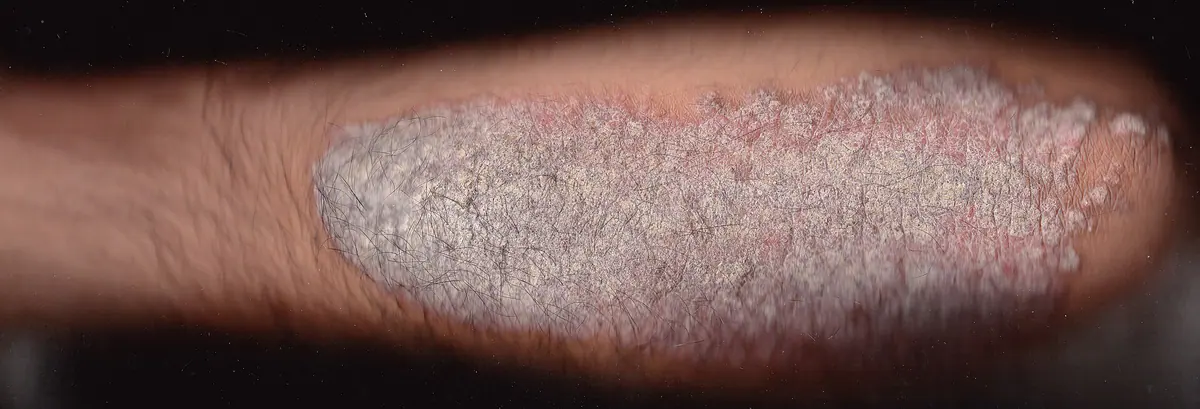
Distinct borders · Thick scales · Plaque-like shape. Comparison of nail and joint symptoms with chronic eczema
Photo: MediaJet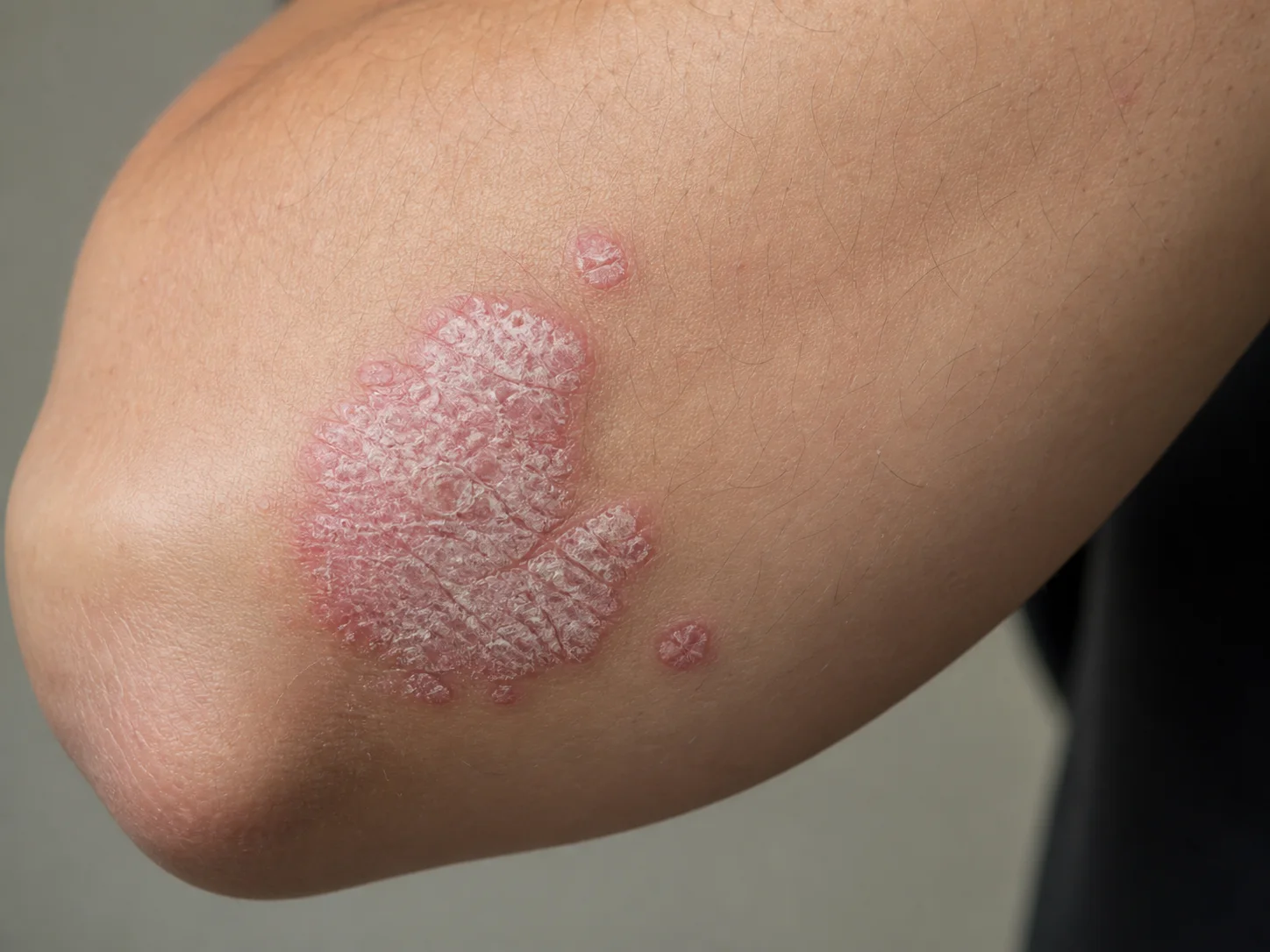
Psoriasis is evaluated by looking at the borders of the plaques, the layered scales, and the distribution, such as on the elbows and knees. Changes in the nails and joint discomfort are also checked separately from the skin photos.
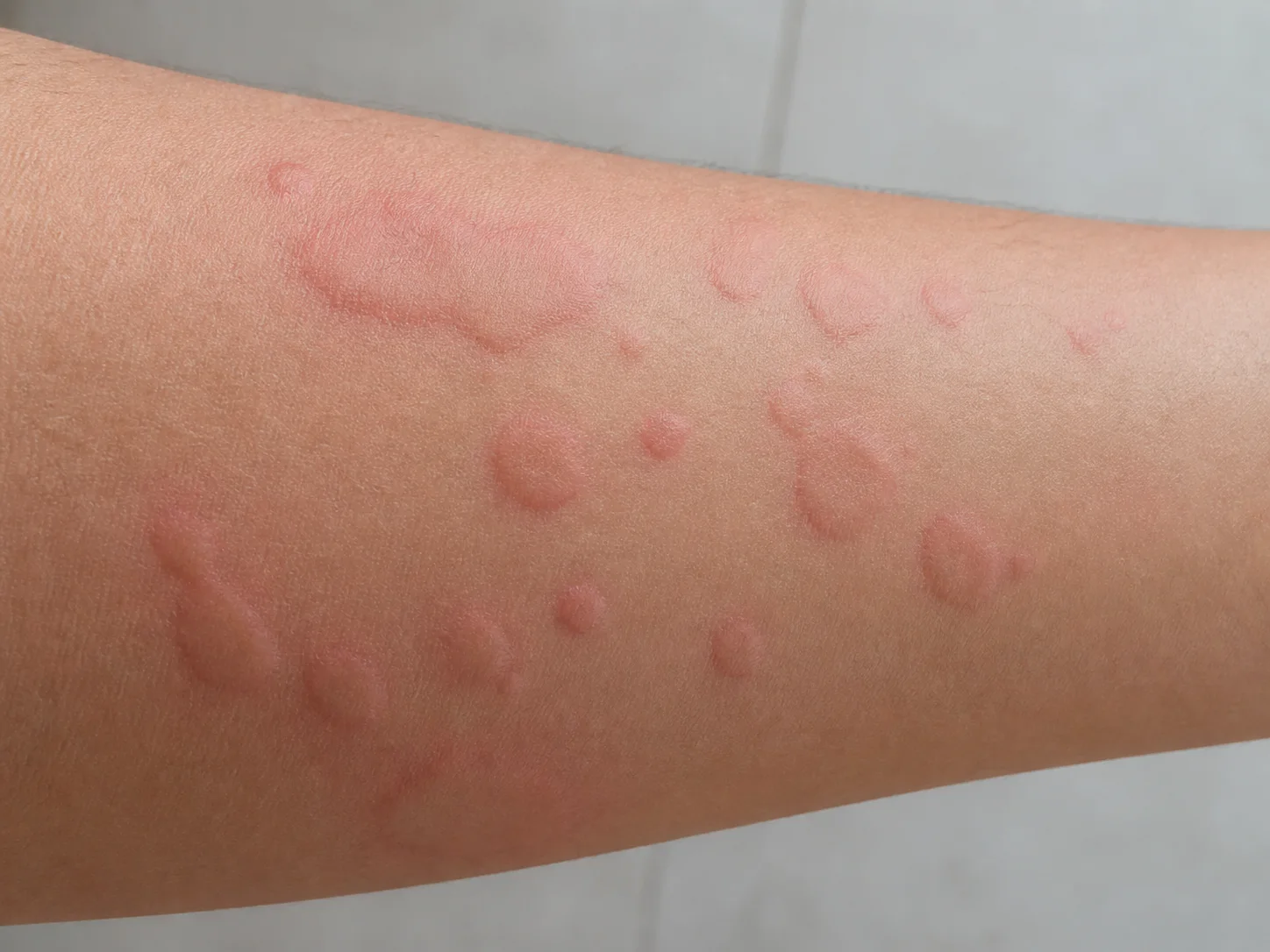
The key clue is whether the surface has almost no scaling and whether the wheals rise smoothly and then shift location. Please record whether the same lesion remains after several hours, along with the time the photo was taken.
Swollen wheals, shifting patterns, short duration. Check if a single lesion remains for more than 24 hours
Photo: john (Dispolt)| Points to check | Psoriasis | Hives | Eczema |
|---|---|---|---|
| Duration of a single lesion | The same plaque remains for several weeks or more and recurs | Fades within tens of minutes to 24 hours and may appear in other locations | Remains in the same location for several days or more, and may cycle between wet and dry stages |
| Surface | Well-defined plaques with overlapping silvery-white scales | Smoothly swollen wheals; usually no scaling | Dryness, micro-blisters, oozing, crusting, cracking |
| Areas to examine together | Scalp, elbows, knees, navel, fingernails, and toenails | Whether the location changes in each photo, or if it fades when pressed | Skin folds, hands, exposed areas, and areas thickened from scratching |
| Clinical clues | Changes in fingernails/toenails and joint pain or swelling | Swelling of the lips, tongue, or throat and respiratory symptoms | New products, occupational exposure, infection, and sleep disturbance |
Check how long a single lesion has persisted before focusing on the diagnosis
For hives that have already disappeared by the time you are in the consultation room, the time information in photos provides a clue for differential diagnosis. If the same area persists beyond one day and scaling or oozing is visible, other possibilities such as psoriasis, eczema, or vasculitis are considered.
The skin changes to look for differ between psoriasis and hives
For psoriasis, we examine thick, scaly areas caused by the rapid buildup of skin cells, as well as changes in the nails and joints. For hives, we look at what triggered the swollen skin marks and how long they take to disappear.
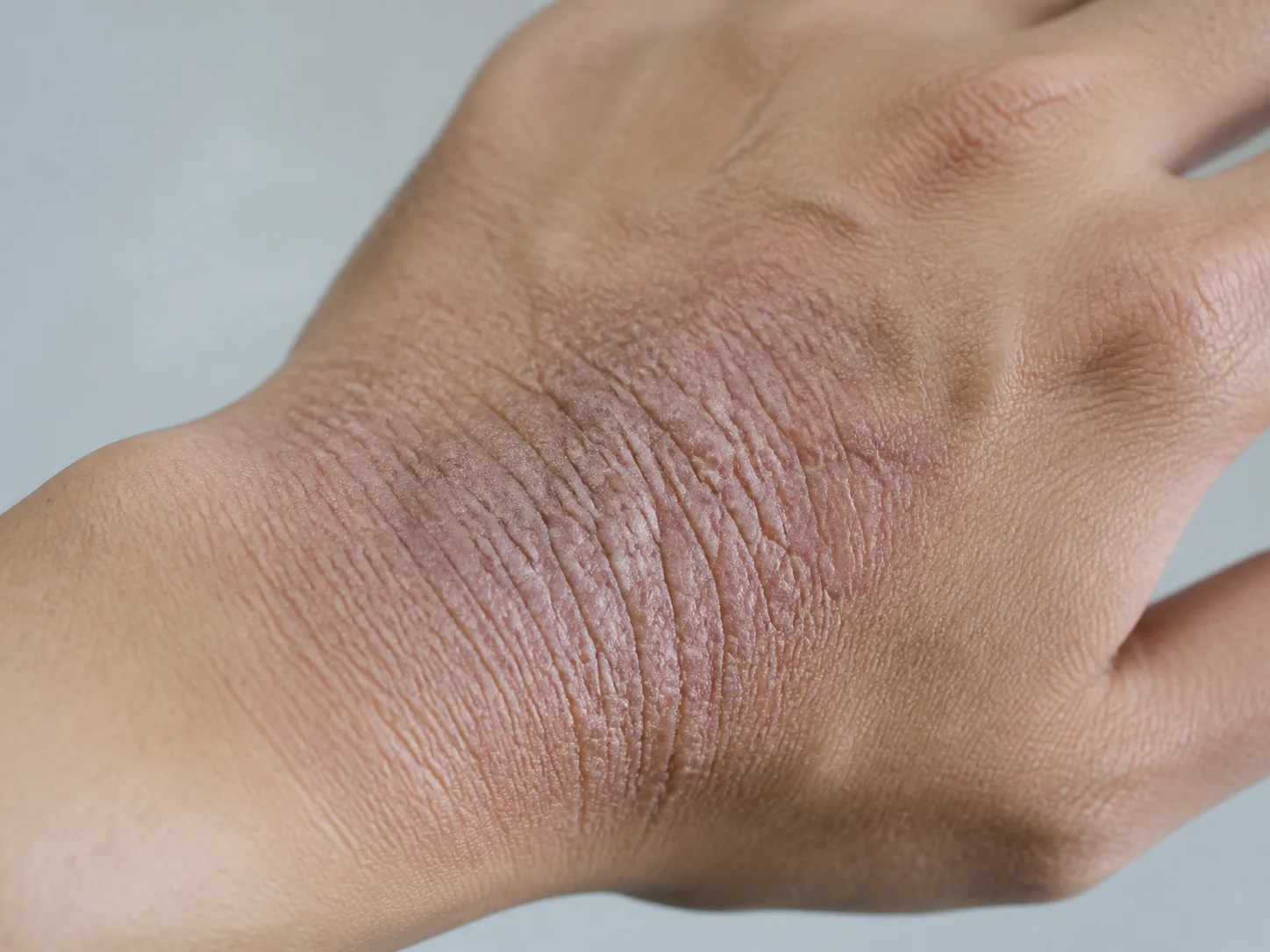
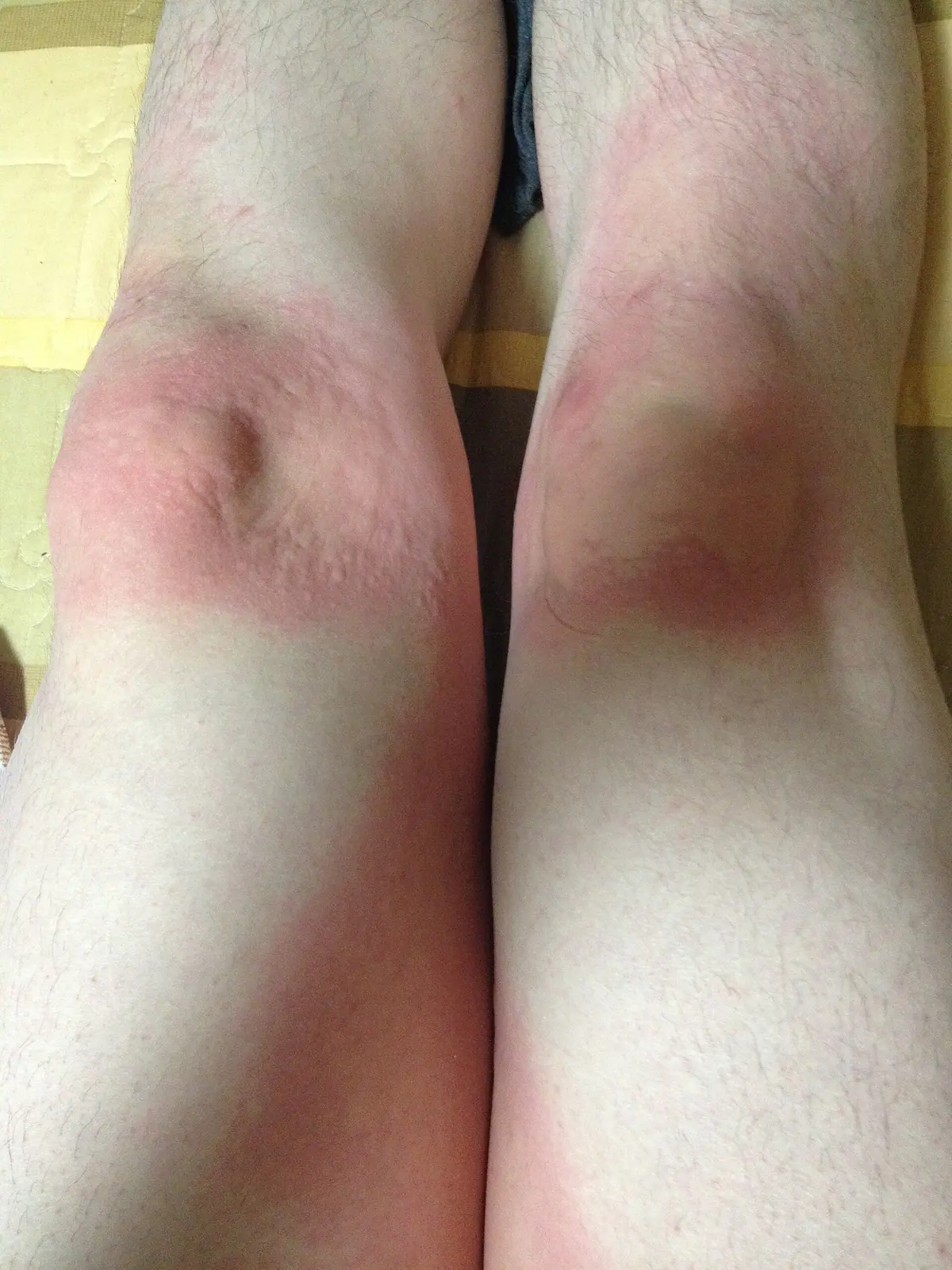
Prolonged scratching or exposure to irritants can make skin lines more prominent and leave dry cracks. Please record the affected areas along with exposure to water work, cleansers, or gloves.
Multiple lesions may be present simultaneously
People with psoriasis may also develop contact dermatitis or hives separately. Do not group the oldest plaque, lesions that newly appeared that day, and secondary changes caused by scratching under the same name.
Please use photos to compare how much of the same area remains
Please record the time the rash appeared and disappeared, as well as any scaling, oozing, or changes to the scalp, hands, or nails. If it started after using a new cosmetic product, please provide the product name and the area where it was applied.
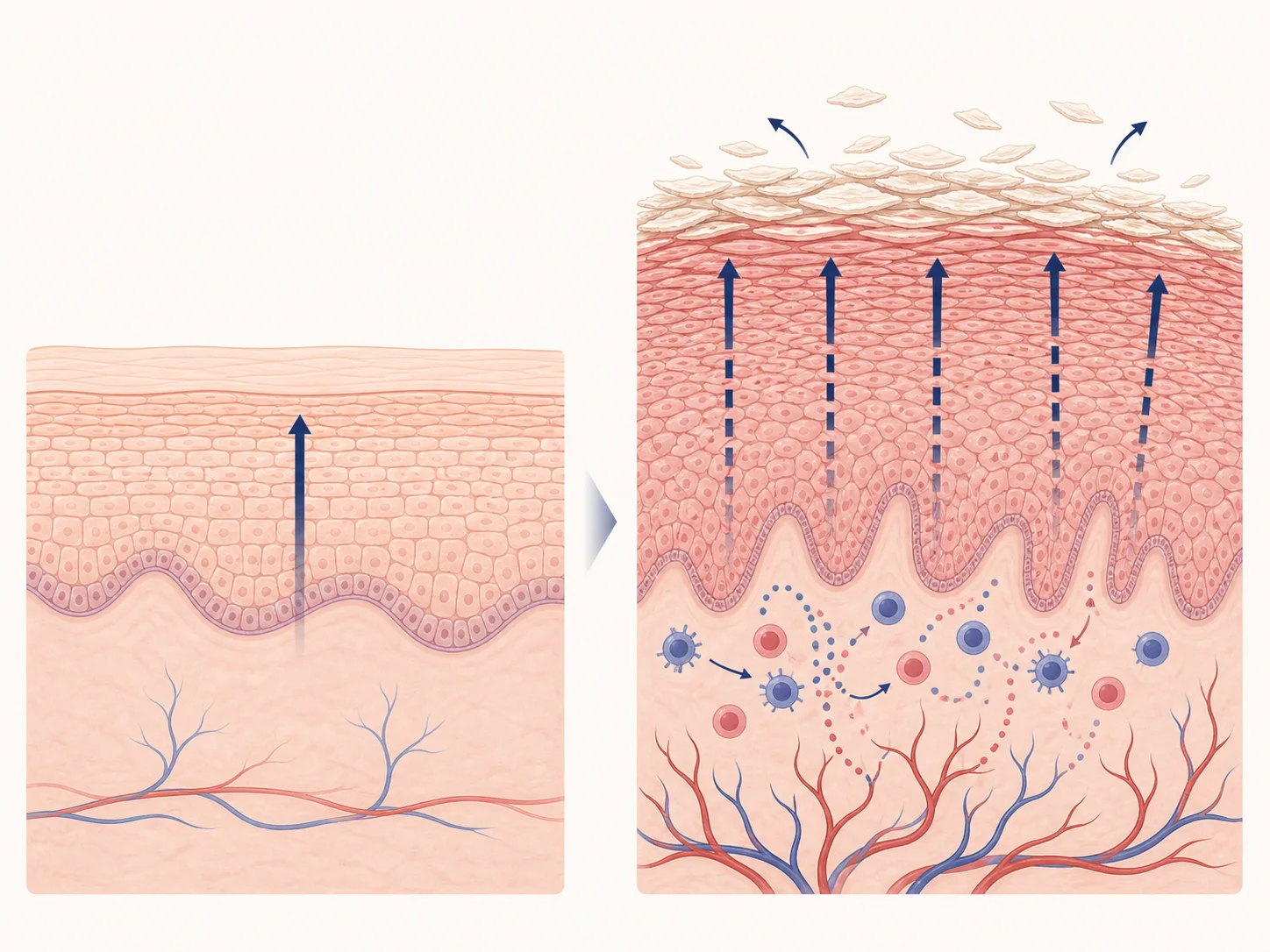
This is a simplified concept showing how overactivation of the immune system contributes to the rapid increase of skin cells, inflammation, and the accumulation of scales.
Record the start and end time of a single lesion, the presence of scaling or oozing, changes to the scalp, hands, or nails, and exposure to new products together.
Next reading
Content to follow
Are red, thick plaques and silvery scales clues to psoriasis?
How do you distinguish between chronic eczema and psoriasis?
When can herbal medicine treatment become the primary focus for treating psoriasis?
Skin terms used in this differential guide
When herbal medicine treatment is the primary focus
We set the goals for herbal medicine treatment based on your previous treatments and when symptoms recurred
Psoriasis can follow a chronic course where skin changes improve and then worsen again, and the burden varies by area, such as the scalp, nails, or skin folds. While continuing existing treatments, herbal medicine treatment can become the primary focus to manage the recurring patterns and overall systemic condition together.
We ask where it appeared and when it worsened again
We examine the redness and thickness of the scales, the distribution of skin changes, sensations of heat or dryness, and symptoms related to sleep, digestion, fatigue, and joints.
We check if not only the itching, but also sleep and daily life are improving
We compare the occurrence of new skin changes, scaling and cracking, nail changes, joint discomfort, and daily functional abilities.
We set the goals for herbal medicine treatment by identifying the problems that need to be resolved first
If there are causes that require immediate priority, such as infection or rapid worsening, those treatments come first. Subsequently, for herbal medicine treatment, we determine the primary goal of recovery by examining current discomfort, recurring patterns, sleep, digestion, and fatigue, and coordinate the sequence with necessary dermatological treatments.
While reducing aggravating factors through lifestyle management, herbal medicine treatment determines the initial target by analyzing the pattern of lesions, sleep, digestion, and fatigue through pattern identification (Byeonjeung). Necessary skin treatments are continued in accordance with the progress.
Consult about treatmentEvidence and Update Information
This content was organized by Korean medicine doctor Choi Yeon-seung and updated on 2026-08-23.
- DermNet, Psoriasis
- American Academy of Dermatology, Relieve uncontrollably itchy skin
- American Academy of Dermatology, Psoriasis: Signs and symptomsPlaque, guttate, pustular, and erythrodermic psoriasis, and nail/joint symptoms