Psoriasis: Start with the topics you are curious about
Points to check first
Psoriasis: Symptoms and when to seek medical evaluation
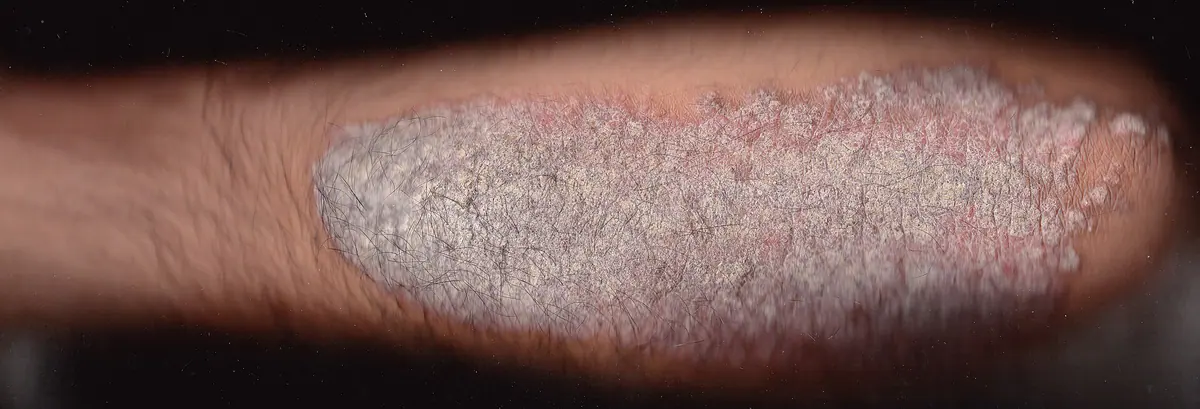
Common symptoms of psoriasis include thick, raised inflammatory plaques and silvery-white scalesscales on the scalp, elbows, knees, torso, palms, and soles. The skin may feel itchy, burning, stinging, or tight, and may crack due to dryness and bleed. Depending on the type, it may appear as small drop-shaped skin changes, smooth rashes in skin folds, pustular skin changes on the hands and feet, or severe redness and scaling across the entire body. Small pits, thickening, or crumbling of the nails, as well as joint pain, swelling, morning stiffness, and heel pain may also occur. Seek prompt medical evaluation if the entire body suddenly turns red, or if pustular skin changes occur along with fever and a worsening general condition.
Distinguishing types and emergencies
Determine when to seek medical evaluation based on the appearance of the skin and symptoms appearing on the nails, joints, and throughout the body
Consider the location, function, and general body condition, rather than looking only at the area of skin change.
| Visible or felt symptoms | What to check | Priority action |
|---|---|---|
| Thick, raised plaques and silvery-white scales | Possibility of plaque psoriasis | Document distribution, itching, and cracking |
| Small drop-shaped skin changes on the torso and limbs | Possibility of guttate psoriasis | Recent Infections and Skin Care |
| Smooth rash in armpits or groin | Possibility of inverse psoriasis (skin folds) | Differentiate from friction or infection |
| Nail pitting, thickening, and joint swelling | Possibility of nail psoriasis or psoriatic arthritis | Prompt medical evaluation by dermatology or rheumatology |
| Generalized redness, widespread pustular skin changes, or fever | Possibility of severe psoriasis | Immediate hospital evaluation |
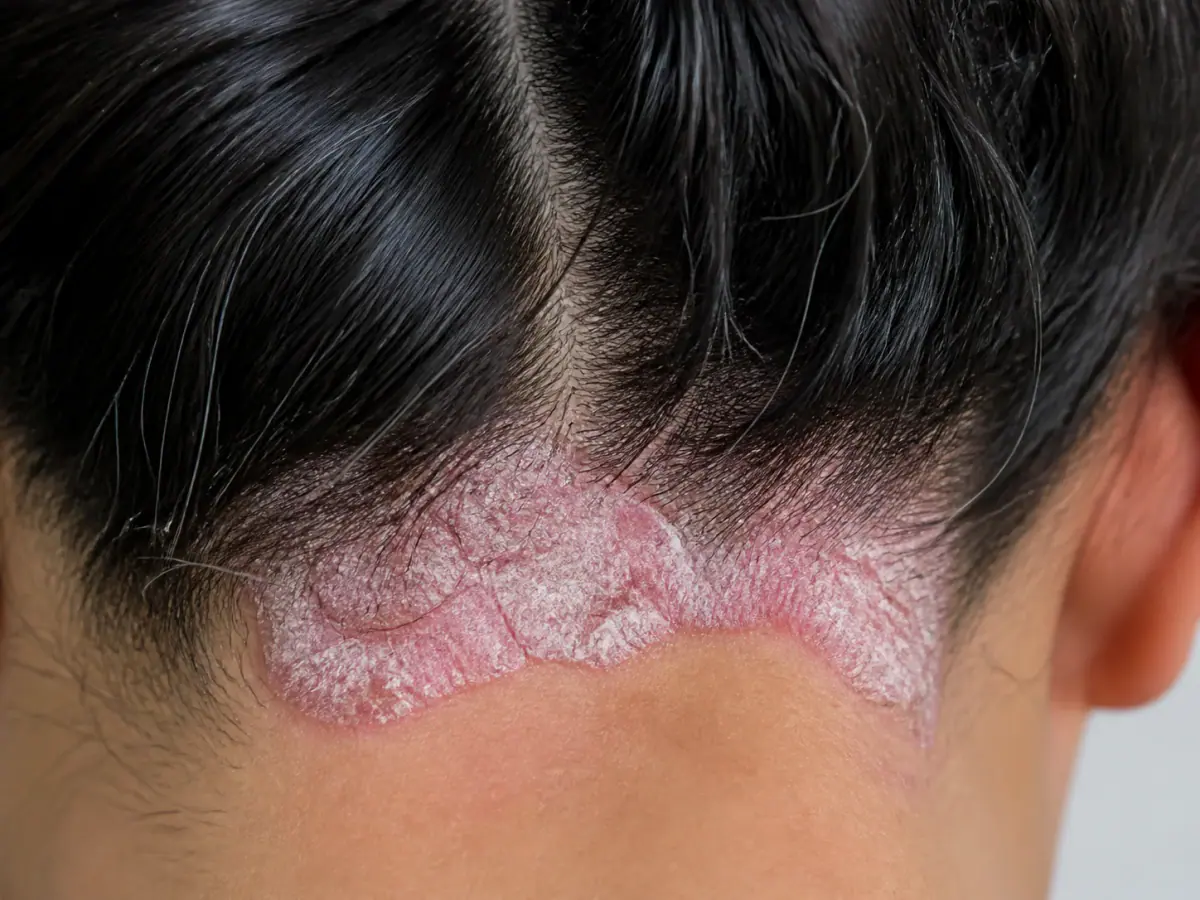
Scalp psoriasis may start like dandruff, but it typically has relatively distinct borders, and thick plaques may extend beyond the hairline. It is considered alongside seborrheic dermatitis, which is characterized by thin, greasy scales.
Actual clinical photos and educational close-up examples are materials for comparing possible patterns and cannot be used for diagnosis alone. Mechanism diagrams have simplified complex processes.If these discomforts have recurred
For those who notice scales on the elbows and pitting in the nails when dressing in the morning
Psoriasis is a chronic condition that repeatedly improves and worsens. If you focus only on removing the scales itching, it is easy to overlook cracks, the condition of the scalp and nails, and the burden on daily life.
For those with recurring thick plaques that look like scalp dandruff
topical agentswhen the same plaques repeatedly become red and thick even after thinning with use
For those whose sleep is interrupted by skin cracking, bleeding, and nighttime itching
When sleep and interpersonal relationships become difficult due to the scalp, nails, or itching
For those with swelling and pain in the fingers, toes, or joints, and stiffness in the morning
When you wish to combine Korean herbal medicine treatment because worsening is evident after fatigue, stress, or alcohol consumption
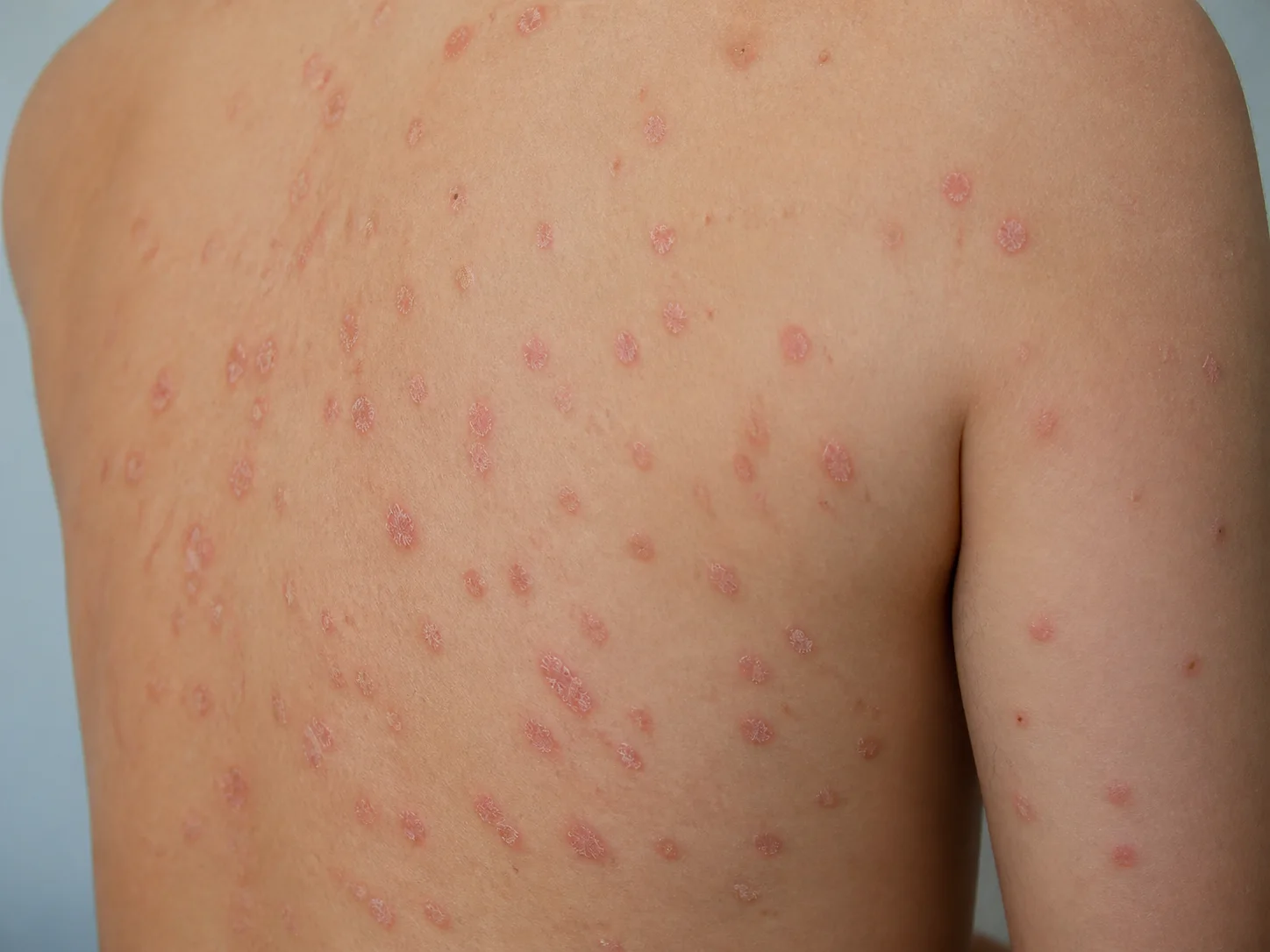
This pattern involves the sudden appearance of many small, thin lesions rather than large plaques. We screen for the onset after an infection as well as other systemic rashes such as pityriasis rosea or drug eruptions.
Points to distinguish first
How to distinguish psoriasis from similar-looking skin diseases
Please also let us know if your joints are stiff or if your eyes are painful
We screen for extensive redness, pus, fever, joint swelling and stiffness, as well as eye pain and changes in vision.
Please inform us about your nails and joints as well as your skin
We record photos taken under the same conditions, as well as the sequence of onset for scales, cracking, and nail or joint symptoms.
We check if both the skin and daily life are improving together
While maintaining dermatology or rheumatology treatments, we observe changes in itching, sleep, work, and joint function.
Why does it keep getting worse?
Reasons why psoriasis persists or recurs
We examine red and hot phases differently from thick and dry phases
In Korean herbal medicine treatment, the priority differs between periods when skin changes rapidly turn red and periods when old plaques become thick and cracked.
Severity is not determined by the surface area of the skin alone
Treatment goals also include reducing stress caused by scalp keratin, changes in fingernails and toenails, nighttime itching, and scales falling onto clothing.
We evaluate immune hypersensitivity along with skin heat and dryness
We distinguish between periods when red, hot skin changes spread rapidly and periods when old plaques become thick, dry, and cracked. If worsening correlates with sleep, fatigue, alcohol consumption, or digestion, constitutional recurrence factors are also reflected in the prescription.
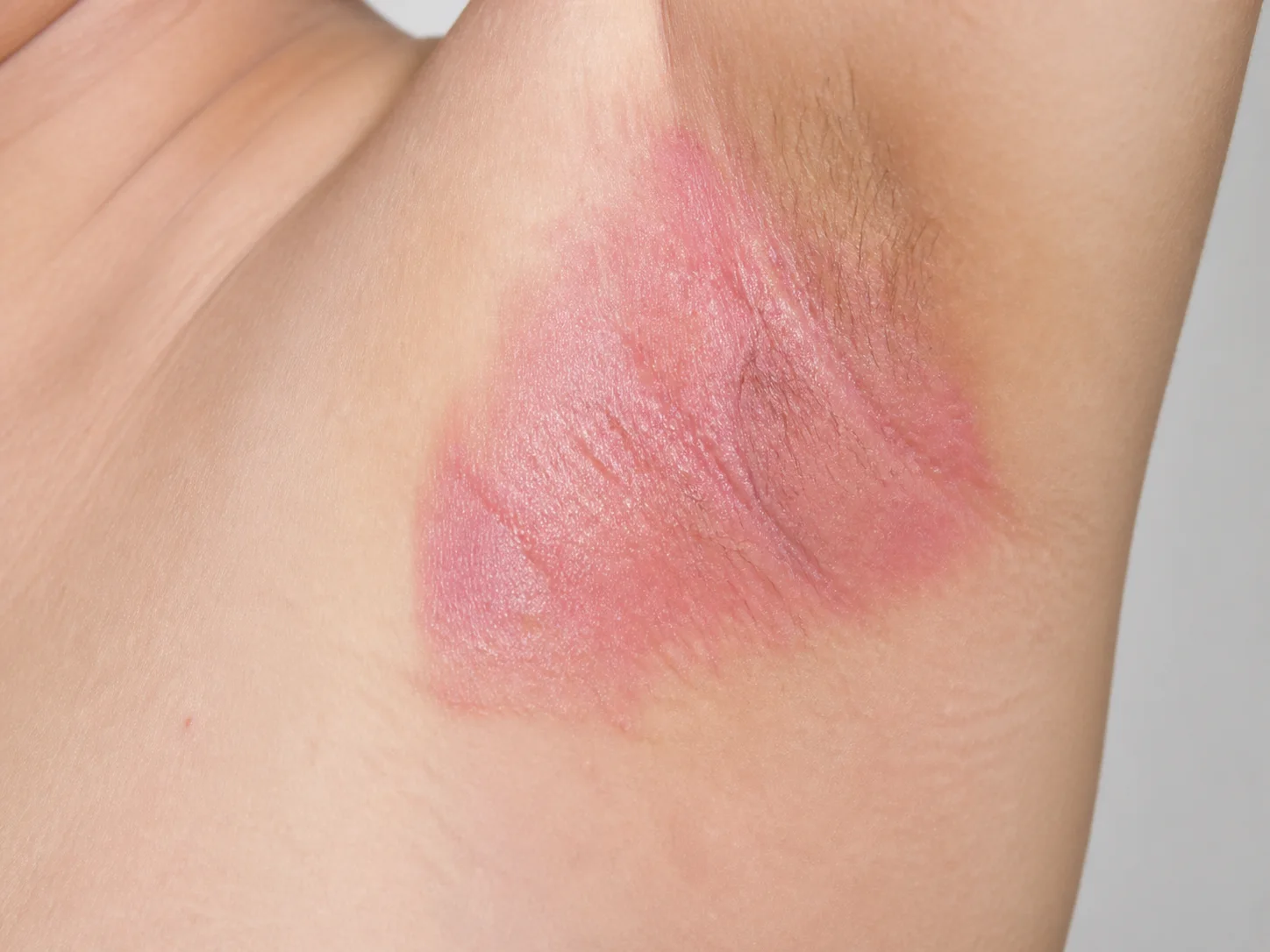
In moist skin folds, psoriasis may have fewer thick scales and can resemble candidiasis, tinea, or friction dermatitis. We examine the borders and look for clues of psoriasis in other areas.
Things to prepare before your visit
What photos and records should I prepare before the medical evaluation?
Please prepare photos of your skin, scalp, and nails, and information regarding itching, cracking, bleeding, joint swelling, morning stiffness, heel pain, and your response to previous treatments.
Thick, raised plaques develop
These are common on the scalp, elbows, knees, and torso; they may appear as single lesions or merge to cover a wider area.
Covered with silvery-white scales
Dry scales may fall off and the skin may crack and bleed, so do not force them off.
May be itchy, burning, or painful
Record the impact on nighttime sleep, dressing, exercise, and work.
Changes to monitor during treatment
What changes should I monitor during treatment?
Number of new skin changes and the redness, thickness, and cracking of existing plaques
Please record when it started and how it has changed, including the dates. To make it easier to compare before and after, take photos of the same area from a similar distance and under similar lighting.
Changes in the scalp, fingernails, and toenails, and the presence of joint pain
Please leave a brief note. Compare not only the visible changes but also whether your sleep, pain, and daily life have become less uncomfortable.
Current topical agents, light therapy, systemic treatments, and nighttime itching, alcohol consumption, and sleep
Please also include the dates of any medications, ointments, or procedures you are currently using. This makes it easier to compare what led to improvement or worsening.
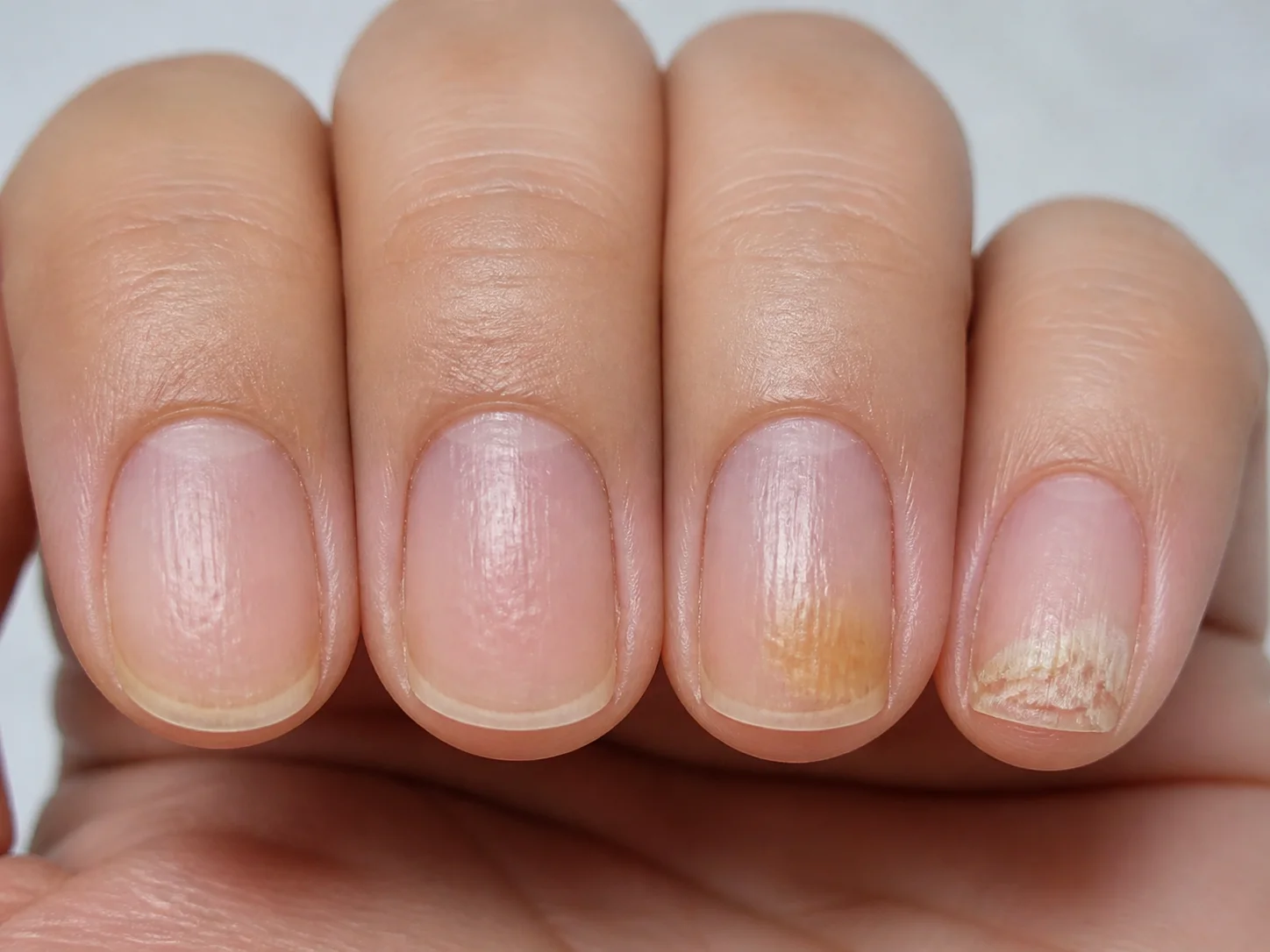
Pitting, oil-drop discoloration, and lifting are clues for nail psoriasis, but fungal infections and trauma can appear similar. Joint pain and swelling are also checked.
When planning herbal medicine treatment
For psoriasis, the direction of herbal medicine treatment is determined based on the currently prominent symptoms
Prescriptions for psoriasis are not based on surface area alone. We adjust the focus on immune hyperactivation, heat, dryness, and circulation by observing whether new skin changes turn red quickly, whether old plaques are thick and cracked, whether dark red and fixed skin changes remain, and whether fatigue and poor recovery overlap with recurrence.
Pattern identification (Byeon-jeung) in Korean medicine is not about giving a different name to a disease. Multiple patterns can overlap in one person, and as the skin changes, for example, as oozing and heat decrease and dryness or cracking remain, the prescription is adjusted accordingly.
When red and hot skin changes spread rapidly
- Primary skin observations
- Check for vivid erythema, thin but rapidly forming scales, and new skin changes appearing where the skin was scratched or injured.
- Overall body condition to check alongside skin
- Confirm if heat sensations and worsening are evident following heat exposure, alcohol consumption, infection, or lack of sleep.
- Primary considerations for herbal medicine prescription
- Focus on nourishing the blood and clearing heat to lower immune hyperactivation and skin heat, and to slow the rate at which new skin changes appear.
When plaques are thick, dry, and cracking
- Primary skin observations
- Check if silvery-white scales are thick, if cracks, bleeding, or tightness remain, and if itching persists for a long time.
- Overall body condition to check alongside skin
- Ask if there is accompanying dryness of the skin and mouth, cold sensations, fatigue, and delayed recovery.
- Primary considerations for herbal medicine prescription
- Rather than continuously lowering heat, add blood nourishment and moisturizing to ensure the skin does not dry out and recovers its flexibility.
When old plaques remain dark red and hard
- Primary skin observations
- Check if the borders are thick, the color is dark or purplish, and if the plaques remain fixed in the same location for a long time.
- Overall body condition to check alongside skin
- Confirm if there is a long duration of illness, local cold sensations, numbness, and pain following stress.
- Primary considerations for herbal medicine prescription
- In addition to controlling heat and dryness, emphasize promoting blood circulation and resolving stasis to aid the circulation and recovery of long-stagnated skin changes.
When the area expands and recovery slows as fatigue increases
- Primary skin observations
- Check if skin changes remain widespread and if the recovery of wounds and scales is slow, even if the skin is not very hot.
- Overall body condition to check alongside skin
- Ask if worsening repeats following chronic fatigue, loss of appetite, lack of sleep, or frequent infections.
- Primary considerations for herbal medicine prescription
- Instead of excessively aggressive heat-clearing, adjust the treatment to maintain a stable phase by reinforcing immune balance and the recovery of Qi and blood.
How is the herbal medicine prescription adjusted?
- Examine the speed of new skin changes and the texture of existing plaques separately
Record the activity of new redness and the thickness, cracking, and color of old plaques separately to determine the proportion of heat-clearing, moisturizing, and blood-circulating treatments.
- Reflect only actual connections to external worsening factors
Confirm if changes repeat after infection, trauma, sleep deprivation, alcohol consumption, or fatigue, and do not force unrelated lifestyle factors to be identified as causes.
- Adjust the prescription based on reports of newly affected areas, thickness, cracking, and daily discomfort
We will monitor whether new skin changes are decreasing, existing plaques are thinning, and if scaling (skin flakes falling on clothes) and nighttime itching are improving.
When should I consider Korean herbal medicine treatment?
- When the same plaque repeatedly becomes red and thick even after thinning during the use of topical agents
- When sleep and interpersonal relationships are difficult due to scalp, nail, or itching issues
- When worsening is evident after fatigue, stress, or alcohol consumption and you wish to combine treatment with Korean herbal medicine
What will be asked during the medical evaluation?
- The number of new skin changes and the redness, thickness, and cracking of existing plaques
- Changes in the scalp and nails, and the presence of joint pain
- Current topical agents, light therapy, systemic treatments, as well as nighttime itching, alcohol consumption, and sleep
Things to prepare before the consultationPlease prepare photos of your skin, scalp, and nails, and information regarding itching, cracking, bleeding, joint swelling, morning stiffness, heel pain, and your response to previous treatments.
If pus, pain, or redness spreads rapidly, or if you have a fever, lesions inside the eyes or mouth, shortness of breath, or sudden facial swelling, please visit a dermatology clinic or seek emergency care first. After confirming that such urgent situations are not present, Baekrokdam provides herbal medicine treatment for chronic and recurring skin diseases.
Consult about psoriasis progressFrequently Asked Questions
Frequently Asked Questions about Psoriasis
Where does psoriasis usually occur?
It is common on the scalp, elbows, knees, and torso, but it can appear anywhere, including the palms, soles, skin folds, and nails.
Is it okay to pick at psoriasis scales?
Forcing them off can cause cracking, bleeding, and skin damage. Manage them according to your prescribed treatment and moisturizing plan.
Are nail pits also a symptom of psoriasis?
Small pits, thickening, crumbling, or lifting may occur. A medical evaluation is necessary to differentiate this from conditions such as fungal infections.
If my joints are stiff, should I wait until the skin condition worsens?
Do not wait. Joint swelling, morning stiffness, or swelling of the entire fingers and toes require prompt medical evaluation to prevent joint damage.
What is the root cause of psoriasis?
Genetic predisposition and environmental factors both play a role in a process where skin cells are produced too quickly due to overactivation of the immune system.
Can psoriasis develop where there is an injury?
Skin changes can occur in the same spot after injuries such as cuts, burns, or severe scratching, so please record the timing of the injury and the appearance of the rash.
If I feel the medication is making it worse, should I stop taking it?
Do not stop prescribed medication arbitrarily; instead, show the prescriber the medication name, start date, dosage changes, and photos of your skin.
References and update date
Doctor of Korean Medicine Choi Yeon-seung verified the content based on the official and professional materials below and updated it on 2026-08-23.
- American Academy of Dermatology, Psoriasis: Signs and symptomsPlaque, guttate, pustular, and erythrodermic psoriasis, and nail/joint symptoms
- NIAMS, Psoriasis symptoms, causes, and risk factorsThick scales, cracking, bleeding, nail/joint symptoms, and severe types
- American Academy of Dermatology, Psoriatic arthritis symptomsJoint swelling, morning stiffness, heel pain, and overall swelling of fingers and toes
- American Academy of Dermatology, Psoriasis: CausesImmune system and genetic factors, and triggers such as infection, skin damage, medication, weather, smoking, and alcohol
- NIAMS, Psoriasis: Diagnosis, Treatment, and Steps to TakeExamination of skin, scalp, and nails, and guidance on differential diagnosis and treatment plans
- American Academy of Dermatology, Psoriasis: Diagnosis and treatmentGuidance on evaluating psoriasis type, severity, and accompanying joint symptoms
- AAD, Psoriasis tips for managingPrevention of skin damage and scratching, moisturizing, and management of individual aggravating factors
- AAD, Psoriasis baths and showersLukewarm baths, mild cleansers, gentle drying, and moisturizing