Differentiating Rings and Scaling
Differences Between Pityriasis Rosea, Tinea, Nummular Eczema, and Psoriasis: Round Scaly Rashes
Do not look only at the 'round' shape; observe where it started and in which direction it spread.
Click on unfamiliar terms to see their meanings immediately.
For round or oval rashes spreading across the torso, we examine the sequence of the first large patch, the difference between the edges and the center, and the oozing across the entire plaque oozing, overlapping boundaries Keratindivided into.
Points to check in the photos first
Even if they look similar, the dead skin, blisters, and borders may differ
We have provided both typical appearances and examples that look slightly different. Do not decide based on a single similar photo; compare how long symptoms like dead skin, wheals, comedones, or oozing have persisted in the same area.
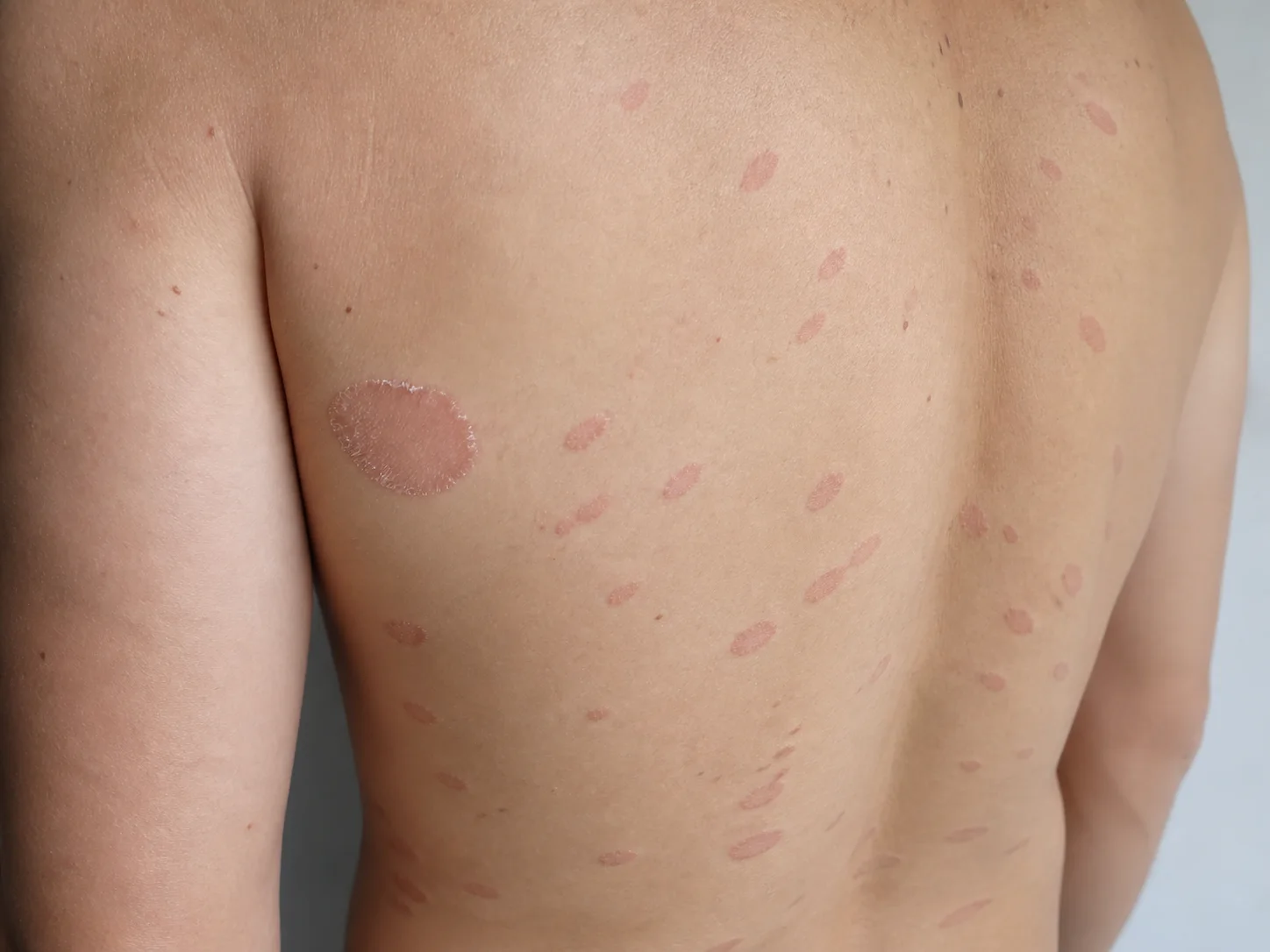
In pityriasis rosea, oval spots may spread along the skin lines of the torso. Since it can look similar to tinea, drug eruptions, or psoriasis, we also examine the order in which the spots appeared.
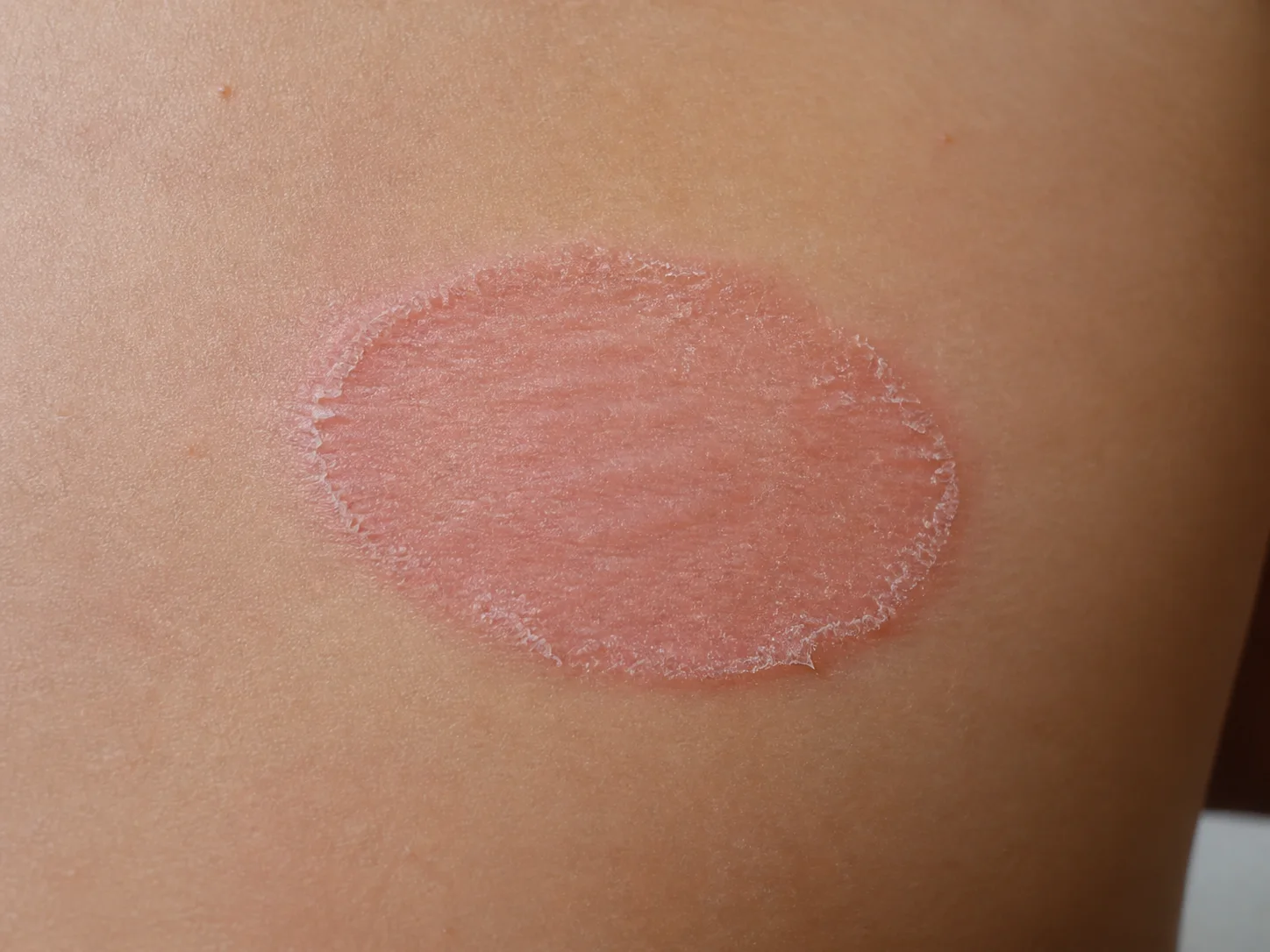
The progression where a large herald patch appears a few days before other spots serves as a clue. Please record the order in which they first appeared rather than providing a single photo.
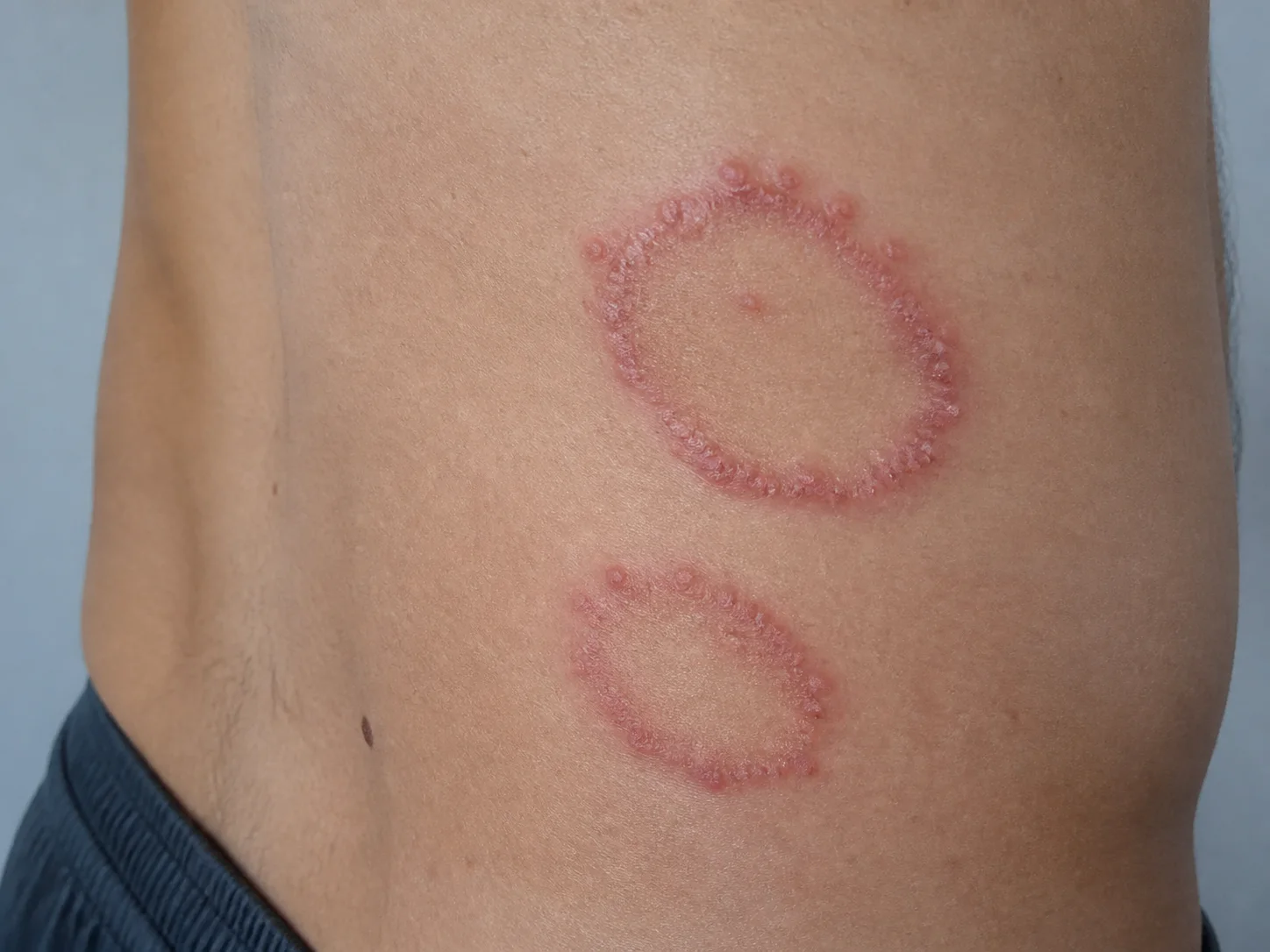
Tinea corporis is characterized by a ring-shaped pattern where redness and scaling are more active on the outer edge than in the center. We confirm the need for infection treatment after differentiating it from nummular eczema or pityriasis rosea.
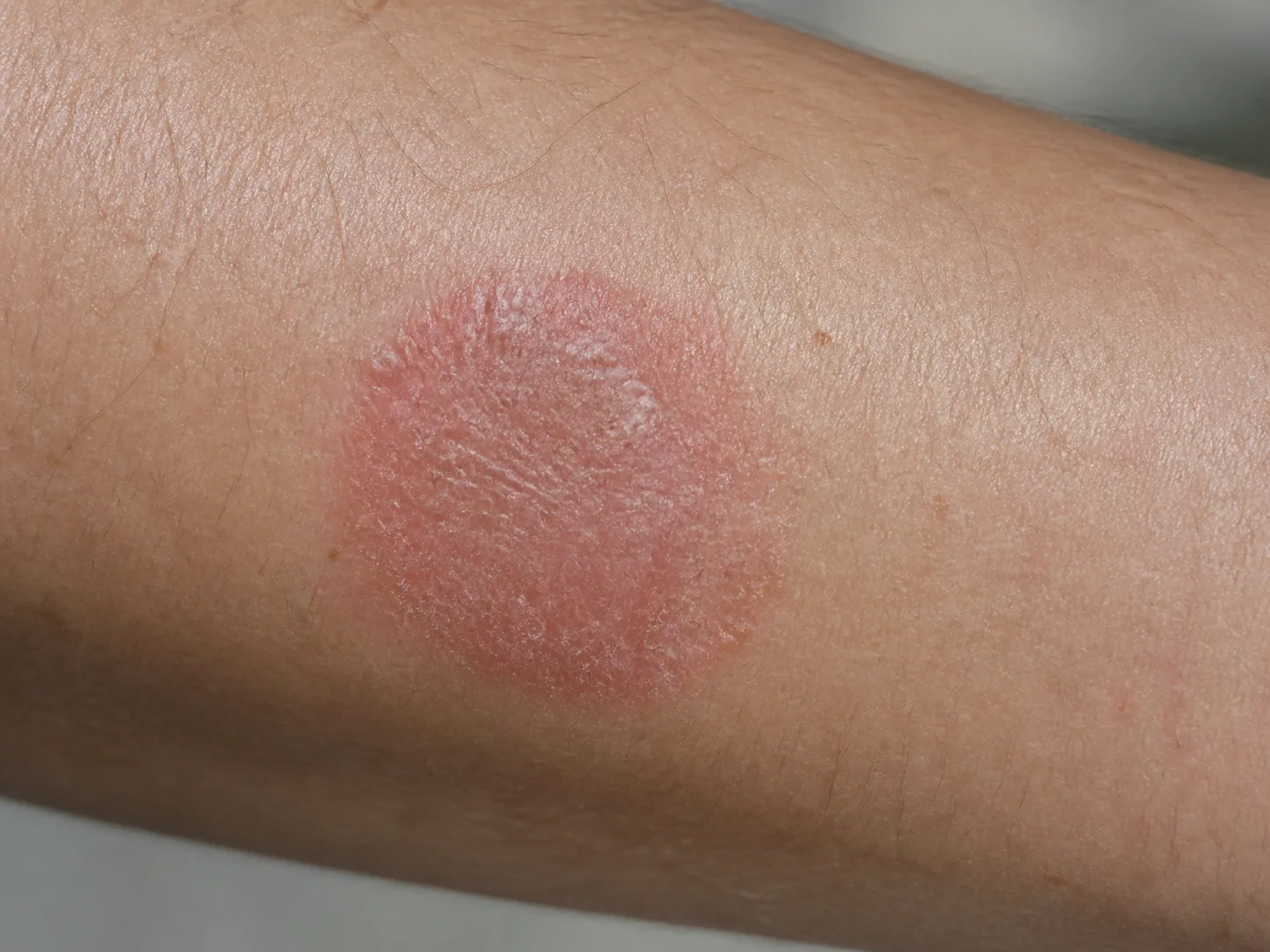
Eczema can also appear round, which may be confused with tinea or psoriasis. We examine whether the center fades, whether the keratin on the edges is prominent, and whether there has been oozing and a recurring course, along with information beyond the photos.
| Points to check | Pityriasis rosea | Tinea corporis | Nummular eczema | Psoriasis |
|---|---|---|---|---|
| Distribution | Along the skin lines of the torso | Ring edges expanding outward | Round plaques on dry limbs | Elbows, knees, scalp, etc. |
| Scales | Thin border facing inward | Active border | Scaling and oozing across the entire plaque | Overlapping and thick silvery-white |
| Progress | Multiple rashes following a large primary plaque | Ring gradually expands | Itchy, recurrent, and possible oozing | Recurrence with distinct borders |
| Verification | Differentiate from other rashes such as drug eruptions | Fungal test if necessary | Exposure, dryness, and history of eczema | Nails, joints, and family history |
Ask if there was a single large spot that appeared first
In pityriasis rosea, small oval rashes may spread along the skin lines from a few days to several weeks after a large primary plaque appears on the torso. It usually follows a natural course, but if it is atypical or persists for a long time, it is re-differentiated from drug eruptions, infections, or psoriasis.
For tinea, check if the edge of the ring is more active
In tinea corporis, the center may fade while the red, scaly edges expand outward. A diagnosis is not finalized as nummular eczema based on photos alone; if necessary, a fungal test is performed first to determine the direction of infection treatment.
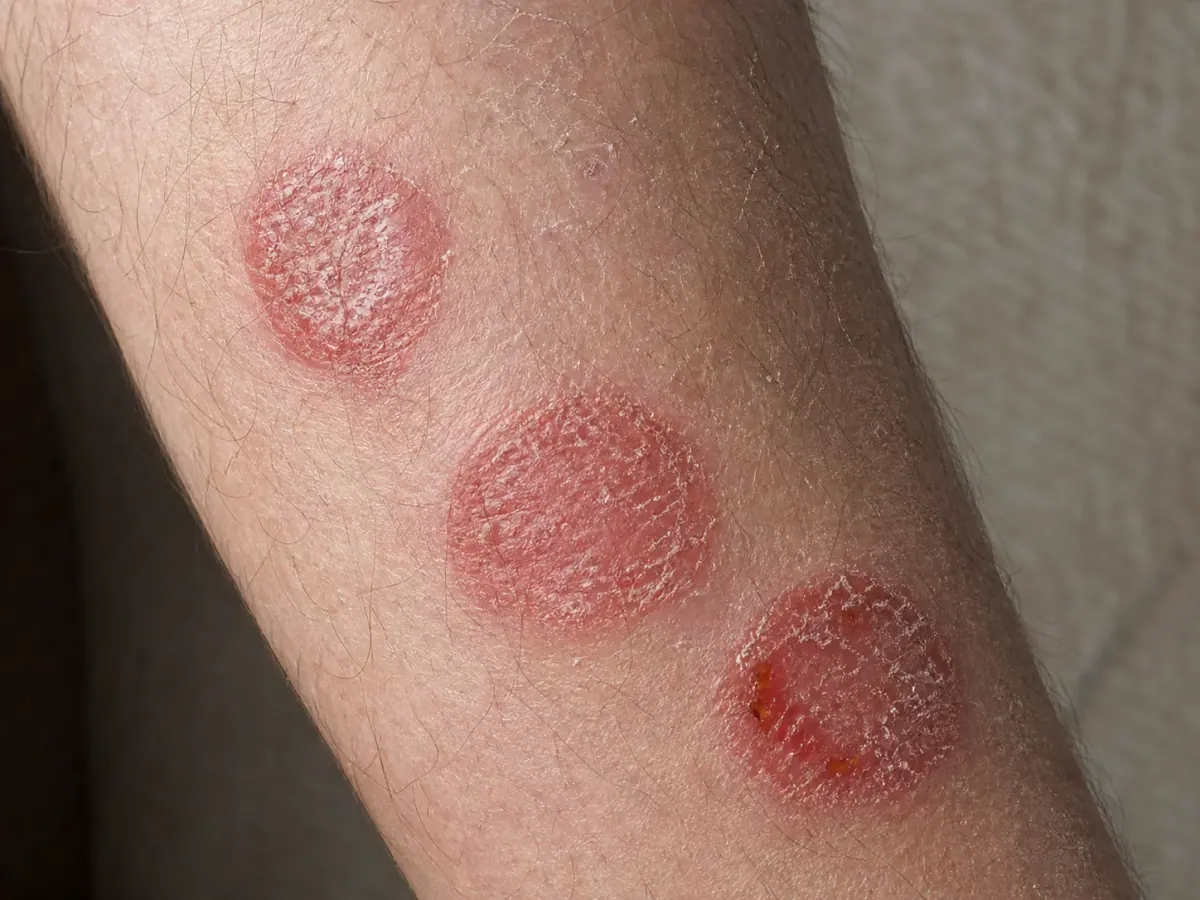
Nummular eczema can appear as multiple round plaques repeatedly on dry arms and legs. Unlike tinea, which grows only at the edges, we monitor the progress of oozing, scaling, and itching across the entire plaque.
Recall if the entire round area was itchy and oozing
In nummular eczema, the entire plaque may be red, scaly, or oozing, and multiple plaques may recur. Psoriasis has clear borders with overlapping scales and may be accompanied by clues from the scalp, nails, or joints, so a diagnosis is not made based on a single plaque on the torso alone.
Please describe the order of the first spot and how it spread
Please take separate photos of the very first spot, the entire torso, and the ring-shaped edges. OozingitchingPlease also note any similar skin changes in your family members or pets.
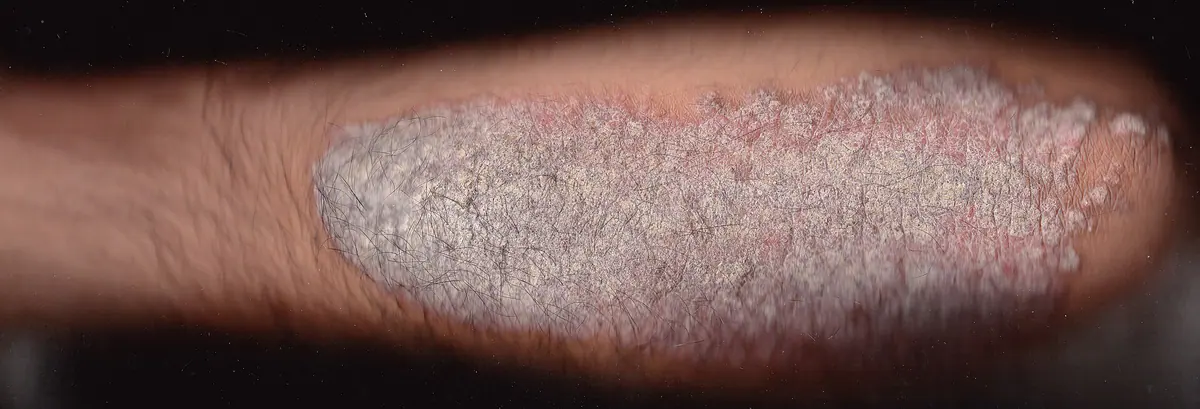
Distinct borders · Thick scales · Plaque-like shape. Comparison of nail and joint symptoms with chronic eczema
Photo: MediaJetRecord the initial lesion, which part of the ring is expanding, the presence of discharge across the entire plaque, and any other clues from different areas.
Next reading
Content to follow
If small rashes spread across the torso after one large spot, is it pityriasis rosea?
How is it distinguished from tinea, guttate psoriasis, or nummular eczema?
If itching and recovery take a long time after diagnosis, can Korean medicine treatment be considered?
Skin terms used in this differential guide
When herbal medicine treatment is the primary focus
We set the goals for herbal medicine treatment based on your previous treatments and when symptoms recurred
Round, scaly rashes must first be differentiated because the treatment direction varies for conditions such as tinea, pityriasis rosea, eczema, and psoriasis. After ruling out or treating infectious causes, Korean herbal medicine treatment can be considered for recurring inflammatory courses.
We ask where it appeared and when it worsened again
We examine changes in the border and center, the location of scales, the speed of spreading, the response to existing antifungals or topical agents, and the general systemic condition.
We check if not only the itching, but also sleep and daily life are improving
We compare the edges and extent of skin changes, the occurrence of new rashes, itching, and the response to treatment.
We set the goals for herbal medicine treatment by identifying the problems that need to be resolved first
If there are causes that require immediate priority, such as infection or rapid worsening, those treatments come first. Subsequently, for herbal medicine treatment, we determine the primary goal of recovery by examining current discomfort, recurring patterns, sleep, digestion, and fatigue, and coordinate the sequence with necessary dermatological treatments.
While reducing aggravating factors through lifestyle management, herbal medicine treatment determines the initial target by analyzing the pattern of lesions, sleep, digestion, and fatigue through pattern identification (Byeonjeung). Necessary skin treatments are continued in accordance with the progress.
Consult about treatmentEvidence and Update Information
This content was organized by Korean medicine doctor Choi Yeon-seung and updated on 2026-08-23.