Differential Diagnosis of Scaling
Psoriasis and Chronic Eczema: Different Realities Beneath the Scales
Psoriasis is characterized by thick plaques with distinct borders and silvery-white scales Keratin, and nail or joint changes serve as clues, whereas chronic eczema itchingWe examine the marks from repeated scratching. We will explain the criteria used to distinguish between similar keratotic skin conditions.
Click on unfamiliar terms to see their meanings immediately.
Thick plaques with distinct borders and silvery-white scales, along with nail changes or joint symptoms, suggest psoriasis. It is difficult to distinguish from eczema that has thickened due to prolonged scratching based on photos alone.
Points to check in the photos first
Even if they look similar, the dead skin, blisters, and borders may differ
We have provided both typical appearances and examples that look slightly different. Do not decide based on a single similar photo; compare how long symptoms like dead skin, wheals, comedones, or oozing have persisted in the same area.
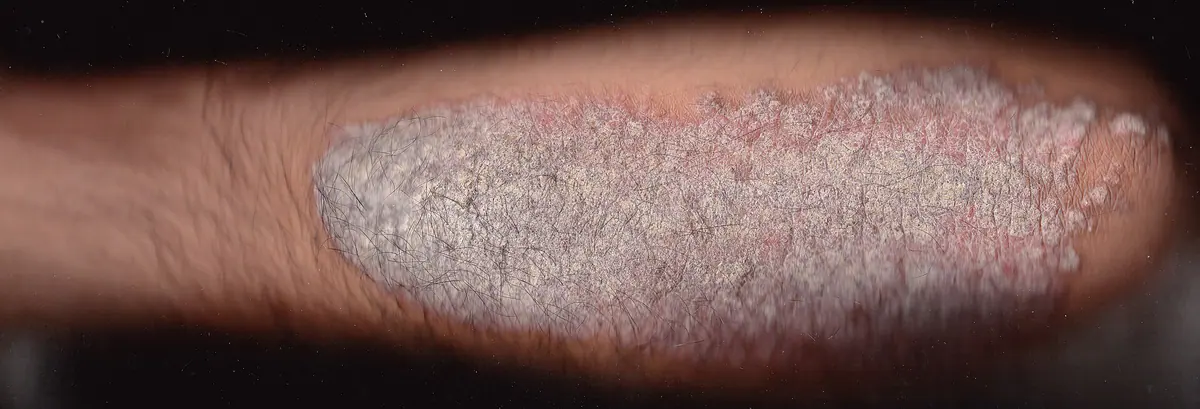
Distinct borders · Thick scales · Plaque-like shape. Comparison of nail and joint symptoms with chronic eczema
Photo: MediaJet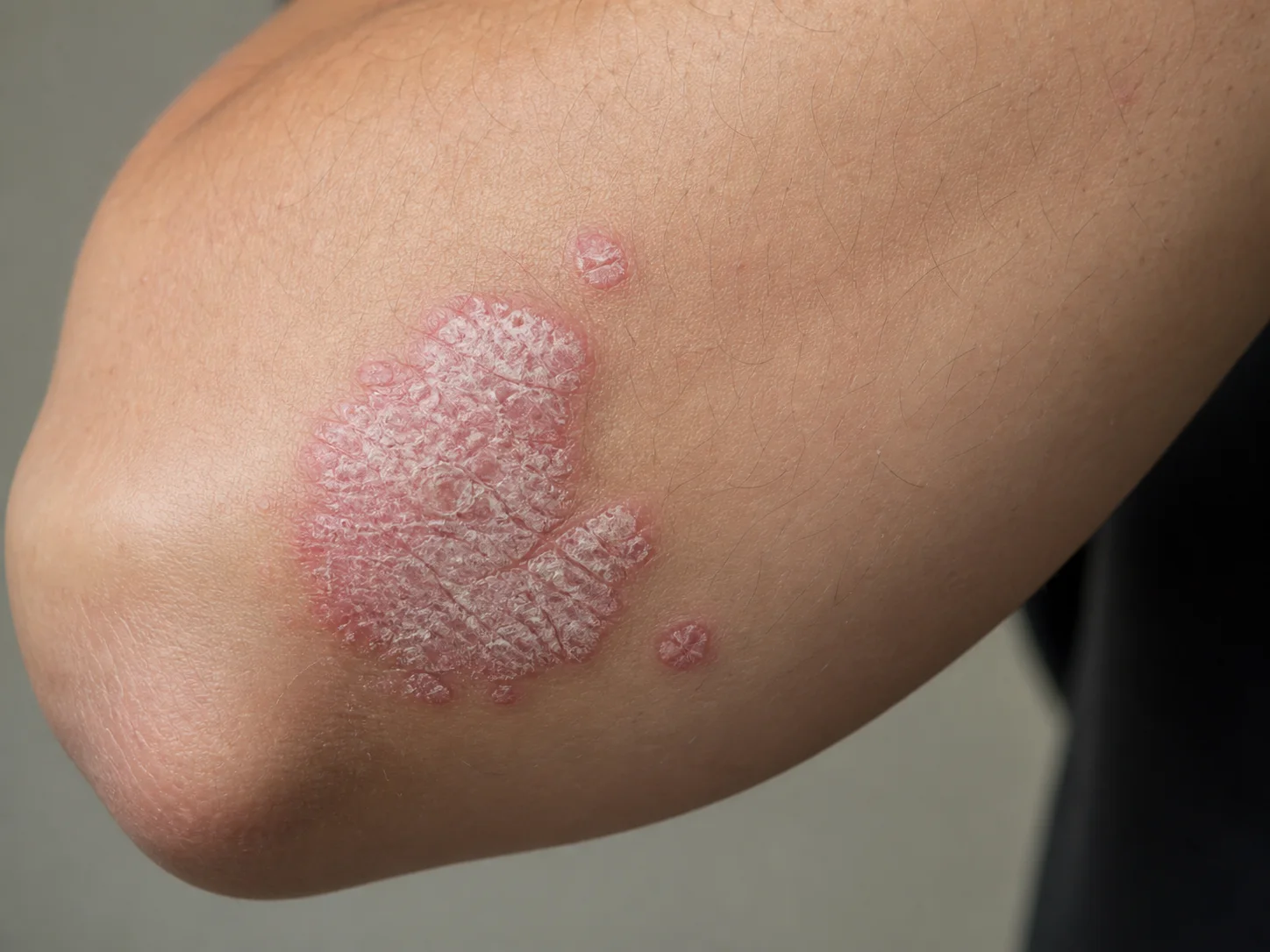
Psoriasis is evaluated by looking at the borders of the plaques, the layered scales, and the distribution, such as on the elbows and knees. Changes in the nails and joint discomfort are also checked separately from the skin photos.
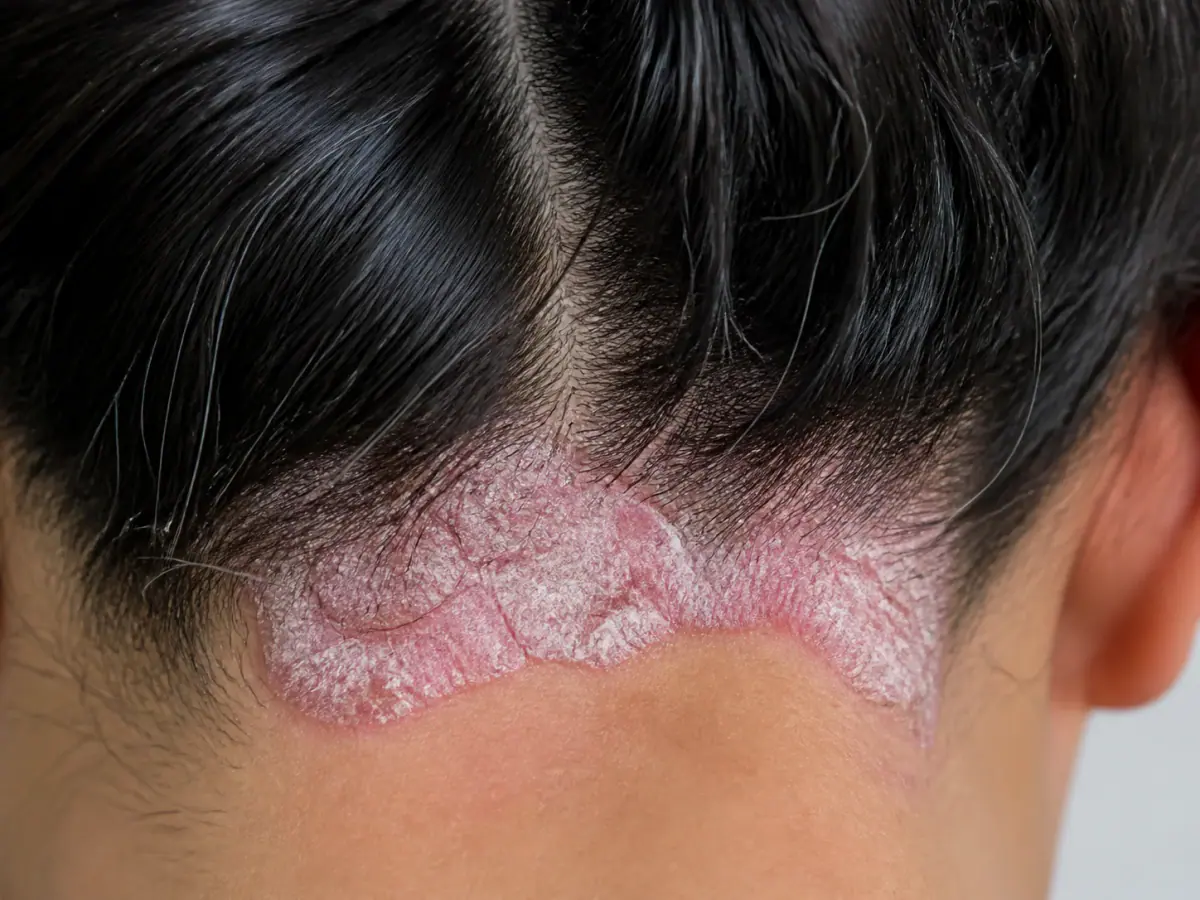
Scalp psoriasis has thicker scales and more distinct borders than simple dandruff, and can extend beyond the hairline. We compare the distribution with seborrheic dermatitis and tinea.
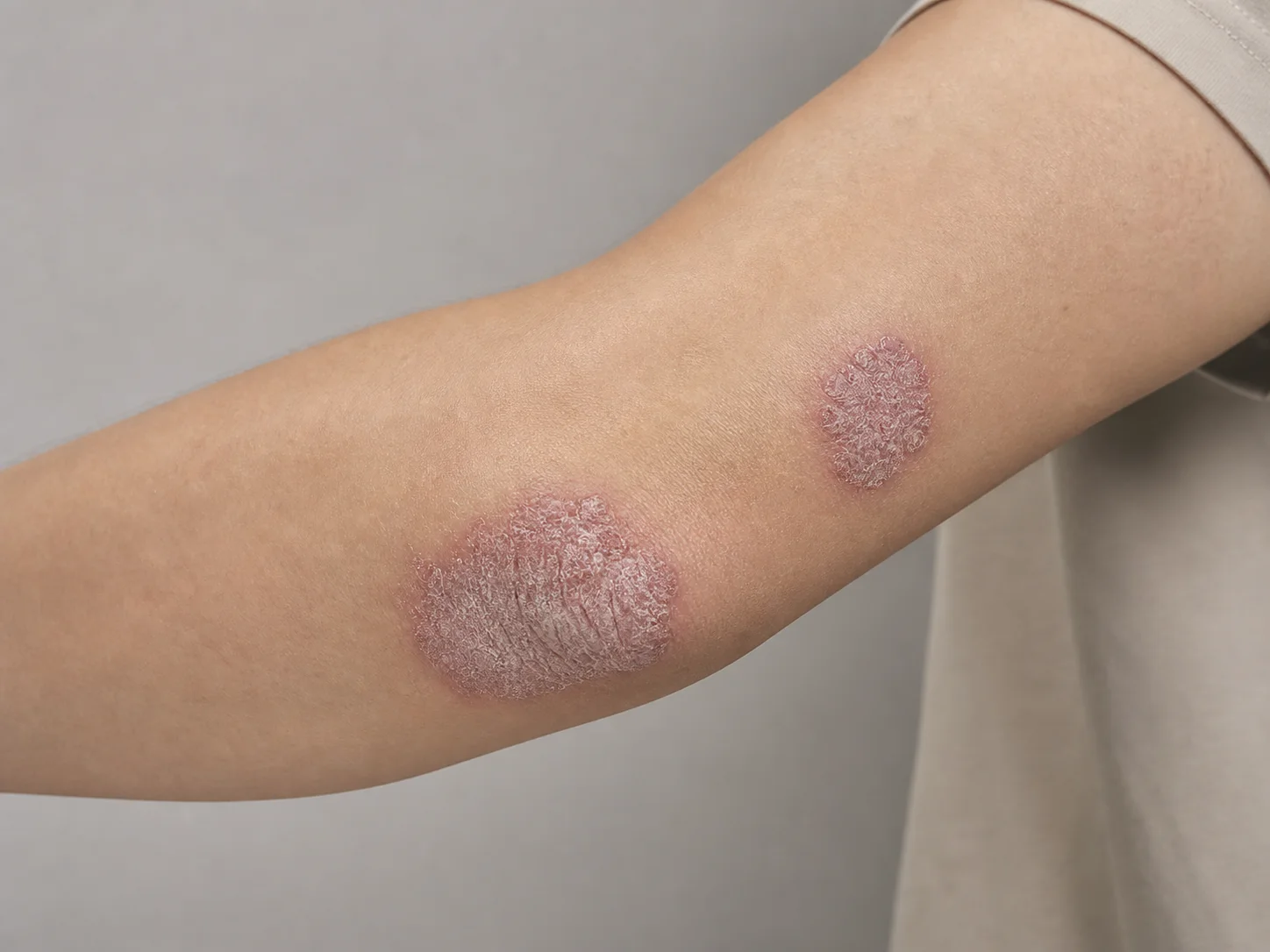
This image reproduces one form of plaque psoriasis. Since chronic eczema and fungal infections can look similar, a diagnosis is not confirmed by photos alone.
| Points to check | Psoriasis | Chronic Eczema |
|---|---|---|
| Border | Relatively distinct plaques | May be diffuse or thicken along the direction of scratching |
| Scales | May appear thick and silvery-white | Various symptoms such as dryness, cracking, and scabbing |
| Areas to examine together | Scalp, elbows, knees, fingernails, and toenails | Exposed or friction-prone areas and existing eczema locations |
| Systemic clues | Joint pain and swelling | Itching and sleep disturbance |
Why we ask about nails and joints together
Psoriasis may not be limited to the skin. If you have pitting or lifting of the nails, as well as morning joint stiffness or swelling, you should inform the medical staff along with providing photos of the skin.
Thickened skin may be the result of prolonged scratching
In chronic eczema, repeated scratching and inflammation can cause the skin texture to become coarse and thick. The borders, distribution, and history oozingand the course of acute exacerbations must be examined together.
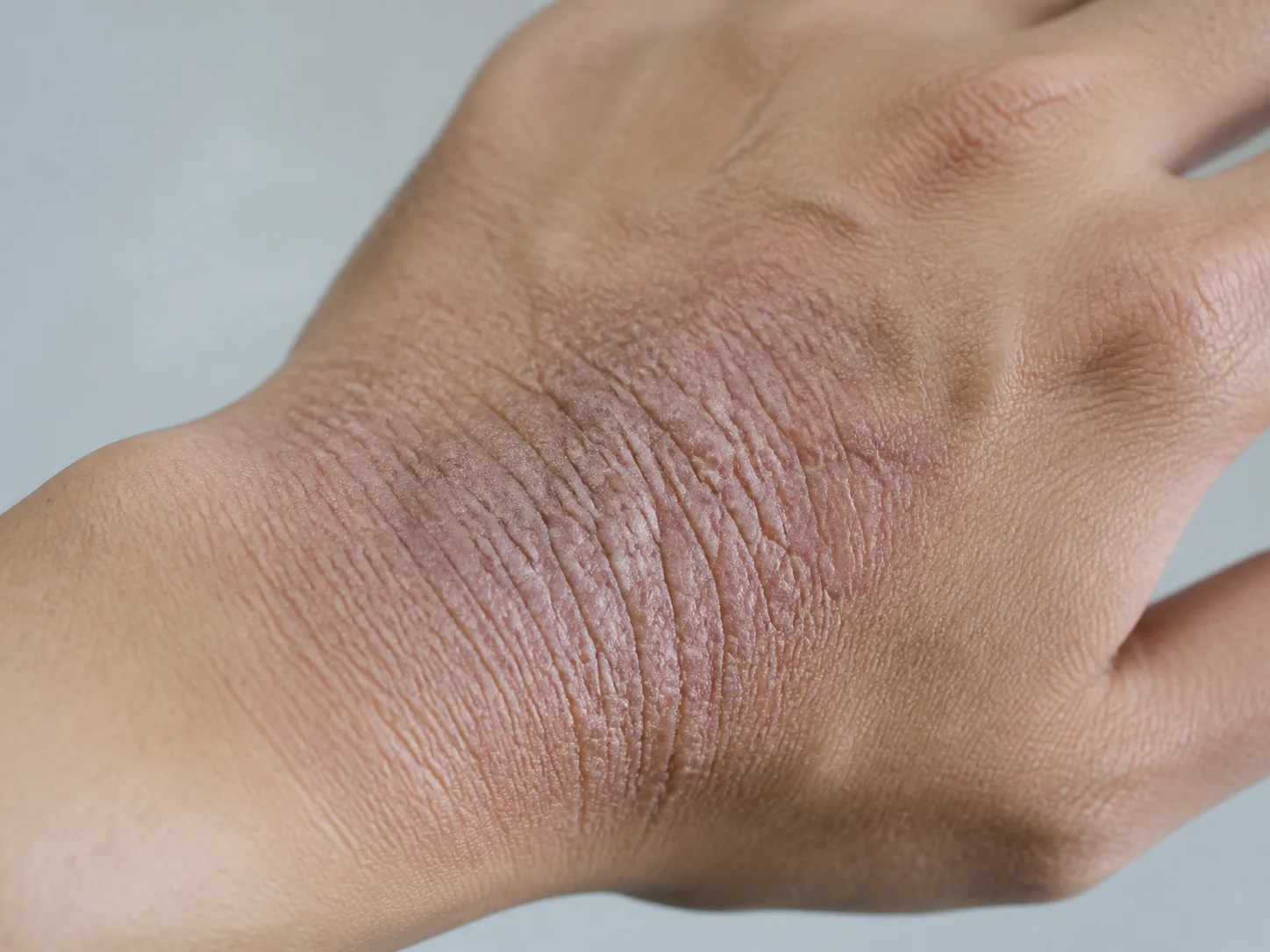
Prolonged scratching or exposure to irritants can make skin lines more prominent and leave dry cracks. Please record the affected areas along with exposure to water work, cleansers, or gloves.
We do not group them as the same type of dermatitis simply because they are long-term
Psoriasis is characterized by relatively distinct plaques, layered scales, and changes in the scalp and nails. In contrast, chronic eczema is identified by coarse skin texture and cracking from prolonged scratching, as well as a history of oozing. If symptoms recur despite treatment, we first re-verify these differences.
Please report nail and joint changes as well as scaling
Please provide photos of the overall skin location and close-ups of the scales, as well as notes on nail changes and whether your joints are stiff, painful, or swollen in the morning.
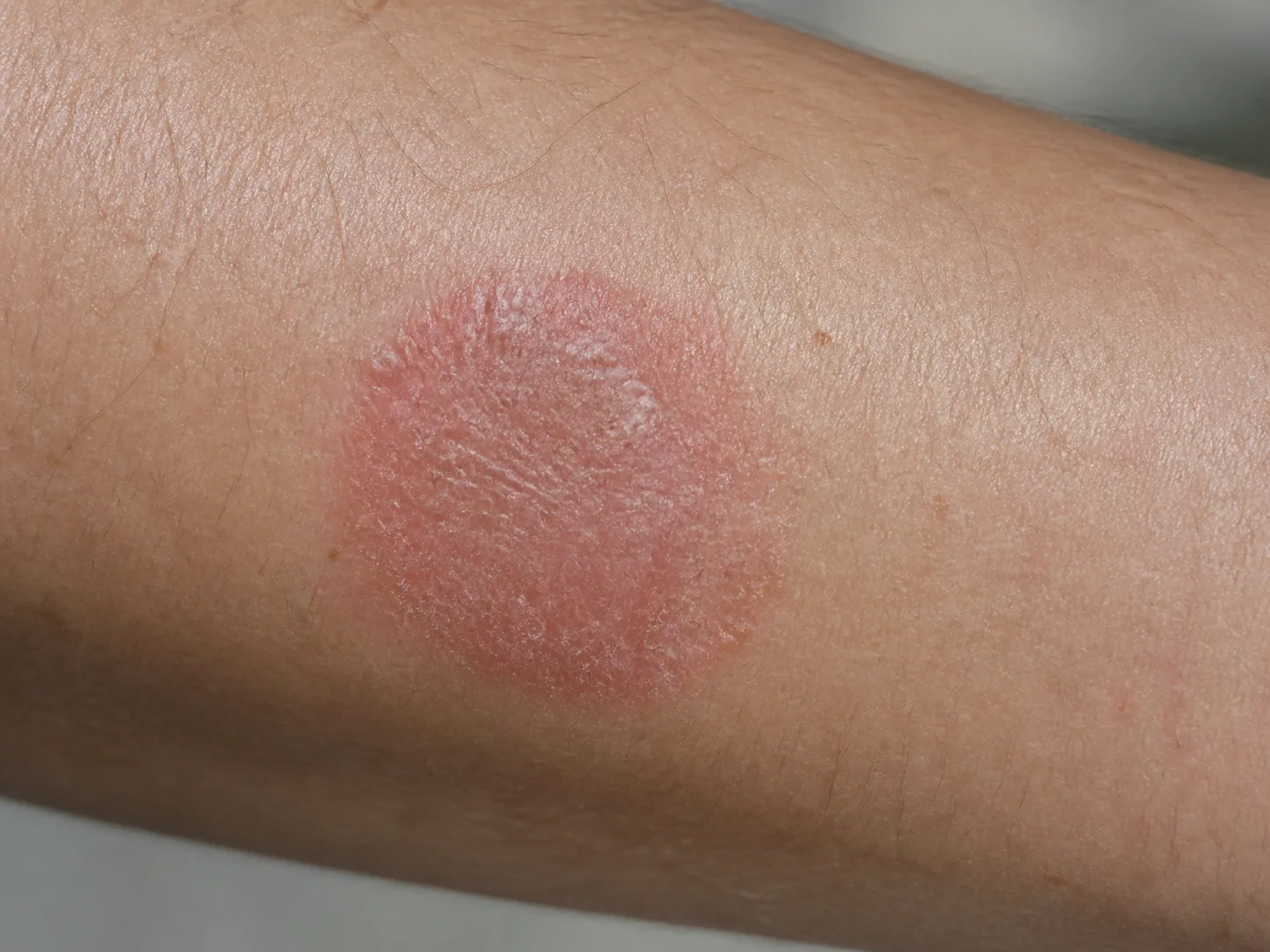
Eczema can also appear round, which may be confused with tinea or psoriasis. We examine whether the center fades, whether the keratin on the edges is prominent, and whether there has been oozing and a recurring course, along with information beyond the photos.
Do not look only at the color of the scales; check the borders, nails, and joint symptoms together.
Next reading
Content to follow
Are red, thick plaques and silvery scales clues to psoriasis?
How do you distinguish between chronic eczema and psoriasis?
When can herbal medicine treatment become the primary focus for treating psoriasis?
Skin terms used in this differential guide
When herbal medicine treatment is the primary focus
We set the goals for herbal medicine treatment based on your previous treatments and when symptoms recurred
Psoriasis can follow a chronic course where skin changes improve and then worsen again, and the burden varies by area, such as the scalp, nails, or skin folds. While continuing existing treatments, herbal medicine treatment can become the primary focus to manage the recurring patterns and overall systemic condition together.
We ask where it appeared and when it worsened again
We examine the redness and thickness of the scales, the distribution of skin changes, sensations of heat or dryness, and symptoms related to sleep, digestion, fatigue, and joints.
We check if not only the itching, but also sleep and daily life are improving
We compare the occurrence of new skin changes, scaling and cracking, nail changes, joint discomfort, and daily functional abilities.
We set the goals for herbal medicine treatment by identifying the problems that need to be resolved first
If there are causes that require immediate priority, such as infection or rapid worsening, those treatments come first. Subsequently, for herbal medicine treatment, we determine the primary goal of recovery by examining current discomfort, recurring patterns, sleep, digestion, and fatigue, and coordinate the sequence with necessary dermatological treatments.
While reducing aggravating factors through lifestyle management, herbal medicine treatment determines the initial target by analyzing the pattern of lesions, sleep, digestion, and fatigue through pattern identification (Byeonjeung). Necessary skin treatments are continued in accordance with the progress.
Consult about treatmentEvidence and Update Information
This content was organized by Korean medicine doctor Choi Yeon-seung and updated on 2026-08-23.
- American Academy of Dermatology, Psoriasis
- American Academy of Dermatology, Eczema types
- American Academy of Dermatology, Psoriasis: Signs and symptomsPlaque, guttate, pustular, and erythrodermic psoriasis, and nail/joint symptoms