Differential by Duration
Hives vs. Eczema: Duration is the Key
For hives, the duration a lesion stays in one spot and the pattern of swelling and disappearing are important, while for eczema, Keratin·oozingscaling, oozing, or cracking can last for several days. This guide explains the criteria for recording the start and end times and taking photos of the same area before your medical evaluation.
Click on unfamiliar terms to see their meanings immediately.
Hives whealstypically do not stay in one place for long and tend to move, whereas eczema lesions can persist for several days and may leave behind scaling, oozing, or cracking.
Points to check in the photos first
Even if they look similar, the dead skin, blisters, and borders may differ
We have provided both typical appearances and examples that look slightly different. Do not decide based on a single similar photo; compare how long symptoms like dead skin, wheals, comedones, or oozing have persisted in the same area.
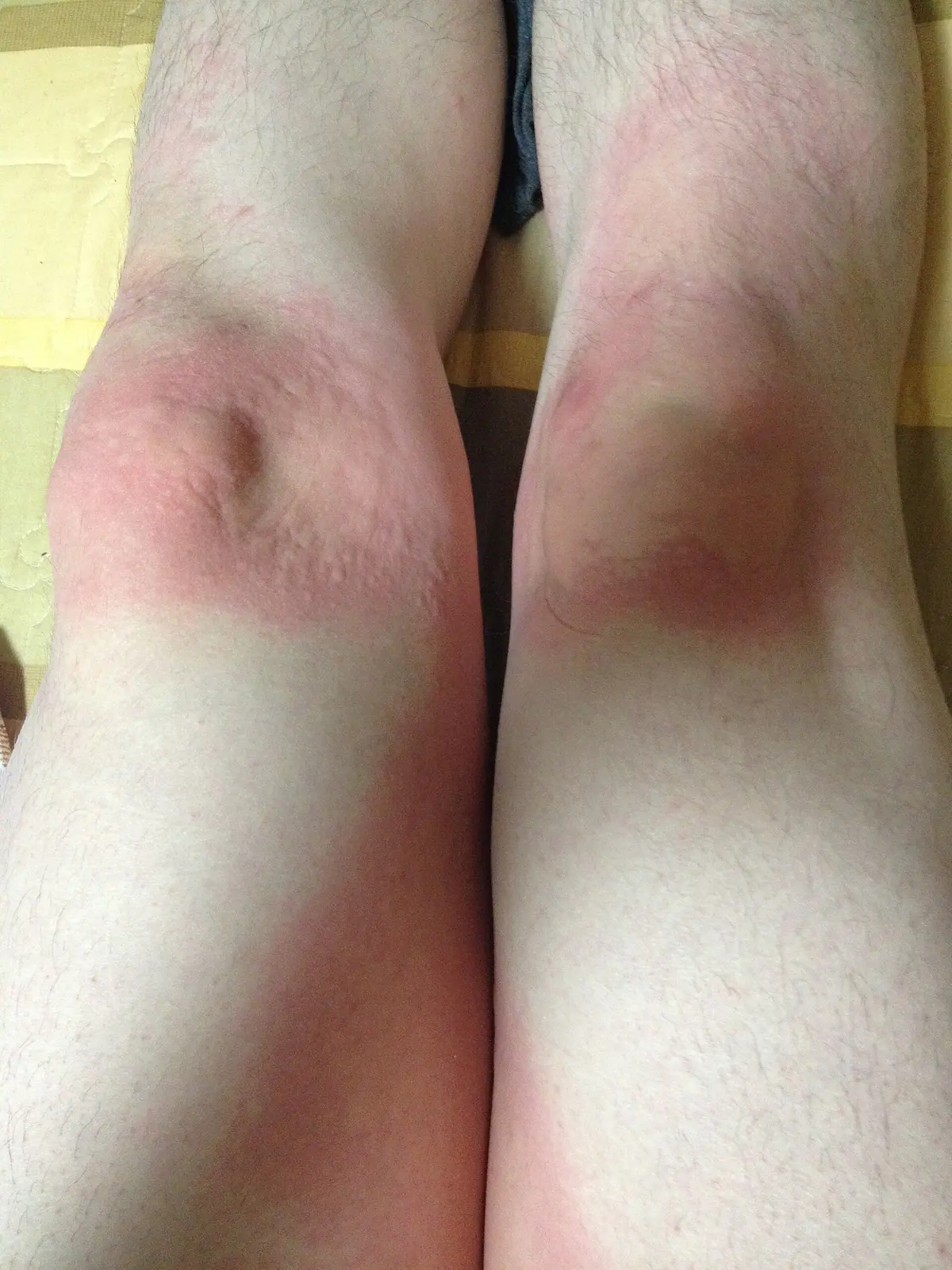
Swollen wheals, shifting patterns, short duration. Check if a single lesion remains for more than 24 hours
Photo: john (Dispolt)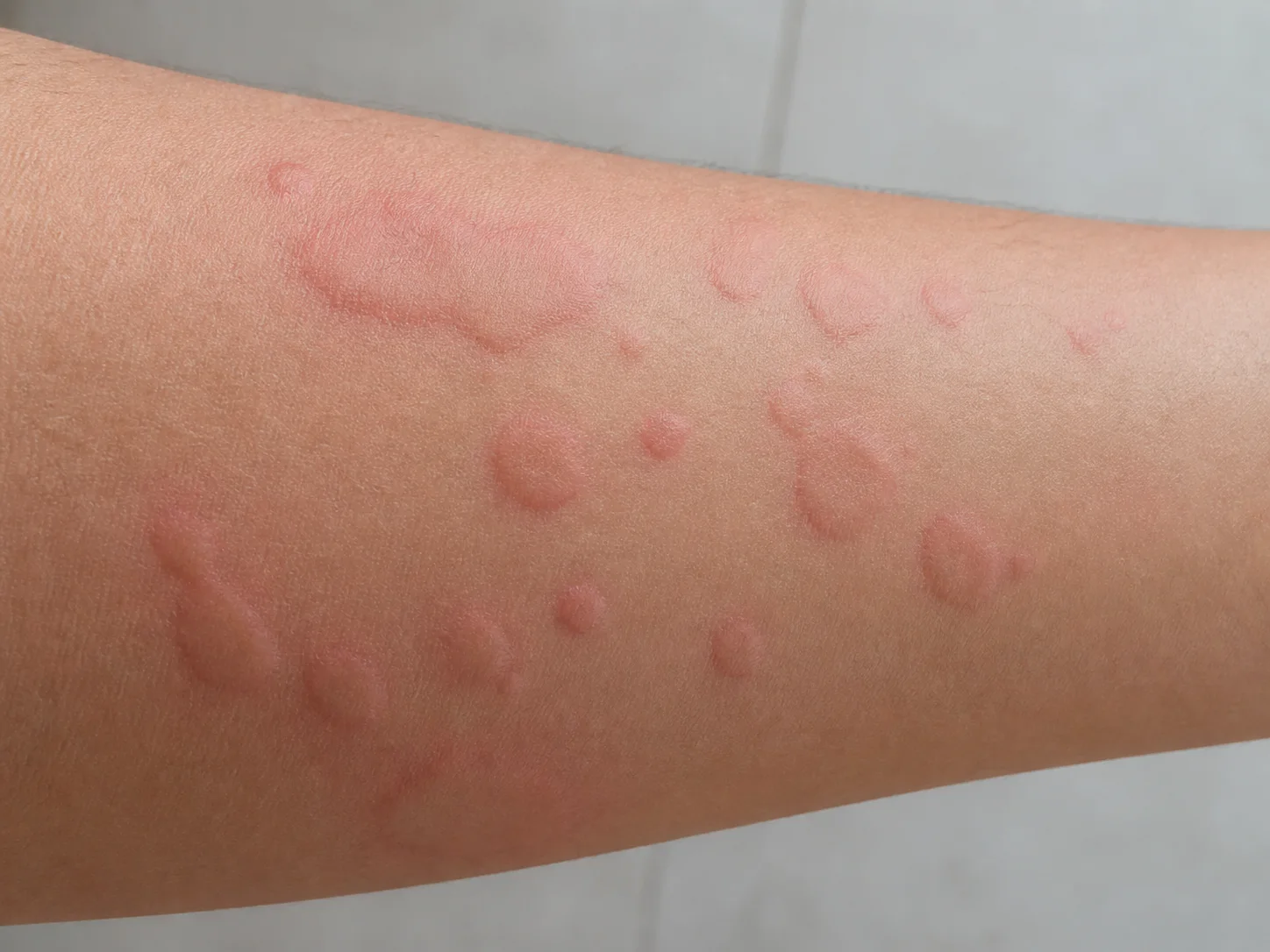
The key clue is whether the surface has almost no scaling and whether the wheals rise smoothly and then shift location. Please record whether the same lesion remains after several hours, along with the time the photo was taken.
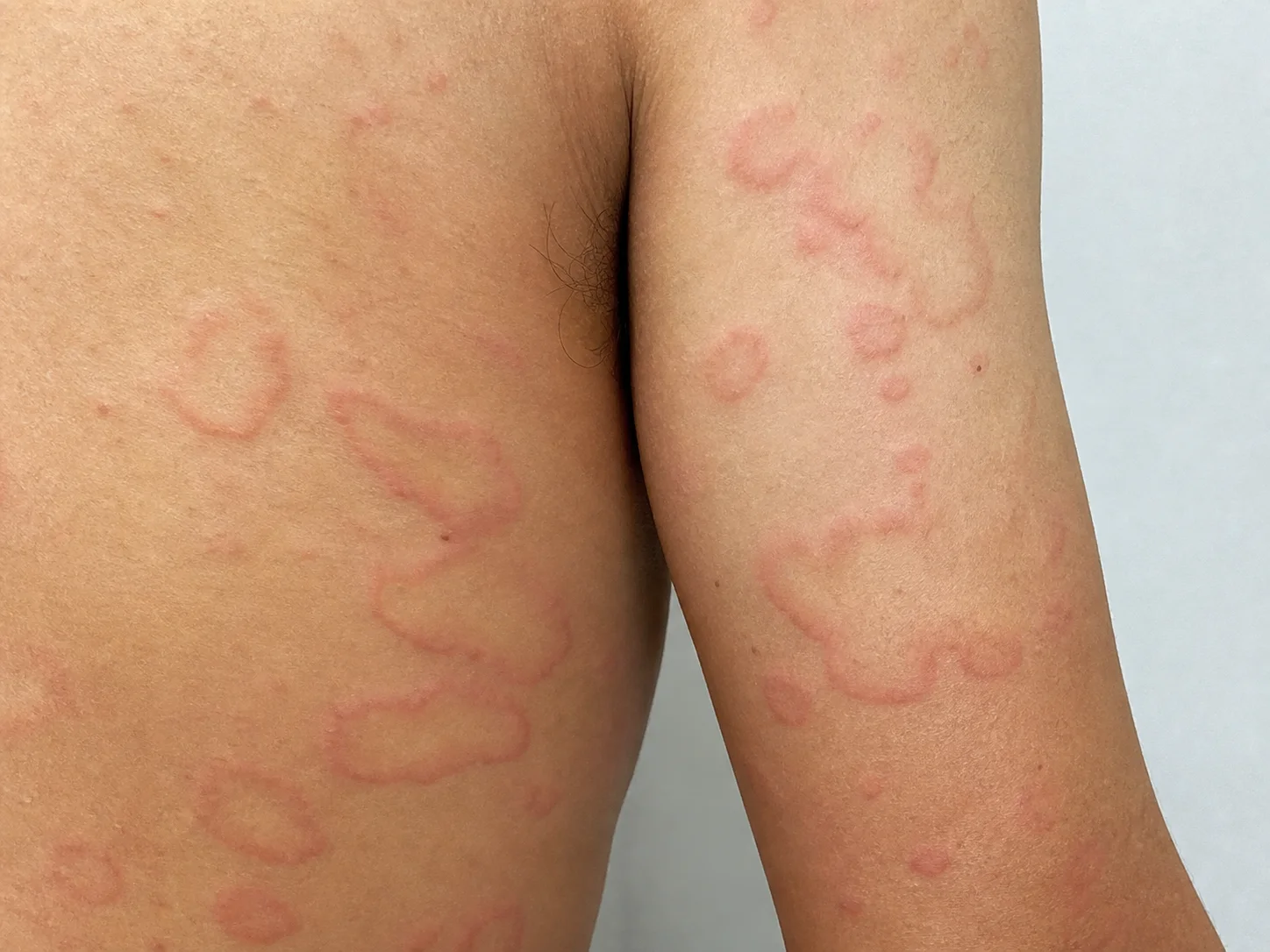
Chronic urticaria is difficult to diagnose with a single photo. Please provide information on whether it has recurred for over 6 weeks, the time the rash appeared and disappeared, and whether the lips or eyelids were swollen.
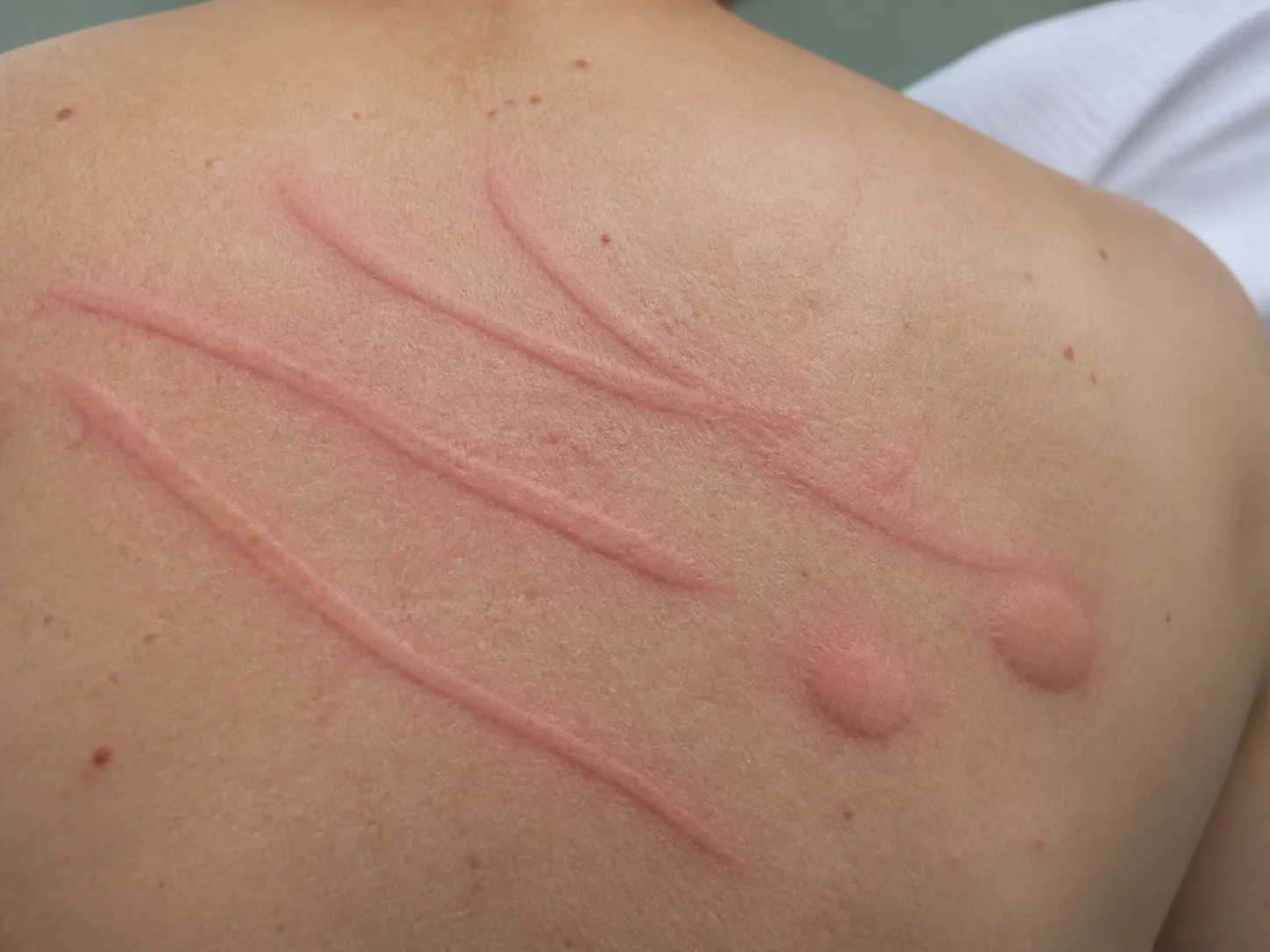
Hives do not only appear as round rashes; they can also rise in linear patterns following friction or pressure. A key clue is how quickly the swelling disappears without leaving any surface scaling or wounds.
| Points to check | Hives | Eczema |
|---|---|---|
| Duration of a single lesion | May fade within tens of minutes to a day and appear in other areas | Can persist in the same location for several days or more |
| Surface | Swollen wheals, may fade when pressed | Dryness, scaling, oozing, cracking |
| Common sensation | Sudden itching | Itching and stinging, repeated scratching |
| Symptoms requiring immediate medical attention | Swelling of the mouth, tongue, or throat and difficulty breathing | Rapidly spreading pain, heat sensation, or high fever |
Please take photos of the skin even after the symptoms disappear
In the case of hives, lesions may not be present at the time of the medical evaluation. It is helpful for differential diagnosis to record the time they appeared and disappeared, whether they remained in the same spot, and if the color faded when pressed, along with photos.
Daily occurrences do not always indicate a food allergy
Chronic hives are often not explained by a single specific food and may be caused by triggers such as pressure, cold, heat, or exercise. Rather than cutting out many foods without evidence, we identify the patterns and triggering conditions.
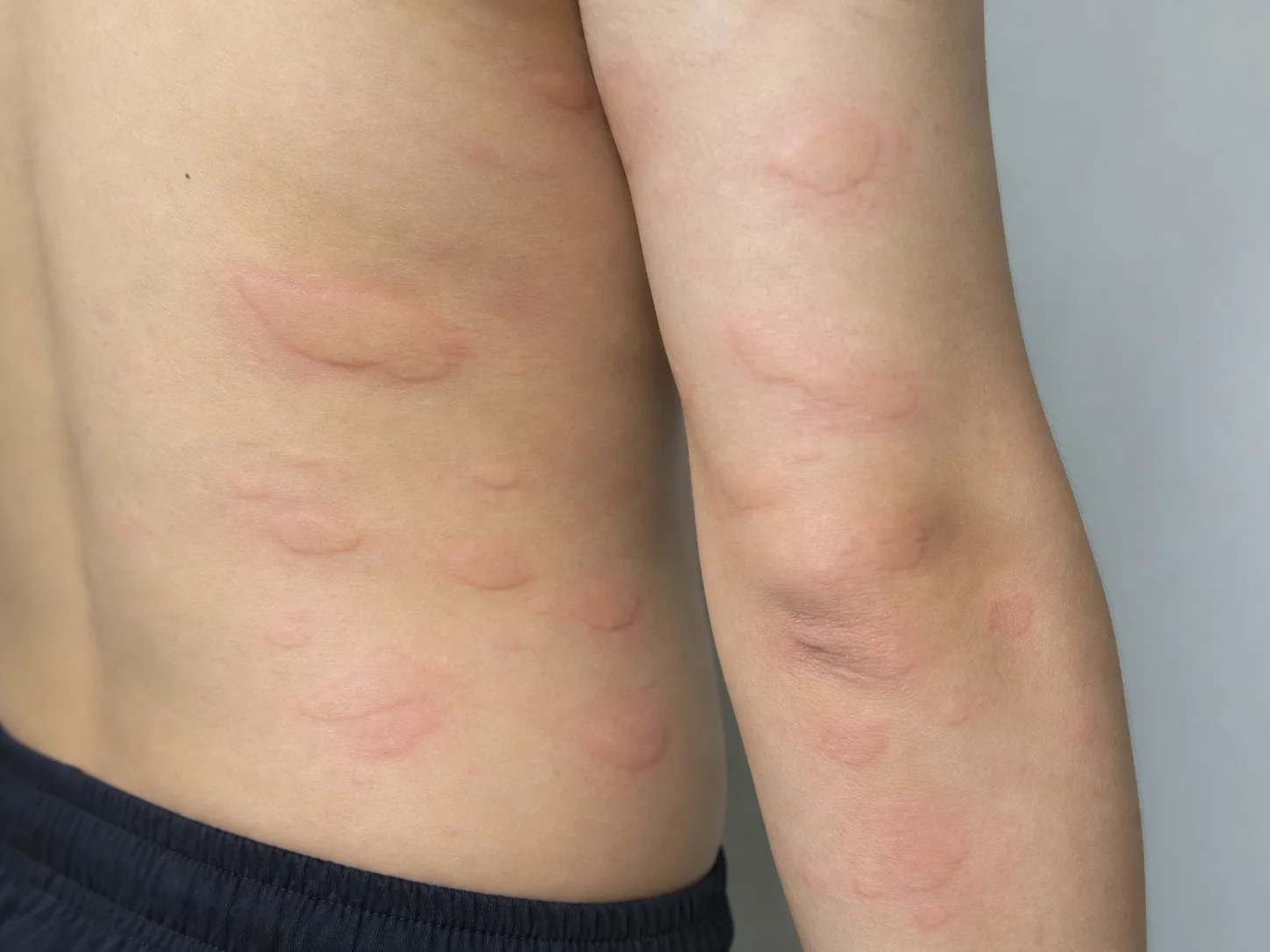
This reproduces one possible distribution of wheals seen in hives. Please check the duration of a single lesion and any respiratory or mucosal symptoms before reviewing the photos.
Do not wait for respiratory or mucosal symptoms
If you experience swelling of the lips, tongue, or throat, or have difficulty breathing or swallowing, do not wait for a Korean medicine consultation or your next outpatient appointment; seek emergency medical care immediately.
Please record photos and the time before the rash disappears
Note the time the rash appeared and disappeared in one spot, and take photos when it is swollen and after it has disappeared. Please also be sure to let us know if you have ever experienced swelling of the lips or tongue, or shortness of breath.
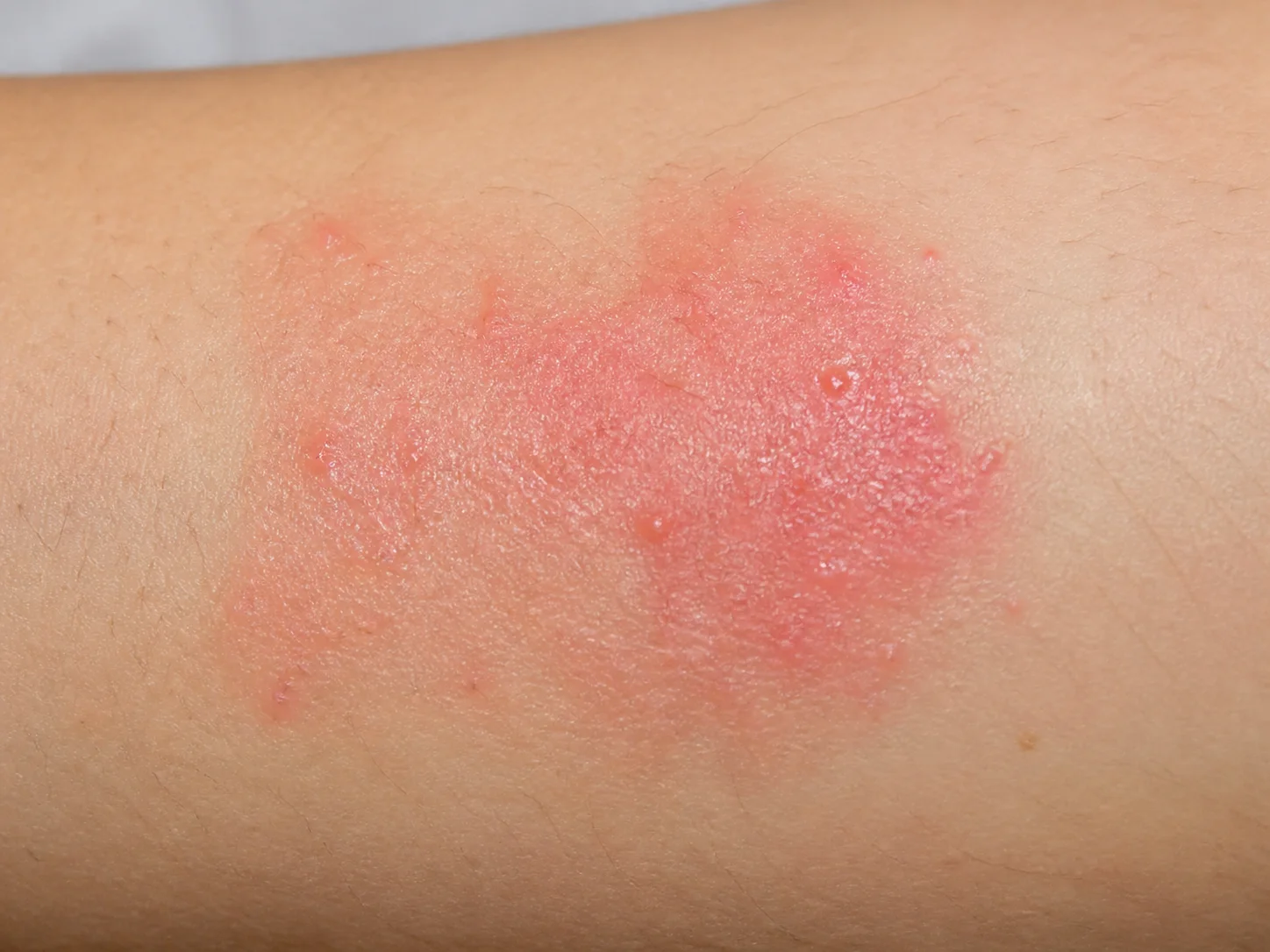
During the acute phase, not only redness but also small blisters, oozing, and peripheral scaling may be visible. If pus, heat, or pain overlap, we first check for infection.
For hives, the duration a single lesion lasts is as important a clue for diagnosing the condition as the shape seen in photos.
Next reading
Content to follow
Is it hives if it rises and disappears like a mosquito bite?
Why is it important to know how many hours a single skin change lasts?
How does herbal medicine treatment view hives with no clear cause?
Skin terms used in this differential guide
When herbal medicine treatment is the primary focus
We set the goals for herbal medicine treatment based on your previous treatments and when symptoms recurred
There are cases where wheals recur but the trigger is unclear, or where a burden on daily life remains even after taking antihistamines. We can examine the recurrence of triggering stimuli and systemic reactions, focusing on Korean herbal medicine treatment.
We ask where it appeared and when it worsened again
We conduct a medical interview regarding the duration of a single skin change, its relationship with heat, cold, pressure, or exercise, and accompanying changes in sleep, digestion, menstruation, and fatigue.
We check if not only the itching, but also sleep and daily life are improving
We check the days and extent of wheal occurrence, itchiness, the frequency of medication needed, and interference with sleep and activities.
We set the goals for herbal medicine treatment by identifying the problems that need to be resolved first
If there are causes that require immediate priority, such as infection or rapid worsening, those treatments come first. Subsequently, for herbal medicine treatment, we determine the primary goal of recovery by examining current discomfort, recurring patterns, sleep, digestion, and fatigue, and coordinate the sequence with necessary dermatological treatments.
While reducing aggravating factors through lifestyle management, herbal medicine treatment determines the initial target by analyzing the pattern of lesions, sleep, digestion, and fatigue through pattern identification (Byeonjeung). Necessary skin treatments are continued in accordance with the progress.
Consult about treatmentEvidence and Update Information
This content was organized by Korean medicine doctor Choi Yeon-seung and updated on 2026-08-23.
- American Academy of Dermatology, Hives diagnosis and treatment
- American Academy of Dermatology, Hives: Signs and symptomsVarious shapes, colors, and movement of wheals and symptoms of angioedema
- American Academy of Dermatology, Hives: OverviewDisappearance of a single wheal and appearance of new lesions, swelling of the face, mouth, or throat, and emergency alerts for breathing or swallowing