Itching without a distinct rash
Distinguishing Chronic Pruritus, Urticaria, and Eczema When Itching Occurs Without Visible Rashes
Even if it feels like 'there is nothing,' record the condition of the skin before scratching, the timing and area of itching, medications taken, dryness, sleep patterns, and systemic symptoms.
Click on unfamiliar terms to see their meanings immediately.
Chronic pruritus may present with dryness or scratch marks from the start, without a distinct rash. Urticaria is characterized by short-lived wheals, for eczema, surface changes that persist for several days are a key clue.
Points to check in the photos first
Even if they look similar, the dead skin, blisters, and borders may differ
We have provided both typical appearances and examples that look slightly different. Do not decide based on a single similar photo; compare how long symptoms like dead skin, wheals, comedones, or oozing have persisted in the same area.
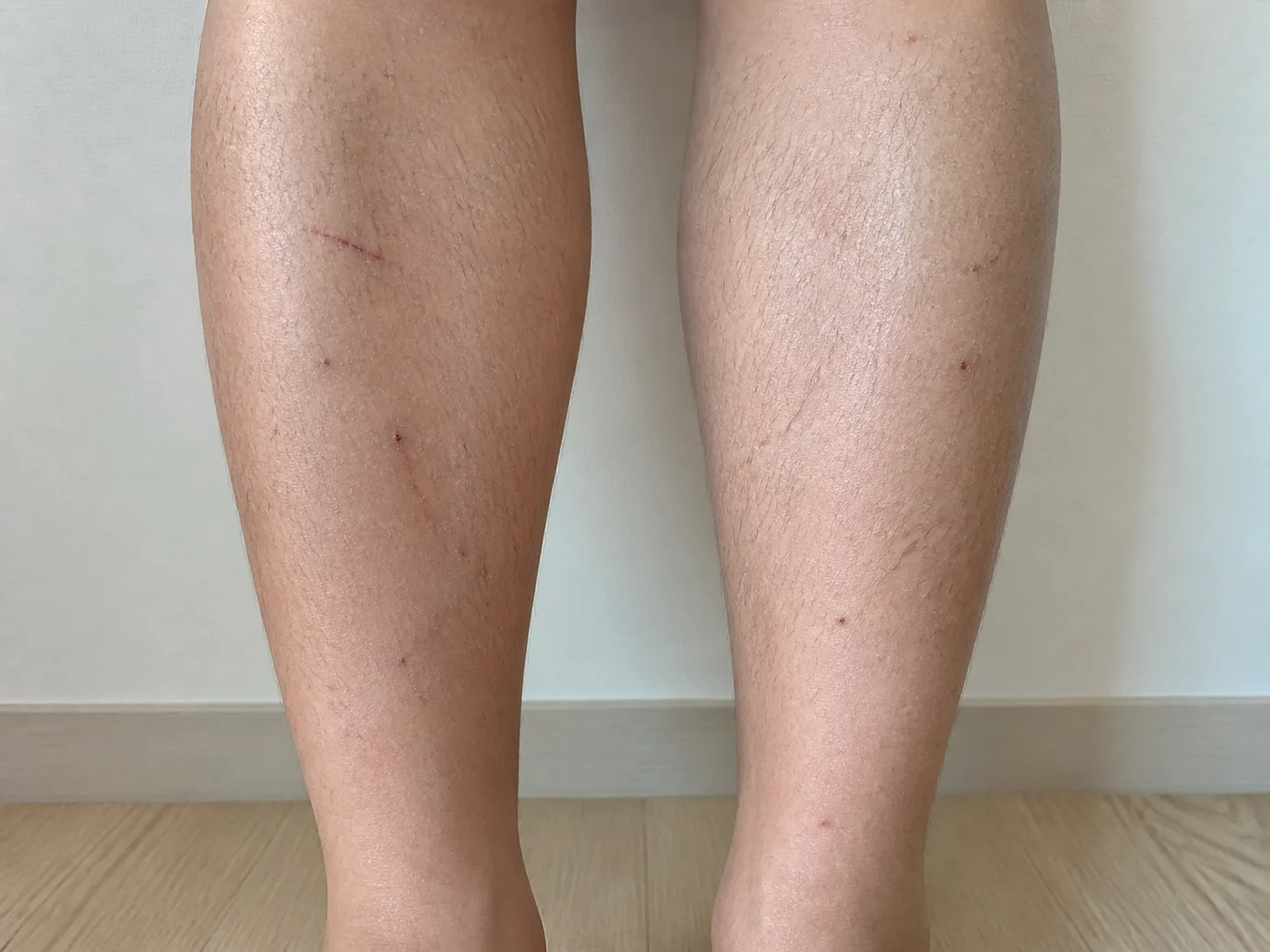
In cases of pruritus (itching), only wounds from scratching may be visible rather than the initial lesions. Please check for new medications, systemic diseases, dry environments, and the extent of nighttime itching.
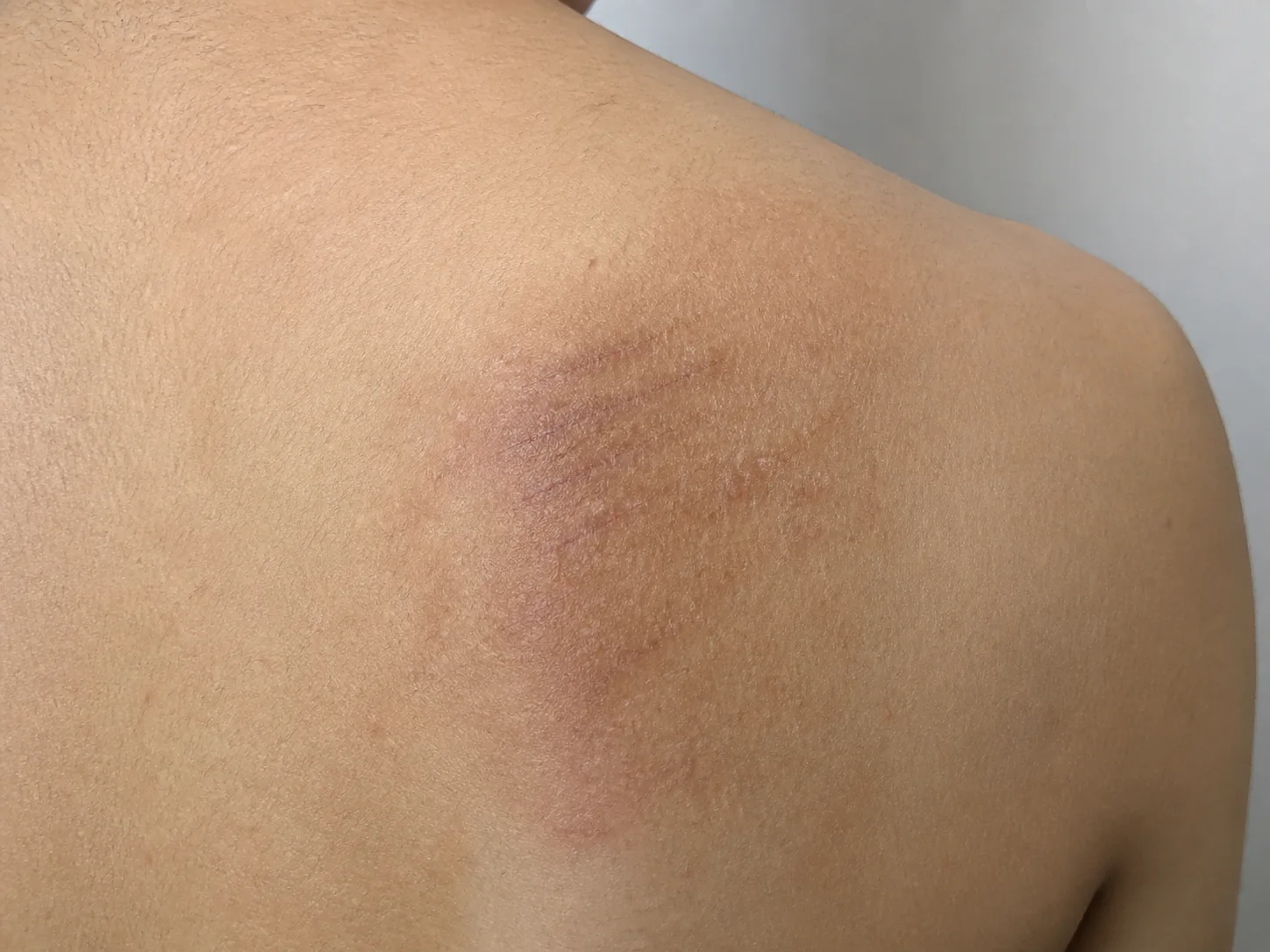
Localized itching in areas difficult to reach, such as one side of the back, is screened for both skin diseases and neurogenic pruritus. Please record any accompanying pain, numbness, and the distribution of symptoms.
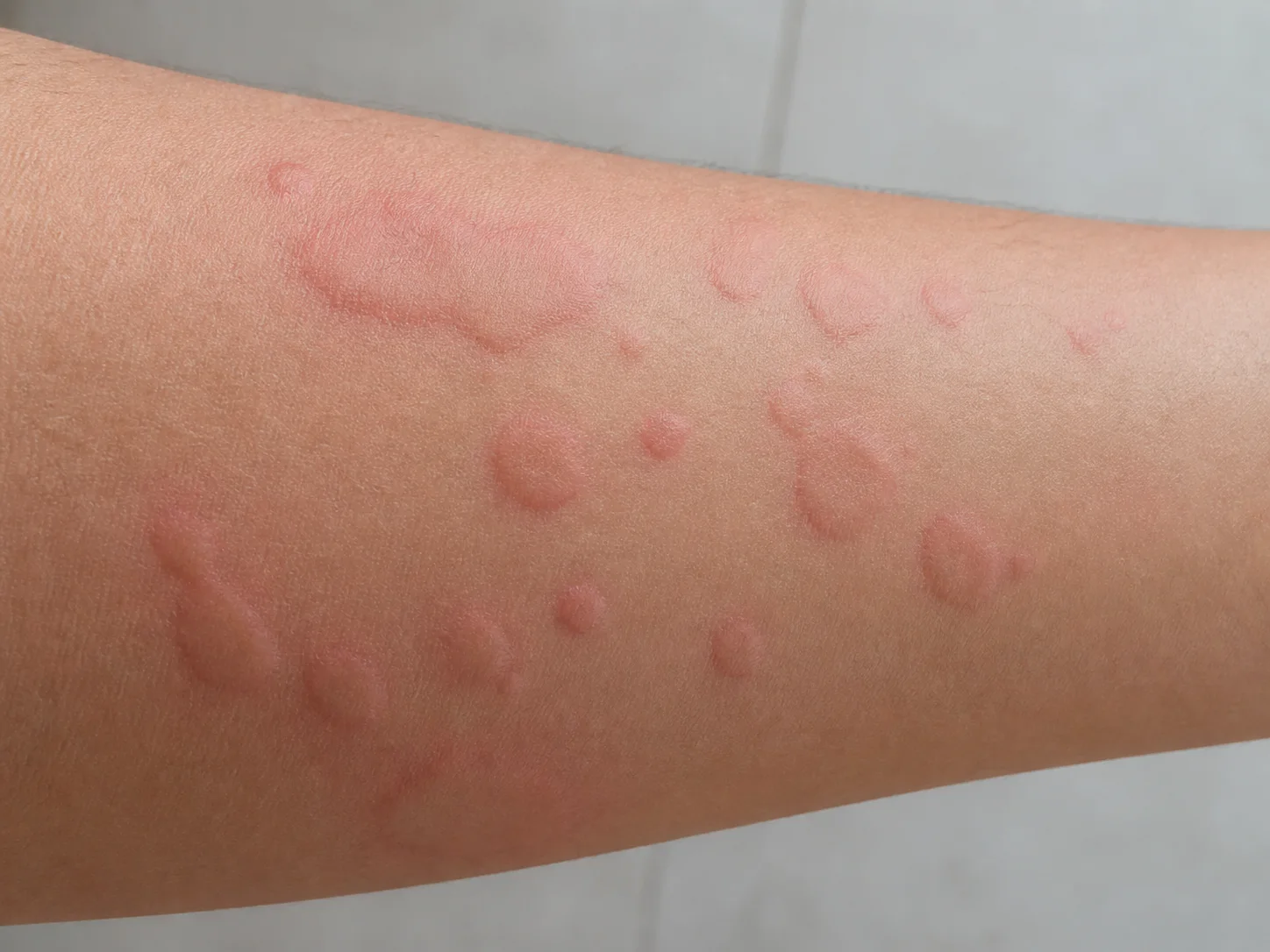
The key clue is whether the surface has almost no scaling and whether the wheals rise smoothly and then shift location. Please record whether the same lesion remains after several hours, along with the time the photo was taken.
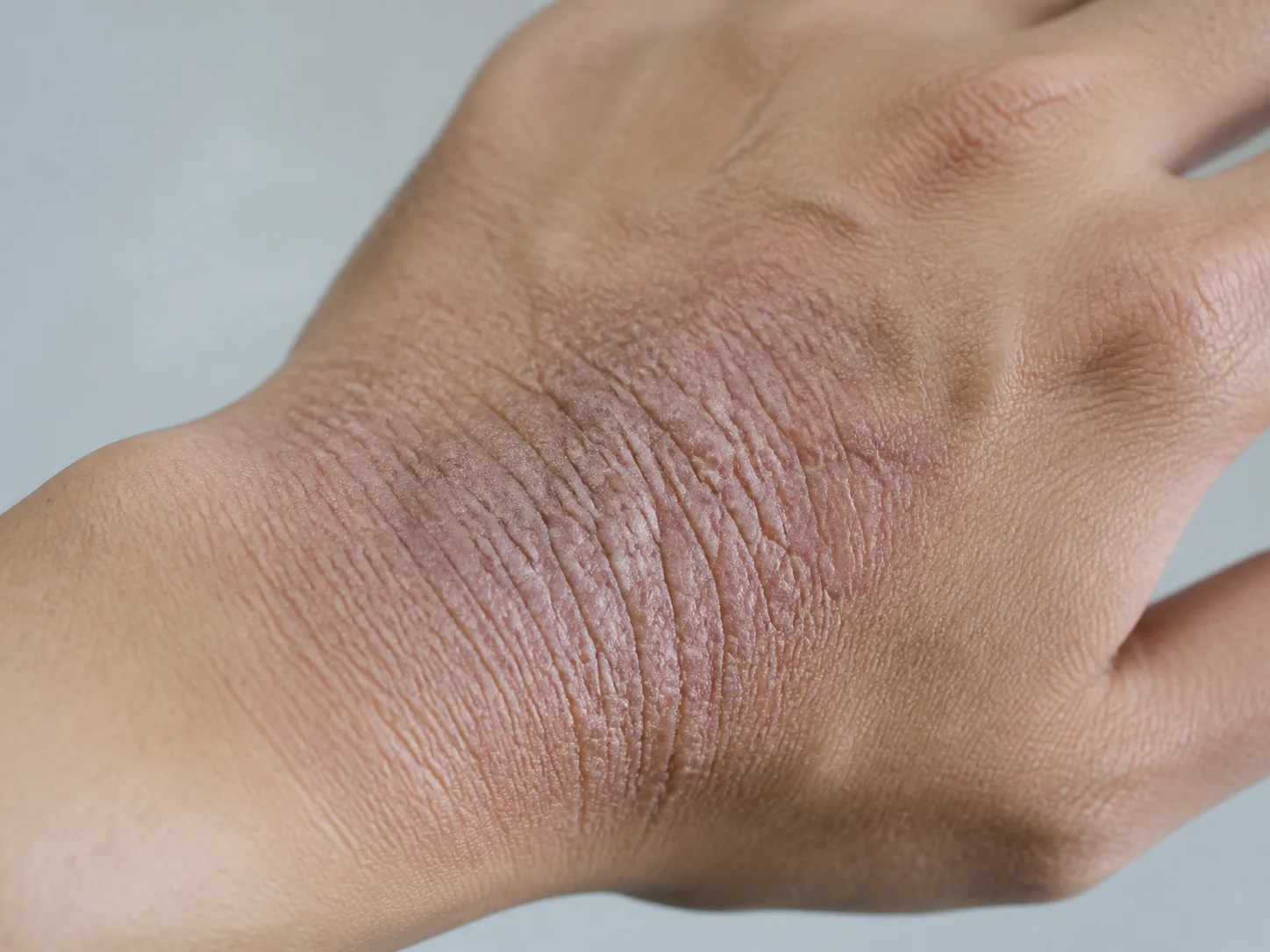
Prolonged scratching or exposure to irritants can make skin lines more prominent and leave dry cracks. Please record the affected areas along with exposure to water work, cleansers, or gloves.
| Points to check | Chronic Pruritus | Hives | Eczema |
|---|---|---|---|
| Initial appearance | Itching may occur first without distinct primary lesions | Swollen wheals appear and move to different areas | Skin changes such as redness, dryness, blisters, or oozing occur first or simultaneously |
| Remaining marks | linear scratch marks, scabs, pigmentation, and secondary lichenification | Few marks remain once a wheal disappears | Persistent flaking, cracking, scabbing, or thickening |
| Area and duration | Systemic or localized; if it lasts more than 6 weeks, the scope of the cause is expanded for evaluation | A single lesion usually fades within 24 hours | The same lesion persists for several days or more |
| Check together | New medications, liver, kidney, thyroid, blood, or neurological issues, and sleep | Pressure, heat, cold, exercise, and mucosal edema | Products, occupation, friction, infection, and skin barrier |
Check whether the itching started first or the skin changes started first
Abrasions,scabpigmentation, and thickening are itchinglikely the result of prolonged scratching rather than the cause of the itching. If possible, provide photos of the skin before scratching and describe the order in which symptoms began.
Systemic itching requires looking beyond just the skin
Check for new medications and health supplements, weight changes, night sweats, fever, jaundice, dark urine, and clues related to kidney, thyroid, diabetes, or blood disorders, and prioritize necessary tests.
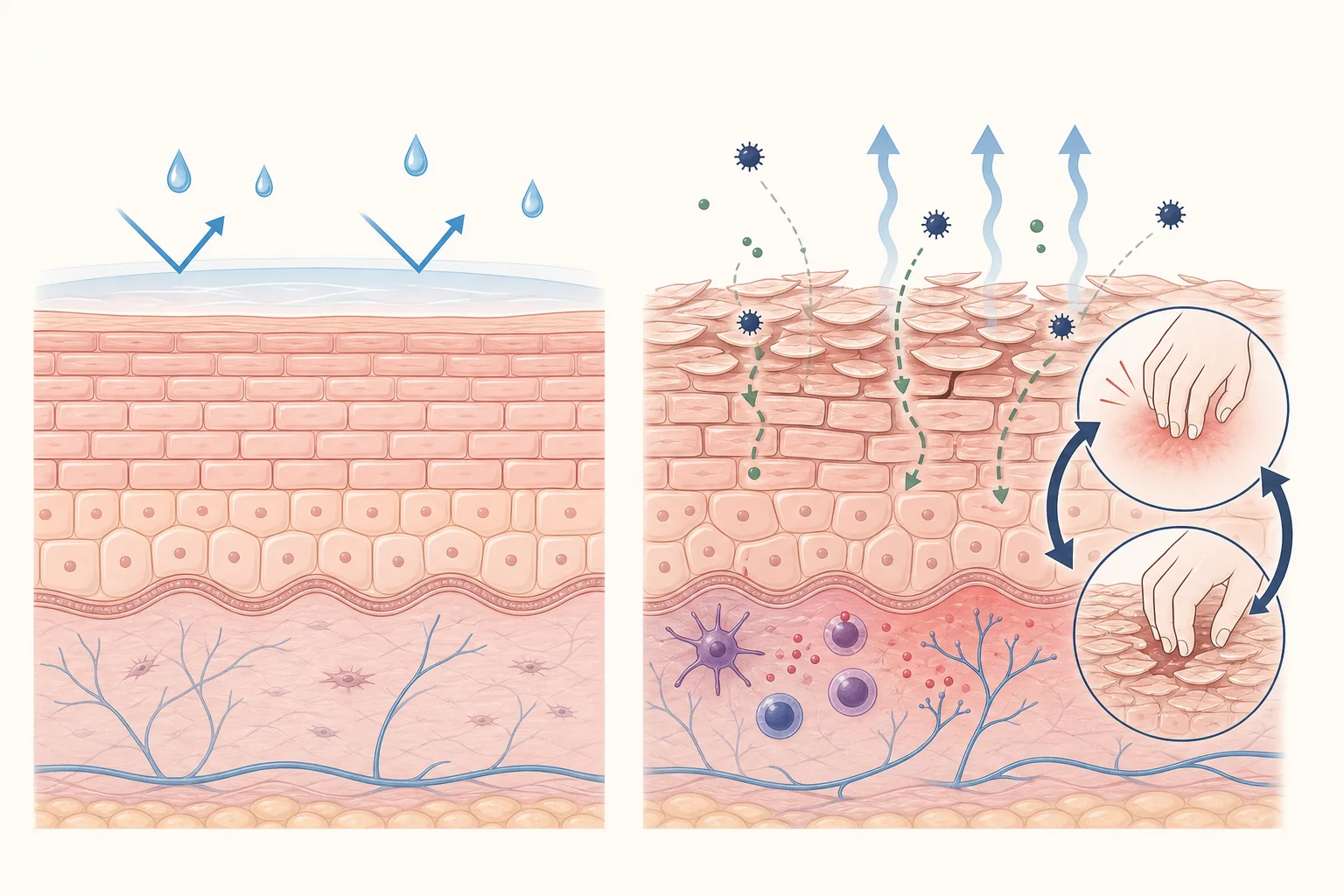
This is a simplified concept showing that when the barrier that retains moisture is disrupted, dryness and exposure to irritants increase, and itching and scratching can further damage the barrier.
Changes in sleep and daily life caused by itching must also be examined
Please note how many times you wake up, how your concentration and choice of clothing have changed, and whether the itching worsens after showering, heating, sweating, or tension. However, if you experience mucosal edema, difficulty breathing, or severe systemic symptoms, you must seek medical attention immediately.
Please provide photos of the skin before scratching and the number of times you woke up at night
Please record the area of itching, the time it started, any new medications, and changes in weight, fever, or jaundice. If your lips or tongue swell or you experience shortness of breath, seek emergency help immediately rather than waiting to organize your records.
Record the skin before scratching, the number of times you woke up at night, the area of itching, and systemic changes such as new medications, weight, fever, and jaundice.
Next reading
Content to follow
Can I receive treatment for chronic pruritus even if there is no clear rash?
What symptoms indicate that non-skin-related causes should be checked first?
How does Korean herbal medicine treatment handle itching that persists even after medical tests?
Skin terms used in this differential guide
When herbal medicine treatment is the primary focus
We set the goals for herbal medicine treatment based on your previous treatments and when symptoms recurred
Even if there is little visible rash, itching can significantly disrupt sleep and concentration. Based on a necessary evaluation of systemic causes, herbal medicine treatment can be the primary focus to address nighttime worsening and the cycle of dryness and fatigue.
We ask where it appeared and when it worsened again
We examine the itchy areas and timing, skin changes before scratching, dryness and lichenification, as well as systemic changes including sleep, bowel movements, urination, and current medications.
We check if not only the itching, but also sleep and daily life are improving
We compare the frequency of waking up during the night, scratching wounds, the duration of itch-free time, and the recovery of daily activities.
We set the goals for herbal medicine treatment by identifying the problems that need to be resolved first
If there are causes that require immediate priority, such as infection or rapid worsening, those treatments come first. Subsequently, for herbal medicine treatment, we determine the primary goal of recovery by examining current discomfort, recurring patterns, sleep, digestion, and fatigue, and coordinate the sequence with necessary dermatological treatments.
While reducing aggravating factors through lifestyle management, herbal medicine treatment determines the initial target by analyzing the pattern of lesions, sleep, digestion, and fatigue through pattern identification (Byeonjeung). Necessary skin treatments are continued in accordance with the progress.
Consult about treatmentEvidence and Update Information
This content was organized by Korean medicine doctor Choi Yeon-seung and updated on 2026-08-23.