Tinea: Start with your questions
Points to check first
Tinea: Symptoms and when to seek prompt medical evaluation
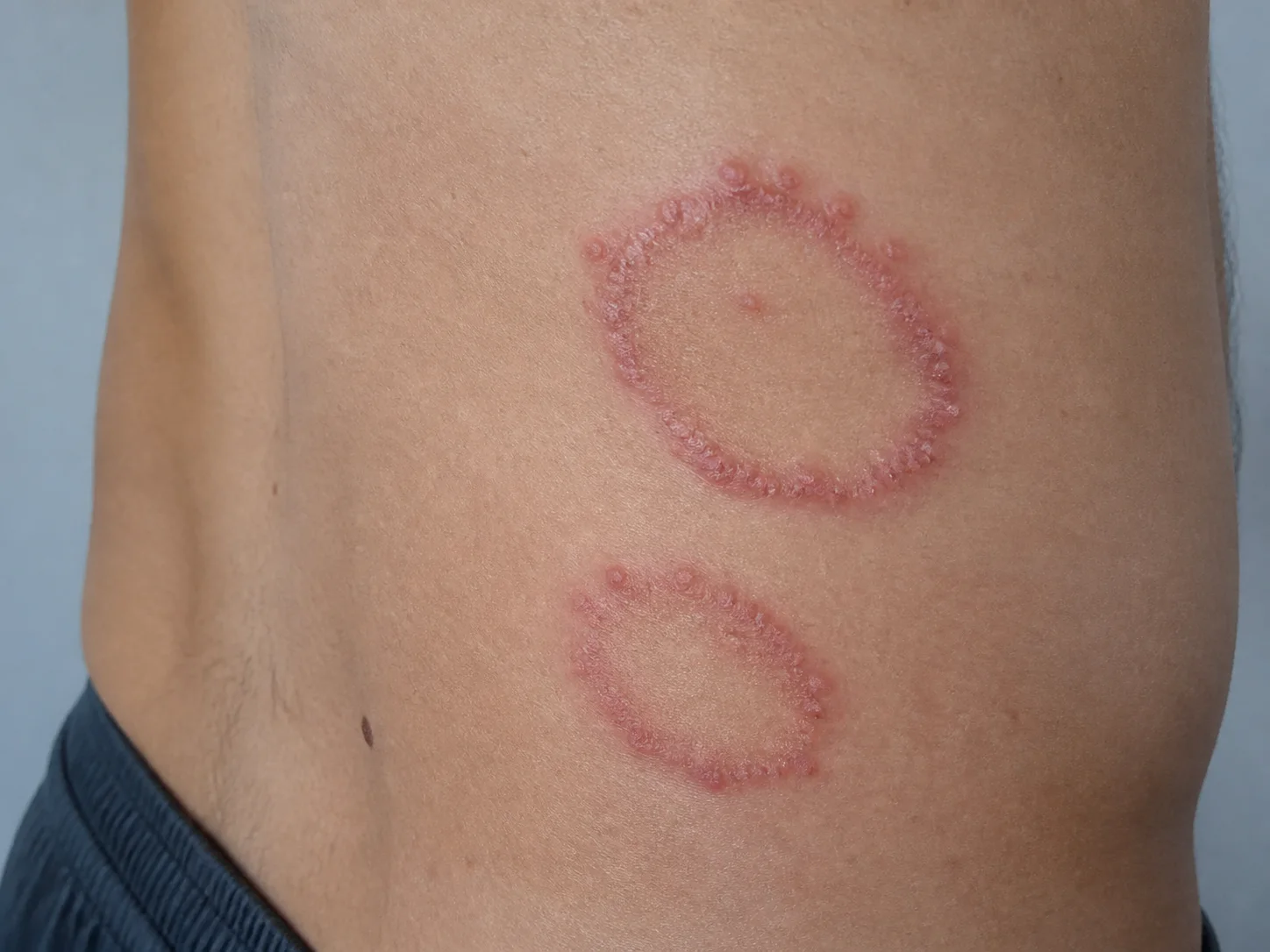
Tinea is a condition caused by dermatophytes invading the skin, scalp, feet, groin, or nails. On the skin, it commonly presents as itchy circular or ring-shaped rashes with more prominent, scaly edges. Depending on skin tone, it may appear red or darker, such as brown or gray, and may not form a typical ring on the face, neck, or scalp. It can cause scaling, broken hair, or partial hair loss on the scalp; white, soggy, or cracked skin between the toes; itchy bordered rashes in the groin; and thickening, discoloration, or brittleness of the nails. As it resembles other skin conditions, do not confirm a diagnosis based on appearance alone; seek medical evaluation if it spreads rapidly or is accompanied by pain, pus, or fever.
Symptoms by area
Check the skin appearance and whether it occurred on the scalp, feet, groin, or nails
Rather than judging by the round shape alone, we observe changes in the skin, hair, and nails, as well as the speed of spreading.
| Area | Commonly observed changes | Next action |
|---|---|---|
| Torso, arms, and legs | Itchy circular or ring-shaped scaly rash | Record photos and spreading borders |
| Face and neck | Scales or color changes with indistinct borders | Differentiate from other skin diseases |
| Scalp | Scales, broken hair, or partial hair loss | Prompt dermatology evaluation |
| Feet and groin | Cracking between toes or itchy bordered rash | Check for simultaneous symptoms in other areas |
| Fingernails and toenails | Thickening, discoloration, or crumbling | Other causes such as injury and tests |
| Rapid spread, pain, pus, fever | Severe inflammation, possibility of secondary infection | Prompt medical evaluation |
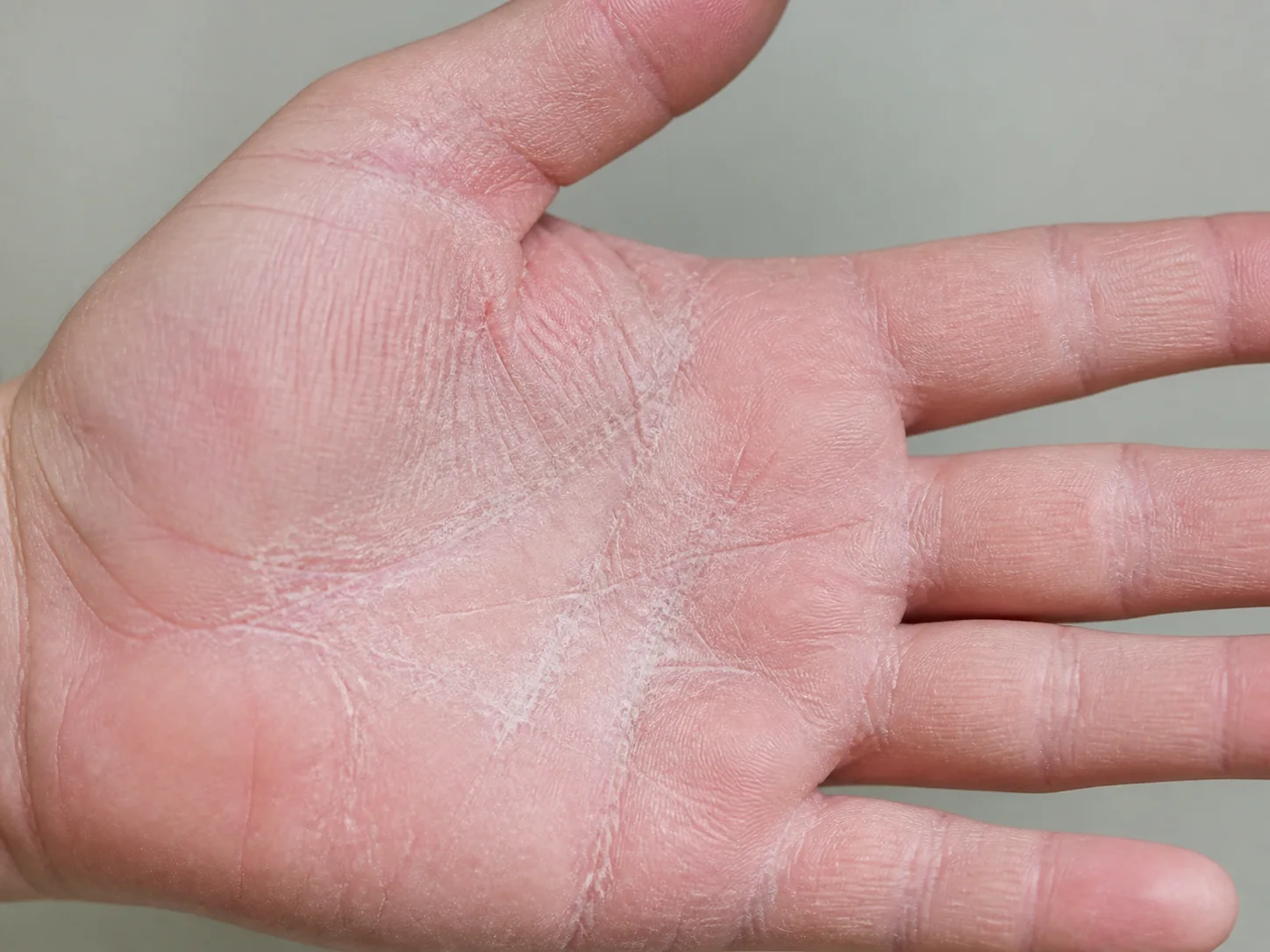
Tinea manuum can appear as fine scaling that is more severe on one hand, which can be confused with hand eczema. We consider accompanying athlete's foot and fungal tests together.
Actual clinical photos and educational close-up examples are materials for comparing possible patterns and cannot be used for diagnosis alone. Mechanism diagrams have simplified complex processes.If these discomforts have recurred
For those worried whether a circular rash is tinea or another type of dermatitis
Tinea is an infectious skin disease where antifungal treatment is key. After confirming the fungal test and the location of skin changes, antifungal treatment is continued; in recurring cases, Korean herbal medicine treatment addresses sweat, moisture,skin barrierdigestion, and recovery conditions together.
For those who notice the edges of a round rash on the arm are redder and itchier in the morning
When the diagnosis is unclear despite alternating between eczema and athlete's foot treatments
For those whose child has scales on the scalp and empty patches where hair has broken off
When the condition recurs in the same environment even after appropriate antifungal treatment
For those whose skin between the toes is white, soggy, and cracked, or whose toenail color has changed
When daily management is difficult due to sweat on hands and feet, soreness, or barrier damage
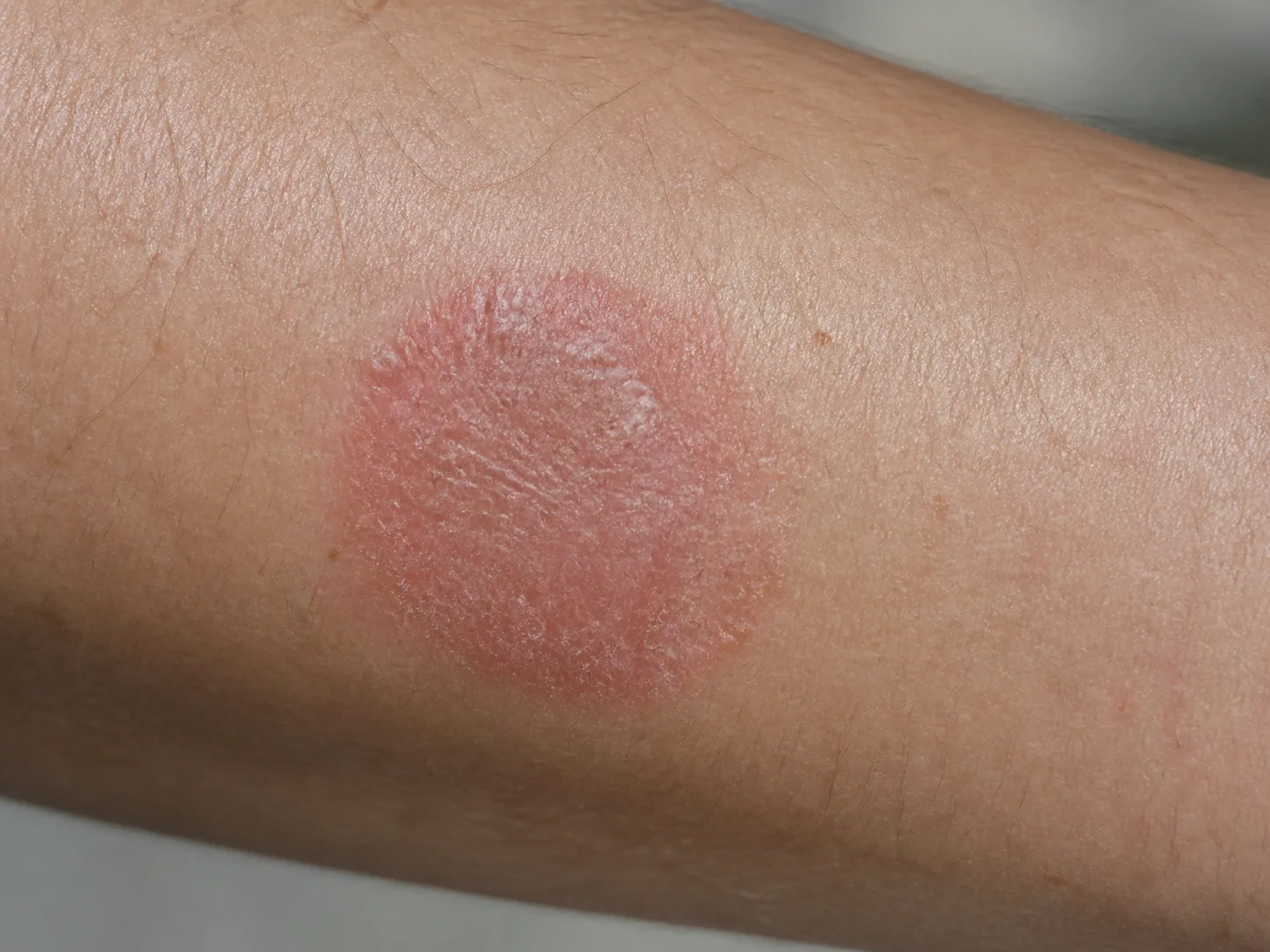
Eczema can also appear round, which may be confused with tinea or psoriasis. We examine whether the center fades, whether the keratin on the edges is prominent, and whether there has been oozing and a recurring course, along with information beyond the photos.
Points to distinguish first
Tinea, how to distinguish it from similar-looking skin diseases
We examine the borders, scales, and differences in skin color together
Not only whether it is circular scales· We check for itching, the borders, and the rate of change shown in the photos.
We also examine the scalp, feet, groin, and fingernails/toenails
We determine the priority for tests and medical evaluation by checking changes in hair, skin folds, and nails.
Screening for spreading, pain, pus, and fever
For symptoms where severe inflammation or secondary infection is suspected, we postpone the herbal medicine consultation and refer you for dermatology or medical evaluation.
Why does it keep getting worse?
Reasons why tinea (ringworm) persists or recurs
First, we distinguish it from nummular eczema and psoriasis
We check for the active edges of the ring, athlete's foot on one hand or foot, nail changes, and perform fungal tests if necessary.
Do not skip infection treatment
We review the type, duration, and application area of antifungal agents, as well as re-exposure through family members, pets, or shared items.
We examine recurring moisture and skin recovery together
We work to reduce conditions that weaken the skin, such as sweat, shoes, gloves, friction, digestion issues, and fatigue.
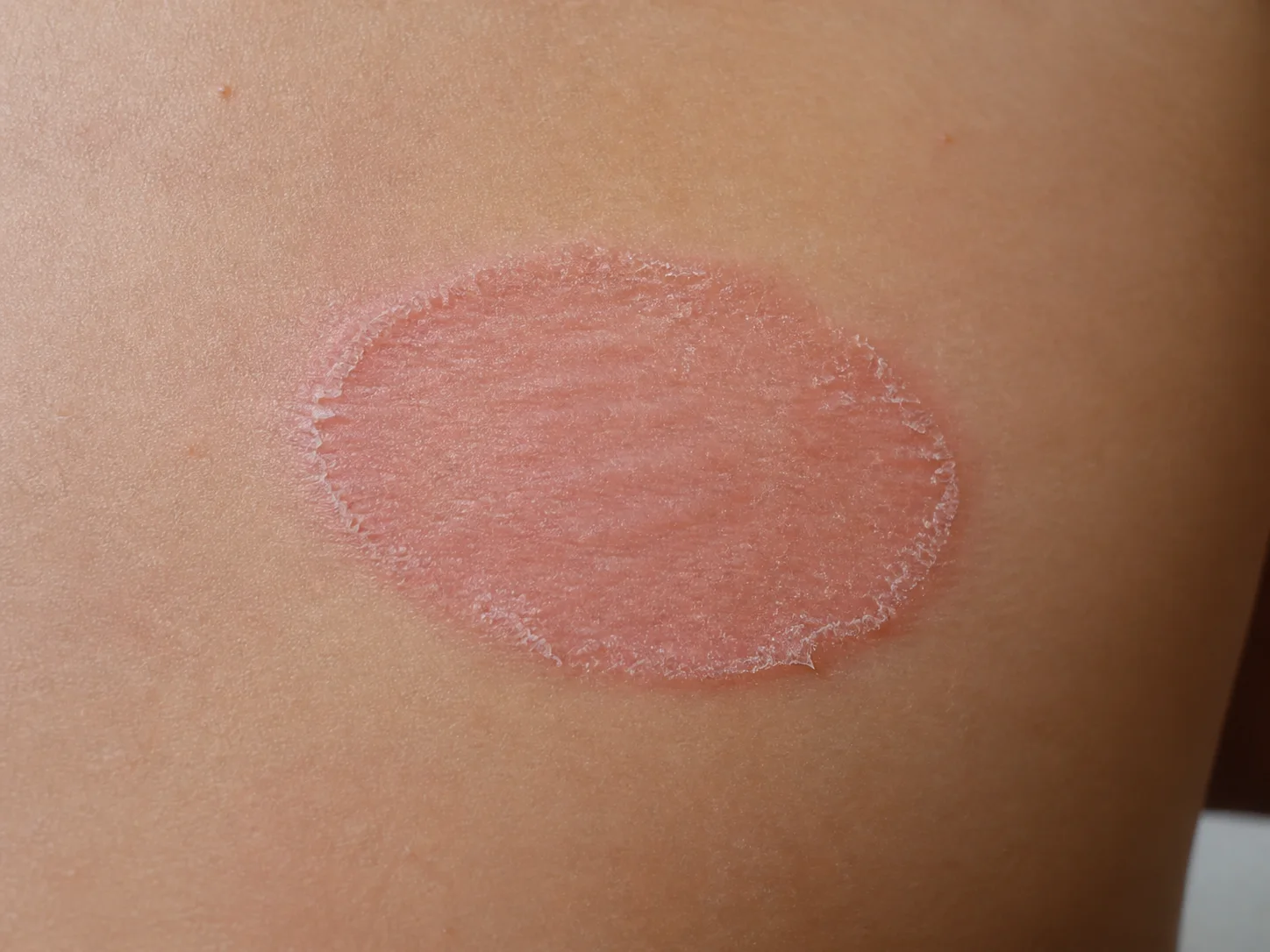
The progression where a large herald patch appears a few days before other spots serves as a clue. Please record the order in which they first appeared rather than providing a single photo.
Things to prepare before your visit
What photos and records should I prepare before the medical evaluation?
Please prepare photos of the rash, the start date, affected area, spreading, itching· pain, pus, changes in hair or nails, and contact with family, pets, or shared items.
A ring shape with a prominent border is common
The outer border of the rash may be redder, darker, and scaly, while the center may appear relatively pale.
It may be itchy, dry, or swollen
Itching, dryness, scaling, and mild swelling may occur together, so we also check for scratch marks.
Color and shape vary depending on skin tone
It may appear darker than the surrounding area, not only red but also brown or gray, and may not form a typical ring on the face or neck.
Changes to monitor during treatment
What changes should I monitor during treatment?
Photos showing the border and center, and fungal test results
Please record when it started and how it has changed, including the dates. To make it easier to compare before and after, take photos of the same area from a similar distance and under similar lighting.
Name, duration, and application area of antifungal agents
Please leave a brief note. Compare not only the visible changes but also whether your sleep, pain, and daily life have become less uncomfortable.
Feet, nails, family, pets, and sweat/shoe environment
Please also include the dates of any medications, ointments, or procedures you are currently using. This makes it easier to compare what led to improvement or worsening.
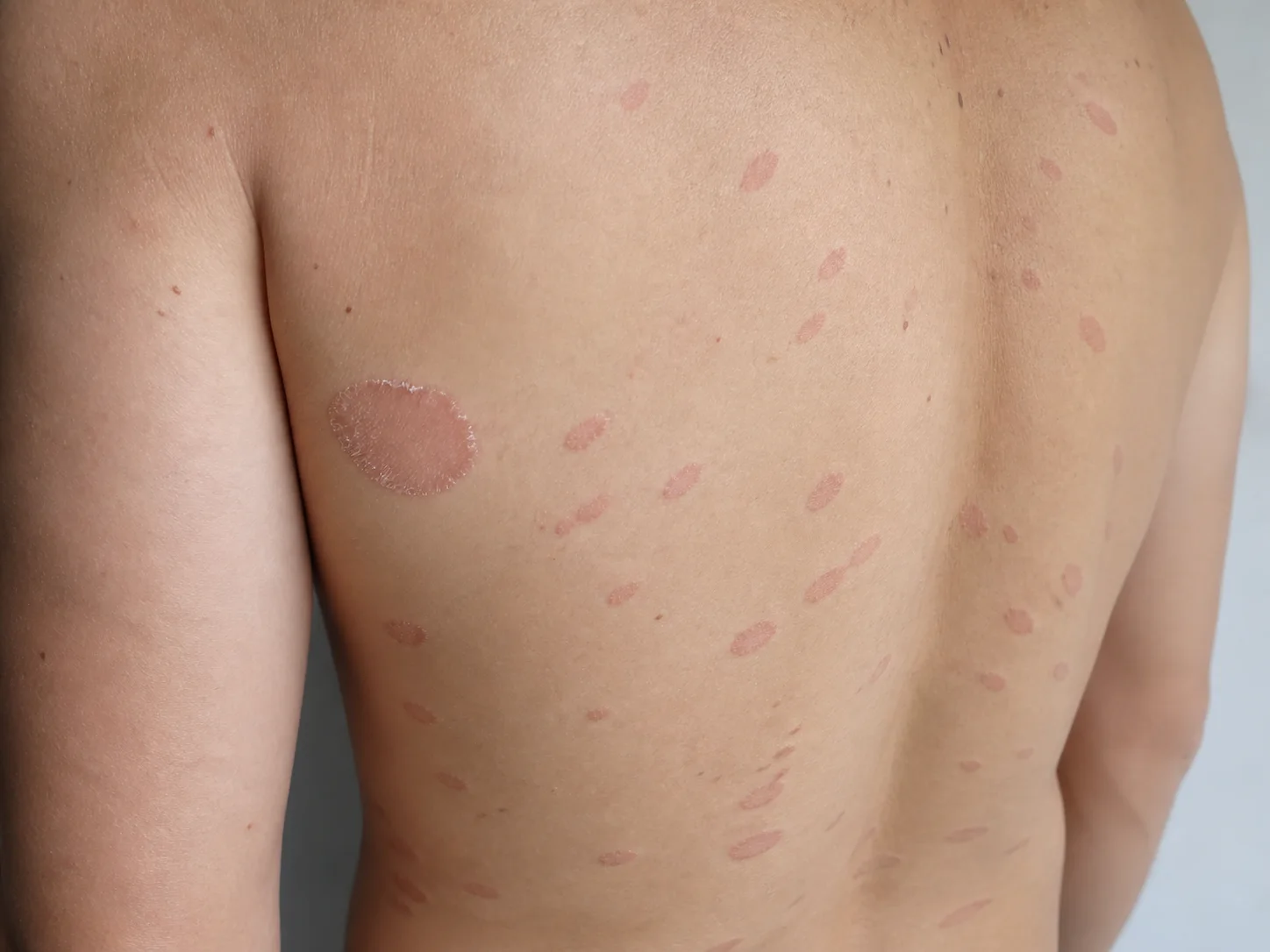
In pityriasis rosea, oval spots may spread along the skin lines of the torso. Since it can look similar to tinea, drug eruptions, or psoriasis, we also examine the order in which the spots appeared.
When planning herbal medicine treatment
Tinea: Determining the direction of herbal medicine treatment based on current prominent symptoms
We first confirm the presence of a fungal infection and maintain necessary antifungal treatment. Herbal medicine treatment is categorized into four types, excessive sweating and redness, moist and oozing, dry and cracked with a weakened barrier, and slow recovery following fatigue or underlying conditions, to address both the recurring conditions and skin recovery.
Pattern identification (Byeon-jeung) in Korean medicine is not about giving a different name to a disease. Multiple patterns can overlap in one person, and as the skin changes, for example, as oozing and heat decrease and dryness or cracking remain, the prescription is adjusted accordingly.
When the edges expand, becoming red and itchy
- Primary skin observations
- We examine the active scaling and redness of the ring, the expansion of the area, pus, and pain.
- Overall body condition to check alongside skin
- We ask about worsening after sweating, heat, or alcohol consumption, as well as feelings of heaviness or bloating in the body.
- Primary considerations for herbal medicine prescription
- Along with antifungal treatment, the focus is on reducing damp-heat and the burden of itching.
When the areas between toes become white, swollen, and moist
- Primary skin observations
- We look for symptoms suggesting maceration, fissures, odor, and secondary infection.
- Overall body condition to check alongside skin
- We check for coldness in the feet, loose stools, and prolonged exposure to moisture.
- Primary considerations for herbal medicine prescription
- The goal is to reduce moisture and support the spleen, stomach, and fluid metabolism without excessively drying the skin.
When hands and feet are dry, cracked, and the condition recurs
- Primary skin observations
- We examine fine scaling, cracks, scratch marks, and differences between one side or both sides.
- Overall body condition to check alongside skin
- We ask about skin dryness, fatigue, lack of sleep, and frequent exposure to cleansing agents.
- Primary considerations for herbal medicine prescription
- Along with infection treatment, we provide support for nourishing the blood and moisturizing the skin to aid barrier recovery.
When healing is slow despite treatment and recurrence is frequent
- Primary skin observations
- We examine the wide range of the affected area, involvement of nails, and delayed wound healing.
- Overall body condition to check alongside skin
- We check for chronic fatigue, underlying conditions, medications, appetite, and sleep.
- Primary considerations for herbal medicine prescription
- We first identify underlying risks and focus on recovering Qi and immunity, along with correcting the living environment.
How is the herbal medicine prescription adjusted?
- Fungal infection and the affected area are confirmed first
If necessary, we perform fungal testing and check for fingernail and toenail involvement, scalp involvement, and secondary infection.
- The foundation of treatment is antifungal therapy and blocking re-exposure.
We review the duration and area of medication use, as well as the environment regarding shoes, towels, and pets.
- Pattern identification (Byeonjeung) is added only in cases of recurrence.
We monitor whether sweat, moisture, skin barrier issues, and fatigue decrease, and if the interval between recurrences in the same area increases.
When should I consider Korean herbal medicine treatment?
- When the diagnosis is unclear despite alternating between eczema and athlete's foot treatments
- When the condition recurs in the same environment even after appropriate antifungal treatment
- When daily management is difficult due to sweat, soreness, or skin barrier damage on the hands and feet
What will be asked during the medical evaluation?
- Photos showing the edges and center, and fungal test results
- Name, duration, and application area of the antifungal agent
- Sweat and shoe environment, and status of feet, nails, family members, and pets
Things to prepare before the consultationPlease prepare photos of the rash, the start date, affected area, spread, itching, pain, pus, changes in hair or nails, and contact with family, pets, or shared items.
If pus, pain, or redness spreads rapidly, or if you have a fever, lesions inside the eyes or mouth, shortness of breath, or sudden facial swelling, please visit a dermatology clinic or seek emergency care first. After confirming that such urgent situations are not present, Baekrokdam provides herbal medicine treatment for chronic and recurring skin diseases.
Consult about tinea progressFrequently Asked Questions
Frequently Asked Questions about Tinea
What does a tinea rash look like?
Circular or ring-shaped rashes with more prominent edges and scaling are common, but depending on skin tone and location, they may appear brown or gray, or the ring may be indistinct.
What are the symptoms of tinea capitis (scalp ringworm)?
Scalp scaling, itching, and patchy hair loss where hair has broken off may occur. Please seek prompt medical evaluation to distinguish it from other scalp conditions.
Is all nail discoloration caused by tinea?
No. Trauma and other conditions can also cause thickening and discoloration, so it is best to confirm through a specimen test.
What causes tinea?
It occurs when dermatophytes infect the skin, scalp, feet, groin, or nails.
Can it be transmitted from pets?
It can be transmitted through direct contact with an infected animal; if your pet has patches of hair loss or scaling, a veterinary check-up is necessary.
Can it be transmitted in the shower room?
Damp public floors and contaminated items such as towels, clothes, bedding, and combs can act as mediums for transmission.
What tests are used to confirm tinea (ringworm)?
The shape and location of skin changes are examined, and if necessary, fungi are identified using samples from the skin, hair, or nails.
References and update date
Doctor of Korean Medicine Choi Yeon-seung verified the content based on the official and professional materials below and updated it on 2026-08-23.
- NHS, RingwormCircular rashes, scaling, dryness, edema, and itching depending on skin color and area, as well as symptoms on the scalp and groin
- CDC, Clinical Overview of RingwormCircular scaling rashes from dermatophyte infection, involvement of the scalp, feet, groin, and nails, and the need for testing
- AAD, Ringworm diagnosis and treatmentConfirmation of skin, hair, and nail samples and selection of treatment by area
- CDC, Treatment of RingwormTopical and oral antifungals by area, completion of treatment, prohibition of steroids, and criteria for non-responsiveness
- CDC, Treating Fungal Diseases with AntifungalsCompliance with antifungal forms and instructions, and consultation on long-term treatment, side effects, and non-responsiveness