Facial rash after ointment use
Distinguishing Rosacea-like Dermatitis, Perioral Dermatitis, Tinea, and Contact Irritation When the Face Becomes Redder After Using Ointment
Before concluding it is 'Topical Steroid Withdrawal (TSW)' ointment name, potency, duration, area, and initial Lesion Obtain photos.
Click on unfamiliar terms to see their meanings immediately.
If the face becomes redder and feels hotter when you pause the use of ointment after it had previously subsided, it may be a recurrence of the original condition, Steroid induced rosacea-like dermatitis, perioral dermatitis, tinea incognito (fungal infection with blurred borders), or other possibilities.
Points to check in the photos first
Even if they look similar, the dead skin, blisters, and borders may differ
We have provided both typical appearances and examples that look slightly different. Do not decide based on a single similar photo; compare how long symptoms like dead skin, wheals, comedones, or oozing have persisted in the same area.
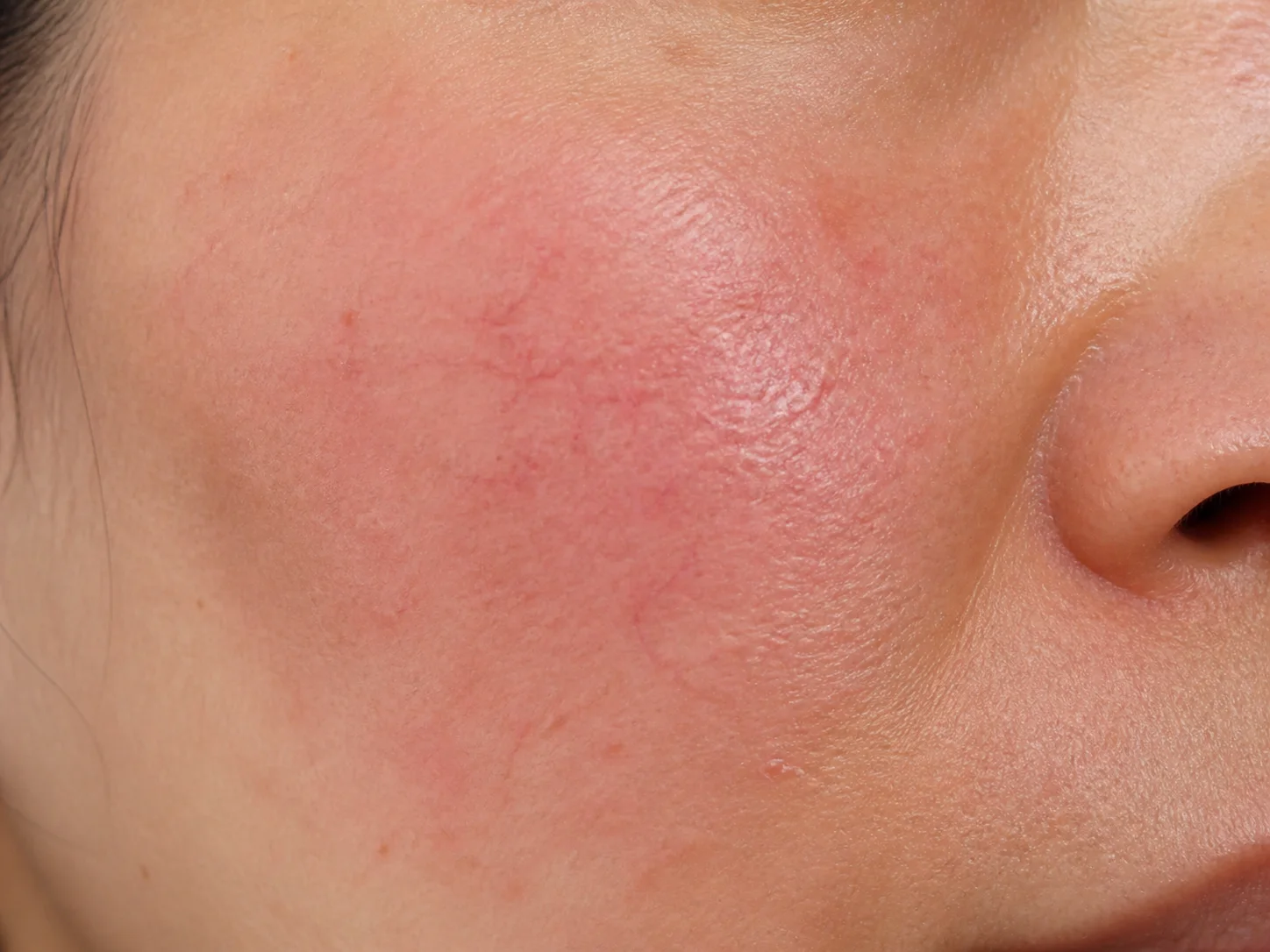
Redness in the center of the face and fine blood vessels that remain even when not triggered are different clues from temporary flushing. We check for rosacea along with papules, scaling, and eye symptoms.
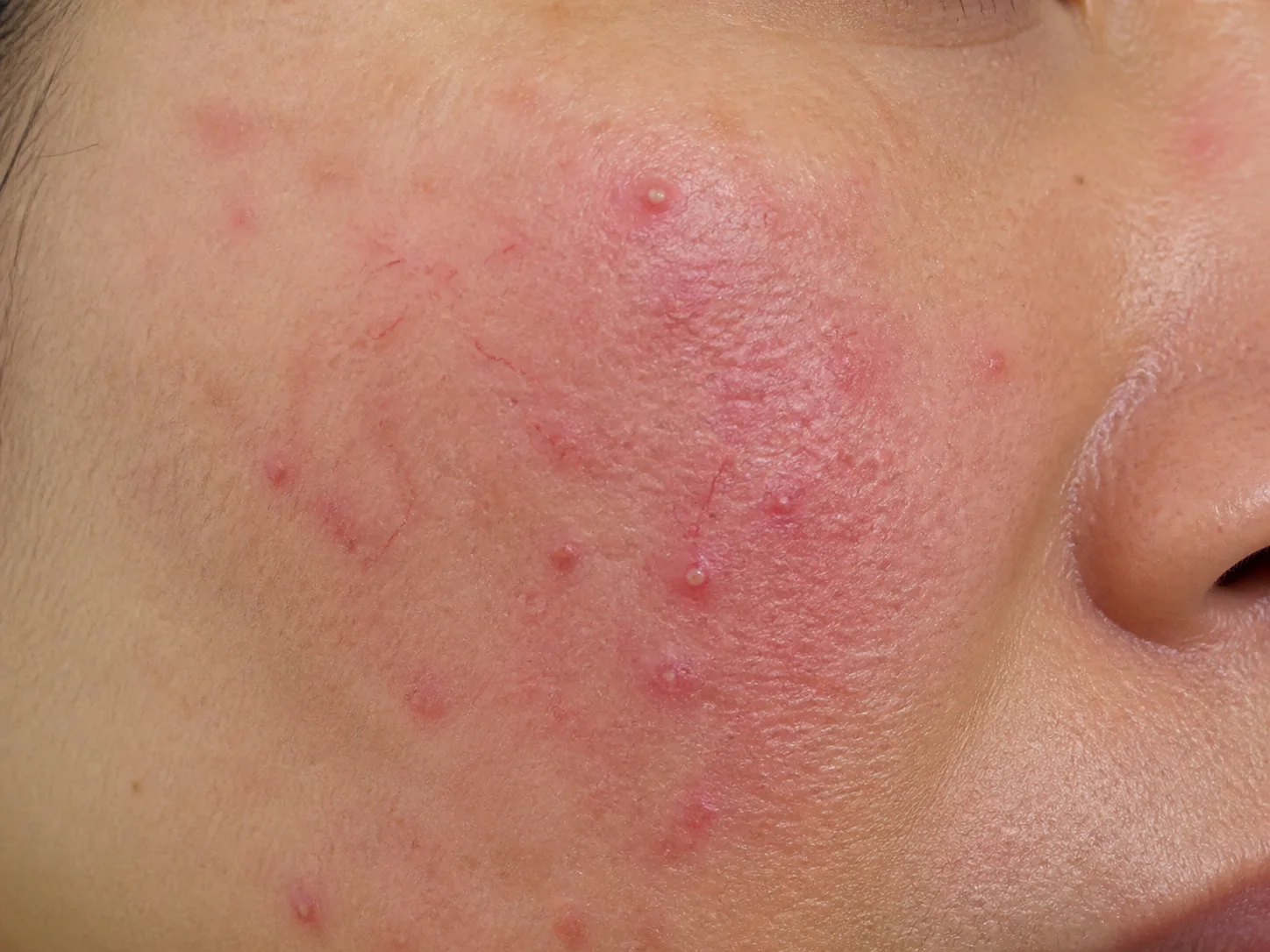
The papules and pustules of rosacea resemble acne, but the absence of comedones is a key clue. Actual differentiation is based on the distribution of lesions and their progress.
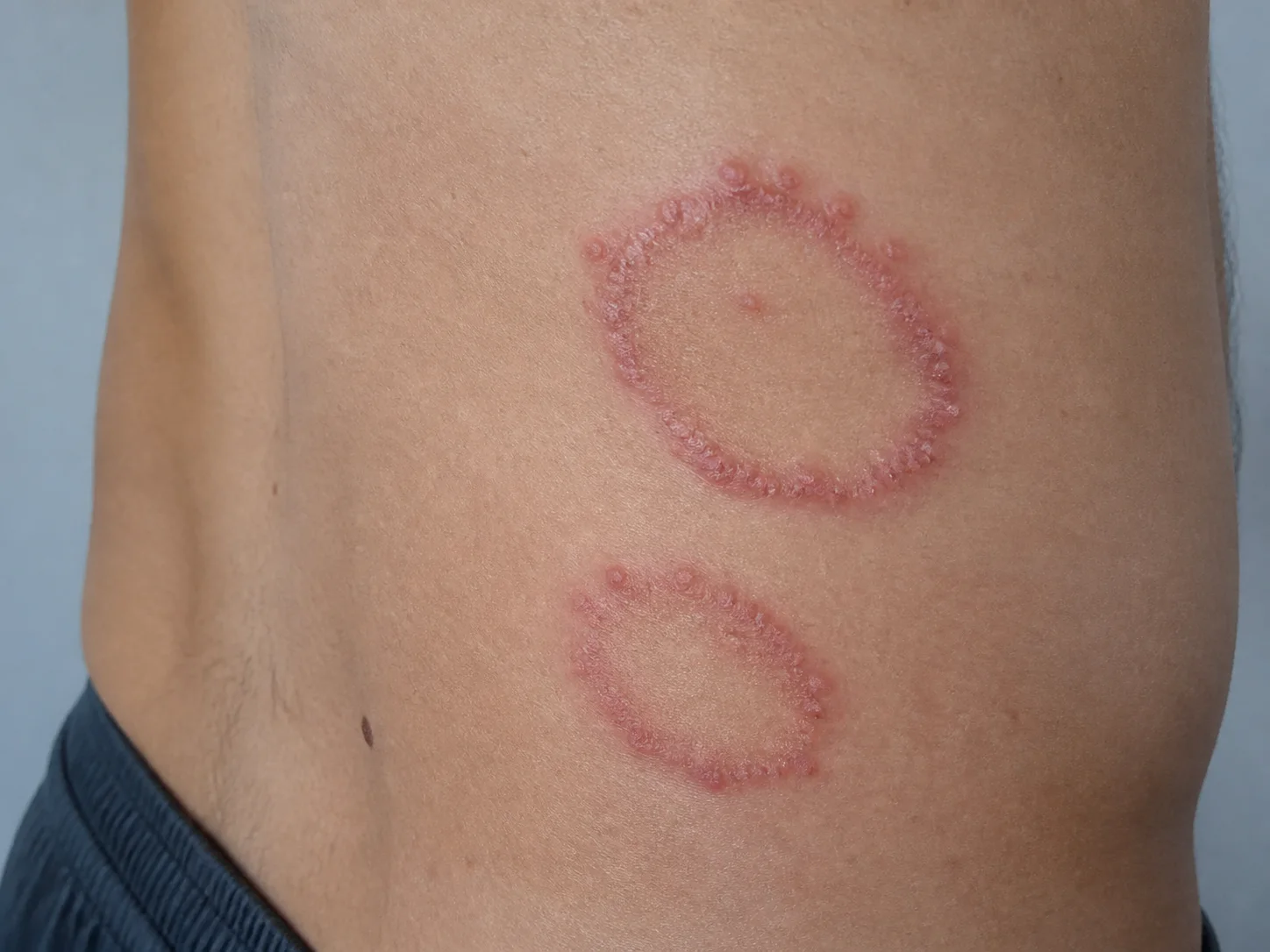
Tinea corporis is characterized by a ring-shaped pattern where redness and scaling are more active on the outer edge than in the center. We confirm the need for infection treatment after differentiating it from nummular eczema or pityriasis rosea.
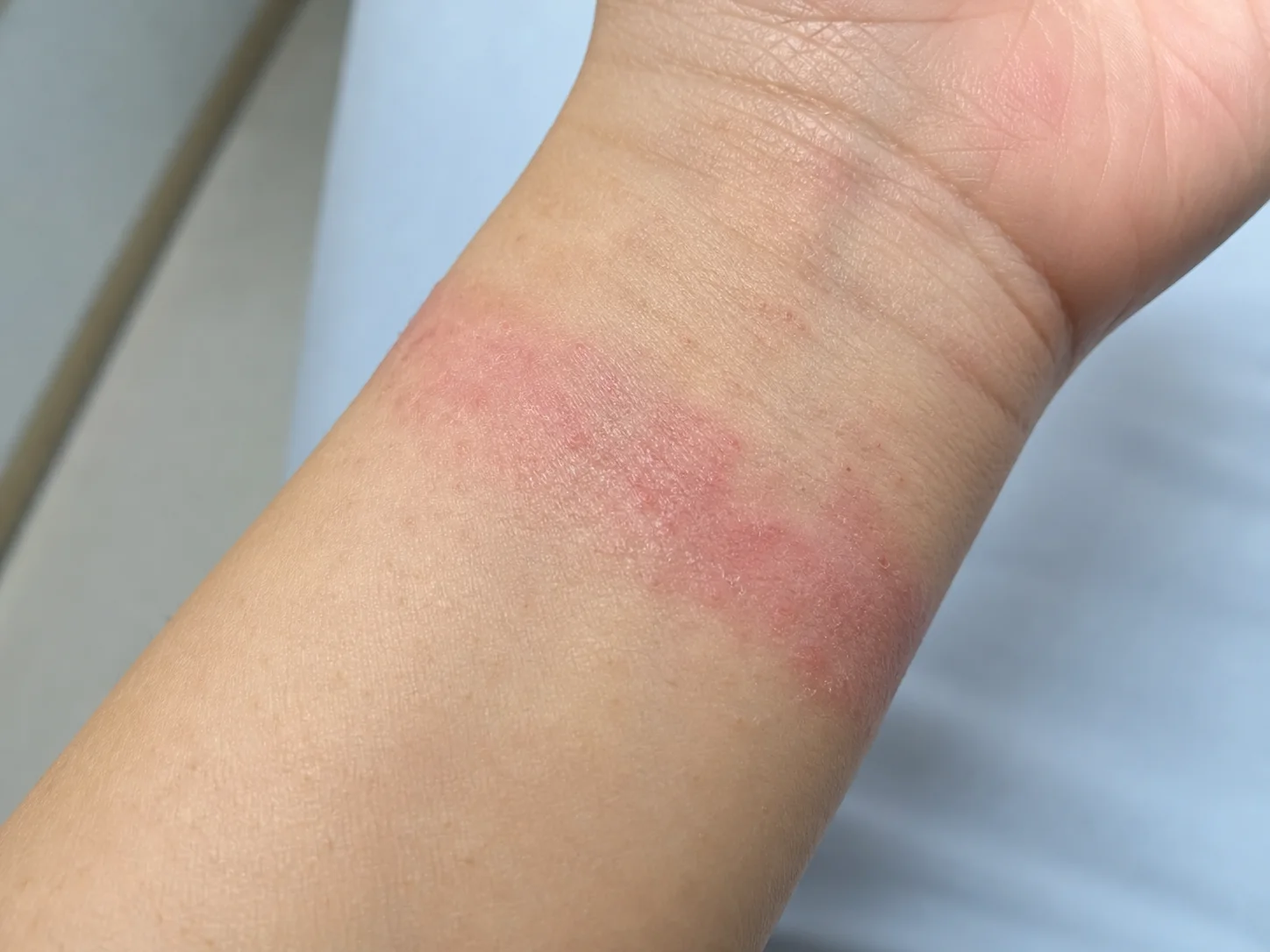
Even if the boundary is not perfectly straight, whether the rash overlaps with the area of contact, such as from a watch, band, or adhesive, serves as a clue. The date the product was changed is also verified.
| Points to check | Rosacea-like dermatitis | Perioral Dermatitis | Tinea incognito (blurred borders) | Contact irritation |
|---|---|---|---|---|
| Key Appearance | Persistent redness, burning sensation, papules, visible blood vessels | Small papules and scaling around the mouth, nose, and eyes | Plaques with blurred borders, some scaling, may be more dominant on one side | Stinging, redness, and dryness within the area of application |
| Time-based Clues | Worsening after the use or discontinuation of facial steroids | May recur after using facial ointments and various other products | Briefly fades after applying ointment, then the affected area expands | Immediately after a new product or cumulative exposure |
| Verification | Differential diagnosis between rosacea and acne | Distribution and presence of comedones | Fungal test if necessary | Discontinue exposure; patch test if necessary |
| Next steps | Plan prescription changes with medical staff | Organize list of products used | Do not delay confirmation of infection | Check irritants and skin barrier |
The initial appearance before applying ointment is the most important clue
Once inflammation subsides, the borders, scaling, and papules may change, making it difficult to identify the original condition. If possible, please prepare the first photo, the prescription, the medication name written on the tube, the application area, and the frequency of use.
Not all redness following steroid use is the same phenomenon
Burning sensations and papules in the center of the face, distribution around the mouth, scaly plaques expanding to one side, and stinging within the applied area each require different explanations. These are not all grouped together as a single photo or the term 'rebound'.
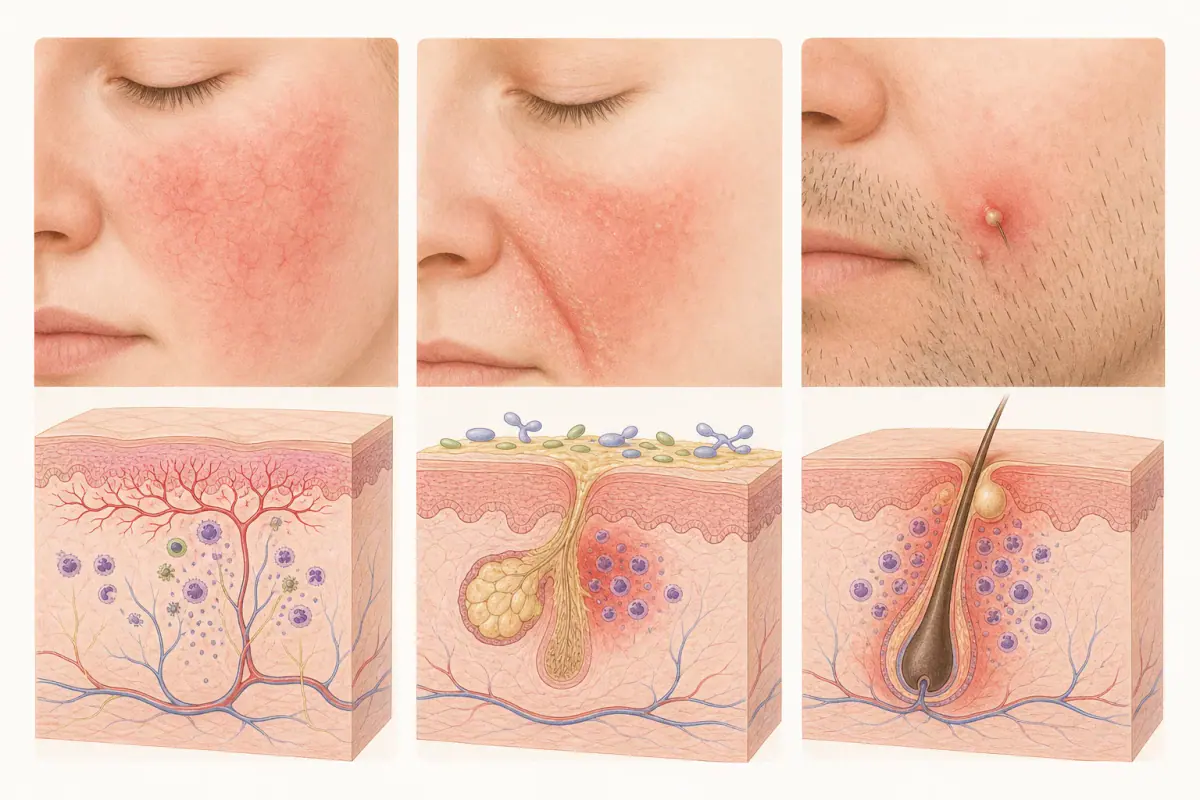
This is a simplified conceptual diagram showing that while rosacea, seborrheic dermatitis, and folliculitis may all appear red, the structures and distributions observed are different. This image does not determine a single cause for each disease.
Do not suddenly stop using prescribed ointments on your own
The next steps for usage may vary depending on the potency of the medication, duration of use, possibility of infection, and whether it was applied around the eyes. Consult the prescribing medical staff regarding how to taper or change the medication, and whether tests are necessary.
Please prepare photos from before applying the ointment and the name of the medication
Please provide the initial appearance of the skin, the name, potency, application area, and duration of the ointment, as well as the changes observed when applying the ointment versus when pausing the ointment treatment. Do not suddenly stop using prescribed ointments on your own.
Organize the initial photo of the lesion, the ointment name, strength, duration, and application area, as well as how the appearance changed when you paused the ointment treatment, all at once.
Next reading
Content to follow
Could facial redness, a burning sensation, and small papules be steroid-induced dermatitis?
How is it distinguished from acne, seborrheic dermatitis, and contact dermatitis?
Why is herbal medicine treatment important for recurring rosacea symptoms after using ointments?
Skin terms used in this differential guide
When herbal medicine treatment is the primary focus
We set the goals for herbal medicine treatment based on your previous treatments and when symptoms recurred
Redness and papules on the face and scalp can recur not only due to external exposure and local inflammation, but also in conjunction with heat sensations, stress, and sleep patterns. Based on differential diagnosis and previous treatments, Korean herbal medicine treatment focusing on managing the conditions that cause recurrence may be central.
We ask where it appeared and when it worsened again
We examine the duration of the flushing, the presence of capillaries, papules, pustules, and scales, as well as eye symptoms and reactions related to digestion, sleep, and tension.
We check if not only the itching, but also sleep and daily life are improving
We check how long the redness lasts, the number of new papules, the burning sensation, and the burden felt during face-to-face activities.
We set the goals for herbal medicine treatment by identifying the problems that need to be resolved first
If there are causes that require immediate priority, such as infection or rapid worsening, those treatments come first. Subsequently, for herbal medicine treatment, we determine the primary goal of recovery by examining current discomfort, recurring patterns, sleep, digestion, and fatigue, and coordinate the sequence with necessary dermatological treatments.
While reducing aggravating factors through lifestyle management, herbal medicine treatment determines the initial target by analyzing the pattern of lesions, sleep, digestion, and fatigue through pattern identification (Byeonjeung). Necessary skin treatments are continued in accordance with the progress.
Consult about treatmentEvidence and Update Information
This content was organized by Korean medicine doctor Choi Yeon-seung and updated on 2026-08-23.
- DermNet, Steroid rosacea
- American Academy of Dermatology, Perioral dermatitis
- AAD, Rosacea signs and symptomsFlushing, persistent color change, blood vessels, papules, skin thickening, and eye symptoms