Eczema: Start with the topics you are curious about
Points to check first
Eczema: Symptoms and when to seek prompt medical evaluation
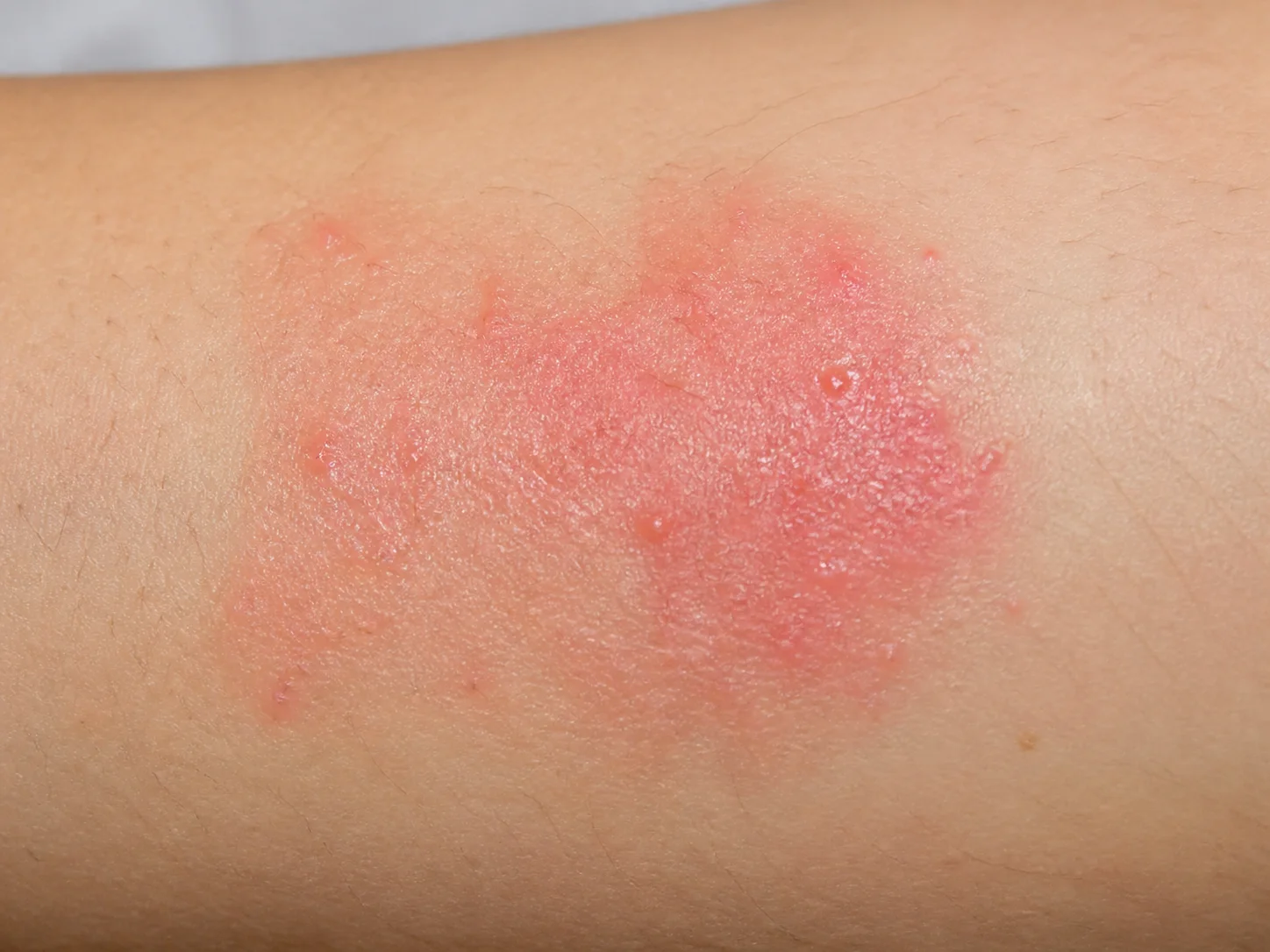
Common symptoms of eczema include dry, severely itchy skin and rashes. These can occur on the face, inner elbows, behind the knees, and on the hands and feet; depending on skin tone, they may appear red, brown, purple, or gray, or present as prominent rough bumps. Scratching leads to more swelling and itching, and may result in scratch marks, scaling, cracking, blisters,oozingor scabs. Prolonged scratching causes the skin to thicken and crack. If you experience unusual pain, heat, yellow scabs, or if clustered blisters are accompanied by fever and fatigue, the possibility of infection or herpetic eczema will be promptly evaluated.
Symptom and Risk Classification
The timing for medical evaluation is determined based on the appearance of the skin, itching, and symptoms suspected of infection.
Since eczema appears differently depending on skin color and type, it is not judged by redness alone.
| Visible or felt symptoms | What to check | Priority action |
|---|---|---|
| Dryness, itching, scaling, and recurrent rashes | Common patterns of eczema | Record distribution and impact on sleep |
| Brown, purple, or gray changes, or rough bumps | Rash presentation by skin color | Take photos under the same lighting |
| Blisters, oozing, cracking, or thickening | Scratching and chronic worsening | Check scratching duration and exposure to irritants |
| Pain, heat sensation, or yellow crusts | Possibility of infectious worsening | Prompt dermatological evaluation |
| Clustered blisters, fever, fatigue, or spreading around the eyes | Possibility of herpetic eczema | Immediate medical evaluation |
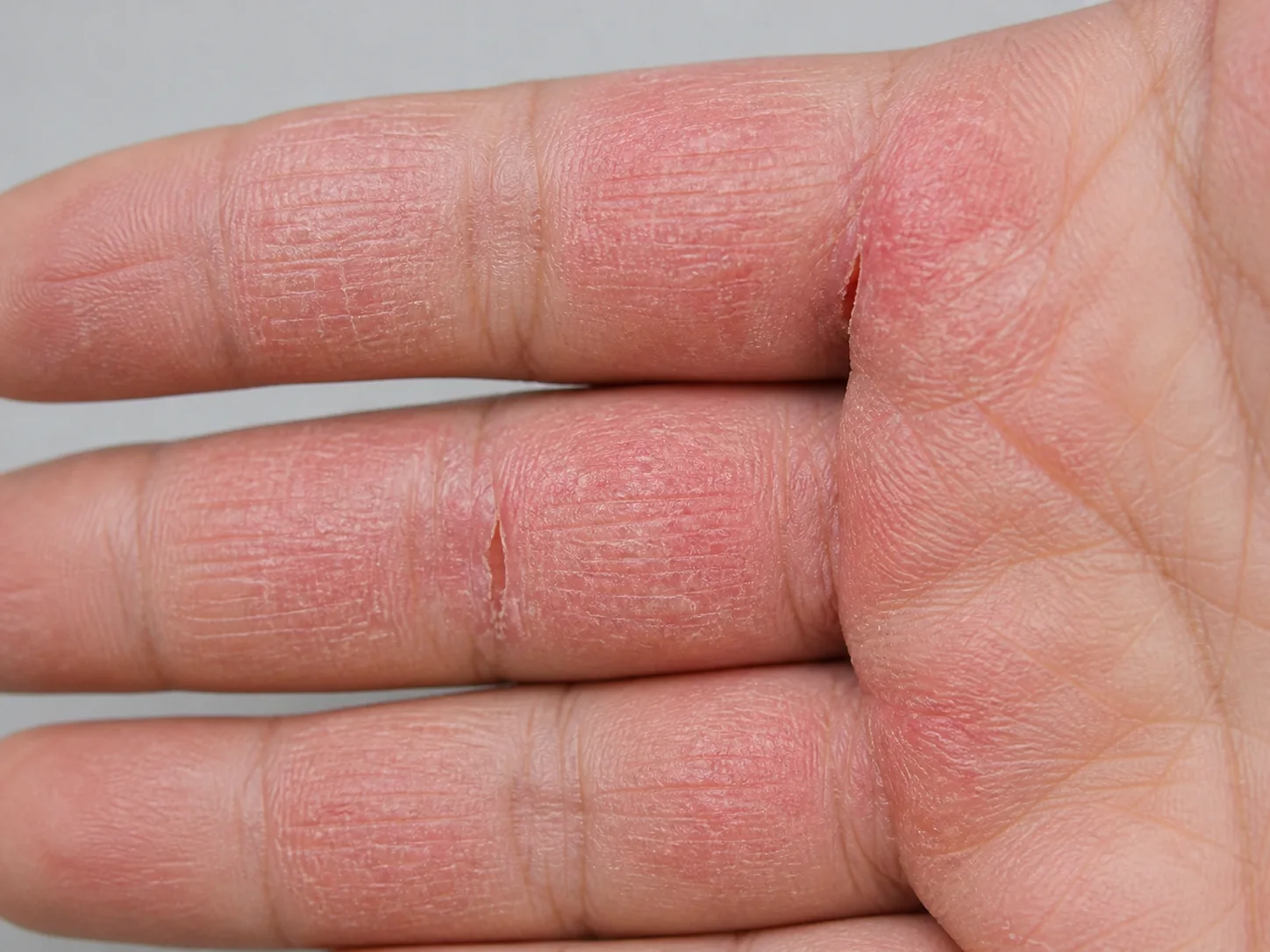
In hand eczema, dryness, scaling, and cracking may be more prominent than deep blisters. We look for clues related to water work, exposure to cleansers, dyshidrotic eczema, and tinea manuum.
Actual clinical photos and educational close-up examples are materials for comparing possible patterns and cannot be used for diagnosis alone. Mechanism diagrams have simplified complex processes.If these discomforts have recurred
For those who wake up every night due to itching and see scratch marks and oozing in the morning
Eczema is not a single disease name, but a term that groups various types of dermatitis. If symptoms recur even after re-confirming the diagnosis and exposure, we can establish the direction of herbal medicine treatment by analyzing the skin's appearance and the specific points of distress for the patient.
Those with recurring dry rashes on the face, inner elbows, behind the knees, or on the hands and feet
ointmentWhen the area where ointment was applied improves, but eczema continues to appear in other locations
Those who, due to skin tone, notice brown, purple, or gray changes before redness
When oozing and cracking appear alternately, making it unclear how to manage the condition
Those who have developed new pain, heat, crusts, or blisters in their usual eczema areas
night itchingWhen you also wish to reduce discomfort during water-related tasks and work
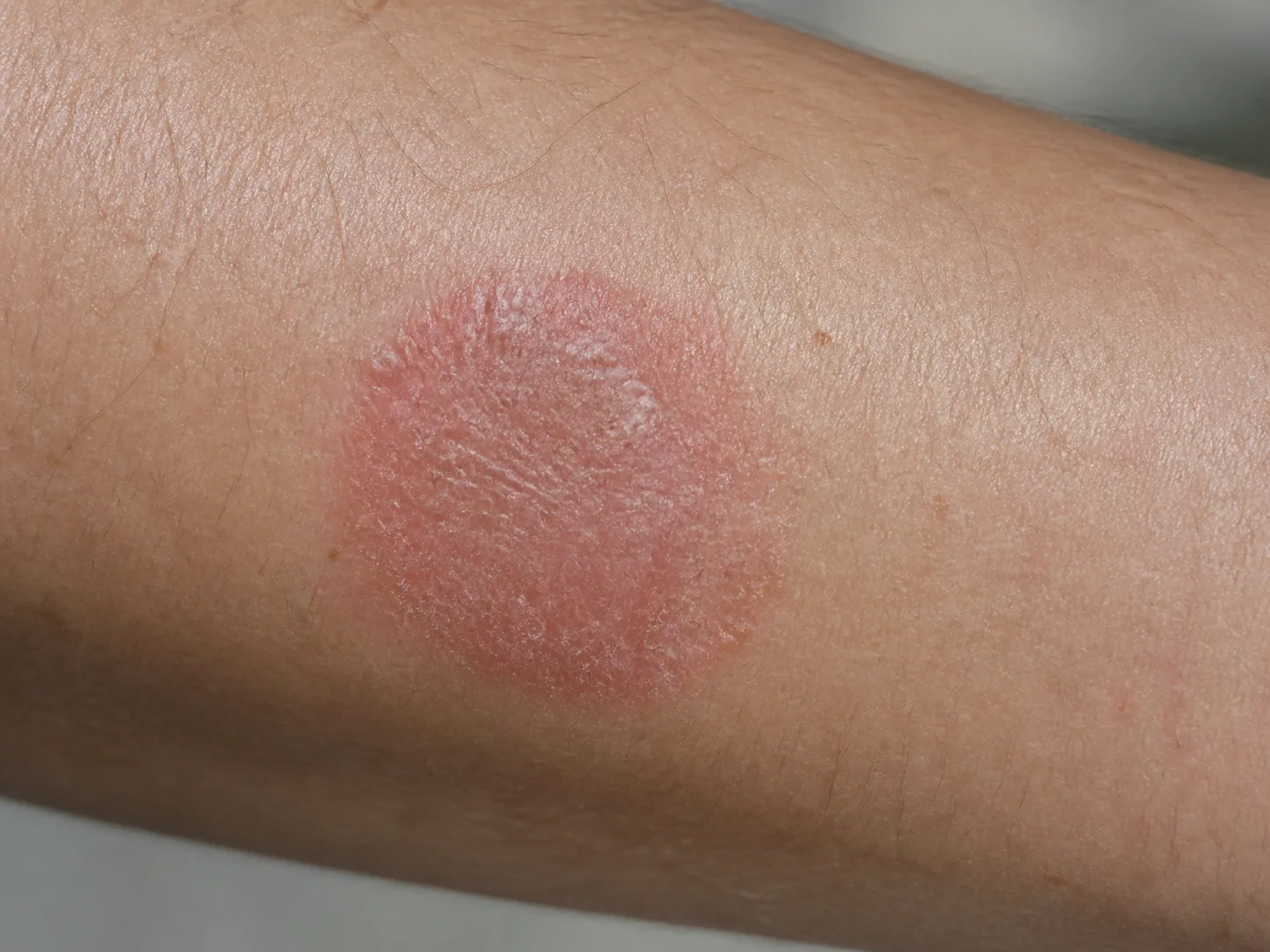
Eczema can also appear round, which may be confused with tinea or psoriasis. We examine whether the center fades, whether the keratin on the edges is prominent, and whether there has been oozing and a recurring course, along with information beyond the photos.
Points to distinguish first
Eczema: How to distinguish it from similar-looking skin diseases
First, check if it spreads rapidly, becomes purulent, or is painful
We first check for pain, heat, scabbing, clustered blisters, fever, or spreading around the eyes.
We examine the skin appearance, itching, and daily discomfort together
Distribution, color, surface changes, nighttime itching, and disruptions to sleep, water-related tasks, or work are all included in the same record.
Check for remaining itching, pain, or daily discomfort even after dermatological treatment
While maintaining topical treatment and skin protection, we observe if there are changes in itching, sleep, or the patterns of recurrence.
Why does it keep getting worse?
Reasons why eczema persists or recurs
We first examine periods of intense oozing and heat
During periods when the skin is red, moist, and burning, we first check for inflammation and infection; herbal medicine is also adjusted focusing on whether the heat and oozing decrease.
During the chronic stage of dryness and cracking, we also monitor the recovery speed
In long-term eczema, the skin thickens and cracks even with minor irritation. More important goals become whether tightness after moisturizing, recovery after water-related tasks, and nighttime scratching change.
Sleep, digestion, and fatigue are reflected in the prescription only when they change along with the skin
While not overlooking local causes such as detergents, metals, or friction, for those whose sleep, digestion, fatigue, and body heat fluctuate along with their skin, we reflect those recurring patterns and recovery conditions in the herbal medicine prescription.
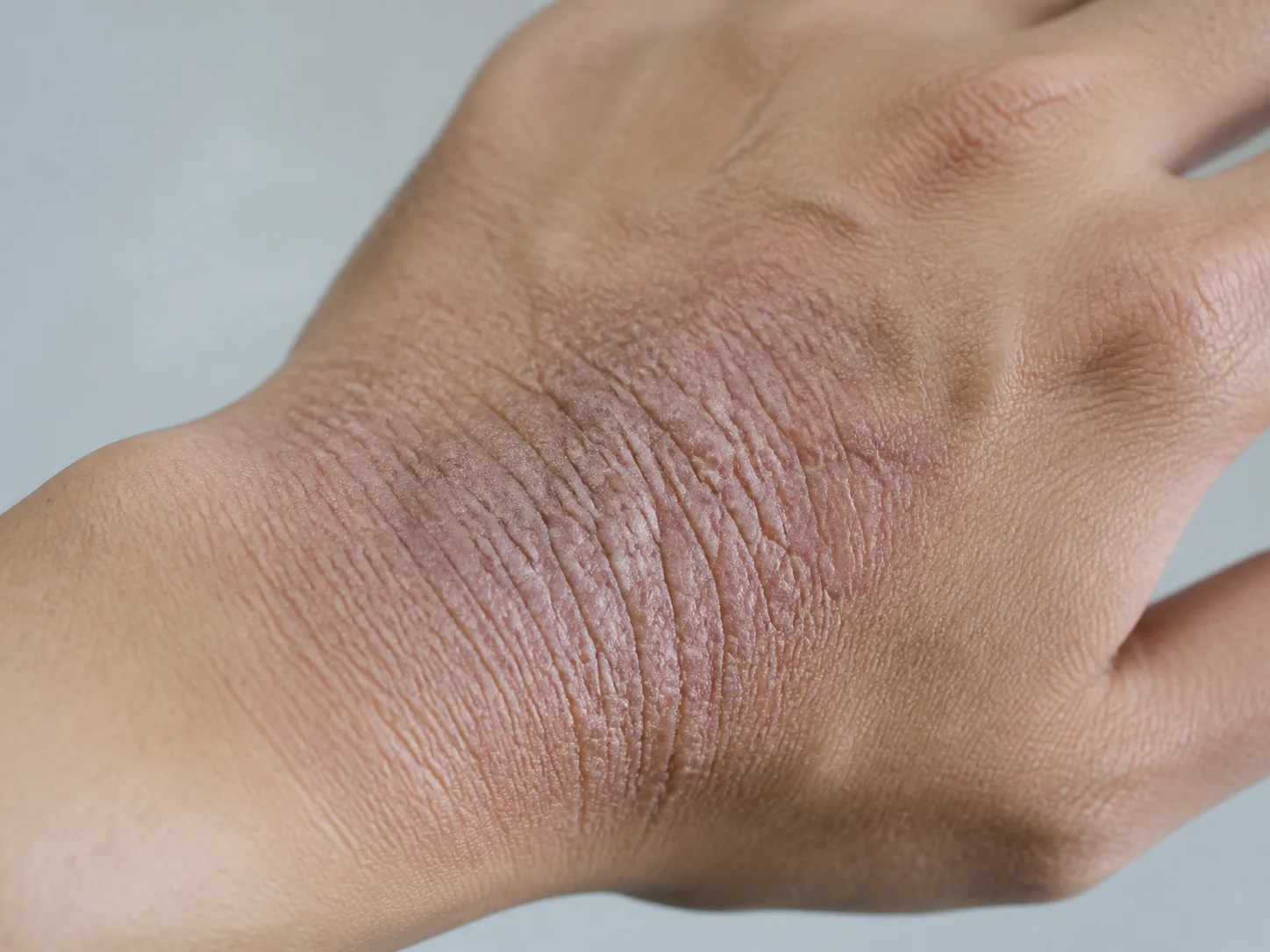
Prolonged scratching or exposure to irritants can make skin lines more prominent and leave dry cracks. Please record the affected areas along with exposure to water work, cleansers, or gloves.
Things to prepare before your visit
What photos and records should I prepare before the medical evaluation?
Please prepare photos of the skin taken under consistent lighting, the times when itching is most severe, information on blisters, discharge, scabs, pain, or heat sensations, the impact on sleep, water-related work, or general work, and any topical medications used.
Itching may start first
Note when it is most severe, such as at night, after bathing, or during work, and its impact on sleep and concentration.
It can appear on the face, skin folds, or hands and feet
Take photos of the distribution and any differences between the left and right sides of the face, inner elbows, behind the knees, and hands and feet.
Appearance varies depending on skin tone
Even if redness is not distinct, we look for changes to brown, purple, or gray tones, as well as rough bumps and itching.
Changes to monitor during treatment
What changes should I monitor during treatment?
Days with oozing and heat versus days with only dryness and cracking
Please record when it started and how it has changed, including the dates. To make it easier to compare before and after, take photos of the same area from a similar distance and under similar lighting.
Exposure that is difficult to avoid, such as detergents, gloves, metals, or friction
Please leave a brief note. Compare not only the visible changes but also whether your sleep, pain, and daily life have become less uncomfortable.
Days of ointment use, frequency of scratching at night, and the degree of difficulty in using your hands
Please also include the dates of any medications, ointments, or procedures you are currently using. This makes it easier to compare what led to improvement or worsening.
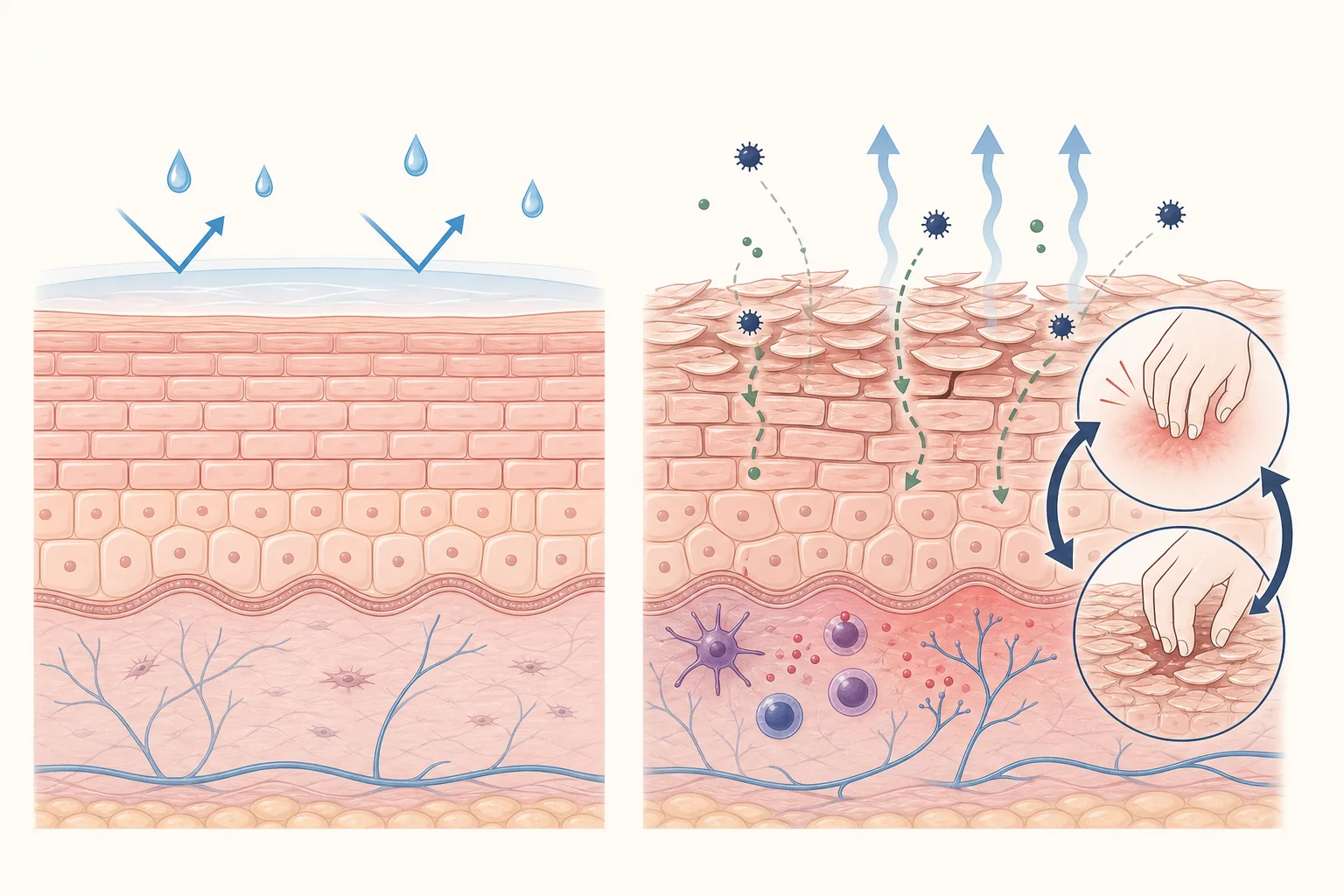
This is a simplified concept showing that when the barrier that retains moisture is disrupted, dryness and exposure to irritants increase, and itching and scratching can further damage the barrier.
Conceptual reference · NIAMS Atopic DermatitisWhen planning herbal medicine treatment
For eczema, the direction of herbal medicine treatment is determined based on the current prominent symptoms
Eczema is not a single condition but a collective term for various inflammatory skin diseases. Before prescribing herbal medicine, we distinguish between contact dermatitis, nummular eczema, dyshidrosis, and infectious or fungal skin changes. Then, we determine whether oozing and heat are central or if dryness and barrier damage are primary, while considering overall systemic recovery conditions.
Pattern identification (Byeon-jeung) in Korean medicine is not about giving a different name to a disease. Multiple patterns can overlap in one person, and as the skin changes, for example, as oozing and heat decrease and dryness or cracking remain, the prescription is adjusted accordingly.
When the skin is red, moist, and oozing
- Primary skin observations
- We observe the vividness of the redness, edema, small blisters, clear discharge, and the speed of spreading.
- Overall body condition to check alongside skin
- We check if symptoms worsen after heat, sweat, or humid environments, and if there is heat in the upper body or difficulty sleeping.
- Primary considerations for herbal medicine prescription
- Priority is placed on clearing heat and removing dampness to first reduce the burden of moist inflammation, heat, and intense itching.
When keratin is thick and cracking recurs
- Primary skin observations
- We check if oozing has decreased but thickness, color changes, keratinization, and cracking remain, and if the skin splits even with slight friction.
- Overall body condition to check alongside skin
- We ask if there is accompanying dryness of the skin and mouth, a feeling of coldness, fatigue, or delayed wound healing.
- Primary considerations for herbal medicine prescription
- We focus on nourishing the blood, moisturizing dryness, and recovering the skin barrier to break the itch-scratch cycle.
When there is swelling, softness, and inflammation persists for a long time
- Primary skin observations
- We observe if the borders are blurred, if moist keratin and edema persist, and if the recovery speed is slow.
- Overall body condition to check alongside skin
- We check if bloating, loose stools, edema, and heavy fatigue worsen along with the skin condition.
- Primary considerations for herbal medicine prescription
- We increase the focus on supporting digestion and fluid metabolism to address conditions where recovery after inflammation is delayed.
When symptoms recur in the same spot after exposure to detergents, metals, or friction
- Primary skin observations
- We check if the borders of contact match the location of the rash and how much recovery occurs during periods when the stimulus is avoided.
- Overall body condition to check alongside skin
- We verify if the relationship with occupation, cosmetics, gloves, or water-related work is clearer than systemic clues.
- Primary considerations for herbal medicine prescription
- We first determine avoidable triggers and protection methods, and then add barrier and immune recovery support when recovery is slow after inevitable exposure.
How is the herbal medicine prescription adjusted?
- First, we narrow down 'what type of eczema it is'
By observing the distribution, borders, blisters, discharge, and timing of contact, we distinguish between pompholyx, contact dermatitis, nummular eczema, and other similar conditions.
- We determine the focus of the prescription based on your current skin condition
During the active phase characterized by wetness and heat, we prioritize clearing heat and removing dampness; during the chronic phase characterized by dryness and cracking, we prioritize nourishing the blood, moisturizing dryness, and barrier recovery.
- We adjust the prescription by observing new affected areas and the speed of recovery
We monitor whether new rashes, discharge, nighttime itching, and cracking after water-related work decrease, and whether the periods of comfort lengthen.
When should I consider Korean herbal medicine treatment?
- When the area where ointment was applied improves, but eczema continues to appear in other areas
- When discharge and cracking appear alternately, making it unclear which care method to use
- When you wish to simultaneously reduce nighttime itching and discomfort during water-related work or professional tasks
What will be asked during the medical evaluation?
- Days with discharge and heat versus days with only dryness and cracking
- Difficult-to-avoid exposures such as detergents, gloves, metals, or friction
- Days of ointment use, frequency of nighttime scratching, and the degree of difficulty in using your hands
Things to prepare before the consultationPlease prepare photos of the skin taken under consistent lighting, the times when itching is most severe, information on blisters, discharge, scabs, pain, or heat sensations, the impact on sleep, water-related work, or general work, and any topical medications used.
If pus, pain, or redness spreads rapidly, or if you have a fever, lesions inside the eyes or mouth, shortness of breath, or sudden facial swelling, please visit a dermatology clinic or seek emergency care first. After confirming that such urgent situations are not present, Baekrokdam provides herbal medicine treatment for chronic and recurring skin diseases.
Consult about eczema progressFrequently Asked Questions
Frequently Asked Questions about Eczema
Where does eczema usually occur?
It is common on the face, inside the elbows, behind the knees, and on the hands and feet, but depending on the type of eczema, it can occur in other areas.
Can it be eczema even if the skin is not red?
Yes. Depending on skin tone, it may appear as brown, purple, or gray changes or as rough bumps, so we evaluate itching, dryness, and distribution together.
If there is discharge, does it mean the eczema has worsened?
Discharge can occur due to scratching and inflammation, but if accompanied by pain, heat sensations, yellow scabs, or fever, we promptly evaluate for potential infection.
If clustered blisters appear, is it okay to wait while moisturizing?
Do not wait. Painful clustered blisters accompanied by fever, fatigue, or spreading around the eyes may indicate eczema herpeticum, so seek medical evaluation immediately.
What is the most common cause of eczema?
Since eczema encompasses various types of dermatitis, it is difficult to explain with a single most common cause. We examine genetic and environmental factors, as well as irritants and allergens that touch the skin, based on the specific type.
If hand eczema develops after changing detergents, is that the cause?
It is a possible clue, but we do not confirm it based on a single chronological link. Please record the product name, contact time, use of gloves, and skin changes to share during your medical evaluation.
Is eczema contagious to others?
Eczema itself is not a contagious disease. However, if there is discharge, pain, heat sensations, or fever, we separately evaluate for potential infection.
References and update date
Doctor of Korean Medicine Choi Yeon-seung verified the content based on the official and professional materials below and updated it on 2026-08-23.
- MedlinePlus, EczemaDryness, itching, distribution, and worsening of redness and swelling after scratching
- American Academy of Dermatology, Atopic dermatitis symptomsRashes by skin tone, blisters, discharge, thickening, and symptoms suspicious of infection or eczema herpeticum
- NHS, Contact dermatitisCauses and typical exposures of irritant and allergic contact dermatitis
- AAD, Atopic dermatitis diagnosis and treatmentEvidence that skin examination and health/symptom interviews are central to the diagnosis of atopic dermatitis
- NHS, Contact dermatitis diagnosisSkin appearance, exposure history, dermatology referrals, and the procedure for allergic contact dermatitis patch tests
- AAD, Patch testing can find what's causing your rashDifferences between patch tests and prick tests, test maintenance, re-reading, and limitations of result interpretation
- NHS, Atopic eczemaContinuous moisturizing after improvement, use of topical steroids, and evidence for medical evaluation criteria for infection or severe worsening