Chronic eczema: start with the most common questions
Before labeling it as eczema
The active phase with oozing and the dry chronic phase are not the same skin state
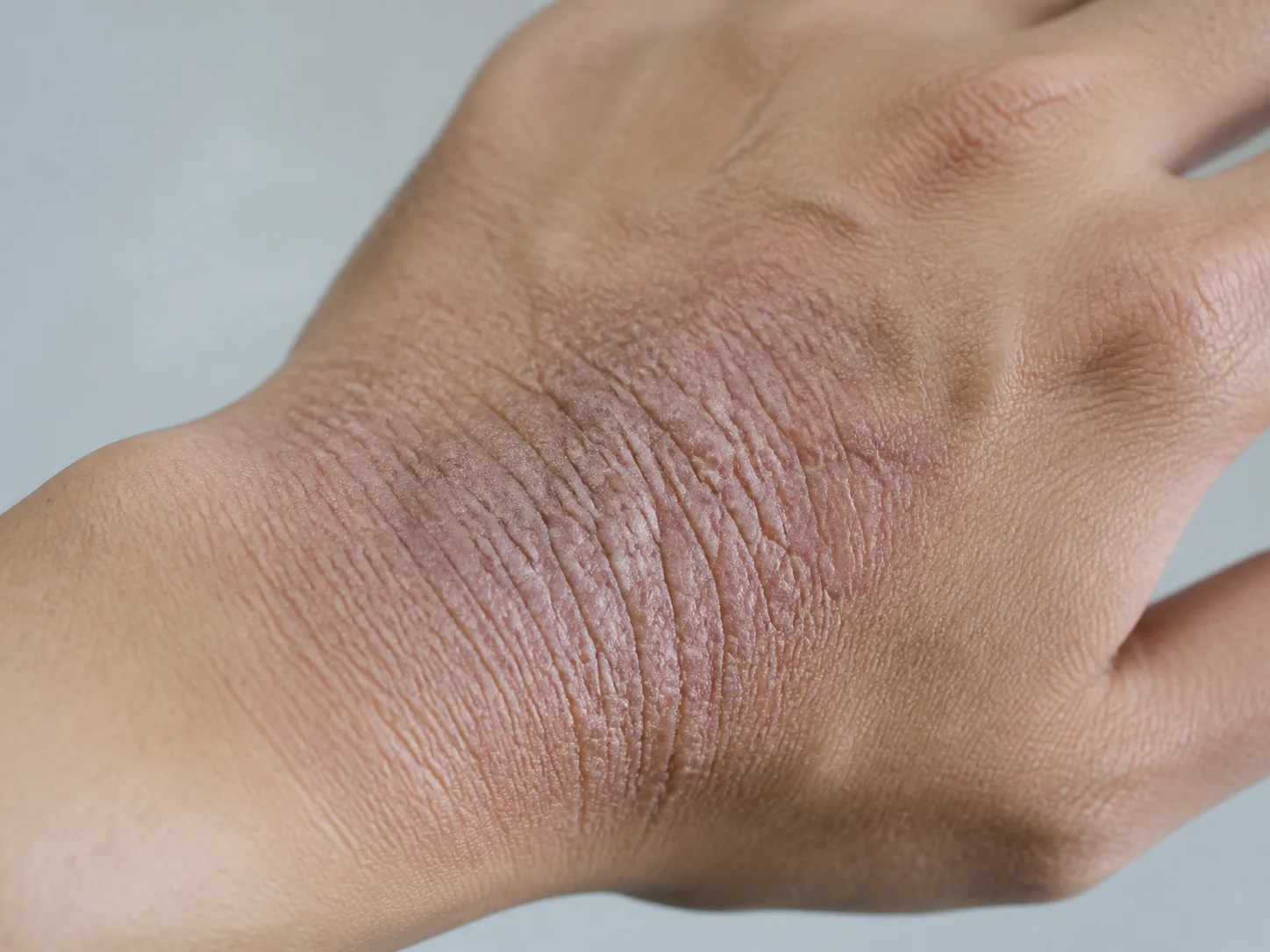
Chronic eczema is characterized by dry and rough skin, recurring redness and itching, scaling and cracking, and skin that has become thick and hard from prolonged scratching. Depending on skin tone, redness may be less visible or appear darker, such as brown, gray, or purple. In the hands or skin folds, cracking may occur after contact with water or friction, leading to pain and bleeding. If the condition worsens, clear oozing and crusting may occur, yellow crusts· Pus, heat sensation, rapid increase in pain, and fever require checking for possible infection. Nighttime itching, sleep loss, and discomfort when using hands, washing, or dressing are also significant symptom burdens.
Symptom Patterns
How to distinguish between dryness, lichenification, oozing, and symptoms suspected to be infection
We examine the appearance of the skin along with the timing of itching, daily functioning, and systemic symptoms.
| Visible Changes | Possible Patterns | Next Step for Verification |
|---|---|---|
| Dryness, flaking, fine cracks | Primarily skin barrier damage | Cleansing, moisturizing, and exposure to irritants |
| Thick, hard, and dark coloration | Lichenification due to repeated scratching | Nighttime itching, scratch marks |
| Redness, swelling, clear discharge | Exacerbation of active eczema | Use of topical agents and changes in affected area |
| Yellow crusts, pus, heat sensation, pain | Possible infection | Seek prompt medical evaluation if fever or rapid spreading occurs |
| Clustered blisters, spreading around the eyes | Possibility of severe infection | Immediate dermatology evaluation |
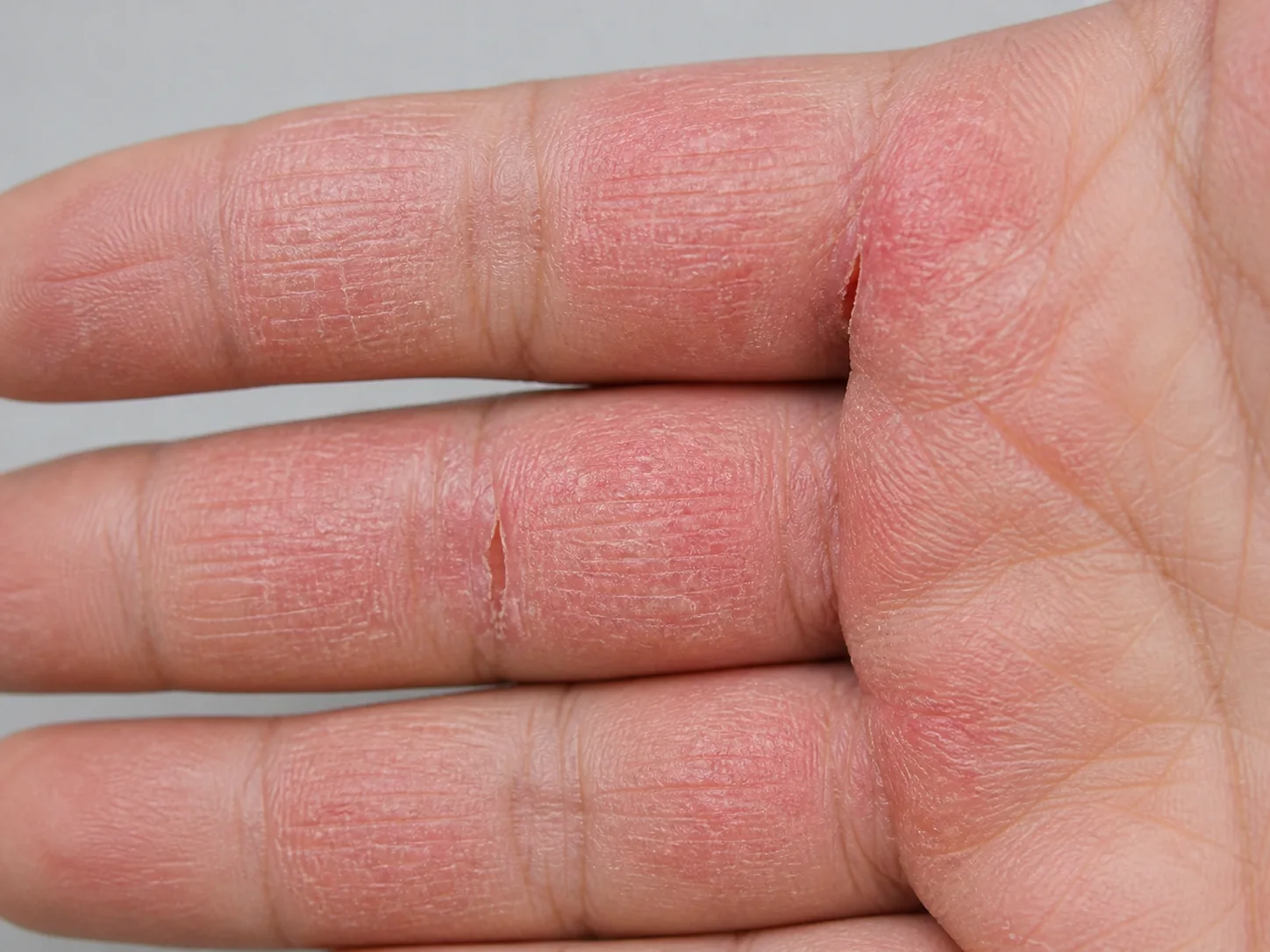
In hand eczema, dryness, scaling, and cracking may be more prominent than deep blisters. We look for clues related to water work, exposure to cleansers, dyshidrotic eczema, and tinea manuum.
Actual clinical photos and educational close-up examples are materials for comparing possible patterns and cannot be used for diagnosis alone. Mechanism diagrams have simplified complex processes.If these discomforts have recurred
Scratching at night, hiding wounds in the morning
It is not that you scratch because you do not know the phrase "do not scratch." Scratching that begins itchingduring sleep is faster than willpower, and the cracks and oozing in the morning change everything from your choice of clothes and work to how you meet people during the day.
Itching that wakes you from sleep
We review how many times you woke up, how long it took to fall back asleep, and whether there were new wounds or blood in the morning, along with photos of the skin.
A day where water and hand use are unavoidable
When performing tasks that are difficult to avoid, such as washing dishes, cooking, washing your face, or typing, crackingwe record the moments when cracks reopen and pain occurs.
Persistent anxiety even when it looks better
If you worry that the condition will flare up again if you pause ointment use, even during days when redness has decreased, we include recurrence intervals and barrier recovery in the treatment goals.
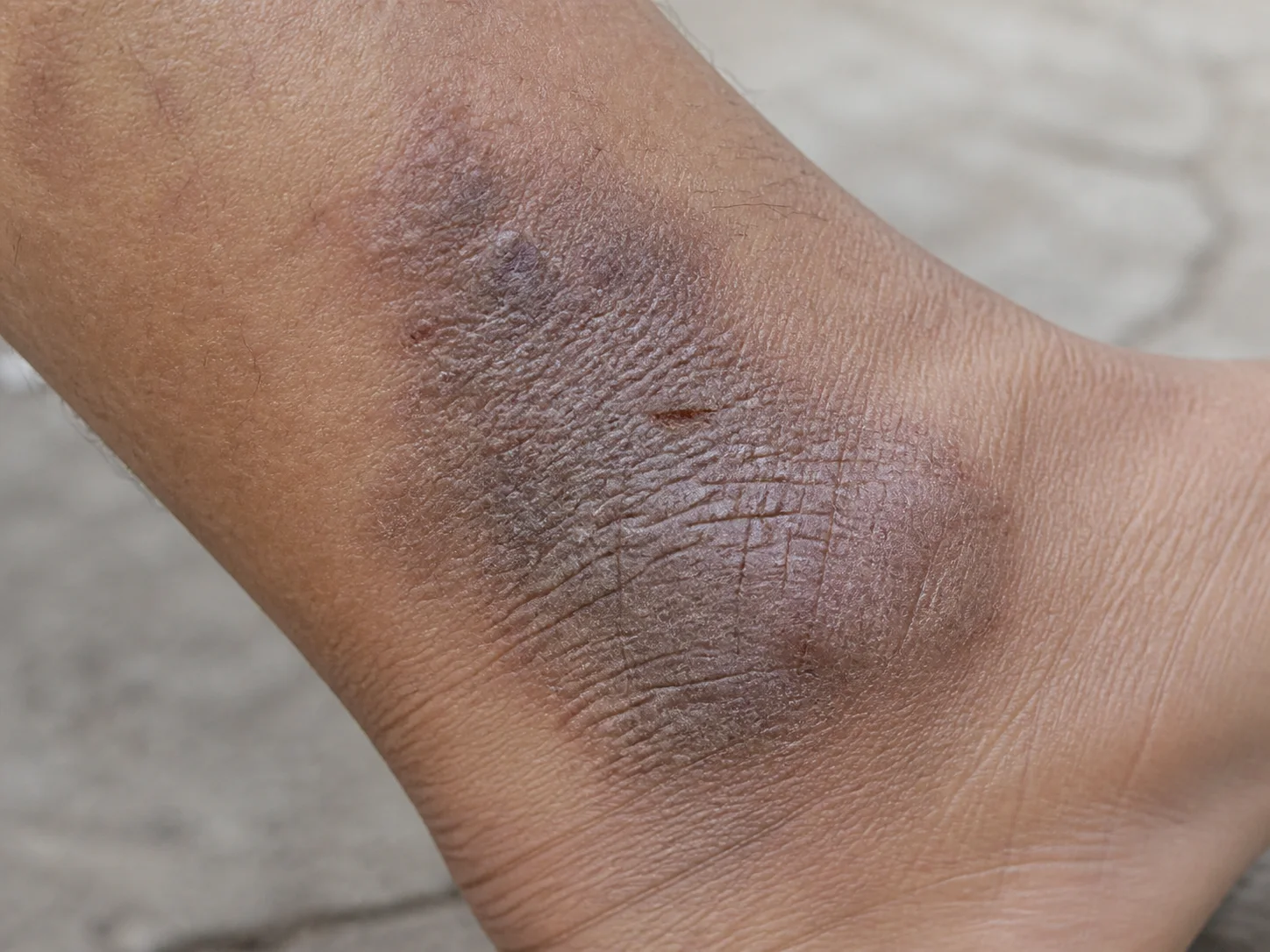
Thick, brown plaques can become fixed in areas that are repeatedly touched, such as the ankles. We examine the timing to determine whether the itching came first or if the habitual scratching started first.
Points to distinguish first
We do not group oozing, yellow crusts, and thickened skin together
Even within chronic eczema, the first course of action differs depending on whether it is currently a hot and moist inflammation or skin that has become dry and thickened from long-term scratching. We also do not overlook skin changes that resemble an infection.
Clear oozing and spreading redness
Clear oozing can occur even in active eczema. We examine whether the area, heat, and itching are expanding rapidly, along with recent exposures.
Yellow crusts, pus, and rapid onset of pain
Since there is a possibility of infection, we do not simply wait while applying more anti-inflammatory topical agents. If fever, chills, or facial swelling occur, we prioritize the necessary medical evaluation.
Lichenification, color changes, and deep cracks
Even if redness is minimal, skin that has been scratched for a long time can become thick and hard, and may continue to itch. Pain that hinders the use of hands or walking is also a significant disease burden.
Why does it keep getting worse?
Itching leads to scratching, and scratching opens the barrier again
Skin with a weakened barrier easily becomes dry and itchy even with everyday stimuli. If inflammation increases due to scratch wounds, the cycle of recurrence may remain even if redness is reduced with ointment.
A skin barrier unable to retain moisture
Tightness and stinging after washing, and fine cracks that occur even with slight friction, are clues that the skin's ability to block irritants and retain moisture has declined.
Scratching during sleep and lack of recovery time
If new wounds occur every night, the skin has less opportunity to heal. Therefore, we examine not only the appearance of the skin but also how nighttime itching and sleep patterns change.
Worsening triggered by daily factors such as exposure, sweat, and stress
Before assuming a single cleanser is the cause, we look for patterns of recurrence to see if symptoms worsened following a sequence such as water-related work, moisture inside gloves, sweat, overnight work, or tension.
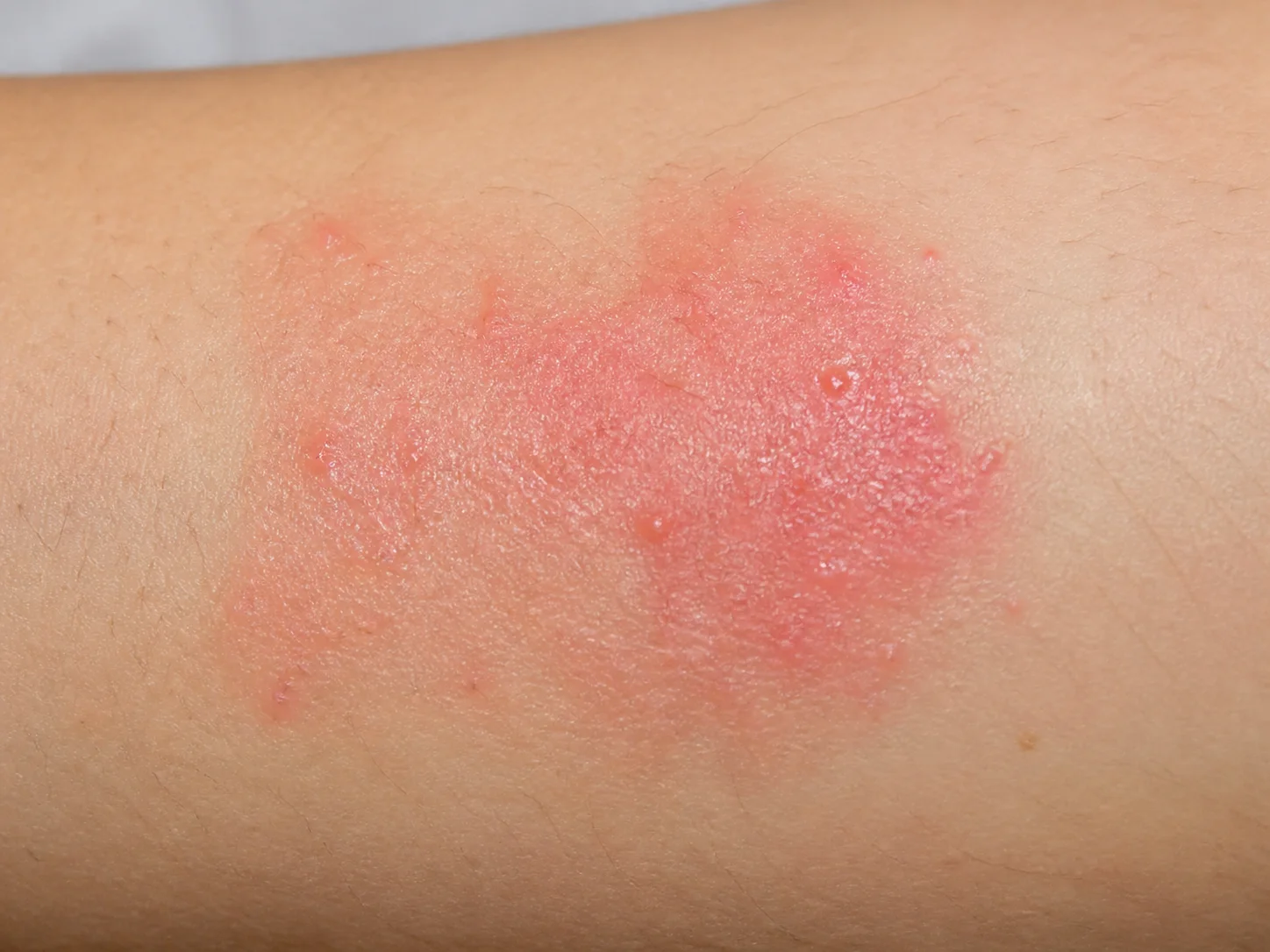
During the acute phase, not only redness but also small blisters, oozing, and peripheral scaling may be visible. If pus, heat, or pain overlap, we first check for infection.
Things to prepare before your visit
The difference between good days and bad days, rather than a single skin change
Eczema may be quiet on the day of the clinic visit. By combining photos taken under the same lighting and distance with records of topical agent use, nighttime itching, exposure, and sleep, the changes in the skin are linked to daily life.
Full shots and close-up shots of the same area
We keep both full and close-up photos to observe the extent of the spread as well as surface oozing, scaling, and cracking separately.
Dates of ointment/moisturizer use and the point of recurrence
Rather than just the product name, record in chronological order when, where, and how much you used it, and after how many days the itching returned.
Number of times awakened at night and instances where hands could not be used
Treatment leads to life improvement only when we compare not just skin scores, but also the recovery of sleep, washing, cooking, and work.
Changes to monitor during treatment
Nights spent sleeping without scratching, hands used without cracking
Treatment does not end simply because photos show reduced redness. The goal is to reduce new oozing, nighttime itching, and cracking pain, and to increase the time spent being less conscious of the skin in daily life.
Distinguishing between active oozing and old, dried crusts
By separating symptoms suspected to be oozing, heat, or infection from thickness, dryness, and cracking, we determine what to reduce first and what to recover.
The first adjustment, a key axis closely linked to recurrence
Rather than simply listing sweat, body heat, digestion, fatigue, and tension, we reflect the conditions under which these symptoms occur multiple times on the same day into the prescription.
Next checks: restful nights and hand function
By comparing the number of times you wake up at night, new wounds, the number of days you used your hands without pain, and the interval between recurrences, we shift the focus from the stage of reducing inflammation to the stage of restoring the skin barrier.
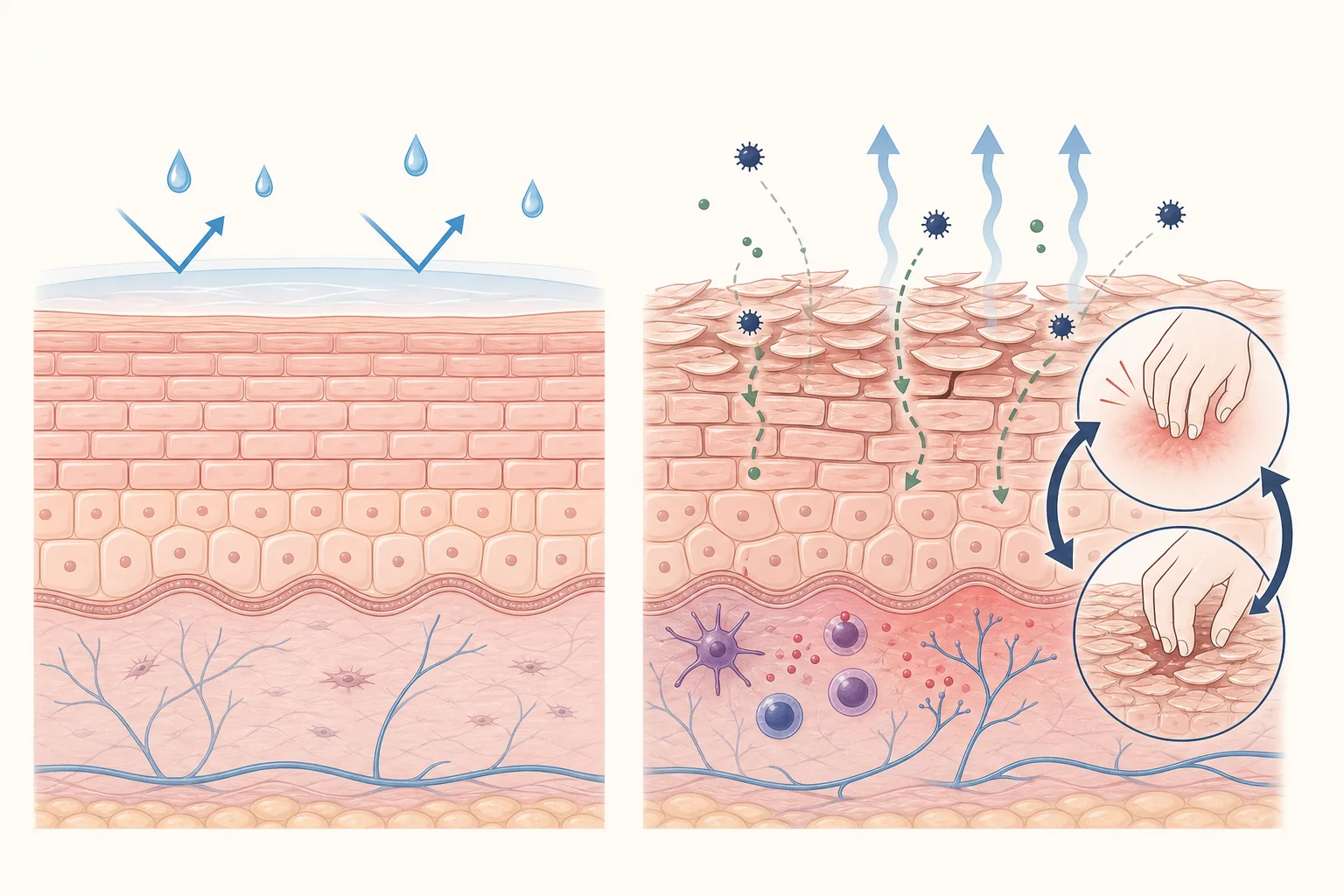
This is a simplified concept showing that when the barrier that retains moisture is disrupted, dryness and exposure to irritants increase, and itching and scratching can further damage the barrier.
Conceptual reference · NIAMS Atopic DermatitisAt the crossroads of oozing, thickening, and delayed recovery
For chronic eczema, the direction of Korean herbal medicine treatment is determined based on the currently prominent symptoms
Prescriptions are not determined by the diagnosis of chronic eczema alone. We prioritize the Korean herbal medicine by distinguishing whether red and moist inflammation still remains, whether dry and thickened skin is the primary issue, whether recovery is slow alongside digestion issues, edema, and fatigue, or whether itching explodes following stress.
Pattern identification (Byeon-jeung) in Korean medicine is not about giving a different name to a disease. Multiple patterns can overlap in one person, and as the skin changes, for example, as oozing and heat decrease and dryness or cracking remain, the prescription is adjusted accordingly.
When the skin is red, hot, and oozing recurs
- Primary skin observations
- We check if redness and heat are distinct, if clear discharge or moist scabs form where scratched, and if the affected area expands rapidly in a short time.
- Overall body condition to check alongside skin
- We also check if symptoms worsen after heat, sweating, or alcohol consumption, if heat concentrates in the face and upper body, and if you toss and turn at night due to itching.
- Primary considerations for herbal medicine prescription
- Rather than nourishing dry skin, the prescription focuses more on reducing the burden of heat, moist inflammation, and intense itching.
When the skin becomes thick like leather, dry, and cracked
- Primary skin observations
- We check if there is little oozing but dead skin, lichenification, and color changes remain, and if flexible areas such as fingers and heels repeatedly crack.
- Overall body condition to check alongside skin
- We ask if the skin and mouth dry out together, if the hands and feet are cold or if you tire easily, and if wounds from scratching during sleep take a long time to heal.
- Primary considerations for herbal medicine prescription
- Rather than focusing on lowering strong heat, we emphasize nourishing the blood, moisturizing dryness, and restoring the barrier to help the skin retain moisture and wounds heal.
When the skin remains moist for a long time and does not heal well, even without significant oozing
- Primary skin observations
- We examine if the boundaries of skin changes are blurred and appear swollen, and if oozing and soft scaling persist sluggishly.
- Overall body condition to check alongside skin
- We check if post-meal bloating, loose stools, edema, and heavy fatigue fluctuate along with the worsening of the skin.
- Primary considerations for herbal medicine prescription
- Rather than simply drying the skin, we adjust the prescription to address digestion and fluid metabolism together, ensuring that inflammatory by-products do not linger and recovery continues.
When itching flares up on stressful days
- Primary skin observations
- We check if you cannot stop scratching at specific times, even if the redness is not more severe than usual, and if areas habitually scratched, such as the neck, arms, or hands, are becoming thickened.
- Overall body condition to check alongside skin
- We ask whether symptoms worsen after tension, anger, or overtime work; if you have difficulty falling asleep or wake up frequently; and if you experience chest tightness combined with digestive stagnation.
- Primary considerations for herbal medicine prescription
- Rather than simply suppressing skin inflammation, we reflect a direction in the prescription that simultaneously lowers the cycle of sleep issues, itching, and body heat that rises after tension.
How is the herbal medicine prescription adjusted?
- First, we identify the most prominent changes currently appearing on the skin
Depending on whether it is the active phase with remaining discharge and heat, or the chronic phase centered on thickening, dryness, and cracking, we adjust the proportion of heat-clearing and dampness-removing treatments versus blood-nourishing and moisturizing treatments.
- We identify the bodily conditions that trigger the return of itching
Among sleep, stress, sweat, digestion, and fatigue, we select only the conditions that actually fluctuate alongside the skin and reflect them in the prescription.
- We also check if your sleep and daily life are becoming more comfortable, not just the skin
By comparing new discharge, the number of times you wake up at night, cracks and pain in the hands, and the interval between comfortable days, we shift the prescription focus from the stage of reducing inflammation to the stage of recovering the skin barrier.
When should I consider Korean herbal medicine treatment?
- When the same area has become thickened and cracked for several months, requiring repeated use of ointment
- When unconscious scratching at night leads to blood or discharge
- When eczema on the hands or feet makes washing, cooking, or work uncomfortable
What will be asked during the medical evaluation?
- The number of times you wake up from sleep and new wounds in the morning
- Tasks you were unable to perform and the pain caused by cracking of the hands and feet
- Dates of moisturizer or ointment use by area and the point when symptoms worsened again
Things to prepare before the consultationPlease prepare photos of the affected areas, the number of times you wake up at night, exposure to water, cleansers, or gloves, dates of moisturizer and topical agent use, and any discharge, pus, fever, or discomfort in hand use and work for the consultation.
If pus, pain, or redness spreads rapidly, or if you have a fever, lesions inside the eyes or mouth, shortness of breath, or sudden facial swelling, please visit a dermatology clinic or seek emergency care first. After confirming that such urgent situations are not present, Baekrokdam provides herbal medicine treatment for chronic and recurring skin diseases.
Consult about chronic eczema progressFrequently Asked Questions
Frequently Asked Questions about Chronic Eczema
Why does chronic eczema skin look thick and dark?
Repeated inflammation and scratching can make the skin thicken and leave color changes. Depending on the skin tone, it may appear brown, gray, or purple.
Is all discharge a sign of infection?
Clear discharge can occur in active eczema. Yellow crusts, pus, heat, a rapid increase in pain, and fever increase the possibility of infection.
Is it important if the itching is severe only at night?
Yes. Nighttime awakenings, scratching, and next-day fatigue are significant disease burdens, so please record the frequency and your use of topical medications.
Can I treat my symptoms with Korean herbal medicine alone?
Differentiating between infections and other skin diseases, as well as moisturizing and local anti-inflammatory treatment, must come first. Korean herbal medicine addresses recurring itching and daily discomfort by examining the stages of skin change alongside systemic recurrence conditions.
Why does the skin thicken in chronic eczema?
Long-term itching and repeated scratching can worsen the skin barrier and inflammation, leading to lichenification, where the skin becomes thick and hard.
Can working with water be a cause?
Repeated exposure to water, cleansers, and moisture inside gloves can damage the skin barrier and act as aggravating factors. Please record the duration and areas of exposure.
Is all chronic eczema atopic dermatitis?
No. There are various types of eczema, such as contact and nummular eczema, and it can resemble infectious or fungal skin changes; therefore, the distribution and exposure must be examined.
References and update date
Doctor of Korean Medicine Choi Yeon-seung verified the content based on the official and professional materials below and updated it on 2026-08-23.
- NIAMS, Atopic DermatitisEvidence for dryness, itching, cracking, oozing, crusting, scaling, and lichenification from repeated scratching, infection, and impact on sleep
- AAD, Atopic Dermatitis Diagnosis and TreatmentSkin barrier management and treatment and prompt evaluation criteria based on infection and severity
- NIAMS, Atopic Dermatitis: Diagnosis, Treatment, and Steps to TakeMedical history, exposure to irritants, skin examination, and selective blood or tissue biopsies
- NHS, Atopic eczemaContinuous moisturizing, local steroids, and symptoms suspected to be infection or pompholyx (dyshidrotic eczema)
- AAD, Atopic dermatitis symptomsItching, dryness, scaling, oozing, and chronic thickening, differences by adult distribution and skin tone, and symptoms suspected to be skin infection