Atopic dermatitis: Start with the most common questions
Points to check first
Atopic dermatitis: Symptoms and when to seek medical evaluation immediately
Atopic dermatitis is not confirmed by a single blood test or allergy test. The process centers on a dermatology evaluation of the appearance and distribution of dryness, itching, and rashes, as well as the onset time, the course of improvement and worsening, sleep disturbance, response to previous treatments, and exposure to irritants such as soap, detergents, scented products, and smoke. Medical history of atopic dermatitis, asthma, and hay fever for the patient and their family is also reviewed. In many cases, skin examination and medical history are sufficient, but blood tests or skin biopsyare selected. Symptoms, distribution, and progression are interpreted together rather than relying on a single test result.
Test selection
We begin with a skin examination and proceed to additional tests only if necessary
Tests are selected based on the clinical presentation of atopic dermatitis and the possibility of other skin diseases.
| Current Situation | Primary Evaluation | Role of Testing | Next Step |
|---|---|---|---|
| Typical dryness, itching, and recurring rashes | Skin examination and symptom history | Determining atopic patterns and severity | Skin care and treatment plan |
| Rashes are less visible on the day of the visit | Photos, progress, and sleep records | Supplementing the timeline of exacerbation and remission | Follow-up examination |
| Atypical appearance or insufficient response to treatment | Diagnostic Re-evaluation | Differential diagnosis of other causes of rash | Selective blood or tissue biopsy |
| Pain, heat sensation, scabbing, pus, fever | Infection Evaluation | Identification of acute complications | Prompt treatment |
| Clustered blisters, pitted skin changes, spreading around the eyes | Herpetic eczema evaluation | Identification of emergency skin or eye complications | Immediate medical evaluation |
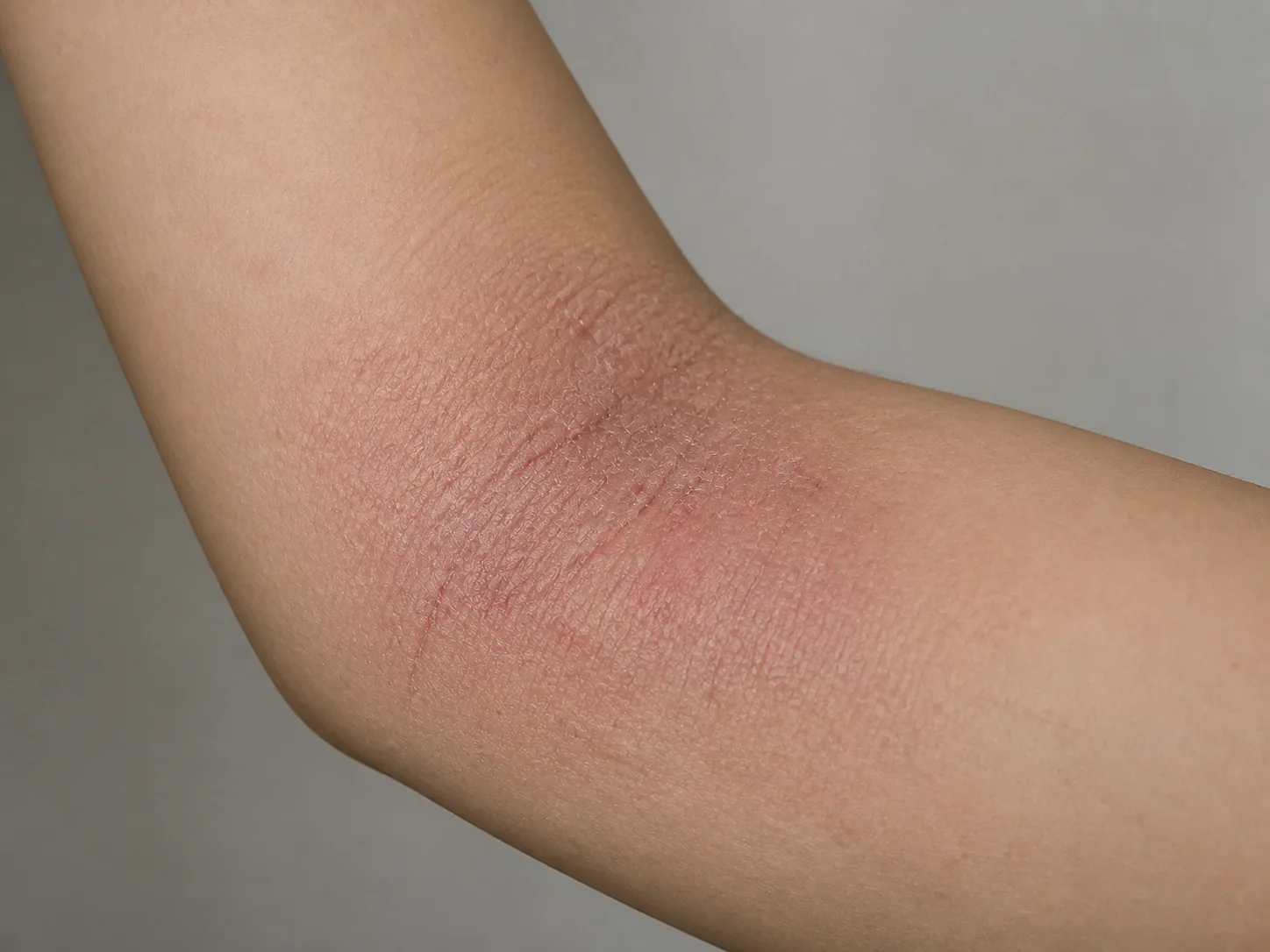
In pediatric atopy, skin folds such as the inner elbows and behind the knees may become more prominent as the child grows. Record nighttime itching and scratch wounds together.
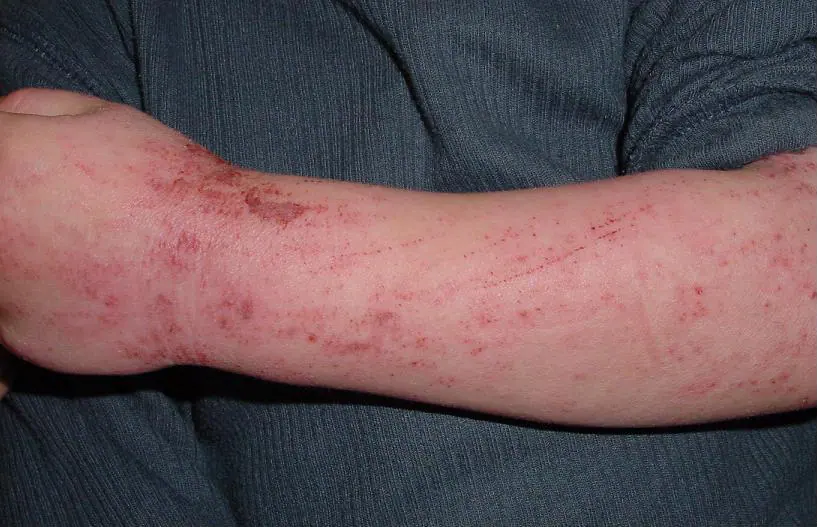
Actual clinical photos and educational close-up examples are materials for comparing possible patterns and cannot be used for diagnosis alone. Mechanism diagrams have simplified complex processes.If these discomforts have recurred
For those wondering if allergy tests are essential for an atopy diagnosis
If itching returns after sweating, seasonal changes, or fatigue, or if areas that were calm during topical application flare up again after a few days, we must examine your overall physical condition during those flare-ups, not just the visible changes in the skin.
For those who wish to show repeated photos and progress even if the skin is less severe on the day of the appointment
Moisturizing and prescriptions ointmentWhen the same area becomes itchy again every time you pause the use of ointment, even if used correctly
For those who wish to simultaneously check itching, sleep disturbance, and exposure to soaps, detergents, or scented products
When you wake up multiple times at night from scratching and find wounds or blood every morningscabwhen these increase
For those asking if differential diagnosis for other skin diseases or a biopsy is necessary due to an insufficient response to treatment
When you wish to reduce recurrences triggered by seasons, sweat, or fatigue through Korean herbal medicine treatment
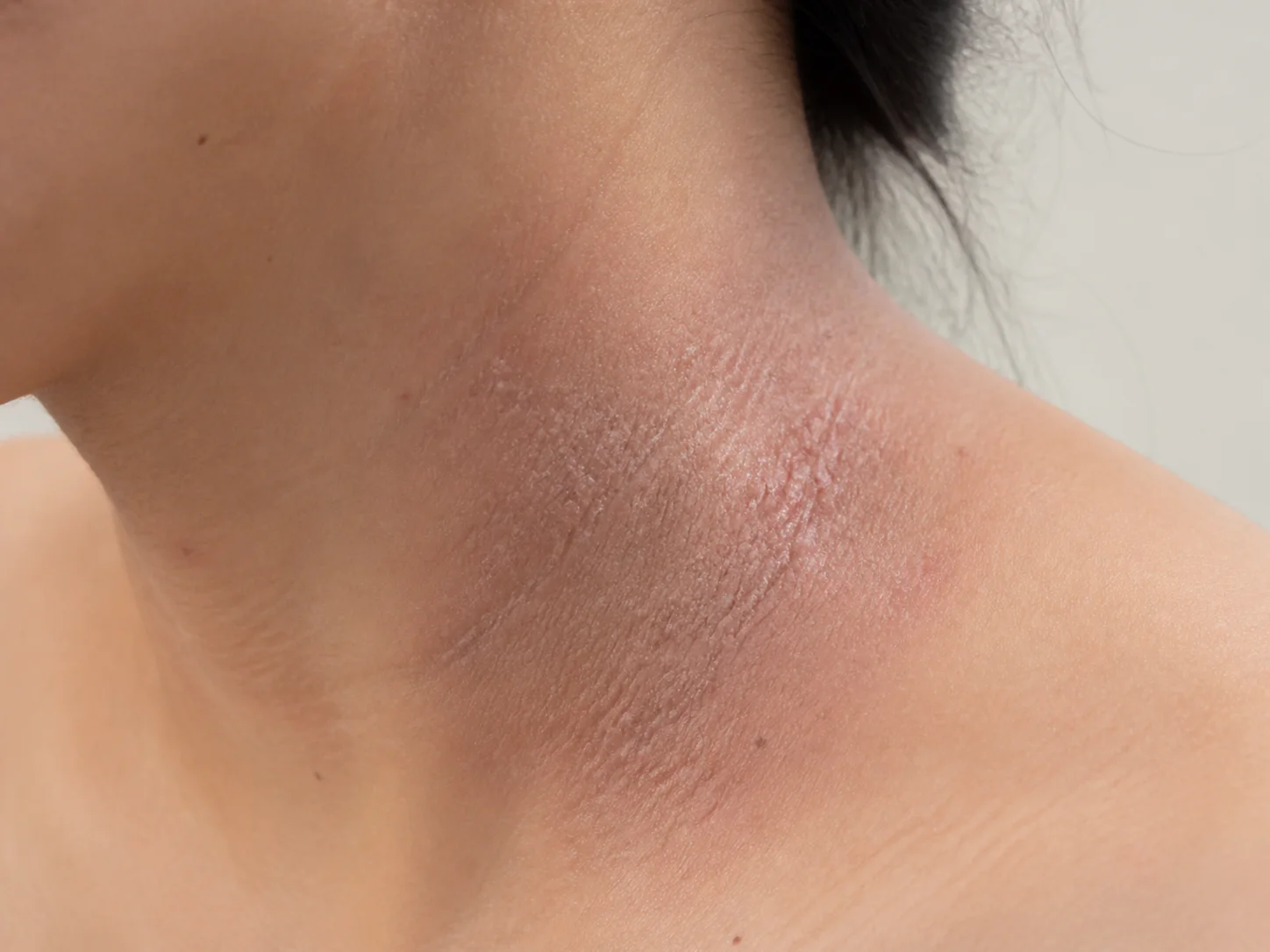
In adults, discoloration and lichenification (thickening of the skin) can remain in areas subject to frequent friction, such as the neck. We compare the surface of the lesion and the surrounding skin rather than the entire face.
Points to distinguish first
How to distinguish atopic dermatitis from similar-looking skin diseases
First, we check for the presence of pain, pus, heat, or clustered blisters
We first check for pain, heat sensation, oozing, pus, fever, clustered vesicles, and spreading around the eyes.
We examine where it occurred and how it recurred, along with the test results
We link photos, sleep patterns, exposure to irritants, and treatment response to the physical examination and selected test results.
We examine remaining itching, dryness, and sleep discomfort even after diagnosis and treatment
We track changes in itching, sleep, and daily functioning while maintaining dermatological treatment.
Why does it keep getting worse?
Reasons why atopic dermatitis persists or recurs
Itching does not end with the skin
Waking up at night from scratching leads to fatigue the next day, which in turn leads to more scratching. In Korean herbal medicine treatment, we consider not only skin color but also the frequency of waking up and the next day's fatigue and concentration levels when evaluating the treatment.
Treatment differs between the red, oozing stage and the chronic, dry stage
During periods of strong heat sensation, oozing, and swelling, we first address inflammation and body heat; during periods of dryness, cracking, and lichenification, we focus on the skin barrier and recovery capacity.
Points to check regarding immunity, body heat, digestion, and fatigue within a single prescription
We determine the direction of the herbal medicine prescription by checking if the skin becomes excessively red even with slight stimulation, if wounds take a long time to heal when fatigued, if there is heat or sweat on the face and upper body, and if sleep and digestion fluctuate along with the worsening of symptoms.
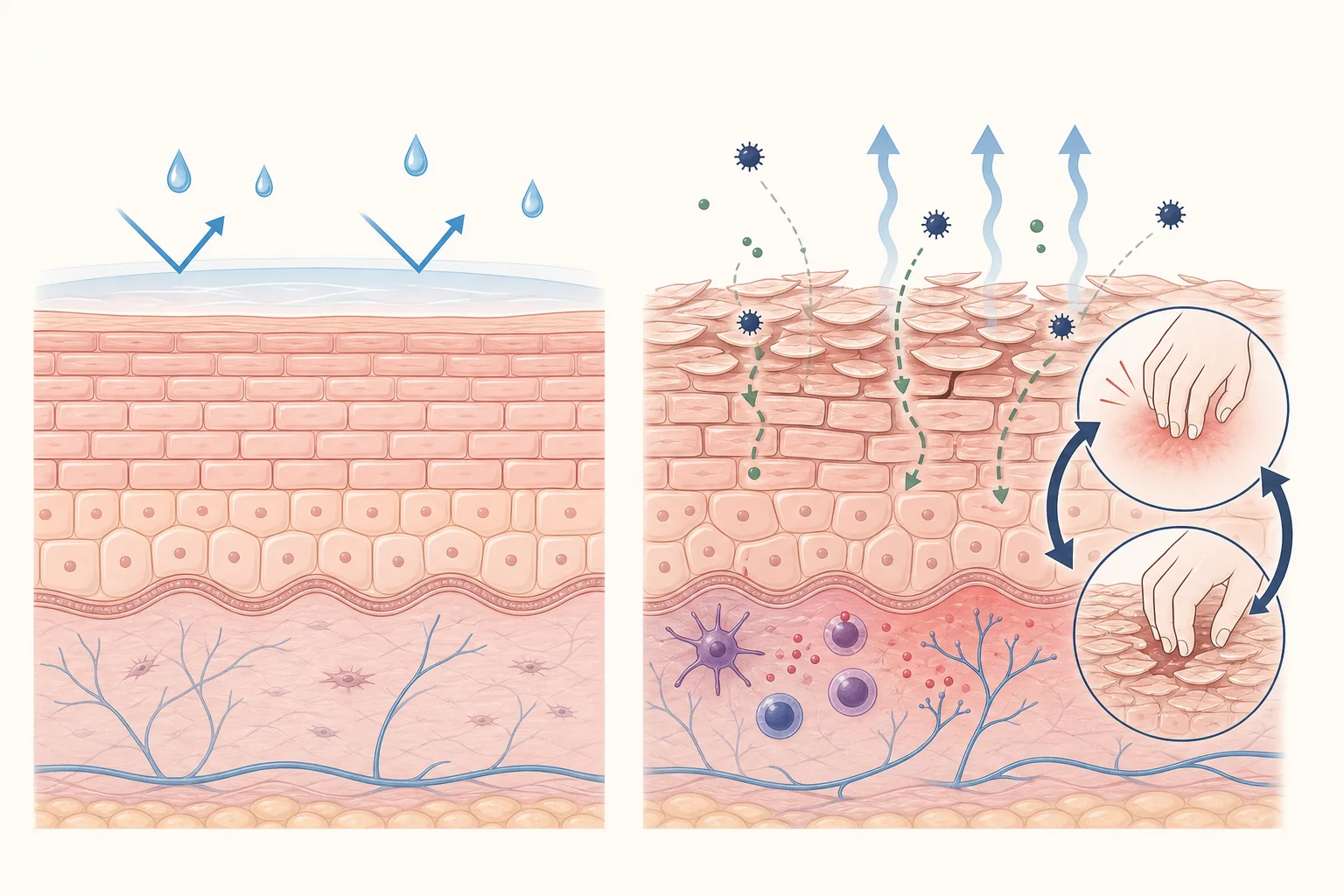
This is a simplified concept showing that when the barrier that retains moisture is disrupted, dryness and exposure to irritants increase, and itching and scratching can further damage the barrier.
Conceptual reference · NIAMS Atopic DermatitisThings to prepare before your visit
What photos and records should I prepare before the medical evaluation?
Please prepare photos of the skin during worsening and improvement, records of itching and sleep, family history related to atopy, exposure to irritants, and the moisturizers, external medications, and test results used.
Try to recall whether the itching or the rash appeared first
We examine the chronological order to see if itching came first, or if swelling, oozing, and cracking occurred after scratching.
We examine where the symptoms appeared and how they look depending on the skin tone
We check the location on the face, skin folds, and hands and feet, as well as color changes to brown, purple, or gray in addition to redness.
We ask about atopy-related medical history
A history of atopic dermatitis, asthma, or hay fever in yourself or your family provides context to aid diagnosis, but is not a sole criterion for a definitive diagnosis.
Changes to monitor during treatment
What changes should I monitor during treatment?
Days of new rashes and days ointment was applied during the week
Please record when it started and how it has changed, including the dates. To make it easier to compare before and after, take photos of the same area from a similar distance and under similar lighting.
Number of times awakened during sleep and skin changes following sweat, heat sensation, or fatigue
Please leave a brief note. Compare not only the visible changes but also whether your sleep, pain, and daily life have become less uncomfortable.
Whether oozing and heat sensation are strong, or if dryness and cracking persist for a long time
Please also include the dates of any medications, ointments, or procedures you are currently using. This makes it easier to compare what led to improvement or worsening.
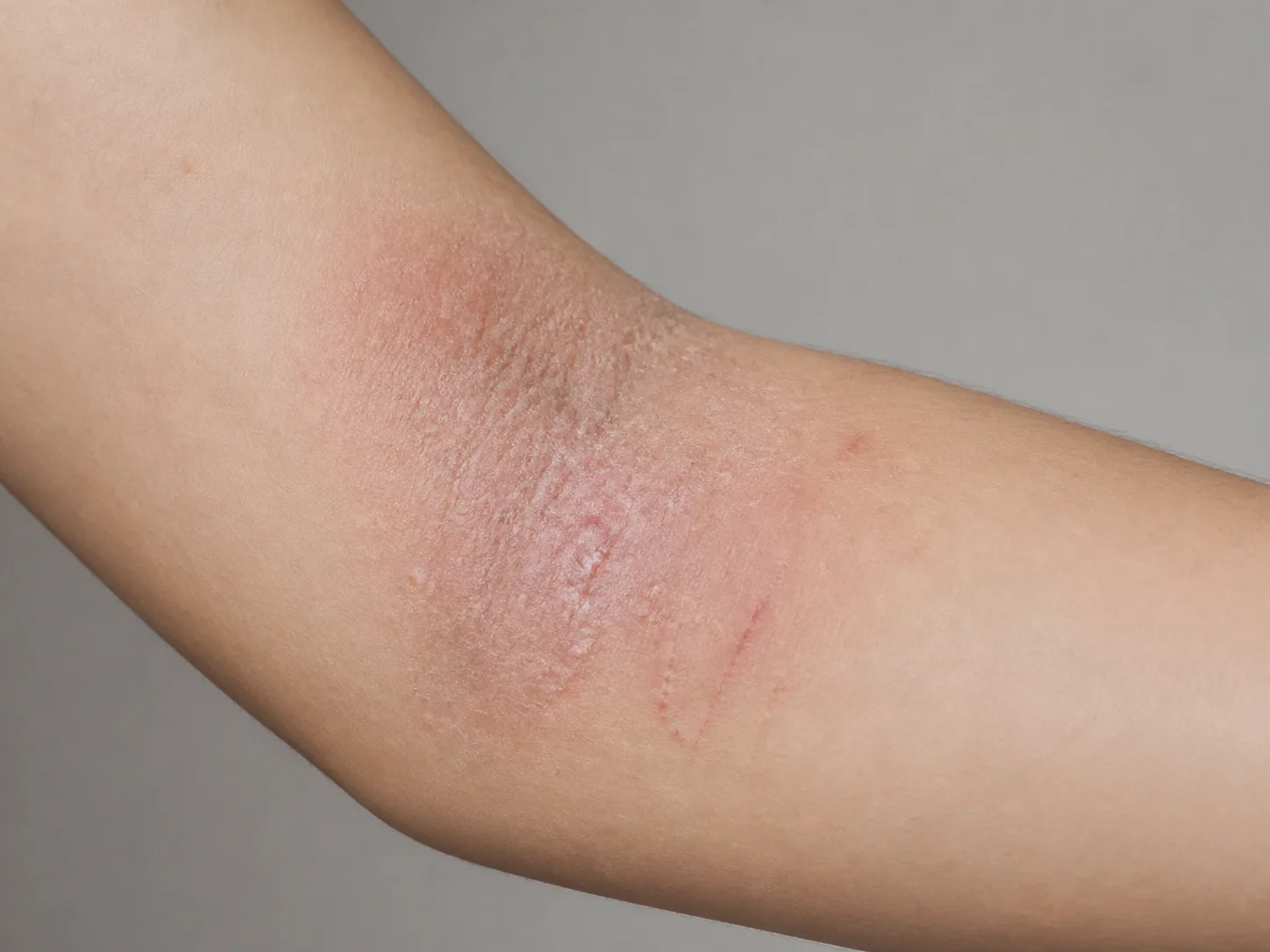
This image reproduces one possible pattern seen in atopic dermatitis or chronic eczema. It is not an actual patient photo or a diagnostic criterion.
When planning herbal medicine treatment
For atopic dermatitis, the direction of herbal medicine treatment is determined based on the currently prominent symptoms
Even with the same diagnosis of atopy, the prescription differs for someone with red, hot, oozing skin versus someone with dry, thickened skin who scratches every night. We perform a pattern identification (Byun-jeung) to see how sweat, body heat, sleep, digestion, and fatigue connect to the actual worsening of symptoms, rather than focusing only on the skin barrier and immune hypersensitivity.
Pattern identification (Byeon-jeung) in Korean medicine is not about giving a different name to a disease. Multiple patterns can overlap in one person, and as the skin changes, for example, as oozing and heat decrease and dryness or cracking remain, the prescription is adjusted accordingly.
When the skin is red, hot, and oozing
- Primary skin observations
- We observe the vivid redness, heat sensation, edema, moist oozing, and the speed at which it spreads after scratching.
- Overall body condition to check alongside skin
- We check if symptoms worsen with heat and sweat, and if upper body heat, thirst, and restless sleep overlap.
- Primary considerations for herbal medicine prescription
- Priority is placed on clearing heat and removing dampness to first reduce the burden of heat sensation, moist inflammation, and intense itching.
When the skin is dry, thickened, and cracking
- Primary skin observations
- We observe dead skin cells, lichenification, color changes, cracks in skin folds and hands, and the time it takes for wounds to heal.
- Overall body condition to check alongside skin
- We ask about dryness of the skin and mouth, coldness in the hands and feet, easy fatigue, and scratching during sleep.
- Primary considerations for herbal medicine prescription
- Emphasis is placed on nourishing the blood, moisturizing dryness, and restoring the skin barrier so that the skin retains moisture and wounds recover.
When digestion is weak, swelling occurs, and recovery is slow
- Primary skin observations
- We check if the borders are blurred, if the area remains damp for a long time or swells repeatedly, and if oozing persists.
- Overall body condition to check alongside skin
- We check if post-meal bloating, loose stools, edema, decreased appetite, and fatigue occur together during flare-ups.
- Primary considerations for herbal medicine prescription
- We adjust the proportion of strengthening the spleen and removing dampness to reinforce digestion and fluid metabolism, ensuring skin inflammation does not persist.
When itching spikes around bedtime or after stress
- Primary skin observations
- We check if redness and scratching increase in the evening and if new wounds increase every morning.
- Overall body condition to check alongside skin
- We ask if difficulty falling asleep, frequent waking, tension, heart palpitations, and upper body heat occur alongside the itching.
- Primary considerations for herbal medicine prescription
- We aim to break the itch-scratch cycle by lowering skin heat and itching while restoring sleep.
How is the herbal medicine prescription adjusted?
- First, we distinguish whether the skin is wet and hot, or dry and thickened
If active oozing and heat are central, we prioritize clearing heat and removing dampness; if chronic dryness and lichenification are central, we prioritize nourishing the blood, moisturizing dryness, and restoring the skin barrier.
- We add systemic conditions that actually cause recurrence
Only clues among sweating, body heat, sleep, digestion, and fatigue that fluctuate in tandem with the skin are reflected in the prescription.
- We adjust the focus based on new rashes, night sleep, and recovery speed
As new skin changes and oozing decrease, we adjust the proportion of heat-lowering treatments and move to the recovery stage by monitoring dryness, wounds, and the interval between recurrences.
When should I consider Korean herbal medicine treatment?
- When the same area becomes itchy again every time you pause the use of moisturizers and prescribed ointments
- When you wake up several times a night due to scratching and wounds or scabs increase every morning
- When you want to reduce flare-ups that recur according to season, sweat, or fatigue through Korean herbal medicine treatment
What will be asked during the medical evaluation?
- Days in a week when new rashes appeared and days when ointment was applied
- Number of times you woke up and skin changes following sweating, heat sensations, or fatigue
- Whether oozing and heat sensations are strong, or if dryness and cracking persist for a long time
Things to prepare before the consultationPlease prepare photos of the skin during flare-ups and improvement, records of itching and sleep, family history of atopic dermatitis, exposure to irritants, and the moisturizers, external agents, and test results used.
If pus, pain, or redness spreads rapidly, or if you have a fever, lesions inside the eyes or mouth, shortness of breath, or sudden facial swelling, please visit a dermatology clinic or seek emergency care first. After confirming that such urgent situations are not present, Baekrokdam provides herbal medicine treatment for chronic and recurring skin diseases.
Consult about atopic dermatitis progressFrequently Asked Questions
Frequently Asked Questions about Atopic Dermatitis
Which test is used to confirm a diagnosis of atopic dermatitis?
Diagnosis is generally made by synthesizing the appearance and distribution of the skin, the pattern of itching and recurrence, and the patient's medical history. There is no single blood test for confirmation.
Can I come for a consultation on a day when my skin looks better?
Yes, you can. It is helpful to prepare photos from when the condition was severe, as well as records of when it started and recurred, itching and sleep patterns, and your response to treatment.
When is a skin biopsy performed?
Medical staff may choose a biopsy when the appearance of the skin is atypical or when other skin diseases need to be ruled out.
Should I stop using ointment before atopic dermatitis tests?
Do not stop using it on your own. Inform the clinic of the name, application area, and duration of the topical agents used, and follow the specific instructions of the testing institution.
Should I continue applying moisturizer for atopic dermatitis even after the skin improves?
Yes. Even if the skin appears less dry, consistent use helps manage the skin barrier and the interval between recurrences.
How long should I apply topical steroids?
This varies depending on the area, the strength of the product, and the severity of the condition. Follow the prescribed amount and duration, and do not increase or stop the treatment on your own.
When should phototherapy or systemic treatment be considered?
A dermatologist will review these options if the condition persists extensively despite sufficient moisturizing and topical treatment, or if there is significant impairment to sleep, school, or work.
References and update date
Doctor of Korean Medicine Choi Yeon-seung verified the content based on the official and professional materials below and updated it on 2026-08-23.
- American Academy of Dermatology, Atopic dermatitis diagnosis and treatmentThe role of skin examination, symptom inquiry, and selective skin biopsy
- NIAMS, Atopic Dermatitis: Diagnosis, Treatment, and Steps to TakeMedical history, exposure to irritants, skin examination, and selective blood or tissue biopsies
- NHS, Atopic eczemaContinuous moisturizing, local steroids, and symptoms suspected to be infection or pompholyx (dyshidrotic eczema)
- AAD, Atopic dermatitis symptomsItching, dryness, scaling, oozing, and chronic thickening, differences by adult distribution and skin tone, and symptoms suspected to be skin infection
- NIAMS, Atopic DermatitisUnknown causes, the complex interaction of skin barrier, immune, genetic, and environmental factors, and the itch-scratch-damage cycle