Eczema Differentiation
Atopic Dermatitis, Contact Dermatitis, and Eczema: Clues to Distinguish Similar Itching
Under the common symptoms of redness and itching, we compare the progression of atopic dermatitis, contact dermatitis, and other types of eczema.
Click on unfamiliar terms to see their meanings immediately.
Eczema is a collective term for various inflammatory skin diseases rather than a single disease name. Age of onset, borders of the affected area, recurring locations, and family history must be examined together for diagnosis.
Points to check in the photos first
Even if they look similar, the dead skin, blisters, and borders may differ
We have provided both typical appearances and examples that look slightly different. Do not decide based on a single similar photo; compare how long symptoms like dead skin, wheals, comedones, or oozing have persisted in the same area.
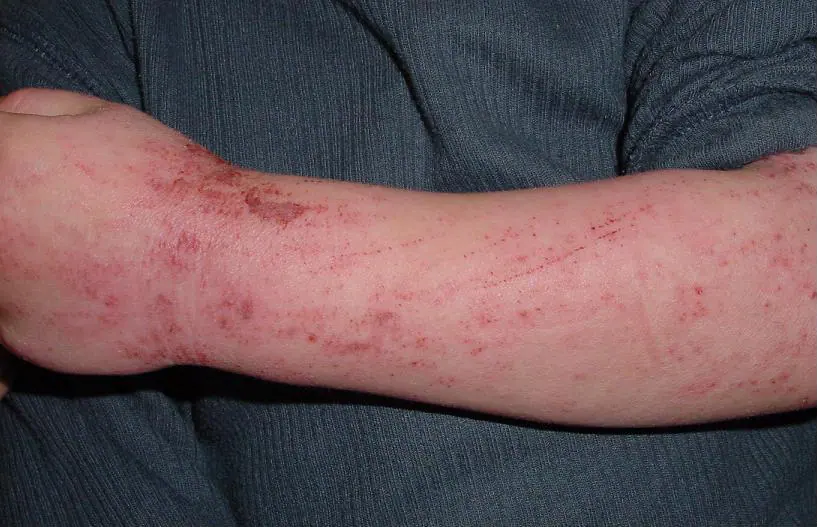
Folded areas · dryness and scratch marks · recurring progression. Differential diagnosis from contact dermatitis and infections.
Photo: Eisfelder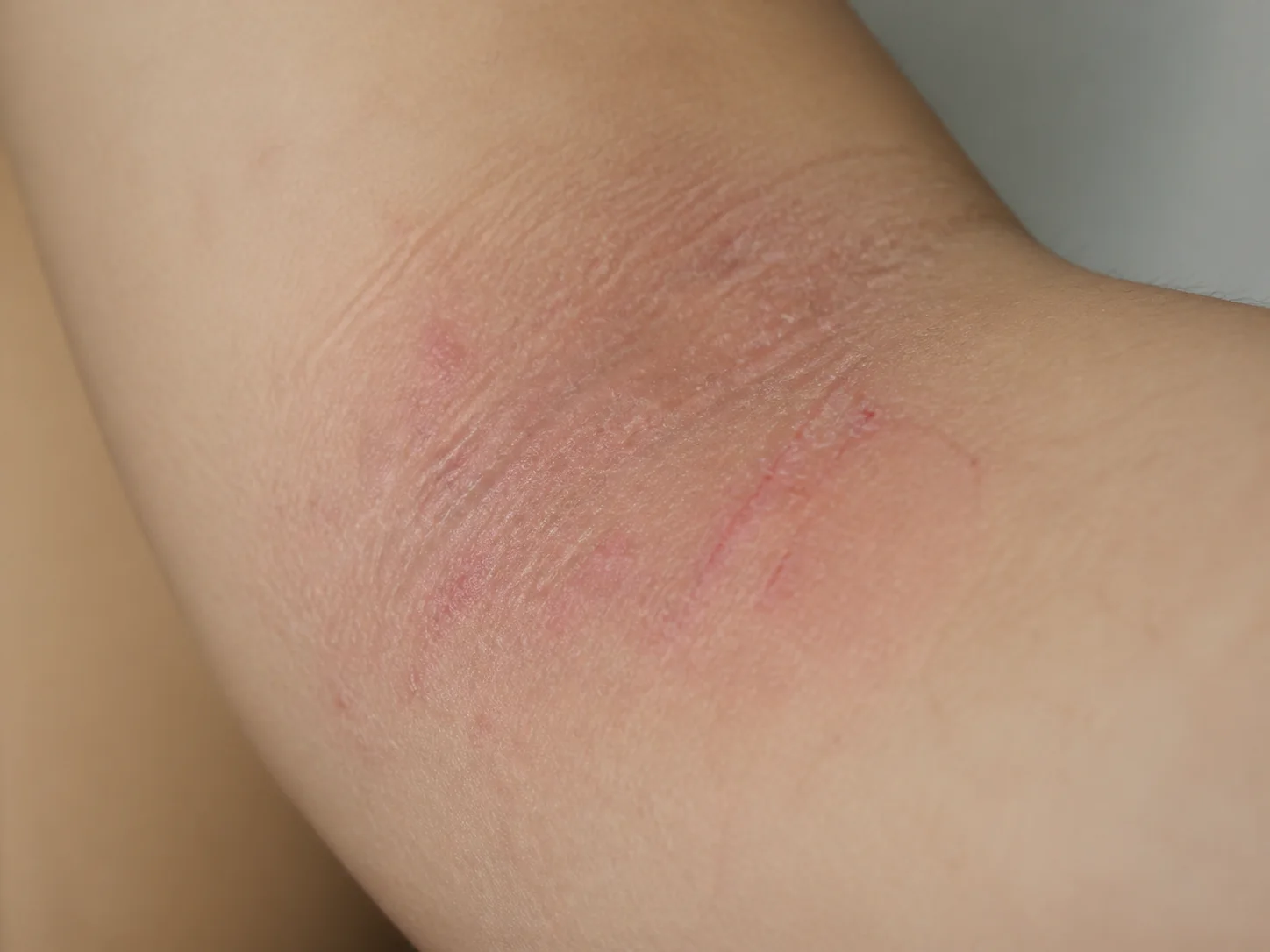
We examine dryness, fine flaking, skin texture, and scratch marks in the folding areas. Contact dermatitis or infections with similar appearances are distinguished through progress monitoring and examination.
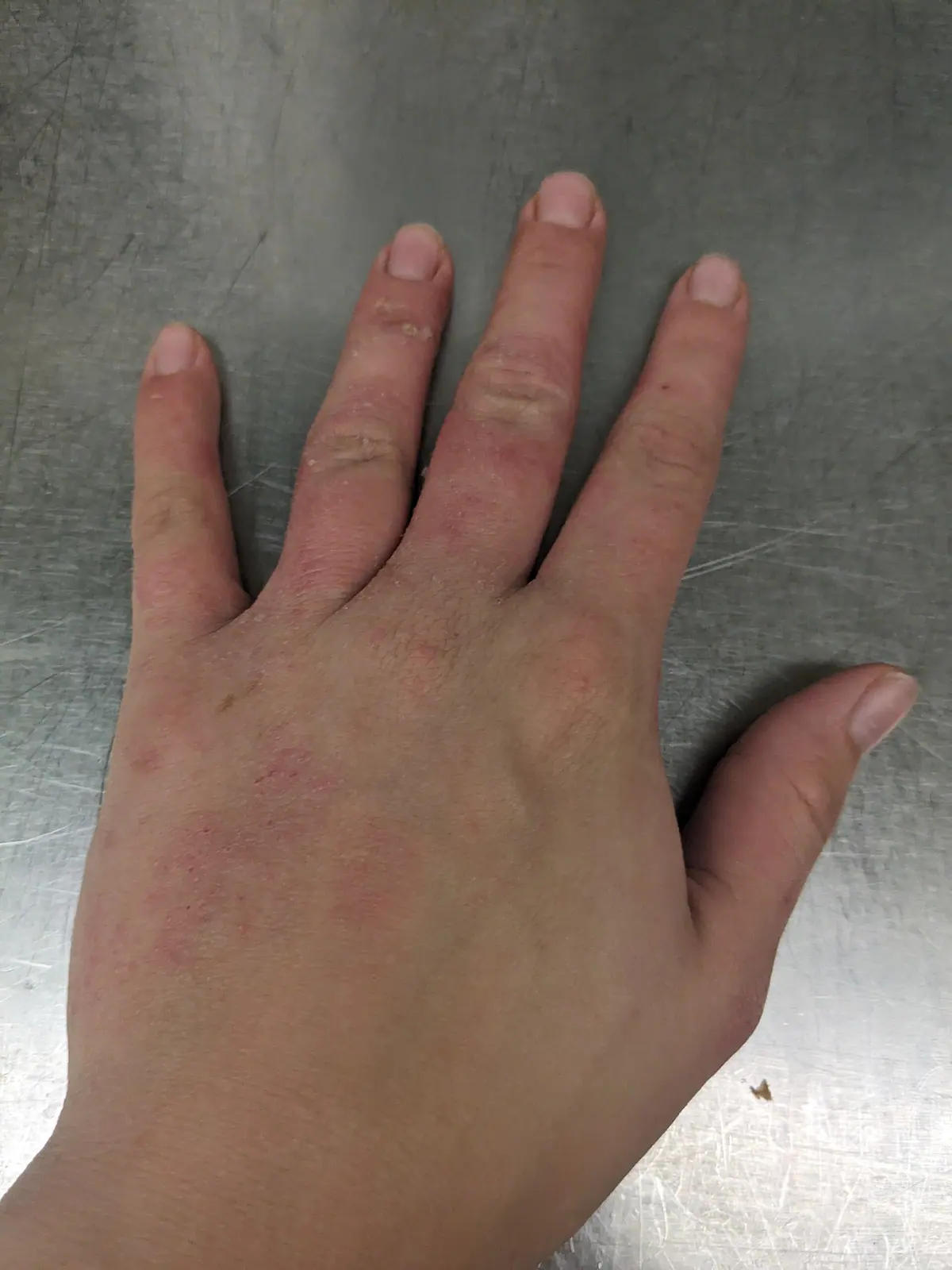
Area of contact · redness and dryness · before and after using a new product. Differential diagnosis from hand eczema and infections.
Photo: Hannah Clover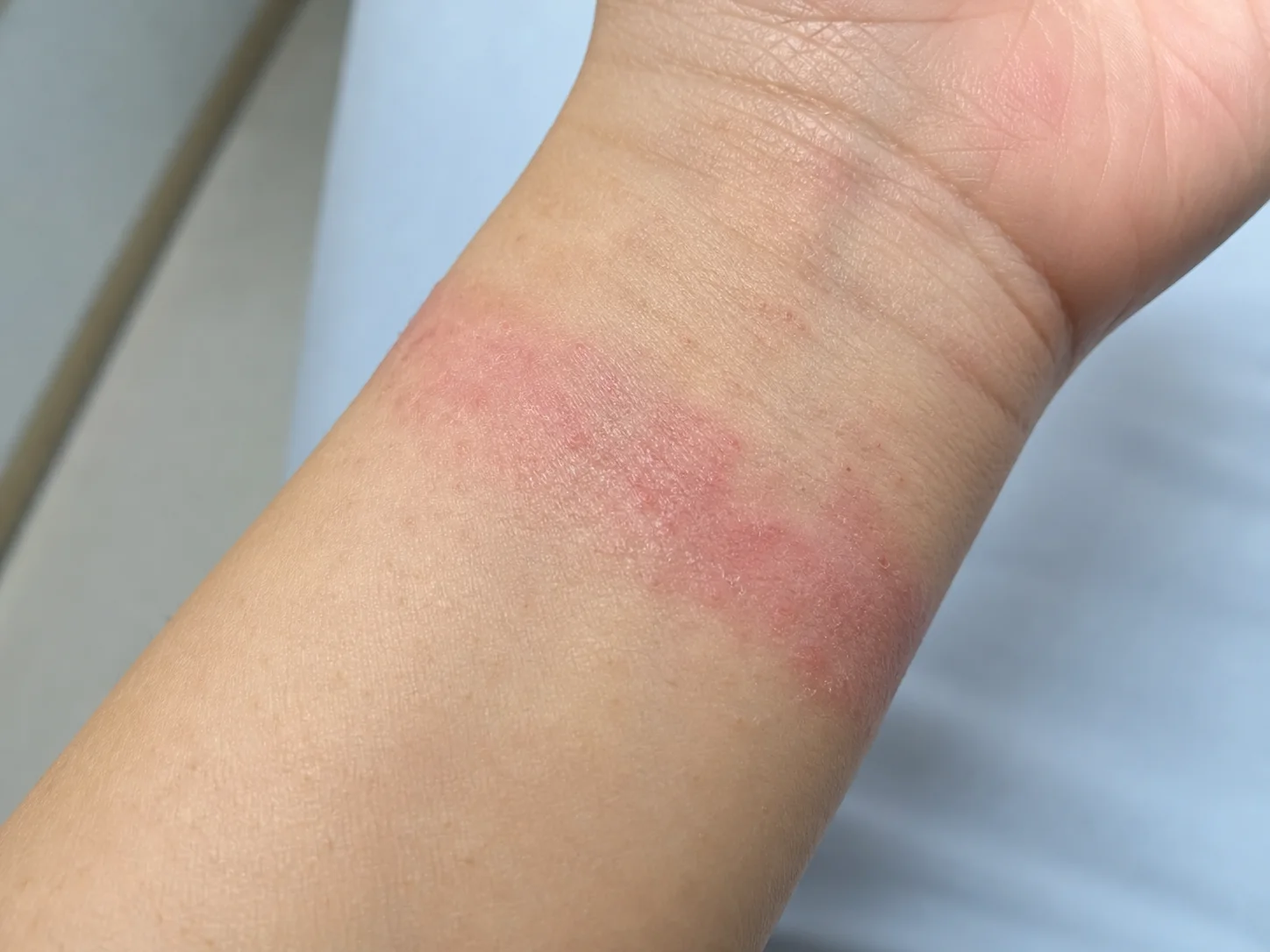
Even if the boundary is not perfectly straight, whether the rash overlaps with the area of contact, such as from a watch, band, or adhesive, serves as a clue. The date the product was changed is also verified.
| Points to check | Atopic Dermatitis | Contact Dermatitis | Other Eczema |
|---|---|---|---|
| Onset and recurrence | Long-term recurrence with age-specific distribution in areas such as skin folds and the face | Centered on the exposed area after contact with a new substance | Varies depending on cause and form |
| Appearance | Dryness, scratch marks, thickening | Relatively clear boundaries; possibility of blisters or oozing | Various forms such as coin-shaped or hand eczema |
| Helpful Records | Family history, sleep disturbance, season | Start date of using cosmetics, metals, or detergents | Location, duration, occupational exposure |
| Examination | Centered on physical examination; exclusion of other diseases if necessary | Consider patch testing for allergic types | Infection tests, biopsies, etc., depending on the form |
If you have been told you have 'eczema,' the following questions remain
Eczema itching, redness, dryness, oozingrefers to a group of various diseases characterized by itching, redness, dryness, oozing, and cracking. Atopic dermatitis is one type of eczema, while contact dermatitis, pompholyx (dyshidrotic eczema), and nummular eczema may differ in their onset conditions and distribution.
The area of contact and the date a product was first used are clues for contact dermatitis
Contact dermatitis is identified when a rash with clear boundaries appears after contact with substances such as earrings, watches, cosmetics, hair dyes, or detergents. It is better to keep photos of the products and the start date rather than relying on memory.
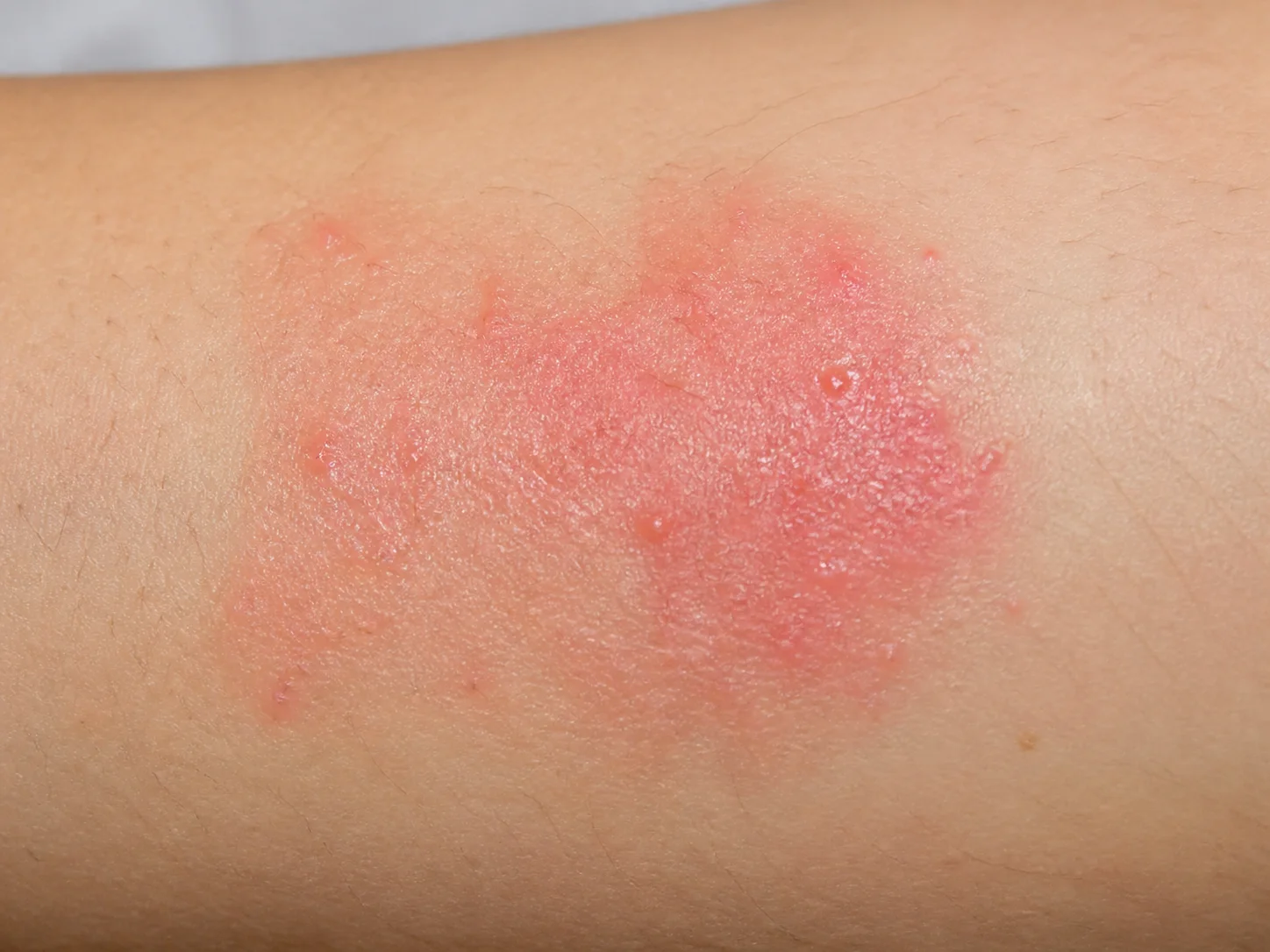
During the acute phase, not only redness but also small blisters, oozing, and peripheral scaling may be visible. If pus, heat, or pain overlap, we first check for infection.
Atopy is diagnosed by observing progression and distribution rather than a single test
Atopic dermatitis is diagnosed by synthesizing skin examinations, symptoms, onset timing, recurring locations, and family history of atopy. A cause is not determined by a single blood test or food test, nor are extensive restrictive diets started based on them.
Please bring this information for atopy or contact dermatitis consultations
Please write down the age of onset, frequently recurring areas, the date you started using new cosmetics, detergents, or gloves, and your family's history of atopy. It is helpful to prepare both photos showing which part of the body is affected and close-up photos of the skin.
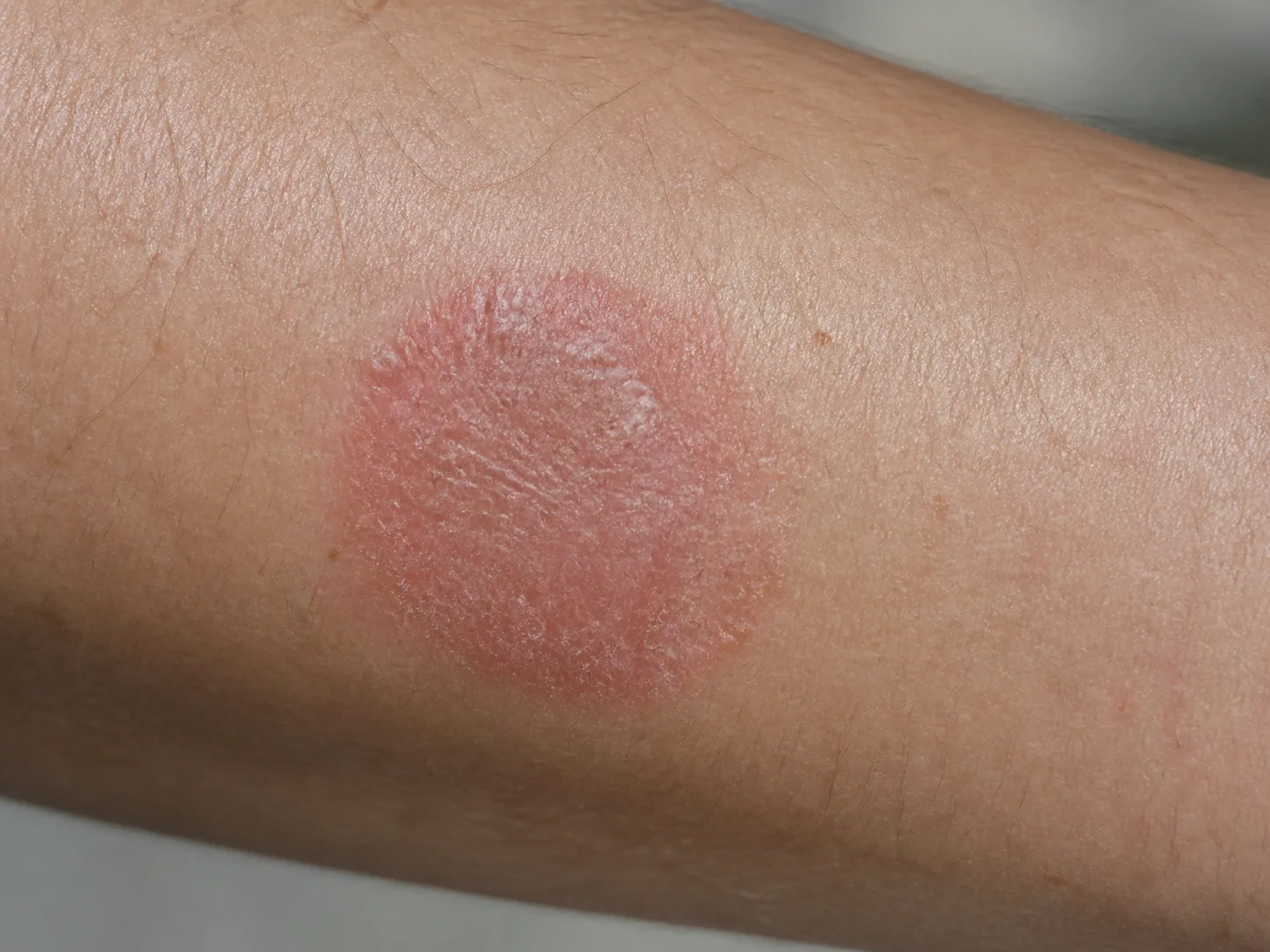
Eczema can also appear round, which may be confused with tinea or psoriasis. We examine whether the center fades, whether the keratin on the edges is prominent, and whether there has been oozing and a recurring course, along with information beyond the photos.
Rather than the common symptom of itching, first look at where it occurred, what it touched, and how long it has recurred.
Next reading
Content to follow
Could it be atopic dermatitis if itching and dryness recur?
How is atopy distinguished from eczema or contact dermatitis?
Why does Korean medicine treatment consider both the skin barrier and sleep together?
Skin terms used in this differential guide
When herbal medicine treatment is the primary focus
We set the goals for herbal medicine treatment based on your previous treatments and when symptoms recurred
Even if inflammation subsides temporarily, the same areas may be affected repeatedly if the itch-scratch cycle, decline in skin barrier function, and sleep disturbance occur together. To address this repetitive cycle and systemic worsening conditions, Korean herbal medicine treatment can be the central focus.
We ask where it appeared and when it worsened again
Prescription priorities are determined by analyzing the proportion of oozing, heat sensation, dryness, and lichenification, as well as age, affected areas, and accompanying patterns of sleep, digestion, and fatigue.
We check if not only the itching, but also sleep and daily life are improving
We compare not only the redness of skin changes but also the frequency of waking up at night, scratch marks, the interval between applications of topical agents, and the recovery of daily life.
We set the goals for herbal medicine treatment by identifying the problems that need to be resolved first
If there are causes that require immediate priority, such as infection or rapid worsening, those treatments come first. Subsequently, for herbal medicine treatment, we determine the primary goal of recovery by examining current discomfort, recurring patterns, sleep, digestion, and fatigue, and coordinate the sequence with necessary dermatological treatments.
While reducing aggravating factors through lifestyle management, herbal medicine treatment determines the initial target by analyzing the pattern of lesions, sleep, digestion, and fatigue through pattern identification (Byeonjeung). Necessary skin treatments are continued in accordance with the progress.
Consult about treatmentEvidence and Update Information
This content was organized by Korean medicine doctor Choi Yeon-seung and updated on 2026-08-23.
- American Academy of Dermatology, Eczema types
- American Academy of Dermatology, Contact dermatitis
- American Academy of Dermatology, Atopic dermatitis diagnosis and treatmentThe role of skin examination, symptom inquiry, and selective skin biopsy