Start with the most common questions about dermatographism
Points to check first
Dermatographism: Symptoms and when to seek prompt medical evaluation
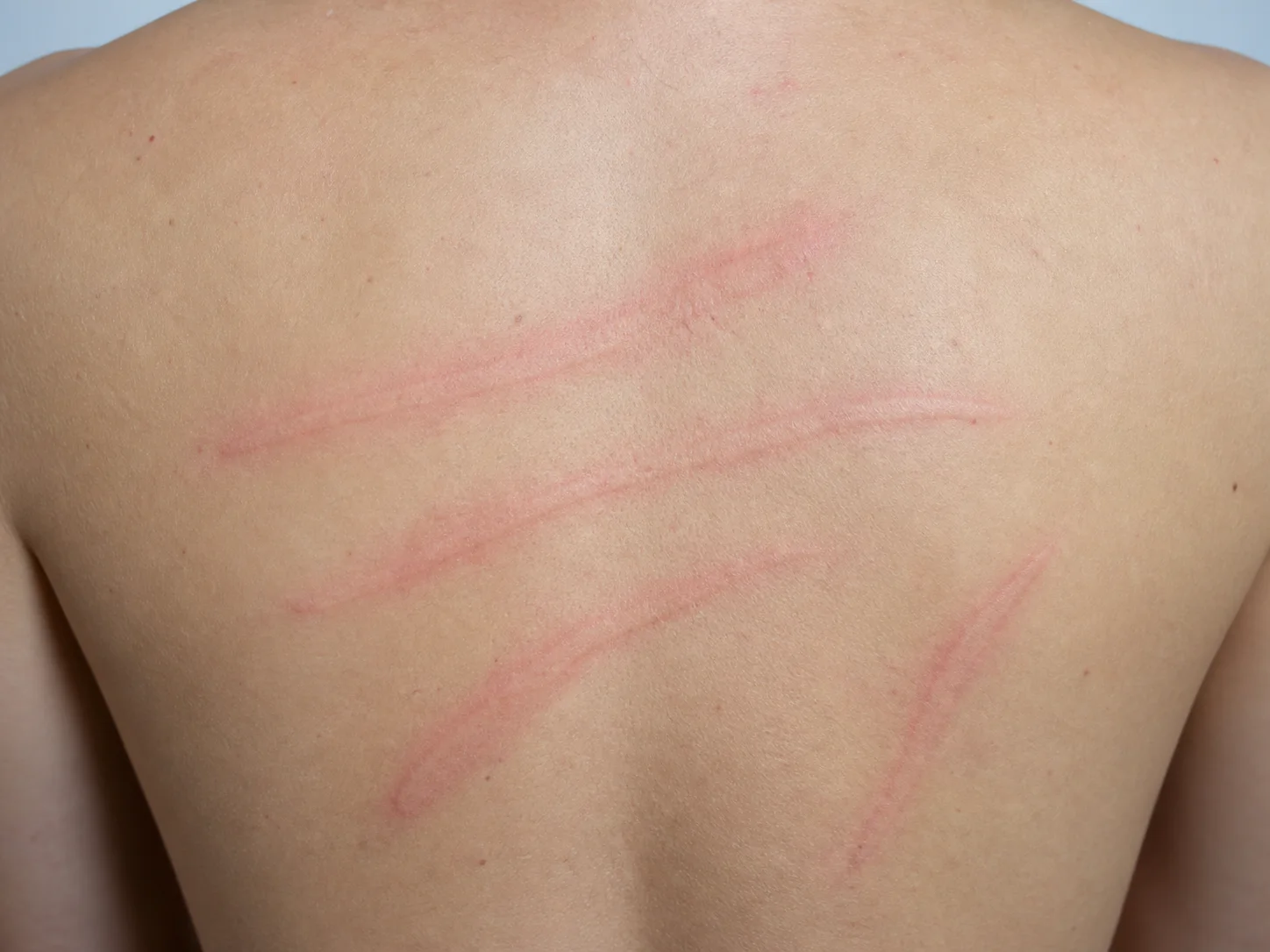
Dermatographism is a condition where raised, red lines appear along the paths of light scratching or rubbing from collars, towels, or bedding, or whealswhere wheals occur. This is accompanied by swelling and itching, appearing within minutes of stimulation and usually subsiding within 30 minutes. In symptomatic types, it occurs even with light pressure, and itching may worsen in the evening or at night, affecting sleep and fatigue levels. Rarely, the reaction is delayed and may last for several hours. If wheals appear throughout the body regardless of stimulation, or if accompanied by swelling of the lips, tongue, or throat, difficulty breathing, or a feeling of fainting, it is not viewed as dermatographism alone.
Distinguishing Symptoms from Emergencies
Determine when to seek medical evaluation based on the lines of stimulation, onset time, resolution, and systemic swelling
Rather than a single line shape, we look at how quickly it appears and disappears after a specific stimulus.
| Visible or Felt Changes | What to check | Priority action |
|---|---|---|
| Immediate swelling and redness along scratched lines | Typical dermatographic reaction | Photos and time records |
| Repeated itching even with light friction from clothing or bedding | Possible symptomatic dermatographism | Dermatology evaluation |
| Delayed and prolonged reaction with pain | Delayed-type or other pressure urticaria | Diagnostic Re-evaluation |
| Wheals moving across the body without stimulation | Possible other types of urticaria | Medical evaluation after recording area and duration |
| Swelling of tongue or throat, difficulty breathing, or feeling of fainting | Possible anaphylaxis | Immediate emergency assistance |
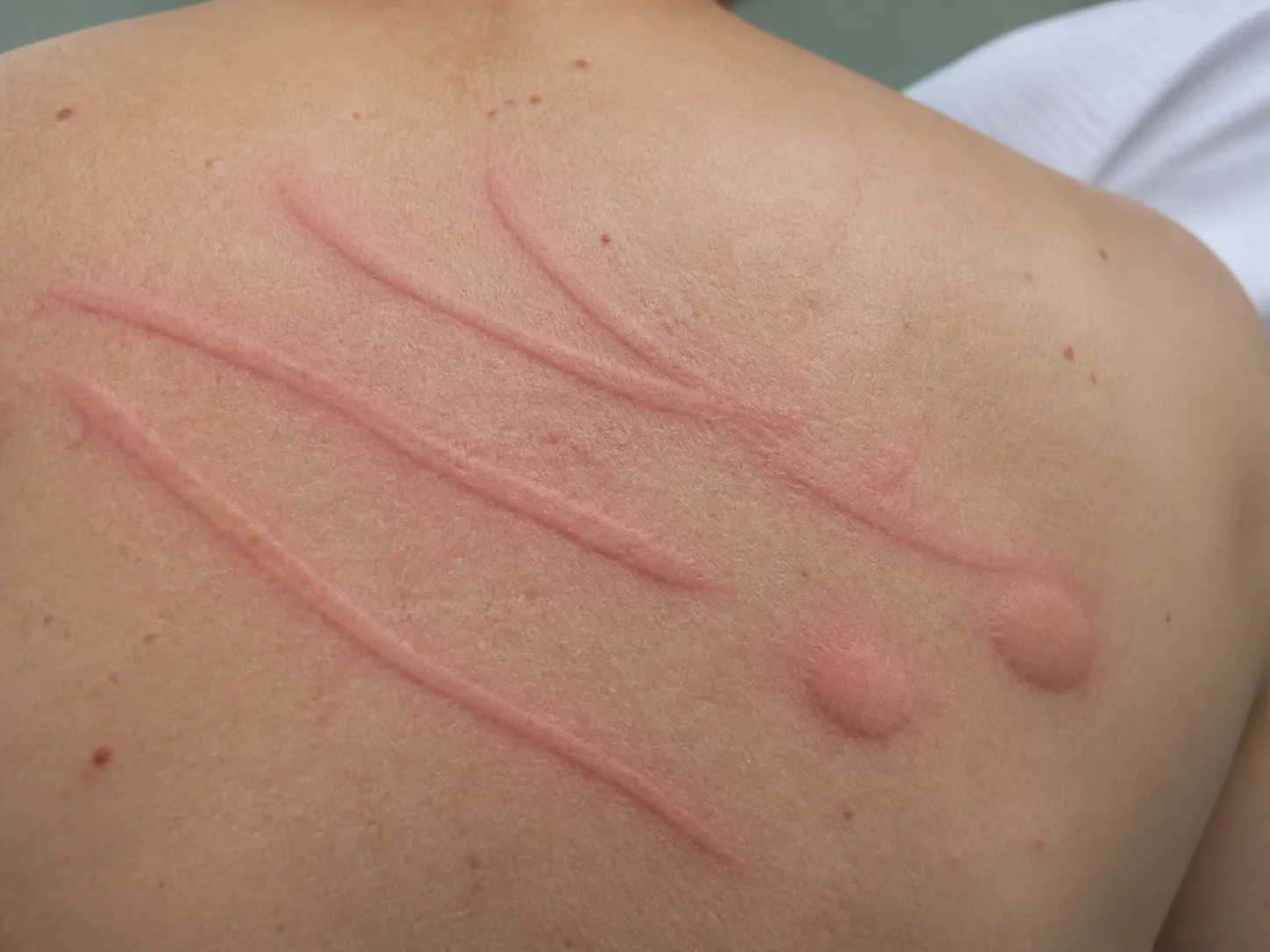
Hives do not only appear as round rashes; they can also rise in linear patterns following friction or pressure. A key clue is how quickly the swelling disappears without leaving any surface scaling or wounds.
Actual clinical photos and educational close-up examples are materials for comparing possible patterns and cannot be used for diagnosis alone. Mechanism diagrams have simplified complex processes.If these discomforts have recurred
For those who wake up at night due to swollen lines on the back and waist caused by bedding friction
Dermatographism causes wheals to form along scratched or pressed lines, which can make clothing, bag straps, and bedding burdensome. We analyze the friction threshold, duration, and the influence of heat, dryness, tension, and fatigue.
For those whose skin looks like red, raised lettering where lightly scratched with a fingernail
When marks from clothing seams, bag straps, or bedding swell and itch daily
For those who develop itchy lines and wheals after friction from collars, bag straps, or towels
antihistaminesWhen nighttime scratching and linear wheals recur if treatment is skipped
For those who experience swelling of the lips or tongue, or changes in breathing or swallowing along with wheals
When the intensity of the reaction fluctuates along with heat, dryness, and stress
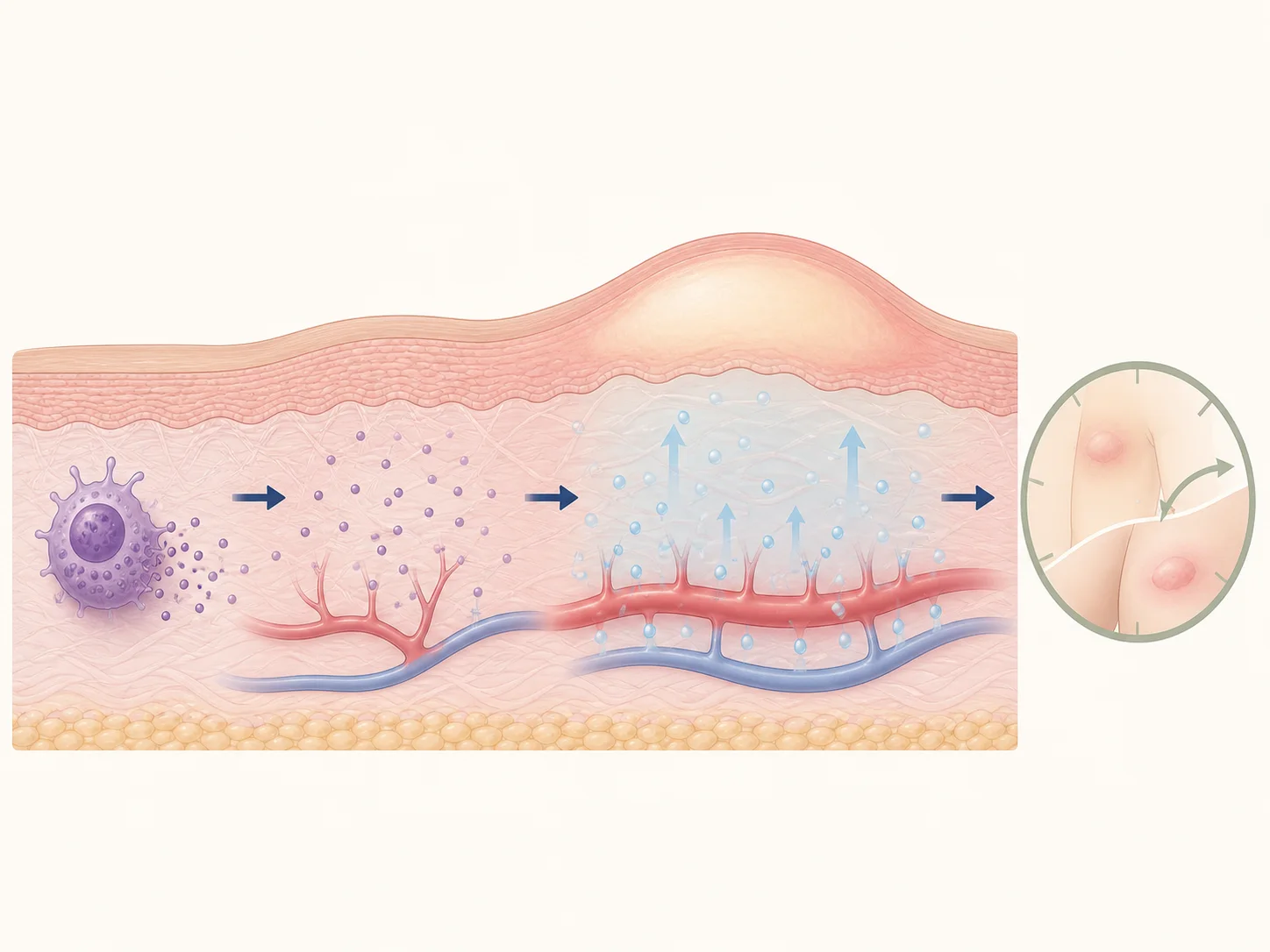
This is a simplified flow showing how temporary edema occurs around blood vessels after the release of mediators, causing wheals to rise. This does not mean all hives have the same triggering cause.
Conceptual reference · AAD Hives: CausesPoints to distinguish first
Dermatographism: How to distinguish it from similar-looking skin diseases
Screening for airway angioedema and anaphylaxis
First, check for swelling of the tongue or throat, throat tightness, breathing or swallowing difficulties, and feelings of fainting.
Check stimulation, wheal formation, and disappearance together
Connect photos with the type of friction and the time of onset, peak, and disappearance.
Check if the swollen skin, sleep, and daily life improve together
While maintaining antihistamine treatment itching· Record changes in sleep, clothing, and work environment.
Why does it keep getting worse?
Reasons why dermatographism persists or recurs
Observe when the skin, which swells along the line within a few minutes, disappears
Record how many minutes after light pressure the swelling occurs and how long it lasts.
The goal is not a lifestyle that avoids all friction
Observe changes that raise the reaction threshold and reduce itching and sleep disturbance.
Check body heat, skin barrier, tension, and immune hypersensitivity together
Perform a pattern identification (Byeonjeung) to determine which conditions, such as heat, dryness, fatigue, or stress, actually exacerbate the reaction.
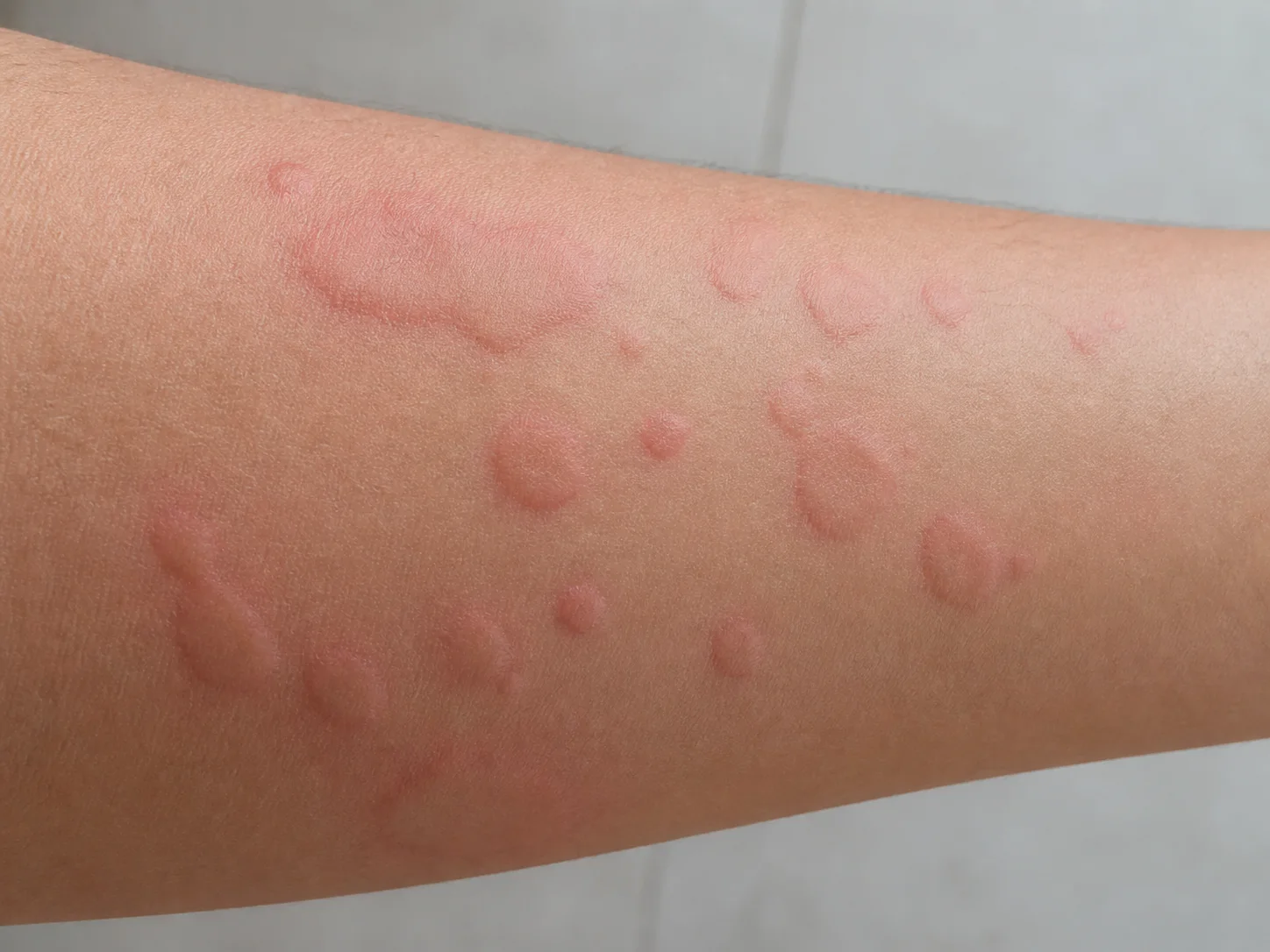
The key clue is whether the surface has almost no scaling and whether the wheals rise smoothly and then shift location. Please record whether the same lesion remains after several hours, along with the time the photo was taken.
Things to prepare before your visit
What photos and records should I prepare before the medical evaluation?
Please prepare photos of the wheals, the type of stimulus, the time of onset and disappearance, itching and sleep patterns, antihistamine intake, and any systemic edema.
Follows the exact shape of scratching or friction
Raised lines and edema occur along the paths where fingernails, collars, bag straps, or towels touched the skin.
Itching may accompany the reaction
Unlike a simple skin-writing response, the symptomatic type feels itchy and uncomfortable even with light stimulation.
Report mucosal reactions such as those on the lips or in the oral cavity
If there is edema outside the skin, check the affected area, duration, and any changes in breathing or swallowing.
Changes to monitor during treatment
What changes should I monitor during treatment?
Photos and the time of onset and disappearance after friction
Please record when it started and how it has changed, including the dates. To make it easier to compare before and after, take photos of the same area from a similar distance and under similar lighting.
The most difficult situations during dressing, exercise, showering, or sleep
Please leave a brief note. Compare not only the visible changes but also whether your sleep, pain, and daily life have become less uncomfortable.
Skin dryness, upper body heat, tension, and fatigue
Please also include the dates of any medications, ointments, or procedures you are currently using. This makes it easier to compare what led to improvement or worsening.
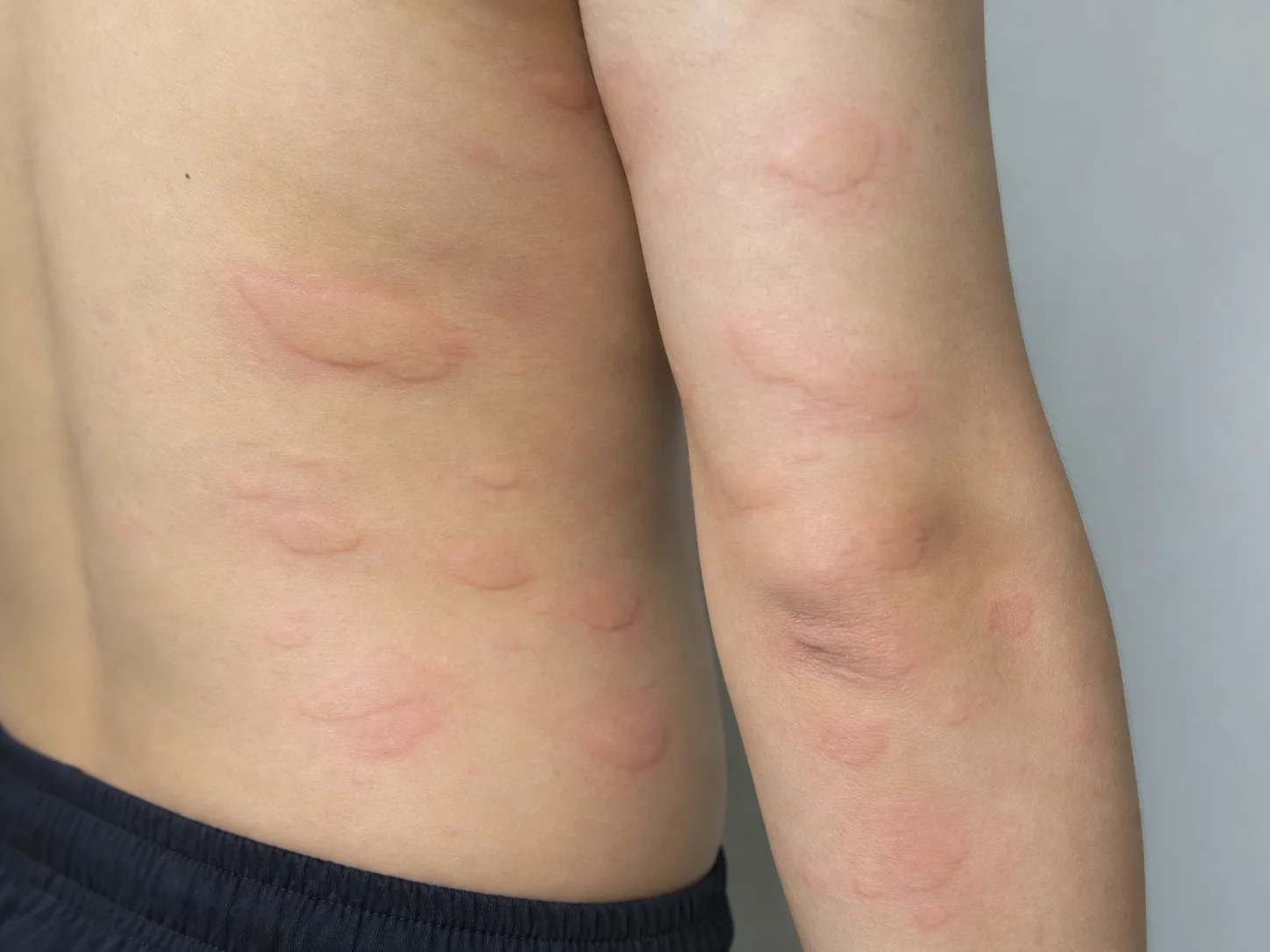
This reproduces one possible distribution of wheals seen in hives. Please check the duration of a single lesion and any respiratory or mucosal symptoms before reviewing the photos.
When planning herbal medicine treatment
For dermatographism, the direction of herbal medicine treatment is determined based on current prominent symptoms
Even for the same linear wheals, we examine whether they are red and hot, whether they start by scratching dry skin, whether there are significant changes in sweat and body temperature, or whether the threshold lowers during tension and lack of sleep.
Pattern identification (Byeon-jeung) in Korean medicine is not about giving a different name to a disease. Multiple patterns can overlap in one person, and as the skin changes, for example, as oozing and heat decrease and dryness or cracking remain, the prescription is adjusted accordingly.
When red swelling occurs after a hot shower or exercise
- Primary skin observations
- Observe the redness, heat sensation, and the extent to which the linear wheals spread to surrounding areas.
- Overall body condition to check alongside skin
- Check for overlapping symptoms such as thirst, heat in the upper body, hot nights, and worsening of the condition.
- Primary considerations for herbal medicine prescription
- Focus on clearing heat and expelling wind to lower body heat and skin hypersensitivity.
When skin continues to swell after scratching dry skin
- Primary skin observations
- Observe for dryness, flaking, and scratch marks between the wheals.
- Overall body condition to check alongside skin
- Inquire about nighttime itching, fatigue, and dryness of the skin and mouth.
- Primary considerations for herbal medicine prescription
- Combine nourishing blood and moisturizing dryness to suppress hypersensitivity and promote skin recovery.
When the threshold for reactions to temperature changes and sweating is low
- Primary skin observations
- Observe the reaction and disappearance time of wheals in sweaty areas and along clothing pressure lines.
- Overall body condition to check alongside skin
- Check for spontaneous sweating, chills, and difficulty adapting to heat or cold.
- Primary considerations for herbal medicine prescription
- Help harmonize surface circulation, sweating, and immune responses.
When wheals appear even with light contact following stress or lack of sleep
- Primary skin observations
- Observe if the area and itching increase on difficult days, even with the same amount of pressure.
- Overall body condition to check alongside skin
- Inquire about palpitations, chest tightness, and tension-related digestive discomfort.
- Primary considerations for herbal medicine prescription
- Add soothing the liver and relieving stagnation to regulate tension, autonomic responses, and sleep recovery.
How is the herbal medicine prescription adjusted?
- Distinguish between wounds and temporary wheals
Confirm whether the swelling rises and disappears within minutes without surface damage.
- Identify conditions that lower the friction threshold
Identify the recurring factor among heat, dryness, sweat, tension, and fatigue.
- Compare reactions to the same daily stimuli
Observe the extent and duration of wheals after wearing clothes, using bedding, or exercising, and check if the number of times waking up during sleep decreases.
When should I consider Korean herbal medicine treatment?
- When marks from clothing seams, bag straps, or bedding swell and itch daily
- When nighttime itching and linear wheals recur after skipping antihistamines
- When the intensity of the reaction fluctuates along with heat, dryness, and stress
What will be asked during the medical evaluation?
- Photos and the time of onset and disappearance after friction
- The most difficult situations during dressing, exercise, showering, or sleep
- Dry skin, upper body heat, tension, and fatigue
Things to prepare before the consultationPlease prepare photos of wheals, the type of stimulus, the time of onset and disappearance, details on itching and sleep, antihistamine intake, and any systemic edema.
If pus, pain, or redness spreads rapidly, or if you have a fever, lesions inside the eyes or mouth, shortness of breath, or sudden facial swelling, please visit a dermatology clinic or seek emergency care first. After confirming that such urgent situations are not present, Baekrokdam provides herbal medicine treatment for chronic and recurring skin diseases.
Consult about the progress of dermatographismFrequently Asked Questions
Frequently Asked Questions about Dermatographism
What do dermatographism symptoms look like?
Red, raised wheals and swelling may appear along the lines where the skin was scratched or rubbed, and it may be itchy.
How long do the wheals last?
They appear within minutes and usually subside within 30 minutes, although in rare cases, they may appear later and last longer.
Is it related to being itchier at night?
Symptomatic dermatographism can worsen in the evening or at night, which may affect sleep and cause fatigue the following day.
Is lip swelling also a part of dermatographism?
Mucosal reactions are possible, but if you experience swelling of the tongue or throat, difficulty breathing, or a feeling of fainting, seek emergency help immediately.
Is it always a medical condition if the skin raises when writing on it?
Mild redness after rubbing hard is common. A medical evaluation is needed when itchy wheals recur even with light friction and interfere with daily life.
Do I need allergy tests to find the cause of dermatographism?
In typical cases, medical history and skin provocation tests are central. Food or contact allergy tests are optional when symptoms are consistent with specific exposures.
Is stress the direct cause?
Stress and lack of sleep can increase itching and scratching, but they are not confirmed as the sole cause.
References and update date
Doctor of Korean Medicine Choi Yeon-seung verified the content based on the official and professional materials below and updated it on 2026-08-23.
- Mayo Clinic, Dermatographia symptoms and causesRaised lines, wheals, swelling, and itching after friction, followed by rapid disappearance
- DermNet, DermographismThe timeline of immediate, symptomatic, and delayed dermatographism and its impact on nighttime life
- British Association of Dermatologists, Urticaria and angioedemaBasis for classifying symptomatic dermatographism as physically induced urticaria and distinguishing short-lived wheals following friction from emergency angioedema
- DermNet, Chronic inducible urticariaDifferential diagnosis between medical history and standardized provocation tests for induced urticaria
- American Academy of Dermatology, Hives: Signs and symptomsVarious shapes, colors, and movement of wheals and symptoms of angioedema