Differential Diagnosis of Induced Urticaria
Cholinergic, Cold, and Dermographism: What Triggered the Wheals?
Even for the same type of hives, record which threshold, heat, cold, or friction, triggers the onset.
Click on unfamiliar terms to see their meanings immediately.
Small wheals, skin that swells after contact with cold, and wheals that rise along lines where the skin was scratched or pressed, all have different onset times. Rather than the size, we look at what activity occurred, how many minutes later they appeared, and when they disappeared.
Points to check in the photos first
Even if they look similar, the dead skin, blisters, and borders may differ
We have provided both typical appearances and examples that look slightly different. Do not decide based on a single similar photo; compare how long symptoms like dead skin, wheals, comedones, or oozing have persisted in the same area.
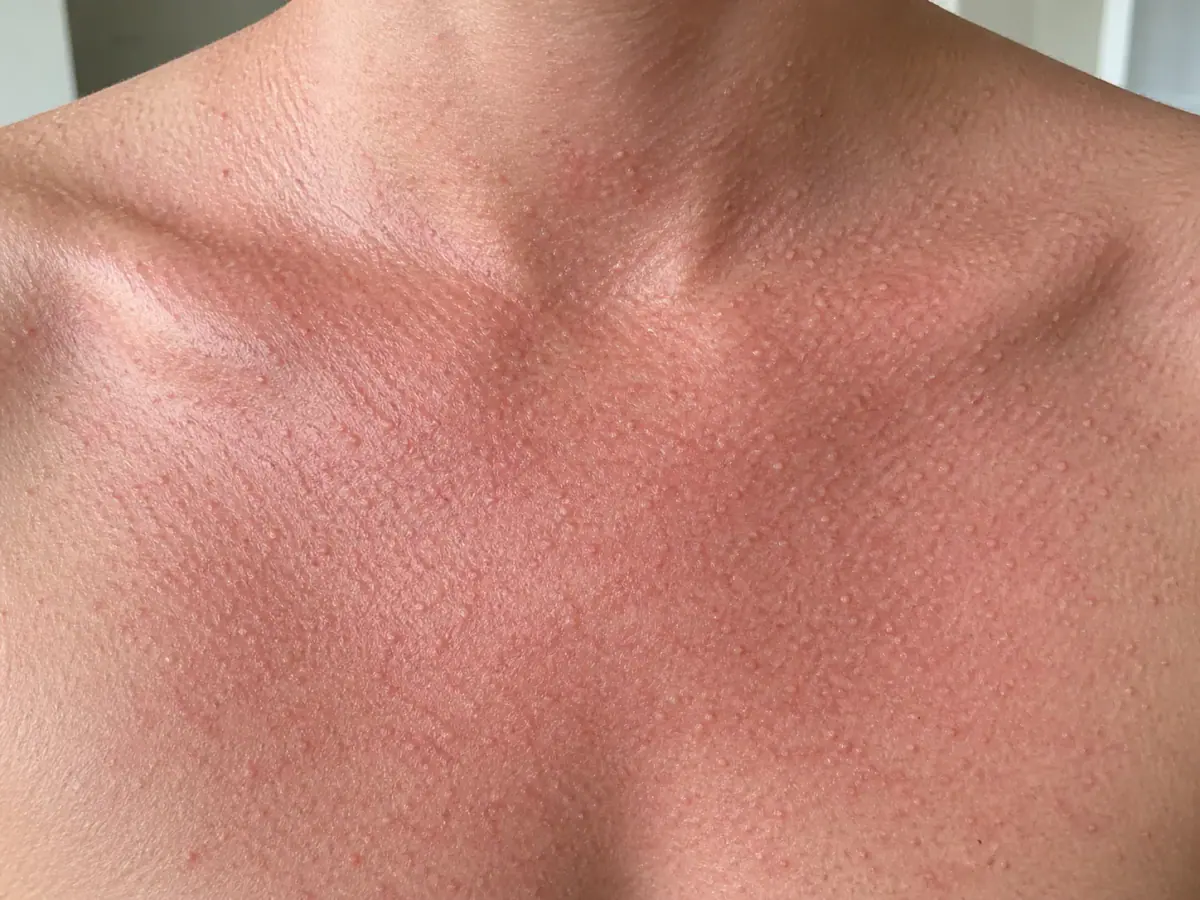
Cholinergic urticaria can cause stinging and multiple small wheals when body temperature rises, such as during exercise, hot showers, or emotional stress. Please record the temperature at which it starts and the time it takes to disappear.
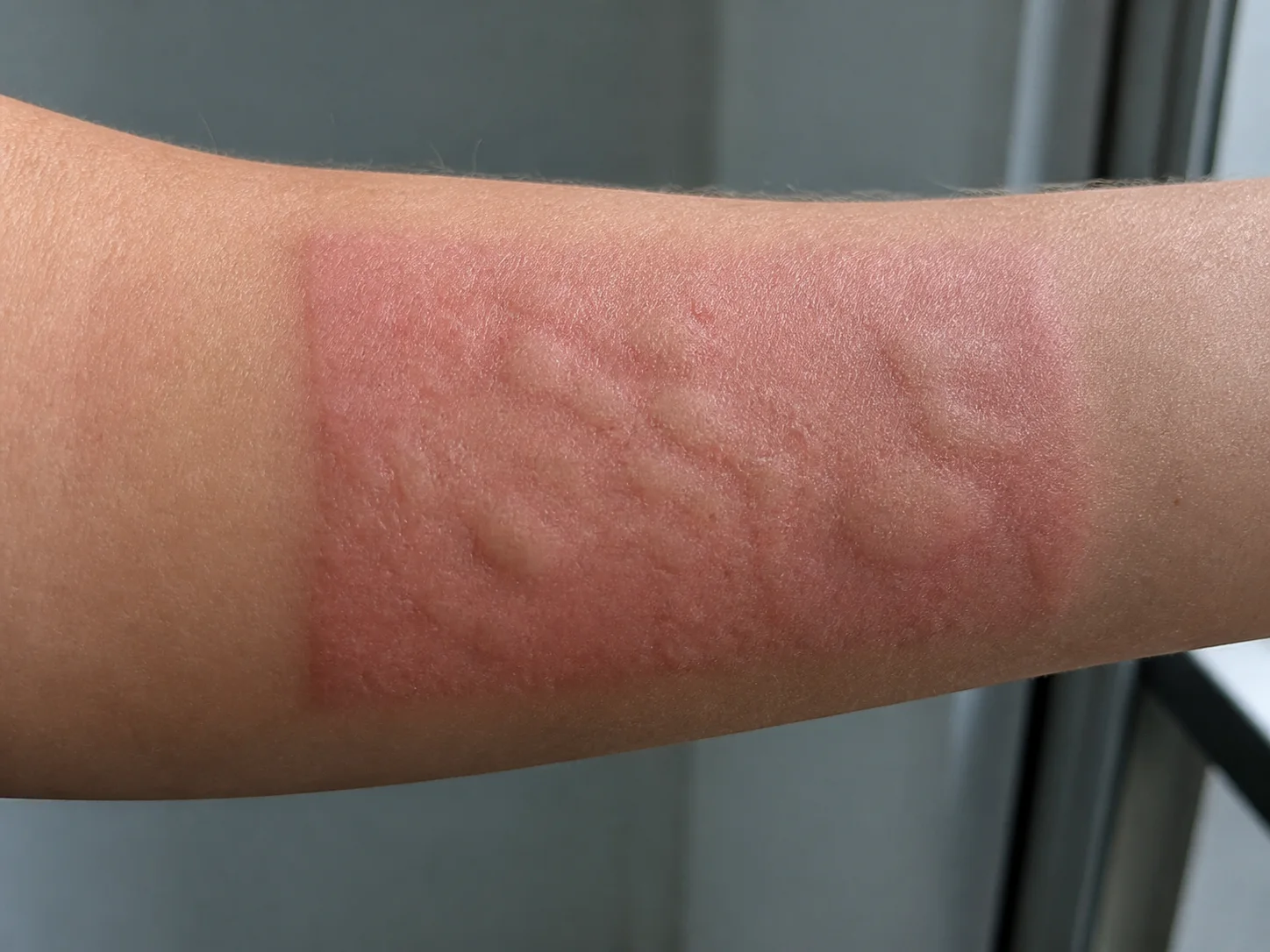
Cold urticaria can cause wheals after contact with cold air, water, or objects, especially when the skin warms up again. Do not repeatedly perform strong cold stimulation tests at home.
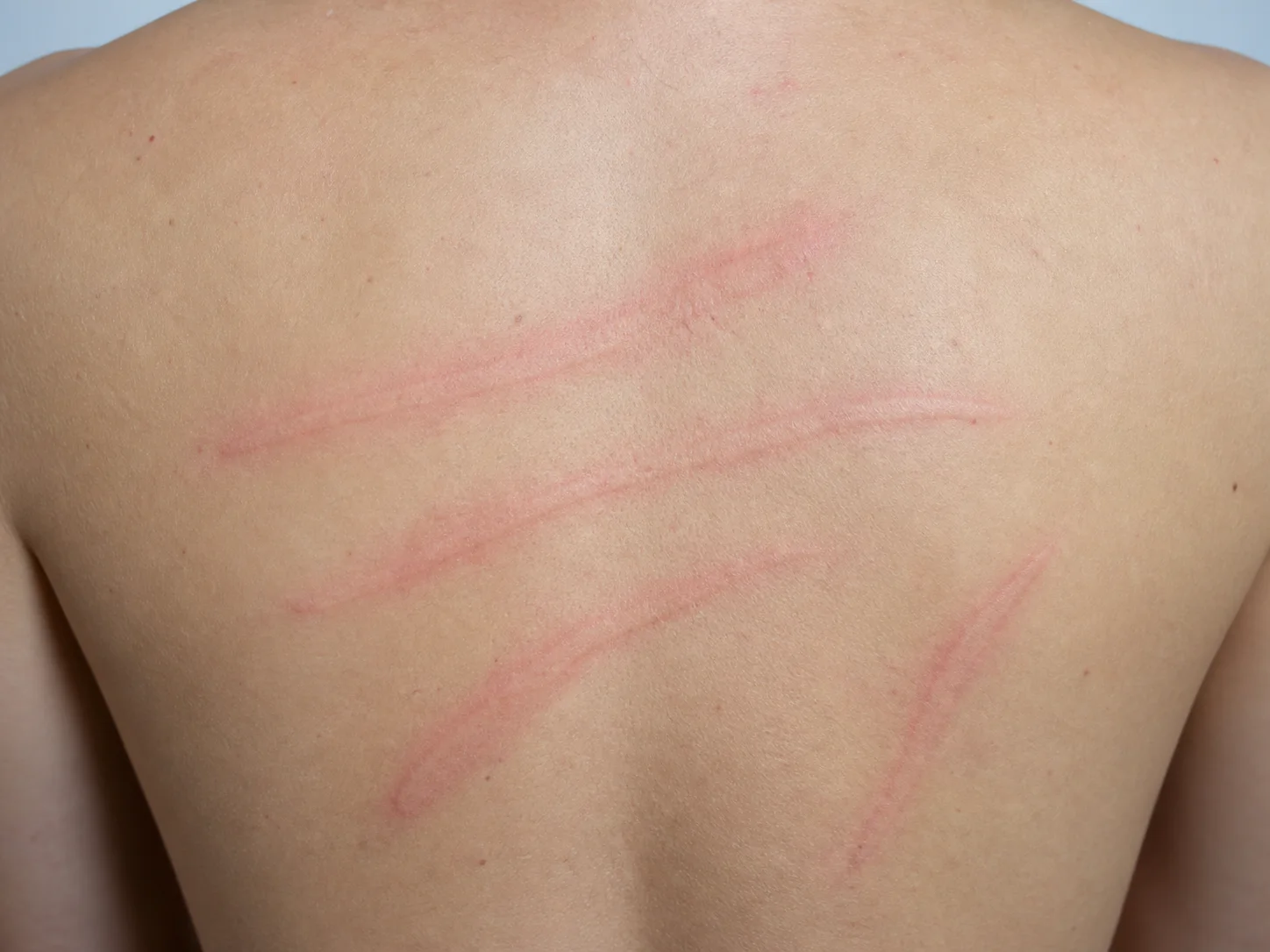
The key clue for dermographism is whether lines from light scratching or pressure from clothing rise within minutes. We check if these are temporary wheals rather than wounds or dead skin cells.
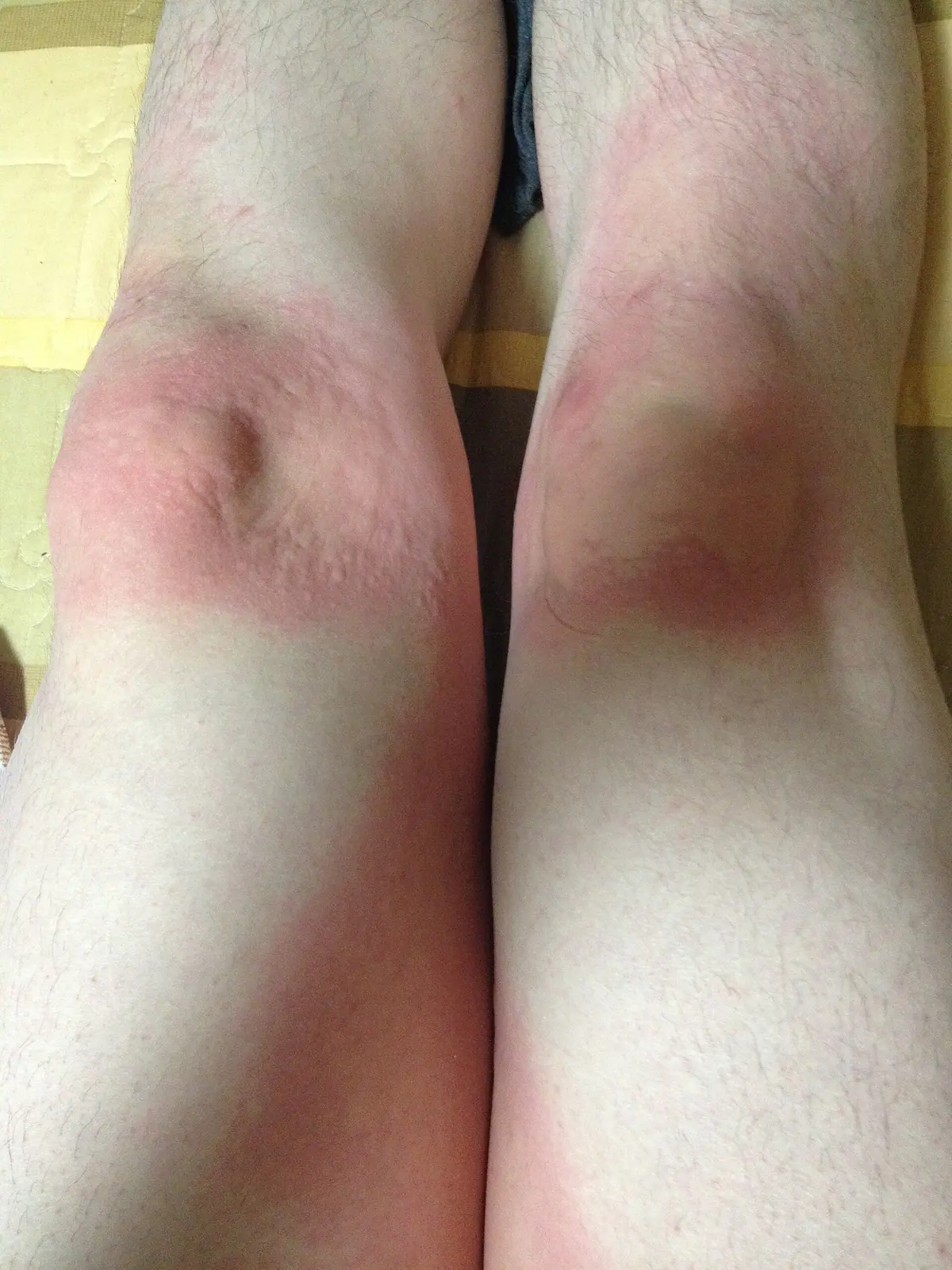
Swollen wheals, shifting patterns, short duration. Check if a single lesion remains for more than 24 hours
Photo: john (Dispolt)| Points to check | Cholinergic Urticaria | Cold Urticaria | Dermographism | General Chronic Urticaria |
|---|---|---|---|---|
| Trigger | Exercise, hot showers, stress | Cold air, water, objects | Scratching, pressure, friction from clothing | Can recur without a clear trigger |
| Appearance | Very small wheals and widespread redness | Wheals and edema in cold areas | Linear wheals | Migration of large and small wheals |
| Record | Body temperature, sweat, stinging sensation | Exposure temperature and after rewarming | Pressure intensity and after several minutes | Duration of a single lesion |
| Caution | Accompanied by respiratory symptoms | Risk of whole-body exposure to cold water | Distinguish from wounds | Swelling of the mouth, tongue, or throat |
For cholinergic urticaria, the moment body temperature rises is more important than the name of the exercise
Tingling and very small wheals may appear when body temperature rises not only from exercise, but also from hot showers, hot food, or nervousness. Rather than the type of exercise, record the time it took to start, the presence of sweat, and the time it took to subside.
Do not test cold reactions on your entire body at home
Severe systemic reactions can occur if a large area of the body suddenly becomes cold, such as when swimming in cold water. Record the exposure situation, but do not repeatedly apply strong cold stimuli to yourself. If you experienced breathing difficulties, dizziness, or mucosal swelling, seek medical evaluation first.
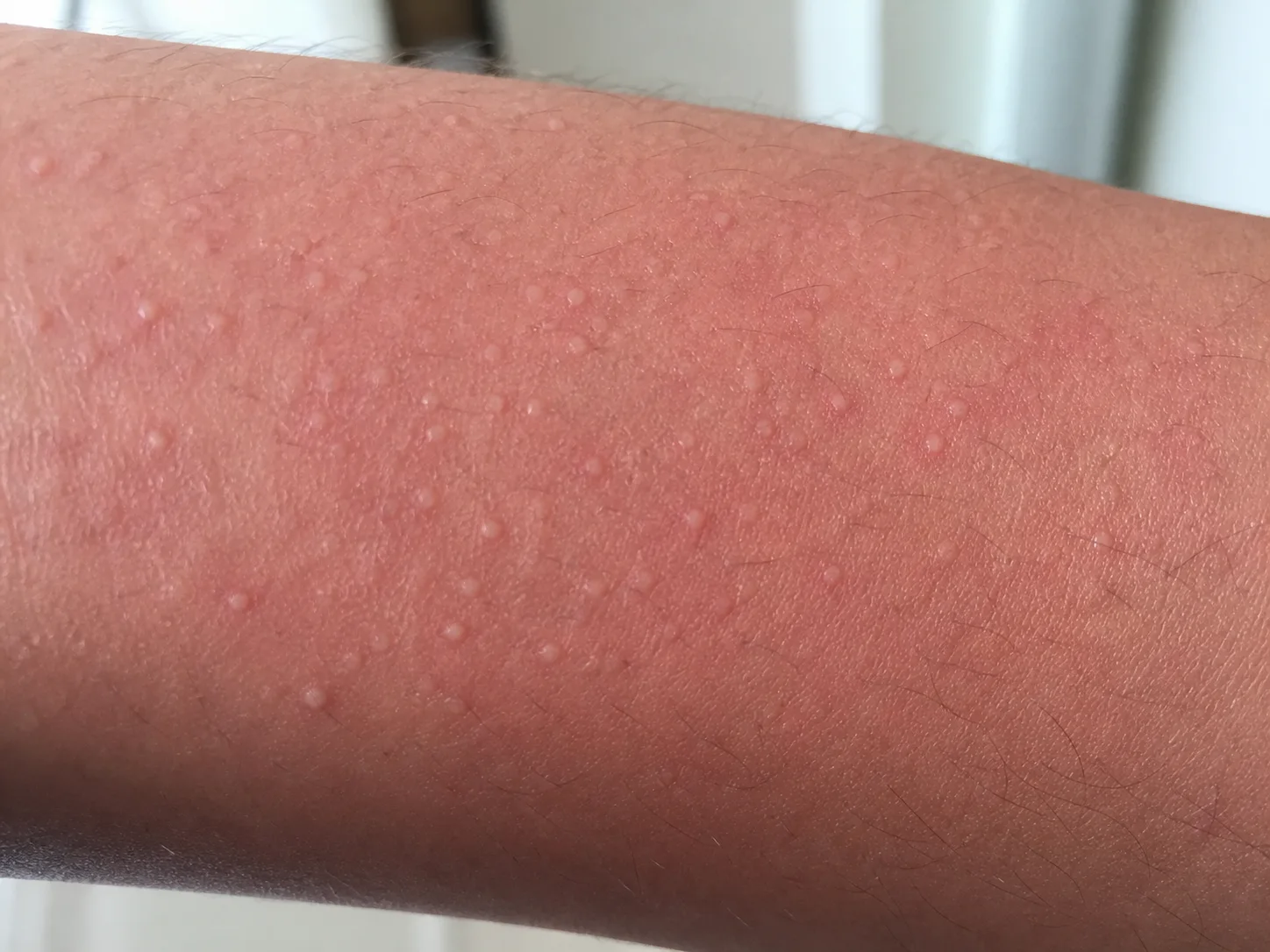
In some cases, very small rashes and tingling occur before larger map-like wheals. We compare the intensity of exercise, sweating, and the time it takes for symptoms to disappear.
Linear wheals differ from wounds or contact dermatitis in terms of duration
DermatographismThe key clue is the pattern of swelling along a line within minutes after light friction, which then disappears. Do not group these with photos of scraped wounds or contact dermatitis that lasts for several days.
Please write down what you did immediately before the swelling occurred
Please record what happened a few minutes after exercise, a hot shower, exposure to cold air, pressure, or scratching, and when it disappeared. Do not cool your entire body at home to check for a reaction.
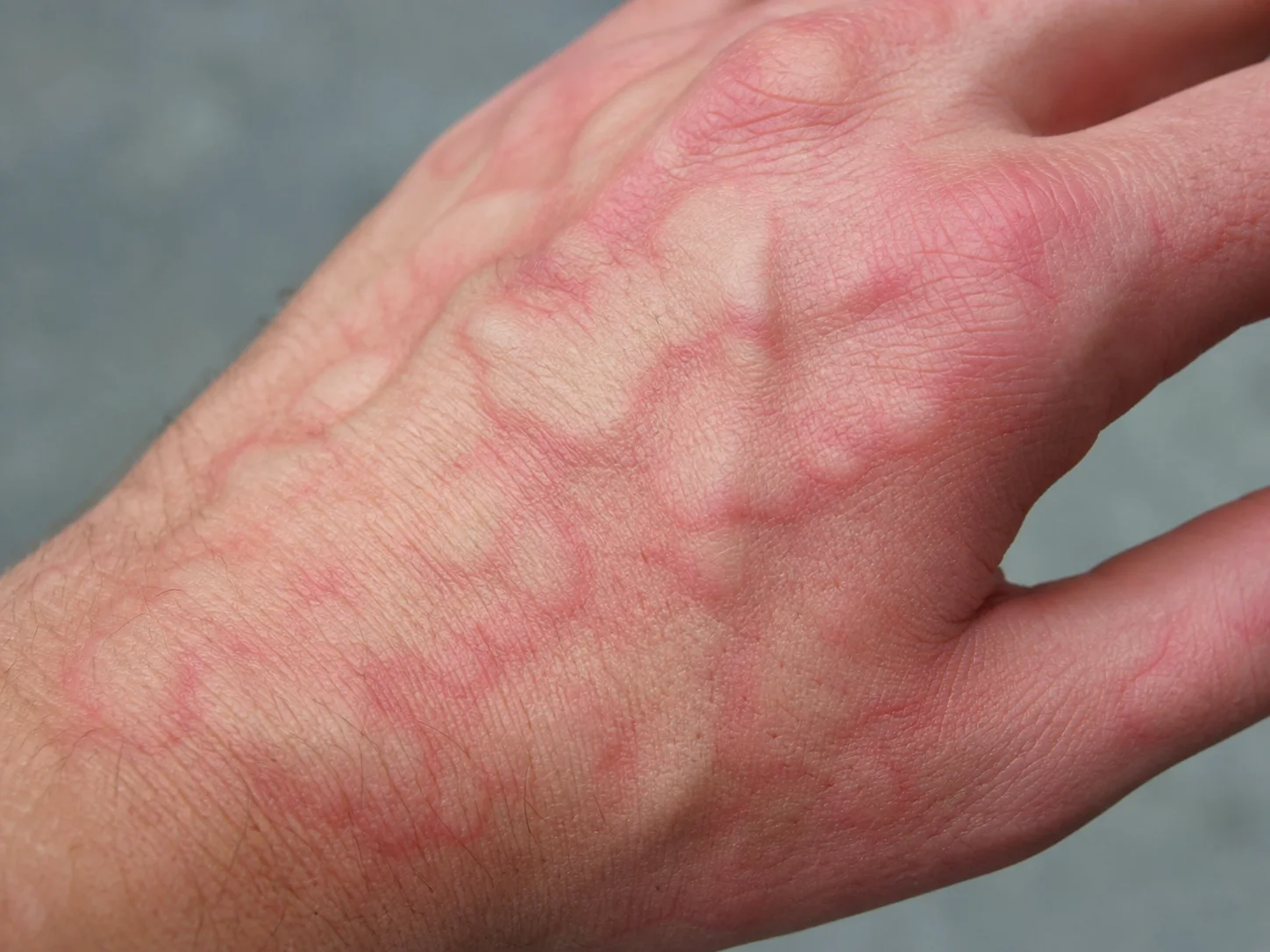
Do not look only at the redness of the hand; record how many minutes after touching cold water the symptoms started and how long they lasted after warming up.
Continue to record what triggered the reaction, how many minutes it took to start, and when it disappeared.
Next reading
Content to follow
Do small hives appear after exercise, tension, or a hot shower?
How do I distinguish cholinergic urticaria from heat rash?
How does herbal medicine categorize recurring wheals that appear after heat and sweating?
Skin terms used in this differential guide
When herbal medicine treatment is the primary focus
We set the goals for herbal medicine treatment based on your previous treatments and when symptoms recurred
There are cases where wheals recur but the trigger is unclear, or where a burden on daily life remains even after taking antihistamines. We can examine the recurrence of triggering stimuli and systemic reactions, focusing on Korean herbal medicine treatment.
We ask where it appeared and when it worsened again
We conduct a medical interview regarding the duration of a single skin change, its relationship with heat, cold, pressure, or exercise, and accompanying changes in sleep, digestion, menstruation, and fatigue.
We check if not only the itching, but also sleep and daily life are improving
We check the days and extent of wheal occurrence, itchiness, the frequency of medication needed, and interference with sleep and activities.
We set the goals for herbal medicine treatment by identifying the problems that need to be resolved first
If there are causes that require immediate priority, such as infection or rapid worsening, those treatments come first. Subsequently, for herbal medicine treatment, we determine the primary goal of recovery by examining current discomfort, recurring patterns, sleep, digestion, and fatigue, and coordinate the sequence with necessary dermatological treatments.
While reducing aggravating factors through lifestyle management, herbal medicine treatment determines the initial target by analyzing the pattern of lesions, sleep, digestion, and fatigue through pattern identification (Byeonjeung). Necessary skin treatments are continued in accordance with the progress.
Consult about treatmentEvidence and Update Information
This content was organized by Korean medicine doctor Choi Yeon-seung and updated on 2026-08-23.
- American Academy of Dermatology, Hives causes
- American Academy of Dermatology, Hives diagnosis and treatment
- DermNet, Cholinergic urticariaEvidence regarding the size, distribution, and sensation of small short-lived wheals after sweat induction, and rare systemic respiratory, circulatory, and digestive reactions