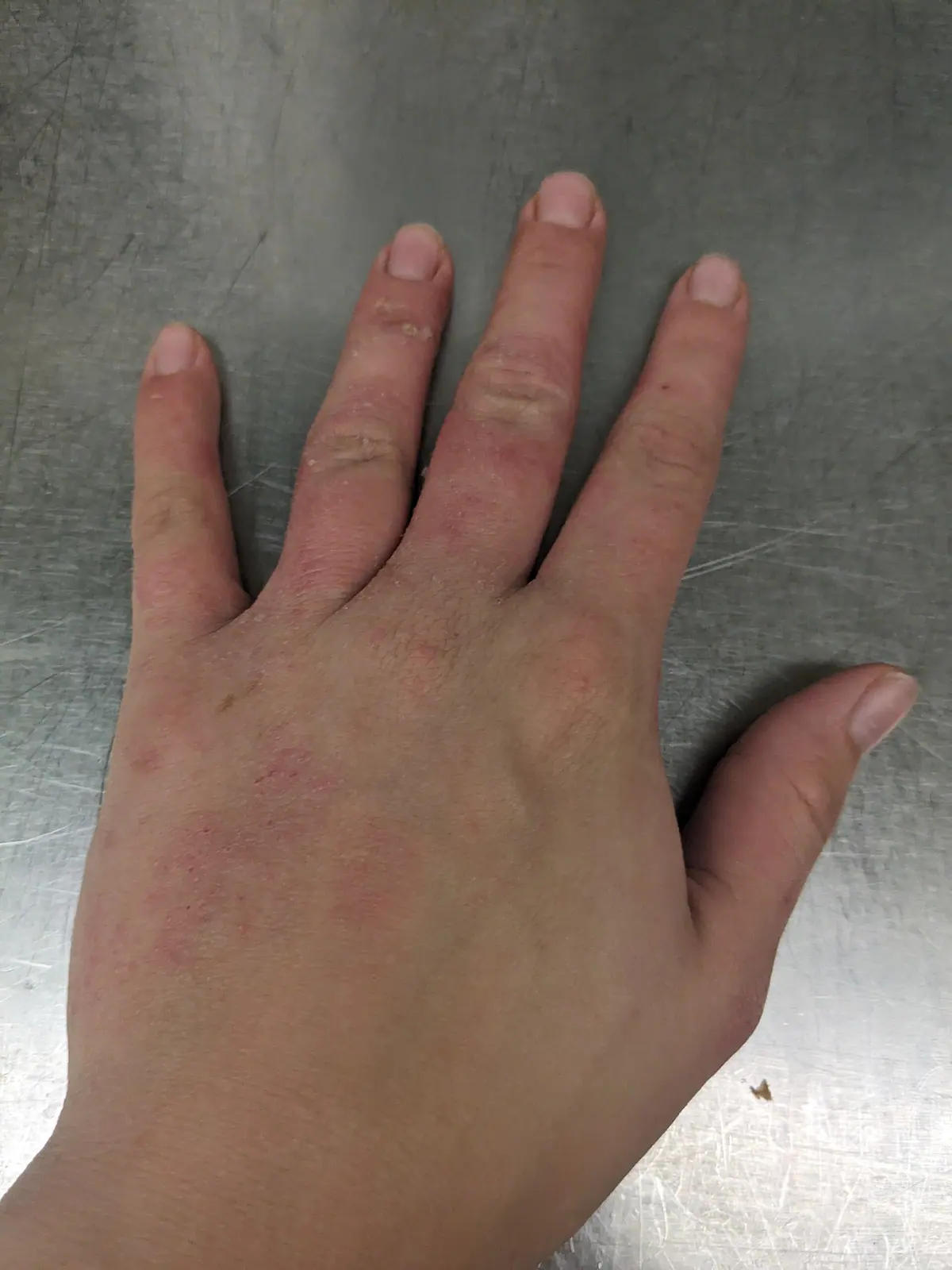
Contact dermatitis: Start with the topics you are curious about
Points to check first
Contact dermatitis: Symptoms and when to seek prompt medical evaluation
Contact dermatitis is an inflammation of the skin where the area that touched a substance becomes red and itchy or stinging, swells, or develops blistersoozingor cracking. Irritant contact dermatitis, caused by substances that directly damage the skin such as detergents or disinfectants, often causes stinging immediately after exposure. Allergic contact dermatitis, caused by metals, fragrances, or cosmetics, may cause itching several hours to several days later. Identifying and avoiding the causative substance is the starting point of treatment.
Symptom Classification
Check what touched the skin, when it happened, and where it occurred
The method for finding the cause varies depending on what touched the skin and when the skin reacted.
| Symptoms | Possible Progression | Priority action |
|---|---|---|
| Stinging and cracking immediately after contact with water or detergents | Irritant contact dermatitis | Protection, moisturizing, and reducing exposure |
| Itching after a few days in areas contacting metals or cosmetics | Allergic contact dermatitis | Check ingredients and consult a dermatologist |
| Rashes with clear boundaries recurring in the same area | Continuous exposure to a specific contactant | Maintain an exposure log and consider patch testing |
| Rapid spread of pus, heat, and pain | Possibility of secondary infection | Prompt dermatological evaluation |
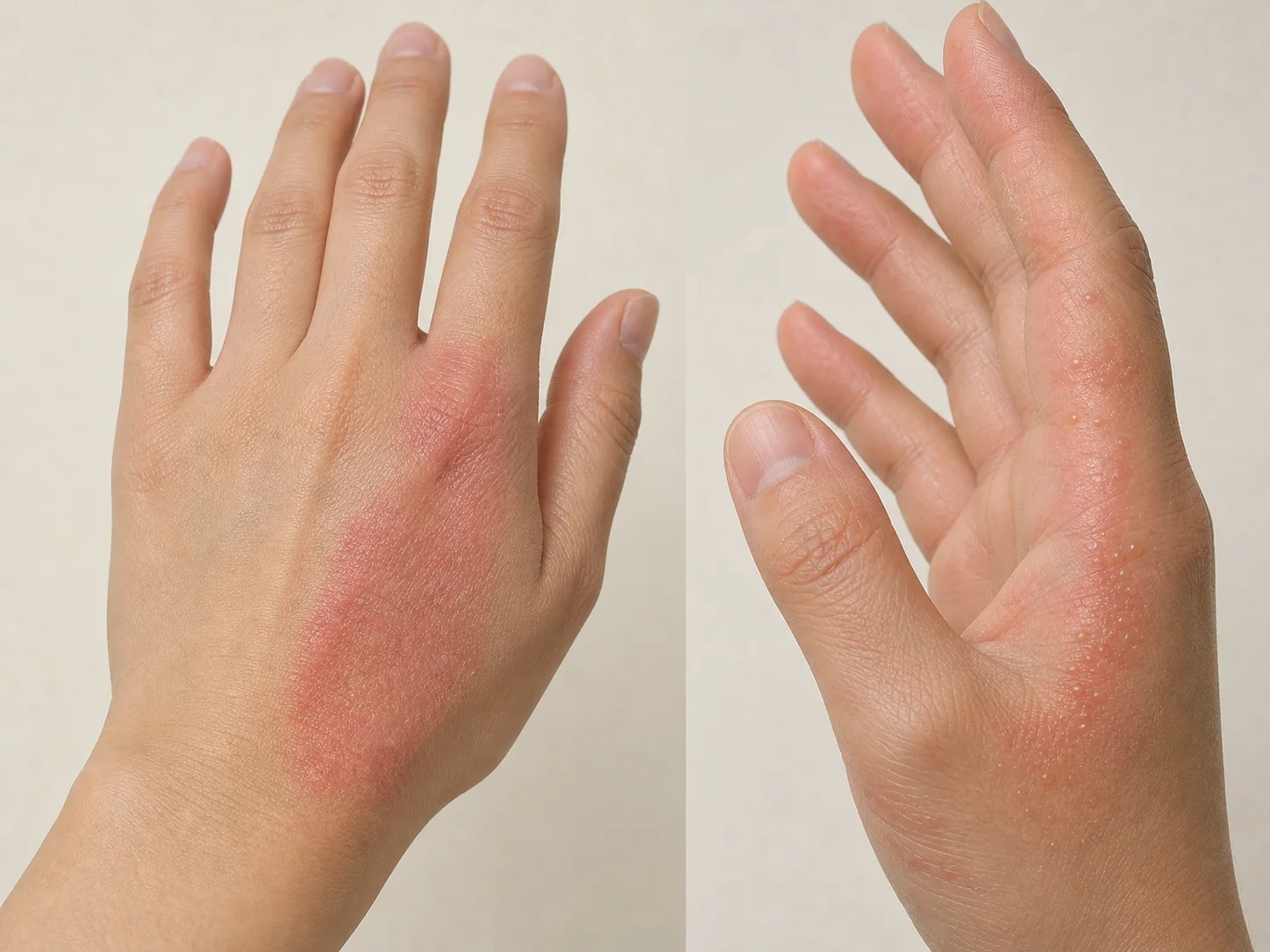
The left side illustrates contact inflammation, and the right side illustrates one appearance of pompholyx-like small blisters. These are not actual patient photos, nor do they imply that both conditions are present simultaneously.
Actual clinical photos and educational close-up examples are materials for comparing possible patterns and cannot be used for diagnosis alone. Mechanism diagrams have simplified complex processes.If these discomforts have recurred
For those whose skin has broken out after using new cosmetics or working with water
Avoiding the cause is the starting point for treating contact dermatitis. However, it is not always possible to quit a job or remove every substance from daily life. IfscabIf the skin fails to recover after such exposure, there is a reason to add Korean herbal medicine treatment.
For those whose hands sting and crack after washing hands, using detergents, or using disinfectants
Even when reducing the causative substances and using prescribed ointments, symptoms persist after occupational or daily exposure Recurrenceoccurs
For those who experience itching only where earrings, cosmetics, hair dye, or bandages touched
When cracking and stinging of the hands or face interfere with work and going out
For those whose skin thickens in the same area and itches at night, even when avoiding the cause and using ointment
When the same contact area becomes itchy again whenever you pause ointment use
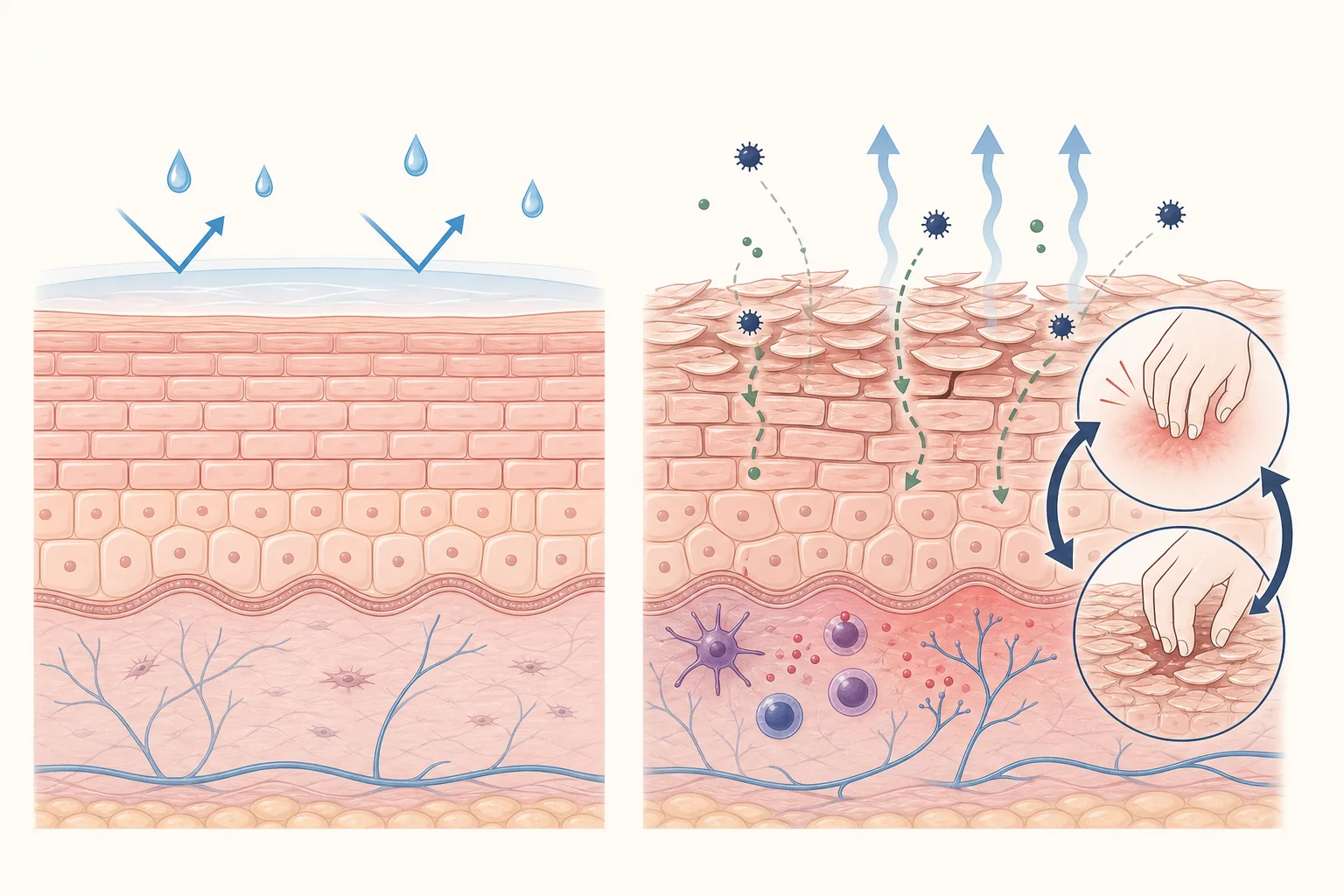
This is a simplified concept showing that when the barrier that retains moisture is disrupted, dryness and exposure to irritants increase, and itching and scratching can further damage the barrier.
Conceptual reference · NIAMS Atopic DermatitisPoints to distinguish first
How to distinguish contact dermatitis from similar-looking skin diseases
First, we check if it is an infection or a severe skin reaction
If there is fever, pain, pus, large blisters, or mucosal edema, please receive a dermatology or emergency evaluation first.
Check the location of the rash and the contact substance together
Record the product, metal, or occupational exposure and the reaction time, and confirm with a patch test if necessary.
Examine recurring itching and barrier recovery together
Manage chronic nighttime itching and cracking that remain even after avoiding the cause, alongside moisturizing and topical treatments.
Why does it keep getting worse?
Reasons why contact dermatitis lasts a long time or recurs
First, accurately identify what the skin came into contact with
Rather than recommending herbal medicine first, we check the results of patch tests and your exposure to cosmetics, metals, detergents, and gloves. Treatment is unlikely to be long-lasting if the cause is not avoided.
We observe how long it takes to feel better after unavoidable contact with water or friction
We examine how long redness and stinging last after unavoidable irritants, such as washing hands or wearing a mask, and whether the skin recovers before the next exposure.
We also examine bodily reactions that last unusually long despite the same level of exposure
We distinguish between hypersensitivity reactions, characterized by sudden swelling and oozing, and impaired recovery, where the skin becomes dry and thickened over time. We determine the priority of herbal medicine treatment by considering heat sensations, sweating, fatigue, sleep, and the recovery of the skin barrier.
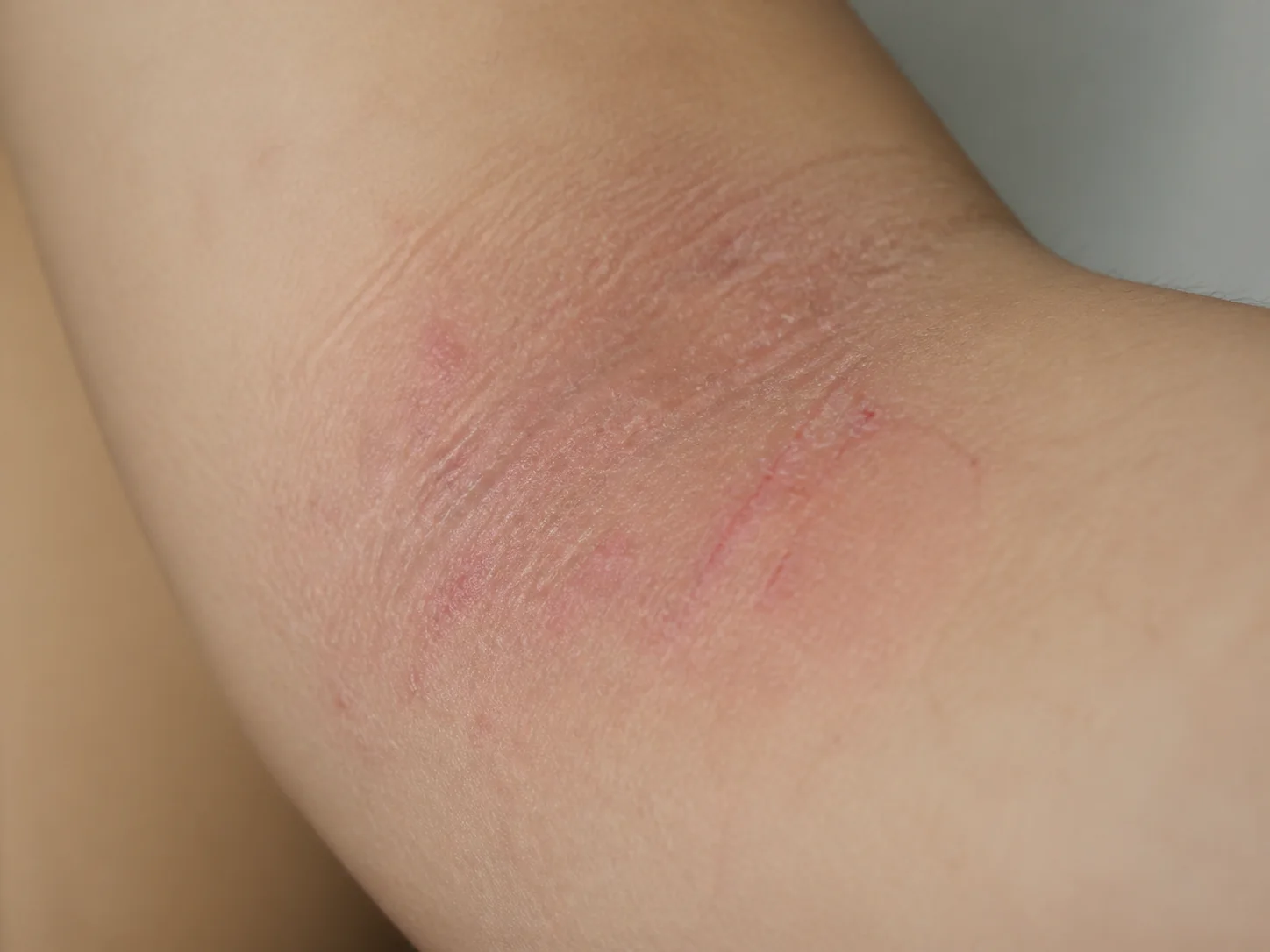
We examine dryness, fine flaking, skin texture, and scratch marks in the folding areas. Contact dermatitis or infections with similar appearances are distinguished through progress monitoring and examination.
Things to prepare before your visit
What photos and records should I prepare before the medical evaluation?
Consultations at Baekrokdam are more specific if you provide the date the rash first appeared, photos of the affected area, exposure to new products or work/hobby-related materials, use of gloves or detergents, and the names of ointments used along with your reaction to them.
Redness and Itching
Redness and itching may occur following the shape of the area where the substance touched. Please check locations where products or metals touch, such as the face, neck, hands, wrists, and navel.
Stinging and Cracking
Frequent hand washing and exposure to detergents or disinfectants strip the oil barrier, making the skin sting and become dry; in severe cases, the skin may crack, making it difficult to work.
Blisters, Oozing, and Swelling
If the reaction is severe, small blisters may cluster, or the area may ooze and swell. Popping blisters or repeatedly using strong disinfectants may cause further irritation.
Changes to monitor during treatment
What changes should I monitor during treatment?
Products, metals, detergents, or gloves touched during the 48 hours before the rash appeared
Please record when it started and how it has changed, including the dates. To make it easier to compare before and after, take photos of the same area from a similar distance and under similar lighting.
The time it takes for redness and itching to start and disappear after exposure
Please leave a brief note. Compare not only the visible changes but also whether your sleep, pain, and daily life have become less uncomfortable.
Patch test results, dates of ointment use, and reasons why avoiding contact with water is difficult
Please also include the dates of any medications, ointments, or procedures you are currently using. This makes it easier to compare what led to improvement or worsening.
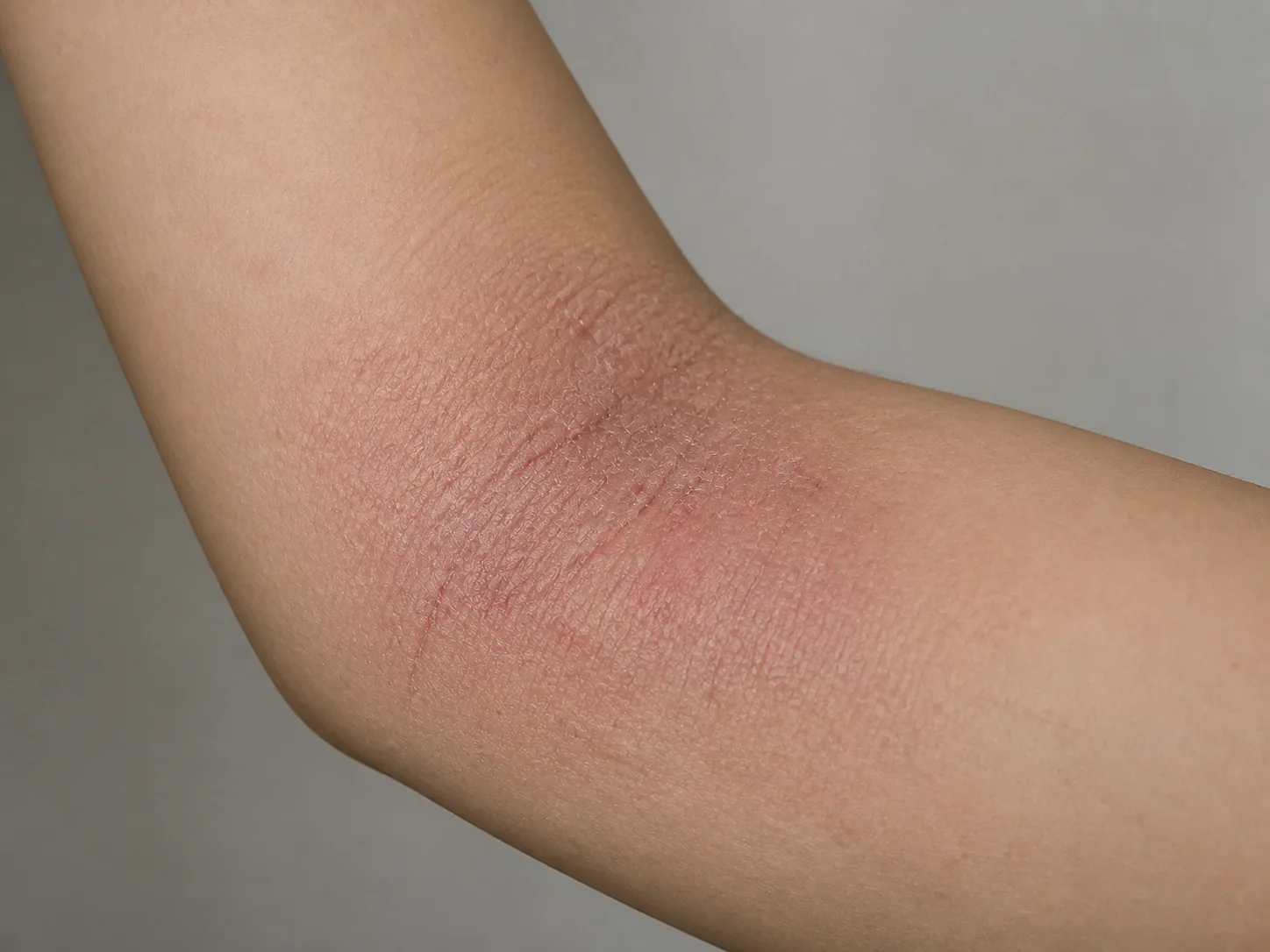
In pediatric atopy, skin folds such as the inner elbows and behind the knees may become more prominent as the child grows. Record nighttime itching and scratch wounds together.
Conceptual reference · American Academy of Dermatology, Atopic dermatitis overviewWhen planning herbal medicine treatment
For contact dermatitis, we determine the direction of herbal medicine treatment based on your current prominent symptoms
Identifying what touched the skin is fundamental. Based on that, we categorize whether there is sudden redness and swelling, significant oozing and erosion, long-term thickening and cracking, or delayed recovery even from minor irritation. We then prescribe treatment to reduce the intensity and duration of the reaction following the same exposure.
Pattern identification (Byeon-jeung) in Korean medicine is not about giving a different name to a disease. Multiple patterns can overlap in one person, and as the skin changes, for example, as oozing and heat decrease and dryness or cracking remain, the prescription is adjusted accordingly.
When sudden redness and swelling occur after contact
- Primary skin observations
- We check if distinct redness, swelling, and intense itching develop rapidly along the boundary of contact.
- Overall body condition to check alongside skin
- We check for an allergic constitution, heat sensations in the upper body, and whether reactions increase after exposure to heat or tension.
- Primary considerations for herbal medicine prescription
- We focus on 'expelling wind' and 'clearing heat' to reduce sudden heat, itching, and hypersensitivity reactions.
When there are many small blisters, oozing, and soreness
- Primary skin observations
- We look for blisters, clear or sticky discharge, yellow scabs, and worsening in humid areas such as inside gloves or diapers.
- Overall body condition to check alongside skin
- We ask if you sweat a lot, are exposed to humid environments for long periods, or experience bloating and a feeling of heaviness in the body.
- Primary considerations for herbal medicine prescription
- We increase the proportion of dampness-removing and heat-clearing treatments to reduce moist inflammation and heat, and to prevent moisture from lingering.
When the skin becomes thick, dry, and discolored over time
- Primary skin observations
- We look for changes that remain even after exposure has ended, such as keratinization, lichenification, color changes, and cracks at the fingertips.
- Overall body condition to check alongside skin
- We check for dry skin, a feeling of coldness, fatigue, and delayed wound healing.
- Primary considerations for herbal medicine prescription
- Rather than simply lowering heat, we focus on nourishing the blood, moisturizing dryness, and restoring the skin barrier to increase the time the skin can withstand inevitable contact.
When rashes appear easily even with slight irritation and persist for a long time
- Primary skin observations
- We check if redness recurs even without strong irritation and if the skin fails to recover before the next exposure.
- Overall body condition to check alongside skin
- We ask if you tire easily, sweat a lot, or if your skin becomes more sensitive after a cold or overwork.
- Primary considerations for herbal medicine prescription
- Along with reducing hypersensitivity, we increase the proportion of Qi-tonifying and surface-consolidating treatments to reinforce skin defense and systemic recovery power.
How is the herbal medicine prescription adjusted?
- First, we identify what touched the skin and where the rash appeared
We check the location and start time of contact with cosmetics, metals, detergents, gloves, or masks, and first reduce irritants that can be avoided.
- Prescriptions are determined by the shape of the reaction and the speed of recovery
Depending on whether there is sudden swelling, significant oozing, or long-term dryness, we adjust the proportion of heat-clearing and dampness-removing versus blood-nourishing and reinforcing treatments.
- We adjust the prescription by observing how long the discomfort lasts after unavoidable irritation
While maintaining the same daily routine, we track whether redness and stinging last for a shorter time and whether recovery occurs by the next day.
When should I consider Korean herbal medicine treatment?
- When symptoms continue to recur after occupational or lifestyle exposure, even after reducing causative substances and using prescribed ointment
- When cracking and stinging of the hands or face interfere with work or going outdoors
- When the same contact area becomes itchy again whenever you pause the use of ointment
What will be asked during the medical evaluation?
- Products, metals, detergents, or gloves touched during the 48 hours before the rash appeared
- The time it takes for redness and itching to start and disappear after exposure
- Patch test results, dates of ointment use, and reasons why it is difficult to avoid contact with water
Things to prepare before the consultationYour consultation will be more detailed if you provide the date the rash first appeared, photos of the affected area, exposure to new products or work/hobby-related materials, use of gloves or detergents, and the name of the ointment used and your reaction to it.
If pus, pain, or redness spreads rapidly, or if you have a fever, lesions inside the eyes or mouth, shortness of breath, or sudden facial swelling, please visit a dermatology clinic or seek emergency care first. After confirming that such urgent situations are not present, Baekrokdam provides herbal medicine treatment for chronic and recurring skin diseases.
Consult about the progress of contact dermatitisFrequently Asked Questions
Frequently Asked Questions about Contact Dermatitis
Does contact dermatitis occur immediately upon contact?
Irritant contact dermatitis can cause an immediate stinging sensation, but allergic contact dermatitis may appear several hours to several days later. Please review any contacts that occurred in the days immediately preceding the rash.
Can cosmetics I have used for a long time suddenly become the cause?
Yes, it is possible. Allergies can develop after repeated exposure, so we check not only recent products but also existing exposures such as fragrances, preservatives, hair dyes, and metals.
If the condition recurs even after using ointment, can I receive Korean herbal medicine treatment at Baekrokdam?
First, we check for exposure to the cause, the presence of infection, and any necessary dermatological treatment. If chronic itching or barrier damage persists even after avoiding the trigger, we will consult on whether to use combined treatments.
Can cosmetics I have used for a long time cause contact dermatitis?
They can. Since allergies can develop after repeated exposure, we check not only recent products but also fragrances, preservatives, and hair dyes that have been used for a long time.
Can contact dermatitis occur just from frequent contact with water?
Repeated contact with water throughout the day can weaken the skin's protective barrier, leading to irritant dermatitis. Gentle cleansing, moisturizing, and protection are necessary.
If the condition recurs even after avoiding the cause, what does Baekrokdam examine?
After checking for hidden exposures, infections, and dermatological treatments, we observe whether chronic itching, barrier damage, and sleep disturbances are recovering together.
What tests are used to diagnose contact dermatitis?
The process centers on examining the skin and asking about the location and progress of the rash, as well as lifestyle and occupational exposures; patch tests are selected if necessary.
References and update date
Doctor of Korean Medicine Choi Yeon-seung verified the content based on the official and professional materials below and updated it on 2026-08-23.
- American Academy of Dermatology, Contact dermatitis: CausesCriteria for distinguishing between barrier damage caused by detergents, disinfectants, or repeated water work, and delayed reactions to fragrances or nickel allergies
- American Academy of Dermatology, Contact dermatitis overviewCriteria for distinguishing symptoms, such as rashes or blisters appearing after itching, and reactions at the contact site being delayed by several hours to several days
- AAD, Contact dermatitis treatmentMedical history regarding lifestyle and occupational exposure, patch tests, and plans to avoid confirmed substances
- NHS, Contact dermatitis: TreatmentCriteria for treatment stages involving avoidance of causative substances, use of moisturizers and topical corticosteroids, and treatment for widespread severe dermatitis
- American Academy of Dermatology, Atopic dermatitis diagnosis and treatmentThe role of skin examination, symptom inquiry, and selective skin biopsy