Cholinergic Urticaria: Start with the topics you are curious about
Points to check first
Cholinergic Urticaria: Symptoms and when to seek immediate medical evaluation
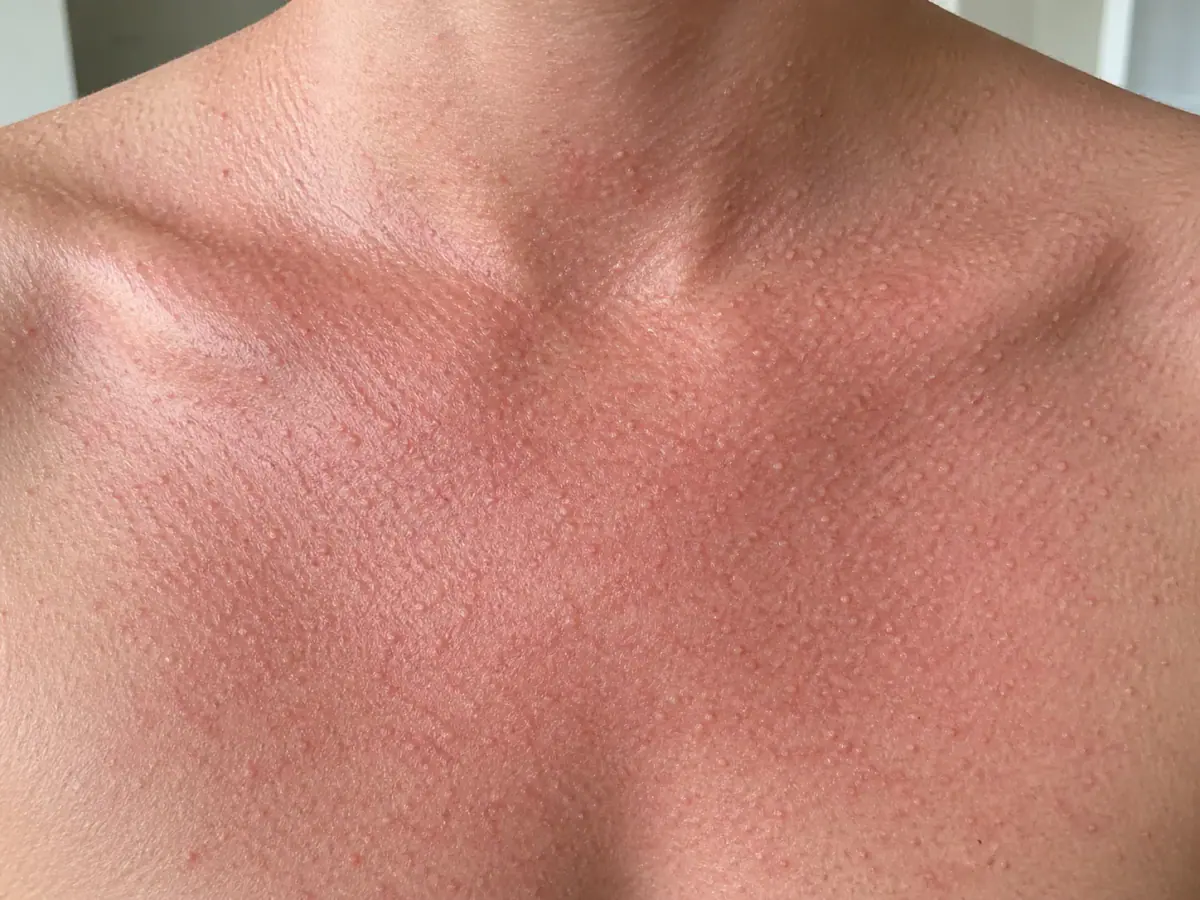
Cholinergic urticaria involves small wheals measuring approximately 1~4 mm that appear within minutes after body temperature rises and sweating occurs due to exercise, a hot environment, a hot shower, spicy food, or stress, whealsand it is common for several of these to appear. The wheals may be itchy, burning, or prickling, and may start on the trunk and neck before spreading to the limbs and face. They usually settle within a short time after the triggering situation stops, but rarely may be accompanied by swelling of the lips or tongue, wheezing or difficulty breathing, dizziness or fainting, or abdominal pain or diarrhea. If there are changes in breathing or consciousness, do not wait assuming these are merely skin symptoms; seek immediate emergency evaluation.
Medical evaluation speed by symptom
How to distinguish between small wheals and systemic reactions
Check not only the appearance of the skin but also the timing relative to sweating, as well as respiratory, circulatory, and digestive symptoms.
| Observation Scenario | Possible Meaning | Action to Take Now |
|---|---|---|
| Small itchy wheals after exercise or heat | Cholinergic urticaria pattern | Medical evaluation after recording photos and triggers |
| Rash spreading from the torso and neck to the limbs | Typical distribution possible | Record duration and accompanying symptoms |
| Heat rash limited only to areas of skin contact | Other induced urticaria, such as heat urticaria | Differentiate through dermatology or allergy evaluation |
| Swelling of lips or tongue, wheezing, or difficulty breathing | Systemic reaction affecting the airway possible | Immediately go to the emergency room or call 119 |
| Dizziness, fainting, abdominal pain, or diarrhea | Severe systemic reaction possible | Immediate emergency evaluation |
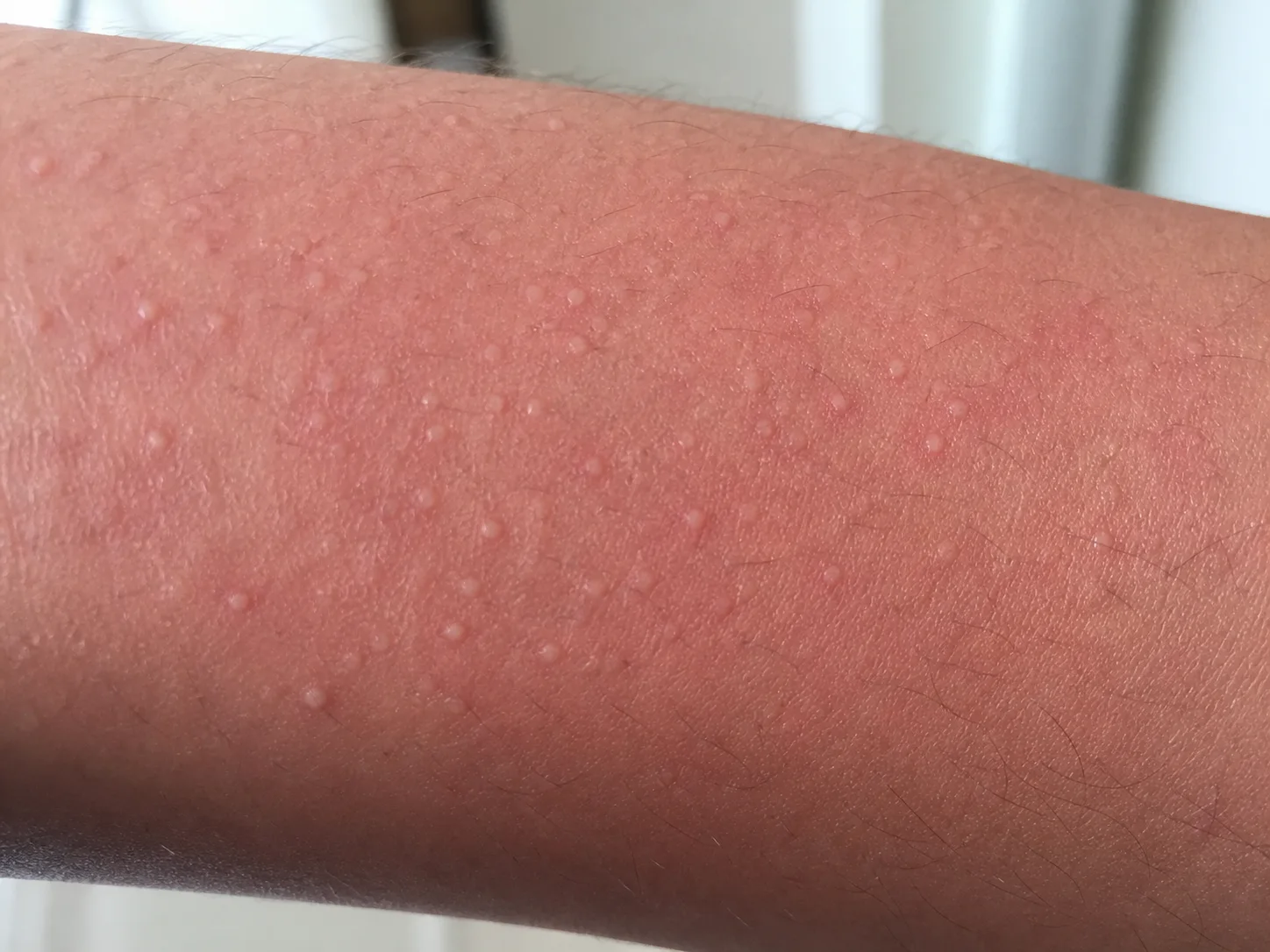
In some cases, very small rashes and tingling occur before larger map-like wheals. We compare the intensity of exercise, sweating, and the time it takes for symptoms to disappear.
Actual clinical photos and educational close-up examples are materials for comparing possible patterns and cannot be used for diagnosis alone. Mechanism diagrams have simplified complex processes.If these discomforts have recurred
For those who experience recurring small hives after exercise or a hot shower
Cholinergic urticaria causes small, tingling wheals when body temperature rises, which may lead patients to avoid exercise, bathing, or social situations. Korean herbal medicine treatment addresses heat, sweating, tension-induced autonomic responses, Dry skinand the direction of recovery.
Those who develop small wheals on the torso when running to work or starting exercise
When tingling and small wheals recur during exercise, bathing, or tension
Those who develop itchy and stinging rashes after a hot shower, sauna, or spicy meal
antihistaminesWhen you continue to avoid exercise and going out even after using medication
Those who have experienced shortness of breath or dizziness along with hives
When worsening of symptoms coincides with lack of sleep, stress, or a feeling of heat in the upper body
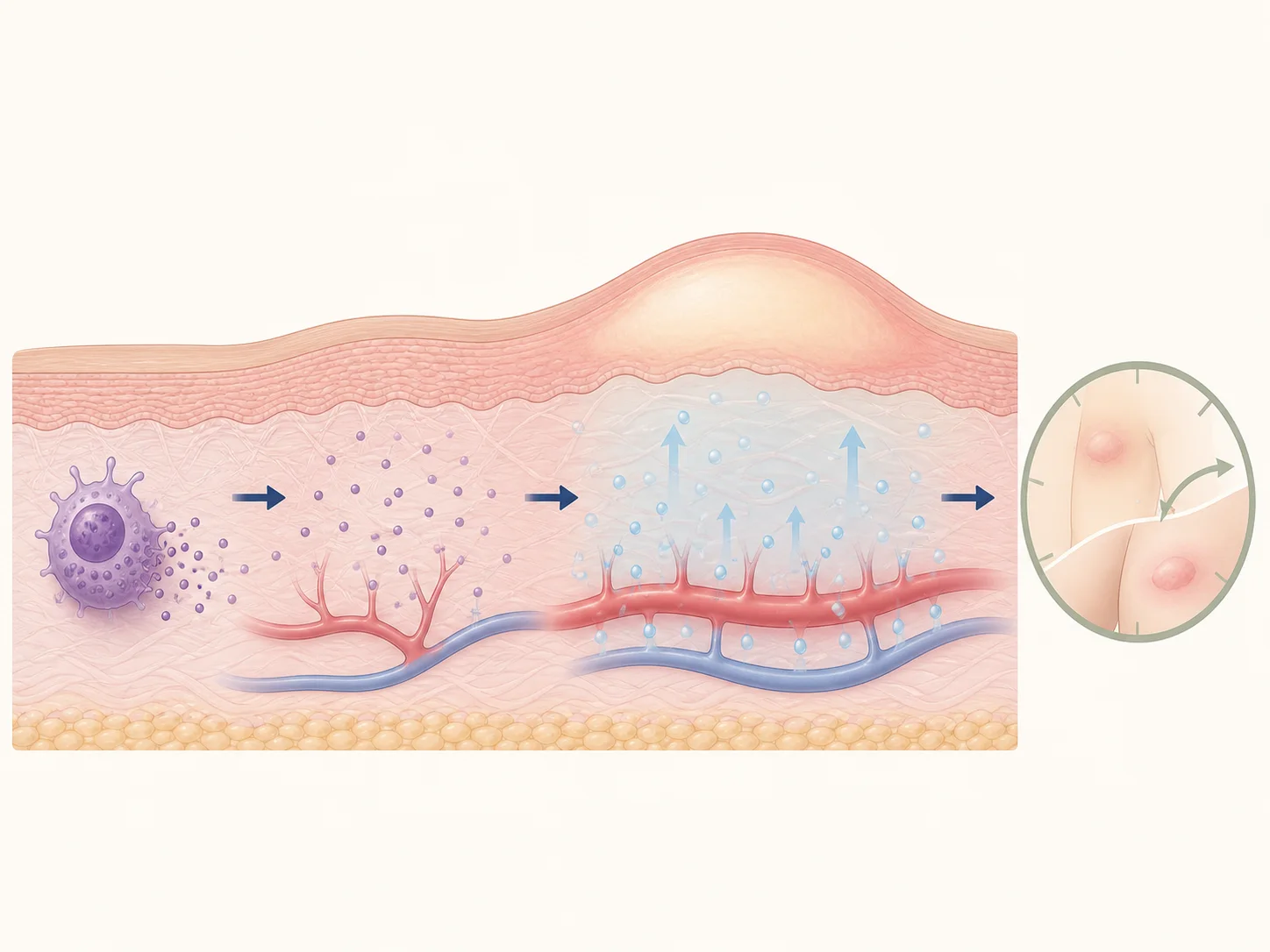
This is a simplified flow showing how temporary edema occurs around blood vessels after the release of mediators, causing wheals to rise. This does not mean all hives have the same triggering cause.
Conceptual reference · AAD Hives: CausesPoints to distinguish first
How to distinguish cholinergic urticaria from similar-looking skin conditions
We first ask about changes in the airway, breathing, and consciousness
If there is throat tightness, tongue swelling, wheezing, shortness of breath, or dizziness as if fainting, we immediately connect you to emergency response.
Please note how many minutes after sweating began the skin swelled
We prioritize professional differential diagnosis between cholinergic urticaria and other induced rashes by checking the triggering scene, start time, photos, and duration.
Treatment goals are set by observing the body's condition as it changes along with the skin
To ensure the safety of using Korean herbal medicine concurrently, please share all medications you are taking without arbitrarily changing antihistamines or prescribed emergency medications.
Why does it keep getting worse?
Reasons why cholinergic urticaria persists or recurs
Please note how many minutes after a specific activity the symptoms appeared
Record how many minutes after exercise, showering, or tension the symptoms start and when they disappear.
Prescriptions are not based on a single sentence stating that you have 'too much heat'
We distinguish whether sweating is excessive or blocked, whether only the face flushes, or whether the skin is dry and stinging.
We also monitor whether you avoid exercise, meals, or social situations less frequently during treatment.
We check if you become less fearful of exercise intensity, shower temperature, and stressful daily situations.
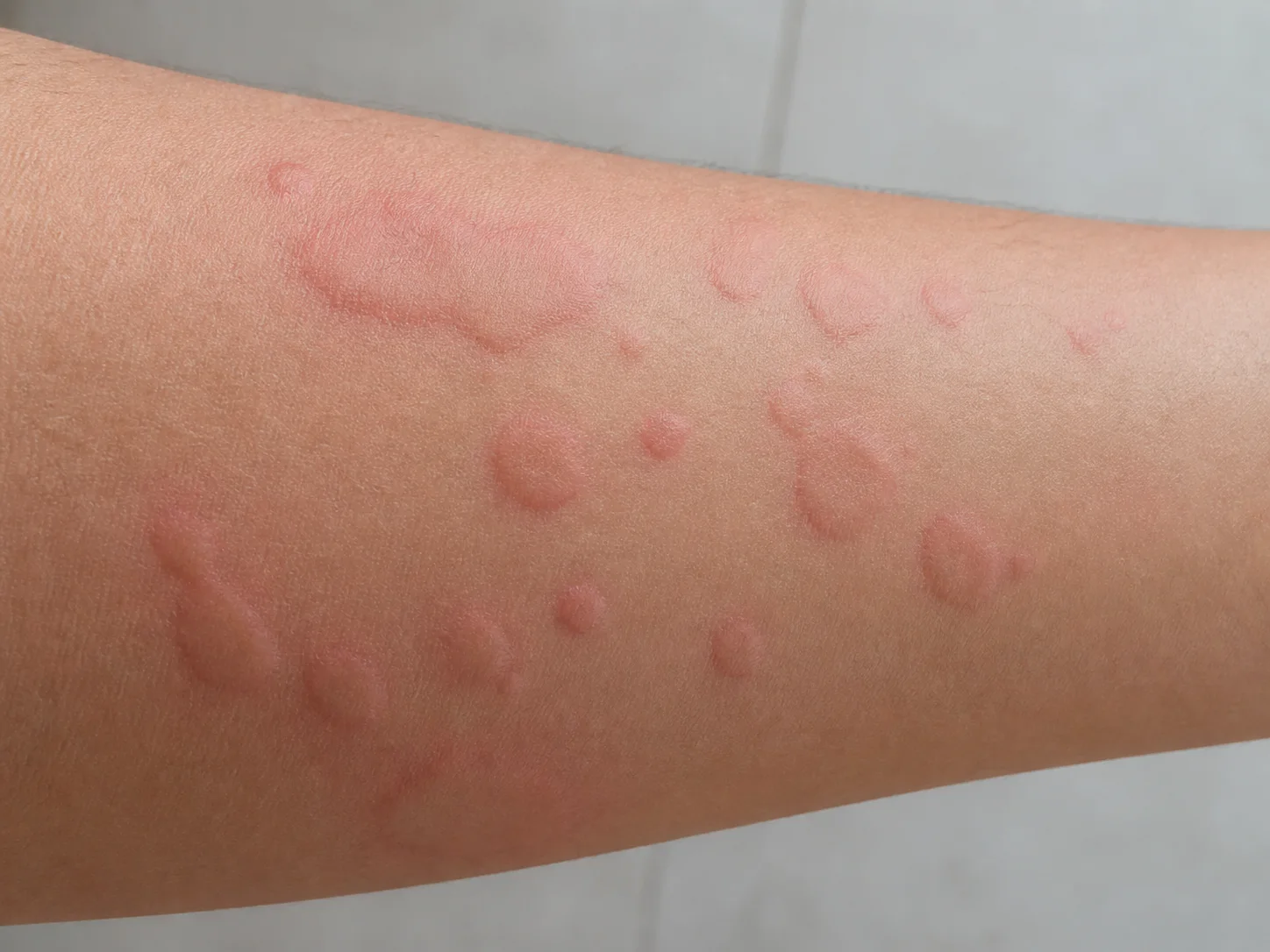
The key clue is whether the surface has almost no scaling and whether the wheals rise smoothly and then shift location. Please record whether the same lesion remains after several hours, along with the time the photo was taken.
Things to prepare before your visit
What photos and records should I prepare before the medical evaluation?
Please prepare information on the triggering activity and when sweating occurred, photos of the wheals, their distribution and duration, any breathing, dizziness, or abdominal symptoms, as well as any allergy consultations and medications taken.
Please note how many minutes after exercise or heat exposure the symptoms appeared.
Record both the time you sweated and the time the wheals began due to exercise, heat, hot water, spicy food, or stress.
Keep photos and records of the distribution of small wheals.
Since they may disappear before your appointment, take photos of small wheals and redness on the torso, neck, arms, and legs in a safe environment.
Please note when a rash in one specific area subsided.
Record how long skin changes persist after stopping the triggering activity, but do not intentionally repeat exercise or hot baths to attempt a self-diagnosis.
Changes to monitor during treatment
What changes should I monitor during treatment?
Triggering scenario and start/disappearance time
Please record when it started and how it has changed, including the dates. To make it easier to compare before and after, take photos of the same area from a similar distance and under similar lighting.
Amount and location of sweat, stinging sensations, and respiratory symptoms
Please leave a brief note. Compare not only the visible changes but also whether your sleep, pain, and daily life have become less uncomfortable.
Exercise intensity, shower temperature, stress, and sleep
Please also include the dates of any medications, ointments, or procedures you are currently using. This makes it easier to compare what led to improvement or worsening.
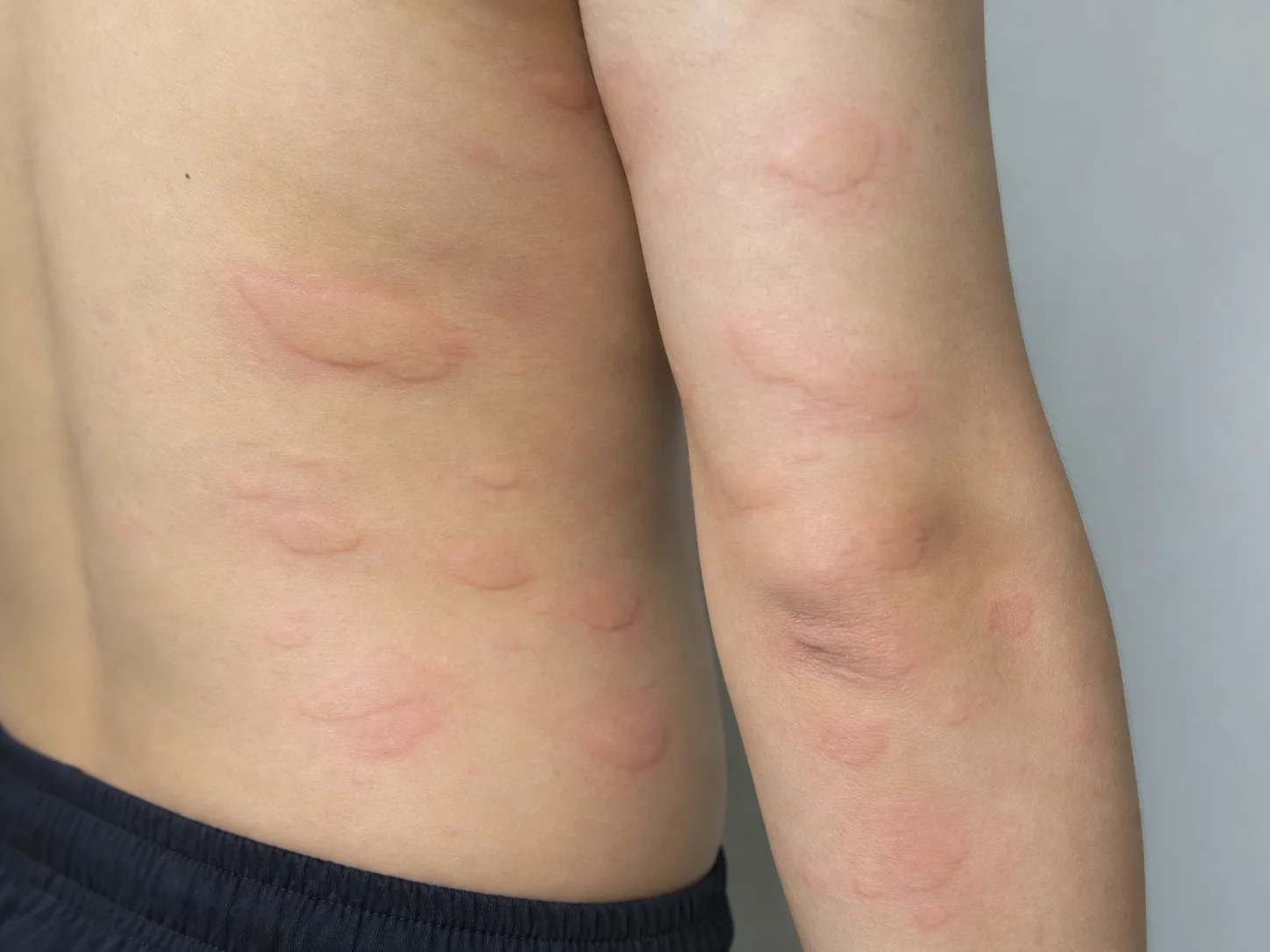
This reproduces one possible distribution of wheals seen in hives. Please check the duration of a single lesion and any respiratory or mucosal symptoms before reviewing the photos.
When planning herbal medicine treatment
For cholinergic urticaria, the direction of Korean herbal medicine treatment is determined based on your specific symptoms.
Even if an increase in body temperature is the common trigger, we differentiate between those who sweat heavily and feel hot, those who struggle to sweat and feel stifled, those whose upper body flushes only when nervous, and those who experience prolonged stinging on dry skin.
Pattern identification (Byeon-jeung) in Korean medicine is not about giving a different name to a disease. Multiple patterns can overlap in one person, and as the skin changes, for example, as oozing and heat decrease and dryness or cracking remain, the prescription is adjusted accordingly.
When the whole body feels hot and redness spreads during exercise
- Primary skin observations
- We look for wide redness, heat sensations, and stinging around the small wheals.
- Overall body condition to check alongside skin
- We ask about thirst, upper body heat, and whether you remain flushed for a long time after hot nights or exercise.
- Primary considerations for herbal medicine prescription
- Treatment focuses on clearing heat and expelling wind to reduce rapid increases in body heat and skin hypersensitivity.
When stinging is most intense just before sweating and sweat excretion is uneven
- Primary skin observations
- We examine the areas where sweat is blocked, the distribution of wheals, and whether symptoms improve or worsen after sweating.
- Overall body condition to check alongside skin
- Check for combined sensitivity to cold and discomfort in heat, as well as whether the patient catches colds easily or experiences spontaneous sweating (jahan).
- Primary considerations for herbal medicine prescription
- The focus is on harmonizing the body's surface temperature regulation and the rhythm of sweat excretion.
When symptoms rise from the chest during meetings, panic, or anxiety
- Primary skin observations
- Observe if symptoms appear rapidly on the face, neck, and chest and subside quickly upon stabilization.
- Overall body condition to check alongside skin
- Inquire about throbbing, chest tightness, poor sleep, and tension-related digestive discomfort.
- Primary considerations for herbal medicine prescription
- Emphasis is placed on soothing the liver and relieving stagnation (sogan-haeul) to lower tension-induced autonomic responses and upward heat flow.
When the skin is dry and itching persists long after wheals appear
- Primary skin observations
- Observe if dryness, scratch marks, and nighttime itching remain.
- Overall body condition to check alongside skin
- Check for fatigue, lack of sleep, and dryness of the skin and mouth.
- Primary considerations for herbal medicine prescription
- Add blood-nourishing and moisturizing treatments (yanghyeol-yunjo) to help skin recovery along with hypersensitivity regulation.
How is the herbal medicine prescription adjusted?
- Identify the situations and times when body temperature rises
Record the trigger threshold and the time it takes for symptoms to disappear during exercise, bathing, or tension.
- Distinguish between the directions of heat, sweat, tension, and dryness
Rather than viewing all symptoms as simple heat, prescribe based on the dominant axis.
- Step-by-step, monitor changes in treatment to see if avoidance behaviors decrease
Check if the onset is delayed and if the range and duration of symptoms decrease during the same exercise or shower.
When should I consider Korean herbal medicine treatment?
- When stinging and small wheals recur during exercise, bathing, or tension
- When exercise and going outdoors are still avoided despite using antihistamines
- When lack of sleep, stress, and upper body heat sensations fluctuate together with the worsening of symptoms
What will be asked during the medical evaluation?
- Triggering situations and the time of onset and disappearance
- Amount and location of sweat, stinging sensations, and respiratory symptoms
- Exercise intensity, shower temperature, tension, and sleep
Things to prepare before the consultationPlease prepare information on the triggering activity and when sweating occurred, photos of the wheals, their distribution and duration, any breathing, dizziness, or abdominal symptoms, as well as any allergy consultations and medications taken.
If pus, pain, or redness spreads rapidly, or if you have a fever, lesions inside the eyes or mouth, shortness of breath, or sudden facial swelling, please visit a dermatology clinic or seek emergency care first. After confirming that such urgent situations are not present, Baekrokdam provides herbal medicine treatment for chronic and recurring skin diseases.
Consult about the progress of cholinergic urticariaFrequently Asked Questions
Frequently Asked Questions about Cholinergic Urticaria
How do cholinergic urticaria wheals appear?
After a stimulus that causes sweating, small wheals appear densely, and the surrounding area may become red, itchy, or feel like it is burning. It may start on the torso or neck and then spread.
How long does cholinergic urticaria last?
They usually appear quickly after the trigger and subside relatively quickly once the activity stops. If they last a long time or the pattern is different, please have them differentiated from other types of urticaria.
What should I do if I experience urticaria and shortness of breath during exercise?
Stop exercising immediately. If you experience difficulty breathing, swelling of the tongue or throat, or dizziness, call 119 or go to the emergency room. Establish an emergency plan through professional medical evaluation before your next exercise.
Why does cholinergic urticaria occur?
It is a triggered urticaria where an immune response occurs after an increase in body temperature and sweating. Various mechanisms have been suggested, such as reactions involving acetylcholine, mast cells, and sweat components, but a single exact cause has not yet been confirmed.
Can it appear just from taking a hot shower?
Yes, it can. Hot showers, baths, saunas, and hot environments are common triggering scenarios that increase body temperature and sweating. This is distinguished from other reactions that occur only where water touches the skin through a medical examination.
Is stress the cause of cholinergic urticaria?
Emotional stimulation can raise body temperature and sweat, triggering symptoms, but it is not the sole fundamental cause. Please record when it started and whether exercise, heat, or food were involved.
When should I go to the emergency room if urticaria occurs after exercise?
If you experience difficulty breathing, wheezing, throat tightness, swelling of the lips or tongue, dizziness, or a feeling of fainting, stop exercising immediately and seek help from 119 or the emergency room.
References and update date
Doctor of Korean Medicine Choi Yeon-seung verified the content based on the official and professional materials below and updated it on 2026-08-23.
- DermNet, Cholinergic urticariaEvidence regarding the size, distribution, and sensation of small short-lived wheals after sweat induction, and rare systemic respiratory, circulatory, and digestive reactions
- Cleveland Clinic, Cholinergic UrticariaTriggers including exercise, heat, showers, spicy food, and stress; itching, burning, tingling, and emergency alerts for exercise-induced anaphylaxis
- DermNet, Urticaria overviewEvidence for differentiating small cholinergic wheals associated with sweating from other triggered urticaria such as heat, cold, or pressure
- DermNet, Chronic inducible urticariaDifferentiation of other physical urticaria and exercise-induced anaphylaxis through detailed medical history and standardized provocation tests
- American Academy of Dermatology, Hives: Signs and symptomsVarious shapes, colors, and movement of wheals and symptoms of angioedema