Start with the most common questions about pregnancy pruritus
Points to check first
Pregnancy pruritus: Symptoms and when to seek medical evaluation immediately
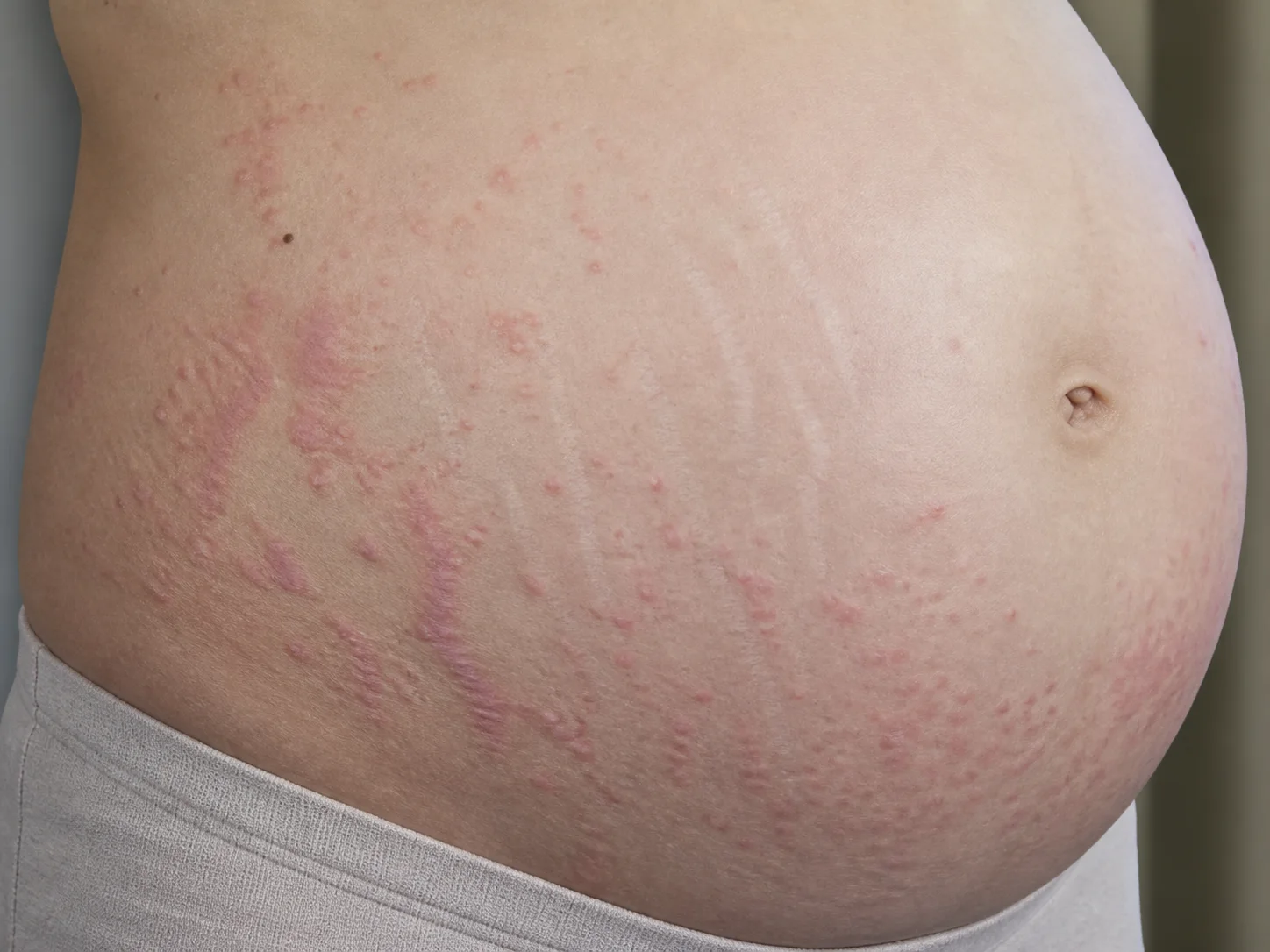
Itching during pregnancy can be caused by stretching skin or rashes such as eczema or PUPPP, but if you experience severe nighttime itching without a rash, including on the palms of your hands and soles of your feet, intrahepatic cholestasis of pregnancyyou must check for Intrahepatic Cholestasis of Pregnancy (ICP). Red papules or urticarial patches starting near stretch marks on the abdomen and spreading to the thighs and buttocks are clues for PUPPP. If you experience severe itching, jaundice, dark urine, or decreased fetal movement, contact your obstetrics department immediately.
Next steps by symptom
First, check for the presence of a rash and which areas itch more at night
The order of skin care, obstetric examination, and immediate evaluation varies depending on the appearance of the itching and accompanying symptoms.
| Symptom Appearance | Possible classification | Next action |
|---|---|---|
| Red papules or urticarial patches near stretch marks on the abdomen | Pregnancy-related rashes such as PUPPP | Consult obstetrics or dermatology to confirm the rash and discuss safe treatment |
| Severe nighttime itching without a rash, including palms and soles | Possibility of Intrahepatic Cholestasis of Pregnancy (ICP) | Contact obstetrics immediately for bile acid and liver function tests |
| Worsening dryness, scaling, and redness in existing eczema areas | Skin conditions such as eczema or contact dermatitis | Medical evaluation after documenting exposure and moisturizer use |
| Jaundice, dark urine, or pale stools | Possibility of liver or bile-related abnormalities | Notify obstetrics on the same day for prompt medical evaluation |
| Baby moving less than usual or changes in movement patterns | Fetal status check required | Contact obstetrics immediately; do not wait until the next day |
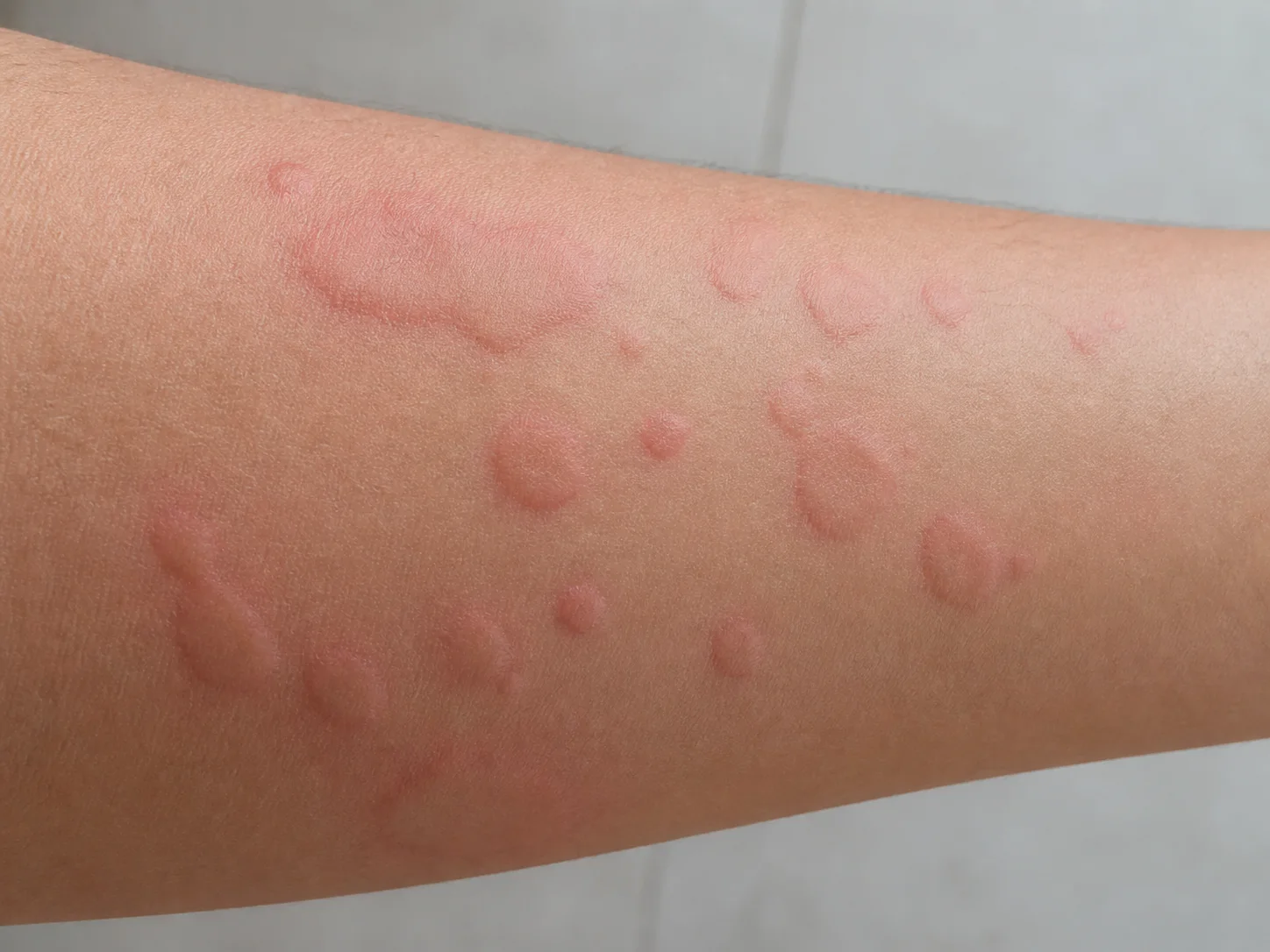
The key clue is whether the surface has almost no scaling and whether the wheals rise smoothly and then shift location. Please record whether the same lesion remains after several hours, along with the time the photo was taken.
Actual clinical photos and educational close-up examples are materials for comparing possible patterns and cannot be used for diagnosis alone. Mechanism diagrams have simplified complex processes.If these discomforts have recurred
For those who find it difficult to fall asleep due to nighttime itching and new rashes during pregnancy
Itching during pregnancy may be due to dryness from stretching skin or pregnancy-related rashes; however, if the palms and soles are particularly itchy without a rash and symptoms worsen at night, Intrahepatic Cholestasis of Pregnancy must be checked. After an obstetric evaluation, we assess the mother's skin heat, dryness, sleep, digestion, and physical strength Byeonjeung (pattern identification).
Those who experience itching on the palms and soles every night but have no visible rash
When rashes on the abdomen, arms, and legs, as well as nighttime itching, persist even after an obstetric evaluation
Those whose red, itchy spots around stretch marks on the abdomen are spreading to the thighs
Despite moisturizing and lifestyle adjustments scratch marksand when sleep disturbance is severe
Those who experience itching along with dark urine, jaundice, or changes in fetal movement
When skin heat, dryness, digestive issues, edema, or fatigue occur along with itching
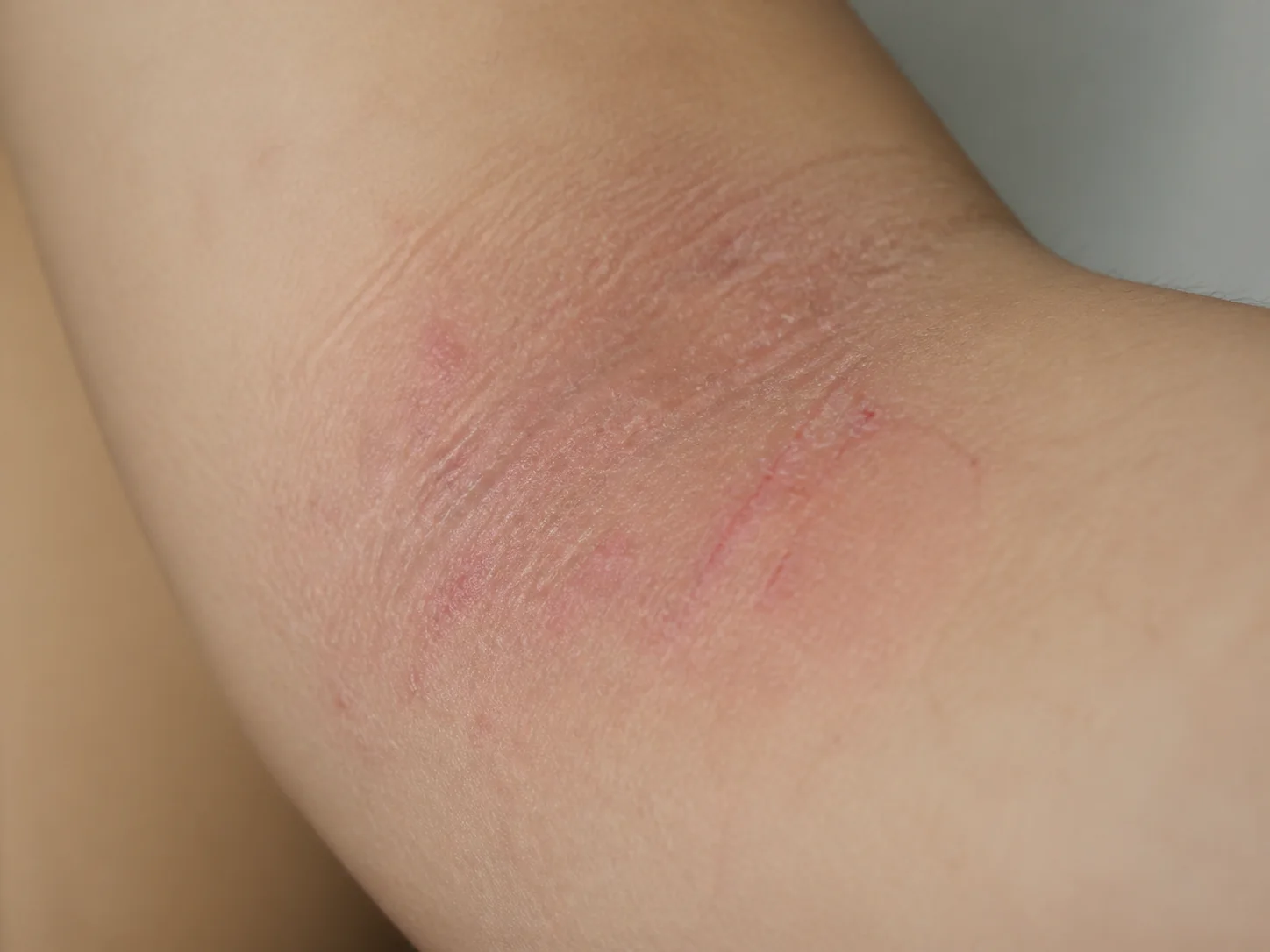
We examine dryness, fine flaking, skin texture, and scratch marks in the folding areas. Contact dermatitis or infections with similar appearances are distinguished through progress monitoring and examination.
Points to distinguish first
How to distinguish pregnancy pruritus from similar-looking skin conditions
First, identify symptoms suggestive of ICP and changes in fetal movement
Nighttime itching of the palms and soles without a rash, jaundice, dark urine, or decreased fetal movement should be connected to the obstetrics department immediately.
Examine other skin conditions, such as PUPPP or eczema, differently
Determine if a dermatology or obstetrics examination is necessary by checking the starting location and shape of the rash, blisters, pain, and whether it is a new reaction or existing eczema.
Only check for supplementary treatment changes for discomfort that persists after testing
While maintaining obstetrics prescriptions and tests, consult on the possibilities and limitations of herbal medicine treatment when chronic itching or sleep disturbance recurs.
Why does it keep getting worse?
Reasons why pregnancy pruritus lasts long or recurs
First, check whether there is a rash or not
Distinguish whether there are papules or plaques on abdominal stretch marks, or if the skin looks normal but the palms and soles are itchy.
Do not delay obstetrics examinations
For severe nighttime itching without a rash, consult with the obstetrics department to see if bile acid or liver function evaluations are necessary.
Simultaneously check the mother's heat, dryness, and sleep recovery
Skin discomfort remaining after necessary evaluations is diagnosed based on pattern identification within the safety range and the current week of pregnancy.
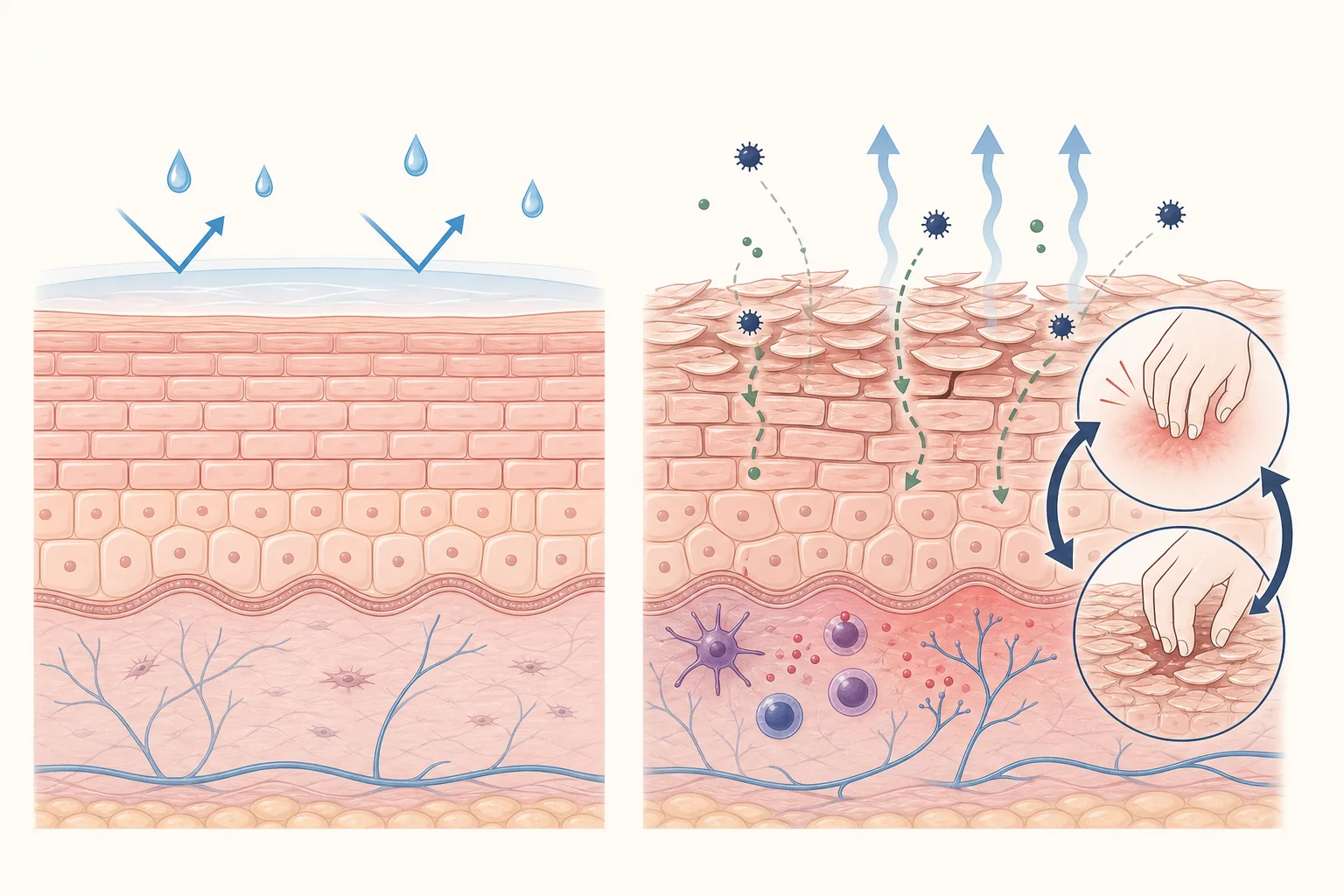
This is a simplified concept showing that when the barrier that retains moisture is disrupted, dryness and exposure to irritants increase, and itching and scratching can further damage the barrier.
Conceptual reference · NIAMS Atopic DermatitisThings to prepare before your visit
What photos and records should I prepare before the medical evaluation?
Please prepare the week of pregnancy, photos of the rash, the time and location of itching, the color of urine and stool, changes in fetal movement, bile acid and liver function results, and current obstetrics prescriptions. This helps in safely determining if obstetrics treatment is needed first and whether Korean medicine treatment can be combined.
Please be sure to let us know if your palms and soles are also itchy
If there is itching in the hands and feet without a rash, or itching that spreads throughout the body, notify the obstetrics department of the possibility of intrahepatic cholestasis of pregnancy.
It worsens at night and interferes with sleep
ICP itching can worsen at night. Do not dismiss it as simple dryness; consult on whether bile acid and liver function tests are necessary.
Check for jaundice and changes in urine and stool color
If changes such as yellowing of the skin or eyes, darkening of the urine, or lightening of the stool occur, notify the obstetrics department promptly.
Changes to monitor during treatment
What changes should I monitor during treatment?
Gestational age, initial site of rash, and order of spread
Please record when it started and how it has changed, including the dates. To make it easier to compare before and after, take photos of the same area from a similar distance and under similar lighting.
Itching of palms and soles, nighttime worsening, jaundice, and urine color
Please leave a brief note. Compare not only the visible changes but also whether your sleep, pain, and daily life have become less uncomfortable.
Obstetric exams, medications, sleep, digestion, edema, and body heat
Please also include the dates of any medications, ointments, or procedures you are currently using. This makes it easier to compare what led to improvement or worsening.
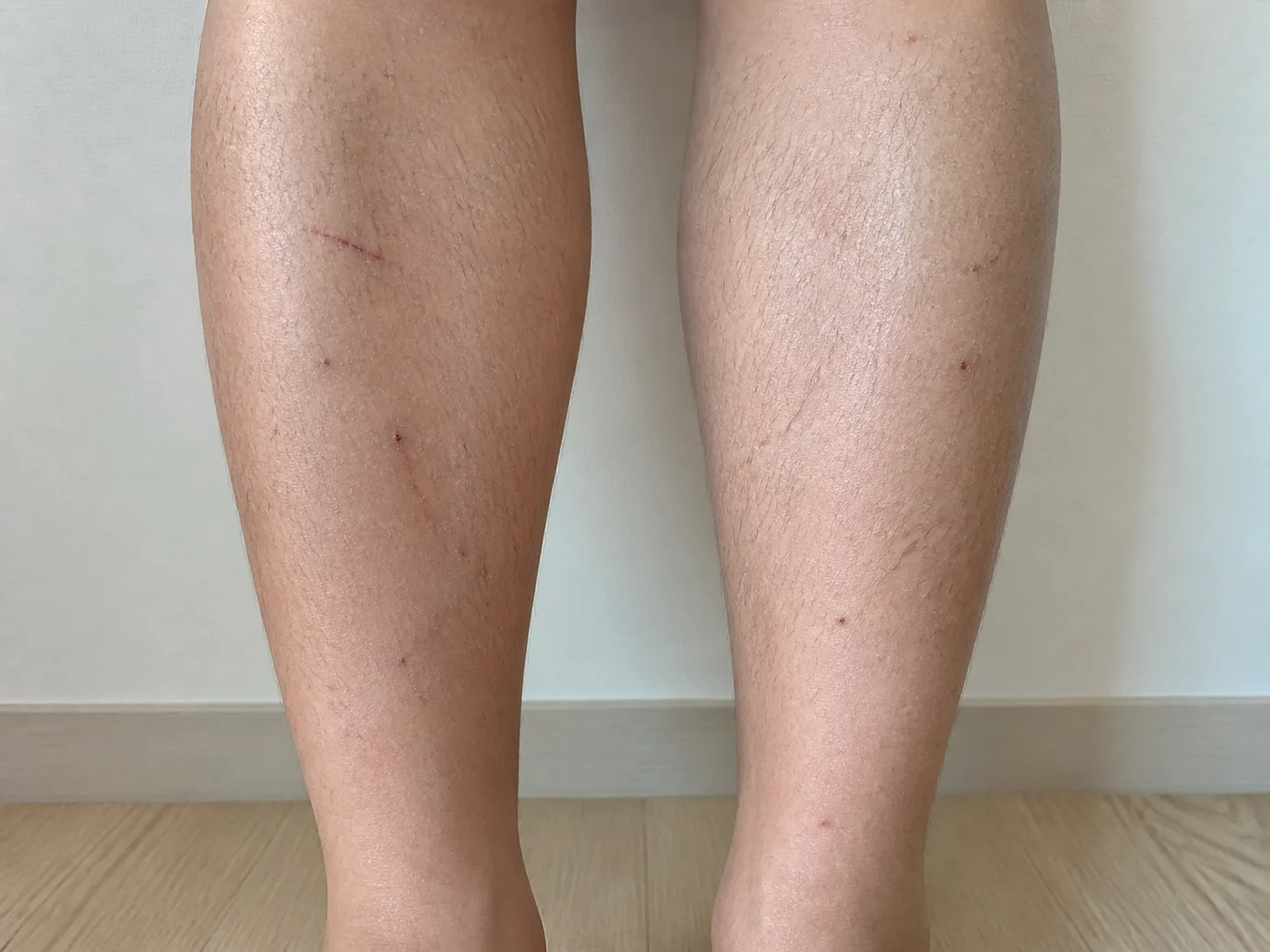
In cases of pruritus (itching), only wounds from scratching may be visible rather than the initial lesions. Please check for new medications, systemic diseases, dry environments, and the extent of nighttime itching.
When planning herbal medicine treatment
For pregnancy pruritus, the direction of Korean herbal medicine treatment is determined based on the current prominent symptoms
After first ruling out obstetric causes for the rash, we evaluate whether the skin is red and hot, whether there is significant edema or moisture, whether it is dry and worse at night, or whether recovery is slow due to depleted energy.
Pattern identification (Byeon-jeung) in Korean medicine is not about giving a different name to a disease. Multiple patterns can overlap in one person, and as the skin changes, for example, as oozing and heat decrease and dryness or cracking remain, the prescription is adjusted accordingly.
When red papules, plaques, and heat sensations increase rapidly
- Primary skin observations
- We examine redness and heat in the abdomen and limbs, as well as new skin changes.
- Overall body condition to check alongside skin
- We check for thirst, heat in the upper body, and difficulty sleeping.
- Primary considerations for herbal medicine prescription
- We reduce skin heat and itching within the safety range for pregnancy.
When itching occurs alongside edema and in moist skin folds
- Primary skin observations
- We look for symptoms such as oozing, swelling, and suspected infection.
- Overall body condition to check alongside skin
- We inquire about lower body edema, bloating, and changes in urination.
- Primary considerations for herbal medicine prescription
- Along with obstetric evaluation, we manage the burden of damp-heat and fluid metabolism.
When the skin is dry and scratching is severe at night
- Primary skin observations
- We look for fine scales, cracks, and dry scratch marks.
- Overall body condition to check alongside skin
- We check for dryness of the mouth and skin, and shallow sleep.
- Primary considerations for herbal medicine prescription
- The focus is on nourishing the blood, moisturizing dryness, and restoring the skin barrier and sleep.
When appetite and energy decrease and wounds heal slowly
- Primary skin observations
- We examine scabs, color changes, and recovery time.
- Overall body condition to check alongside skin
- We inquire about fatigue, appetite, and dizziness.
- Primary considerations for herbal medicine prescription
- We supplement the mother's Qi, blood, digestion, and skin recovery.
How is the herbal medicine prescription adjusted?
- Obstetric causes are ruled out first
Do not delay seeking care if you experience nighttime itching on the palms and soles, jaundice, or changes in urine color.
- We examine the rash and skin stages separately
We determine the proportion of heat, dampness, dryness, and impaired recovery.
- We prioritize the safety of the mother and fetus when adjusting treatment
We share information regarding obstetric care, gestational age, and current medications.
When should I consider Korean herbal medicine treatment?
- When abdominal or limb rashes and nighttime itching persist even after an obstetric evaluation
- When scratch marks and sleep disturbance are severe despite moisturizing and lifestyle adjustments
- When skin heat, dryness, digestion issues, edema, or fatigue fluctuate along with the itching
What will be asked during the medical evaluation?
- Gestational age, the initial site of the rash, and the order in which it spread
- Itching on the palms and soles, nighttime worsening, jaundice, and urine color
- Obstetric tests, current medications, sleep, digestion, edema, and body heat
Things to prepare before the consultationPlease prepare your gestational age, photos of the rash, the time and location of itching, changes in urine/stool color and fetal movement, bile acid and liver function test results, and your current obstetric prescriptions. This helps us safely determine if obstetric treatment is required first and whether Korean medicine treatment can be administered concurrently.
If pus, pain, or redness spreads rapidly, or if you have a fever, lesions inside the eyes or mouth, shortness of breath, or sudden facial swelling, please visit a dermatology clinic or seek emergency care first. After confirming that such urgent situations are not present, Baekrokdam provides herbal medicine treatment for chronic and recurring skin diseases.
Consult about the progress of pregnancy pruritusFrequently Asked Questions
Frequently Asked Questions about Pregnancy Pruritus
If I have itching without a rash, is it just because my skin is dry?
That may be the case, but if you experience itching on the palms and soles that worsens at night, you should inform your obstetrician about the possibility of ICP and consult regarding bile acid and liver function tests.
What is the difference between PUPPP and Intrahepatic Cholestasis of Pregnancy (ICP)?
PUPPP typically presents with red papules or urticarial rashes on the abdomen, whereas ICP is characterized primarily by severe itching without a rash. These are distinguished through physical examination and blood tests.
If the first blood test is normal, does that mean it is not ICP?
Itching can sometimes appear before abnormalities show up in the blood. If symptoms persist, bile acid and liver function will be re-tested based on the obstetrician's judgment.
Fetal movement has decreased; can I wait and see until tomorrow?
Do not wait. If fetal movement has decreased or changed compared to usual, you must contact your obstetrician or the delivery room immediately, regardless of the time.
If my palms and soles are itchy, is it Intrahepatic Cholestasis of Pregnancy?
While these are suspicious symptoms, a diagnosis cannot be confirmed by itching alone. You must inform your obstetrician immediately and undergo liver function and serum bile acid tests.
If blood test results are normal, does that mean it is not cholestasis?
Itching may start first, and levels may change later. If symptoms persist and there are no other causes, the obstetrics department will determine the timing for repeat tests.
If there is a red rash, does that mean it is not cholestasis?
Cholestasis usually does not have a primary rash, but it can occur simultaneously with skin diseases. The shape of the rash will be examined to determine if blood tests are necessary.
References and update date
Doctor of Korean Medicine Choi Yeon-seung verified the content based on the official and professional materials below and updated it on 2026-08-23.
- RCOG, Intrahepatic cholestasis of pregnancyObstetric evidence for immediate verification in cases of itching without rash, worsening on palms/soles or at night, jaundice, bile acid/liver function tests, or concerns regarding fetal movement
- ACOG, Skin Conditions During PregnancyEvidence for distinguishing between the red papules and urticarial rashes of PUPPP that start on the abdomen and the rash-free itching of the palms and soles in ICP
- NHS, Itching in pregnancyEvidence that itching of the palms, soles, and nighttime itching during pregnancy may be symptoms suggestive of ICP, requiring an urgent obstetric evaluation
- MedlinePlus Genetics, Intrahepatic cholestasis of pregnancyEvidence regarding impaired bile flow, bile acid accumulation, complex causes involving genetics, hormones, and environment, and related risk factors
- American Academy of Dermatology, Uncontrollably itchy skin