Nummular Eczema: Start with your most curious topics
Points to check first
Nummular Eczema: Symptoms and when to seek prompt medical evaluation
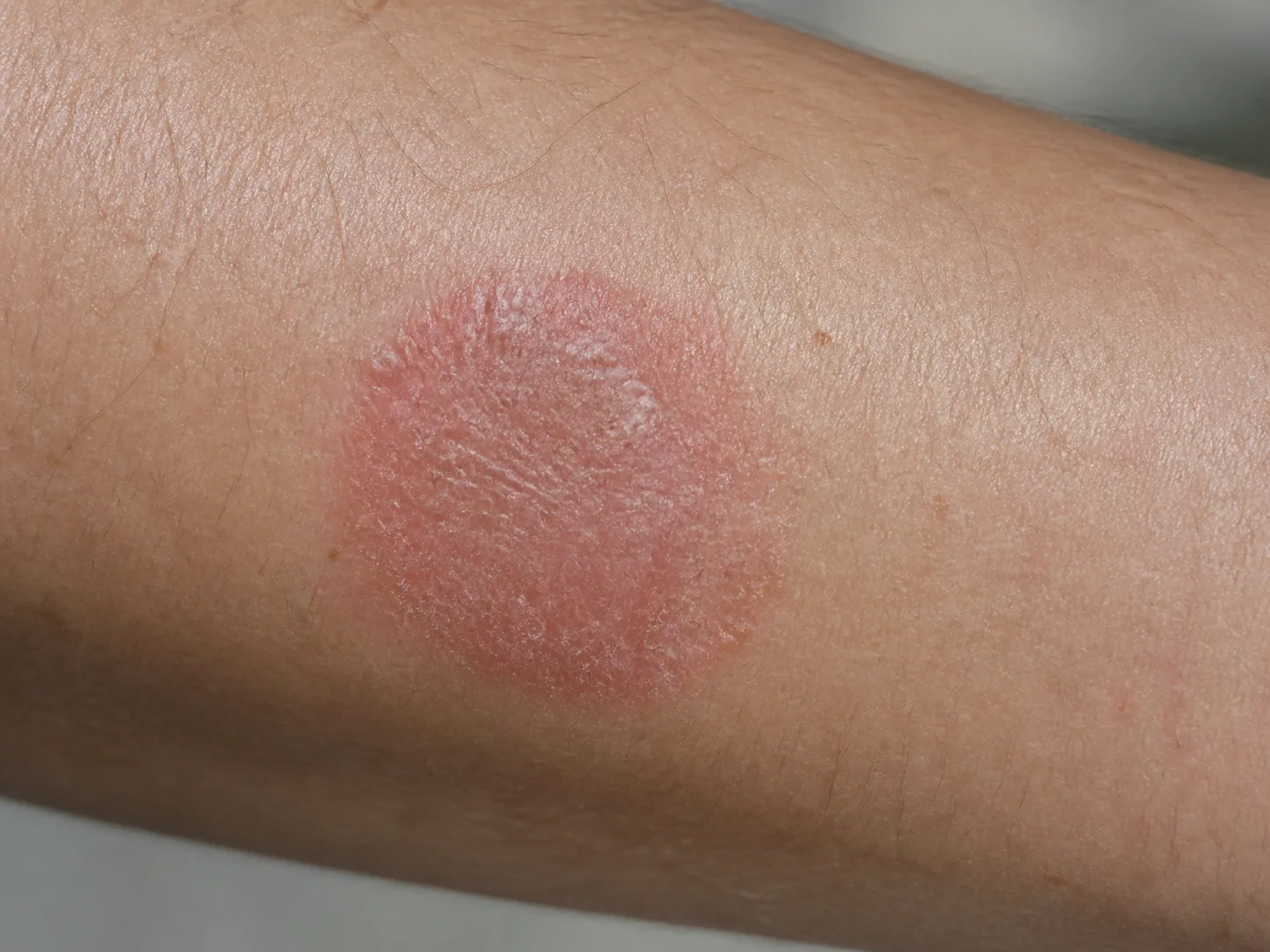
Nummular eczema is a type of dermatitis where small spots or bumps cluster to form round or oval plates, similar to the shape of a coin. It is common on the arms and legs, can spread to the torso, and is usually very itchy. In the early stages, skin changes include swelling and the formation of small blisters, oozingwhich may ooze. Over time, the skin becomes dry, and scabs, cracking, or scaling appear. If the center fades and it looks like a ring, it may resemble tinea corporis, so a diagnosis is not made based on shape alone. If there is a sudden increase in discharge, yellow scabs, heat, swelling, pain, fever, chills, or a general decline in physical condition, a prompt medical evaluation for infection is conducted.
Distinguishing shape and infection
Check the skin appearance, affected areas, and symptoms that require prompt medical evaluation together
We examine surface changes, itching, and pain together, rather than looking only at the round shape.
| Visible or felt symptoms | What to check | Priority action |
|---|---|---|
| Itchy round or oval spots | Possibility of nummular eczema | Record photos of the entire area and the edges |
| Small blisters, swelling, discharge | Early inflammatory pattern | Check amount of discharge, itching, and distribution |
| Dryness, scabs, cracking, scaling | Changes over time | Record of moisturizing and treatment response |
| Ring-shaped with a pale center | Similar conditions such as tinea (ringworm) | Skin examination and selective tests |
| Yellow crusts, heat sensation, pain, fever | Possibility of infection | prompt medical evaluation |
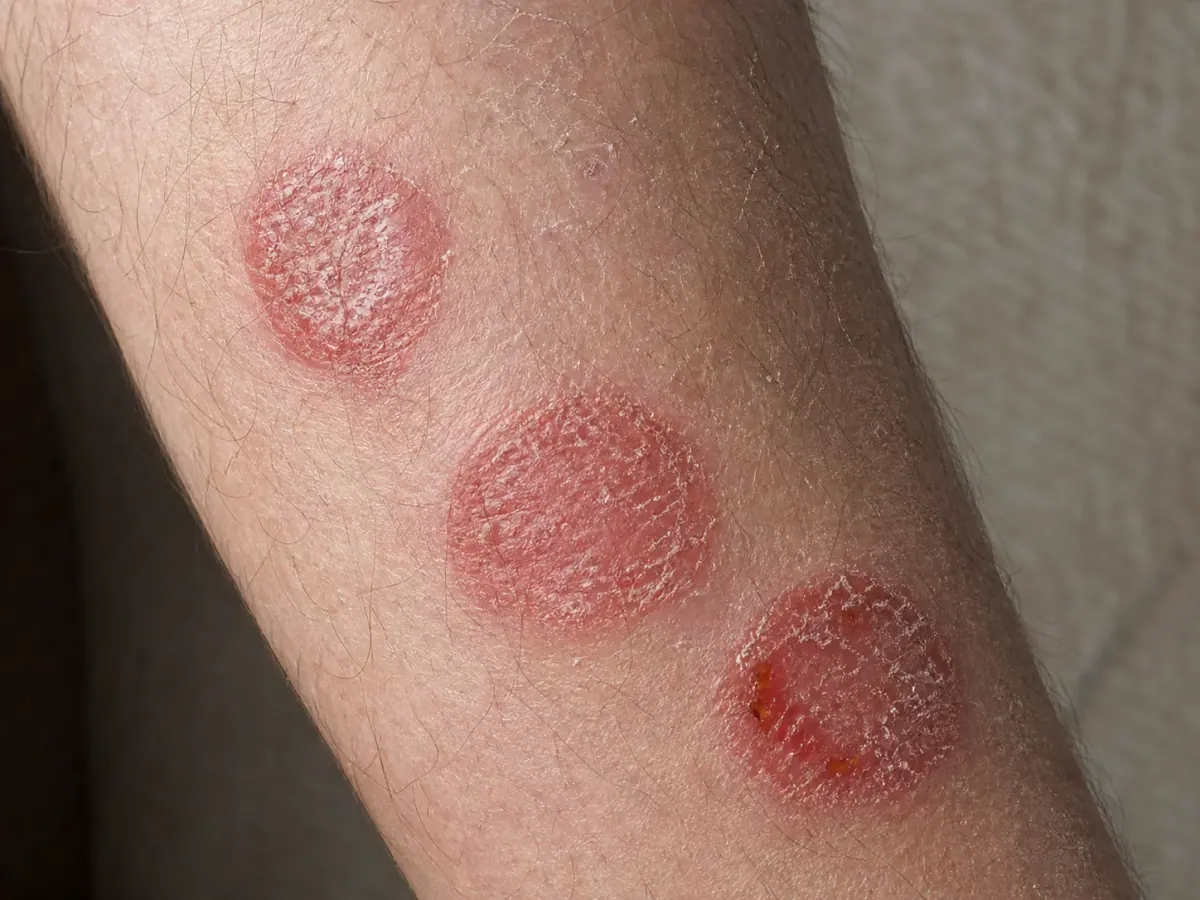
Nummular eczema can appear as multiple round plaques repeatedly on dry arms and legs. Unlike tinea, which grows only at the edges, we monitor the progress of oozing, scaling, and itching across the entire plaque.
Actual clinical photos and educational close-up examples are materials for comparing possible patterns and cannot be used for diagnosis alone. Mechanism diagrams have simplified complex processes.If these discomforts have recurred
For those who scratch coin-shaped spots every night due to itching and have oozing on their bedding
Nummular eczema appears round like tinea or psoriasis, making it easy for treatments to be misapplied. After checking the oozing across the entire plaque Keratin, and the distribution on dry arms and legs, we perform pattern identification (Byeonjeung) to recover heat, moisture, skin barrier, circulation, and digestion.
For those who have multiple round spots on their arms or calves and wonder if it is tinea
ointmentWhen coin-shaped plaques recur on the same limbs even after they subside upon applying medication
For those whose small blisters or oozing dry up and turn into crusts or scales
When dryness, cracking, and itching persist for a long time after oozing and crusting
For those whose skin changes are hot and painful, or are accompanied by yellow crusts and body aches
When tinea treatment and eczema treatment have been repeated, but the diagnosis and progress remain unclear
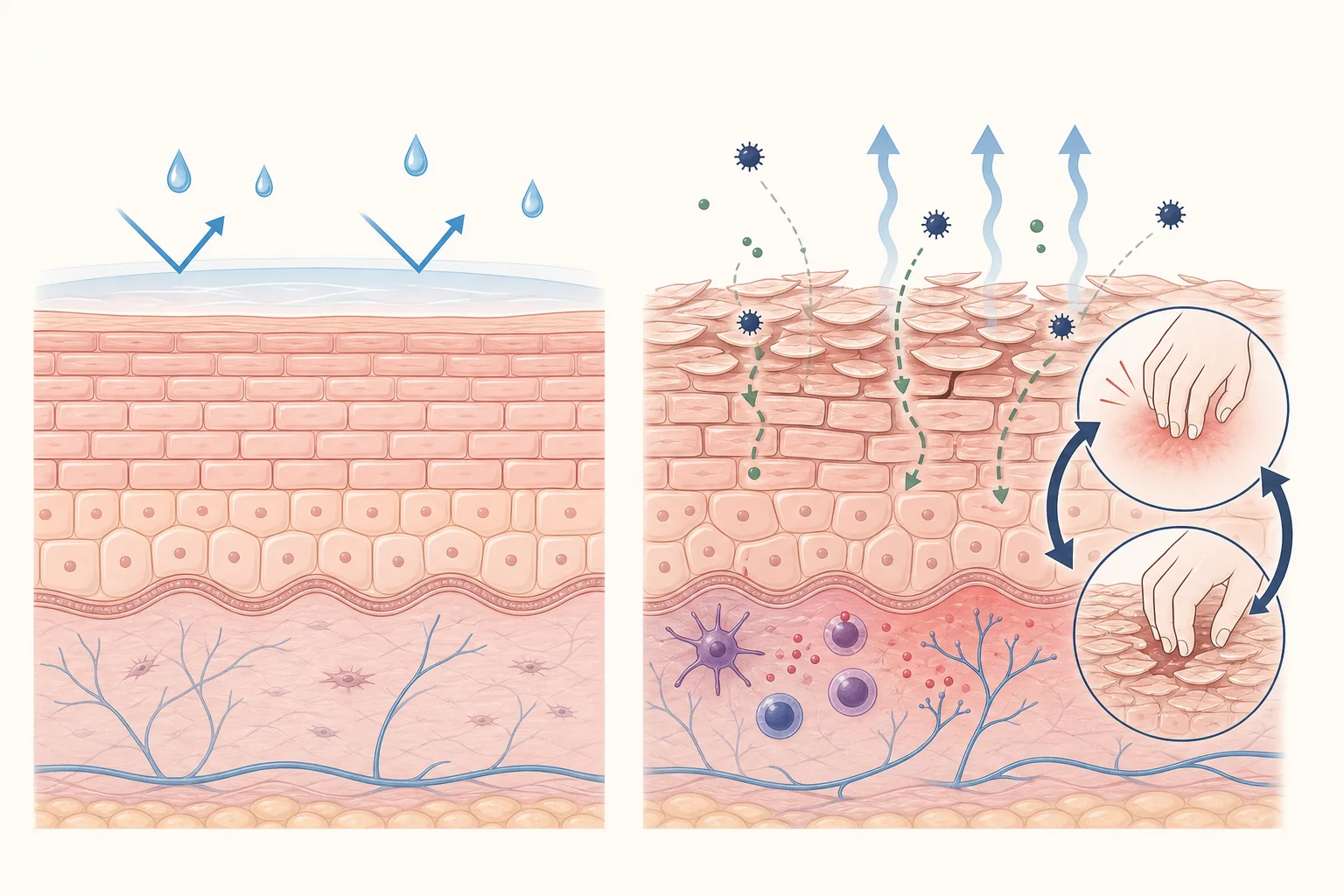
This is a simplified concept showing that when the barrier that retains moisture is disrupted, dryness and exposure to irritants increase, and itching and scratching can further damage the barrier.
Conceptual reference · NIAMS Atopic DermatitisPoints to distinguish first
Nummular eczema: How to distinguish it from similar-looking skin diseases
First, check if it spreads rapidly, becomes purulent, or is painful
We first check for yellow crusts, excessive oozing, heat sensation, swelling, pain, fever, or chills.
We check the changes on the skin surface over time.
We review photos in chronological order, from small spots to blisters, oozing, scabs, cracking, and scaling.
We check how itching and sleep change after dermatological treatment.
While maintaining the diagnosis and topical treatment, we monitor only the changes in nighttime itching, sleep, and work performance.
Why does it keep getting worse?
Reasons why nummular eczema persists or recurs
First, we distinguish it from tinea corporis, which grows only at the edges.
We check whether the entire plaque is itchy and oozing, or if the center is pale while the edges expand.
Wet plaques and dry plaques are not treated with the same prescription.
We prioritize acute oozing and heat sensations separately from chronic thickening and cracking.
We check the dryness of the lower body along with the body's recovery capacity.
We look for connections between recurrence and bathing, heating, friction, coldness or edema in the lower body, digestion, and fatigue.
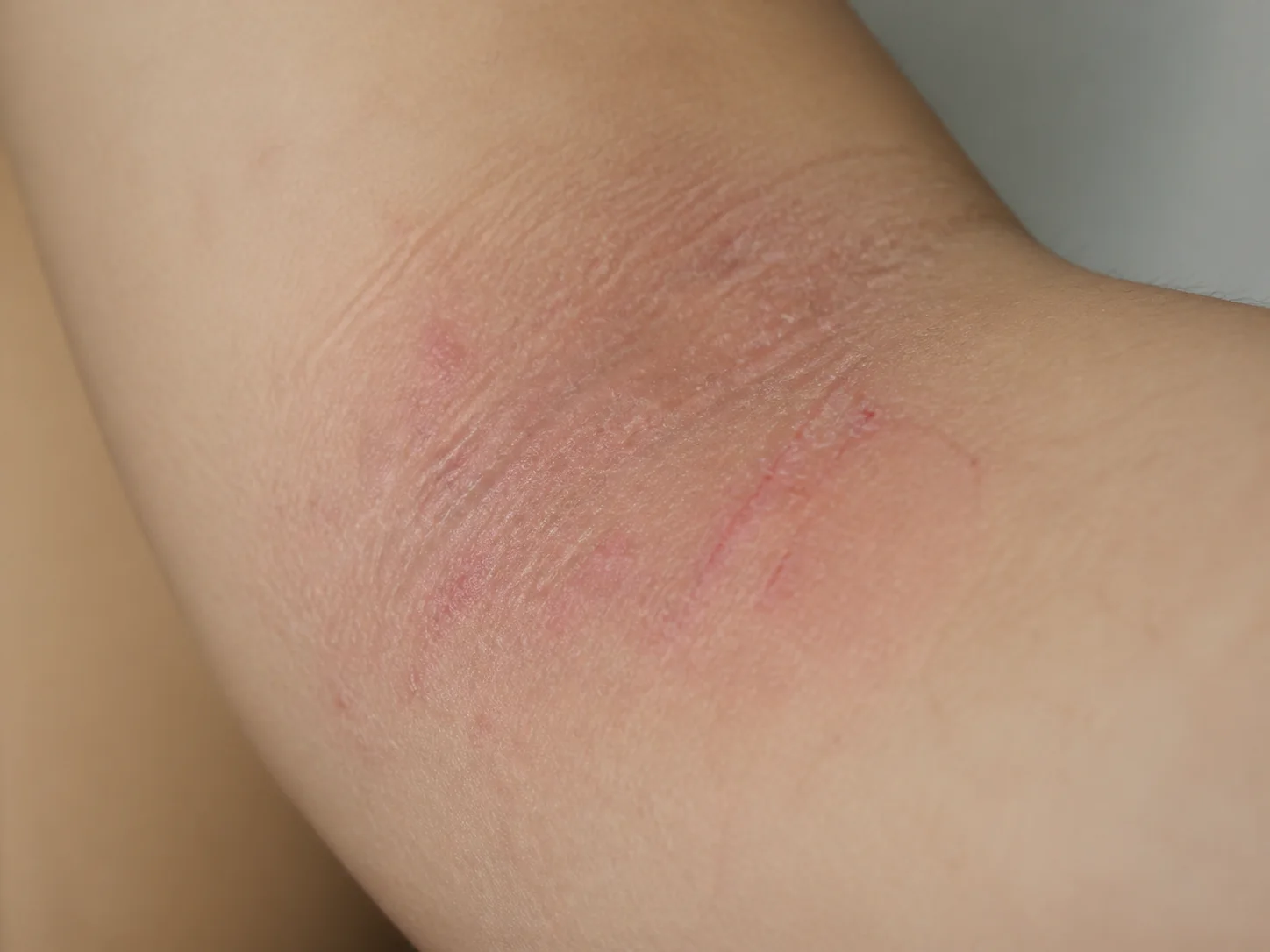
We examine dryness, fine flaking, skin texture, and scratch marks in the folding areas. Contact dermatitis or infections with similar appearances are distinguished through progress monitoring and examination.
Things to prepare before your visit
What photos and records should I prepare before the medical evaluation?
Please prepare photos of the overall skin changes and the edges, the date of first occurrence, changes in blisters, oozing, scabs, and scaling, itching, sleep, pain, heat sensation, fever, and any topical agents used.
Small spots and bumps cluster together
We record the initial size and the speed at which they merge through photos to observe the sequence of skin changes.
Swelling, blisters, and oozing may occur
We record the amount of oozing, the extent to which it stains clothes or bedding, and the level of itching and pain.
Common on arms and legs, and may spread to the torso
We check the number of new skin changes on the arms, legs, and torso on a weekly basis, rather than on the face or scalp.
Changes to monitor during treatment
What changes should I monitor during treatment?
The first plaque to appear and the order of spread
Please record when it started and how it has changed, including the dates. To make it easier to compare before and after, take photos of the same area from a similar distance and under similar lighting.
Current primary symptoms: oozing and heat sensation vs. dryness and cracking
Please leave a brief note. Compare not only the visible changes but also whether your sleep, pain, and daily life have become less uncomfortable.
Medications used, bacterial/fungal tests, bathing, heating, and lower body edema
Please also include the dates of any medications, ointments, or procedures you are currently using. This makes it easier to compare what led to improvement or worsening.
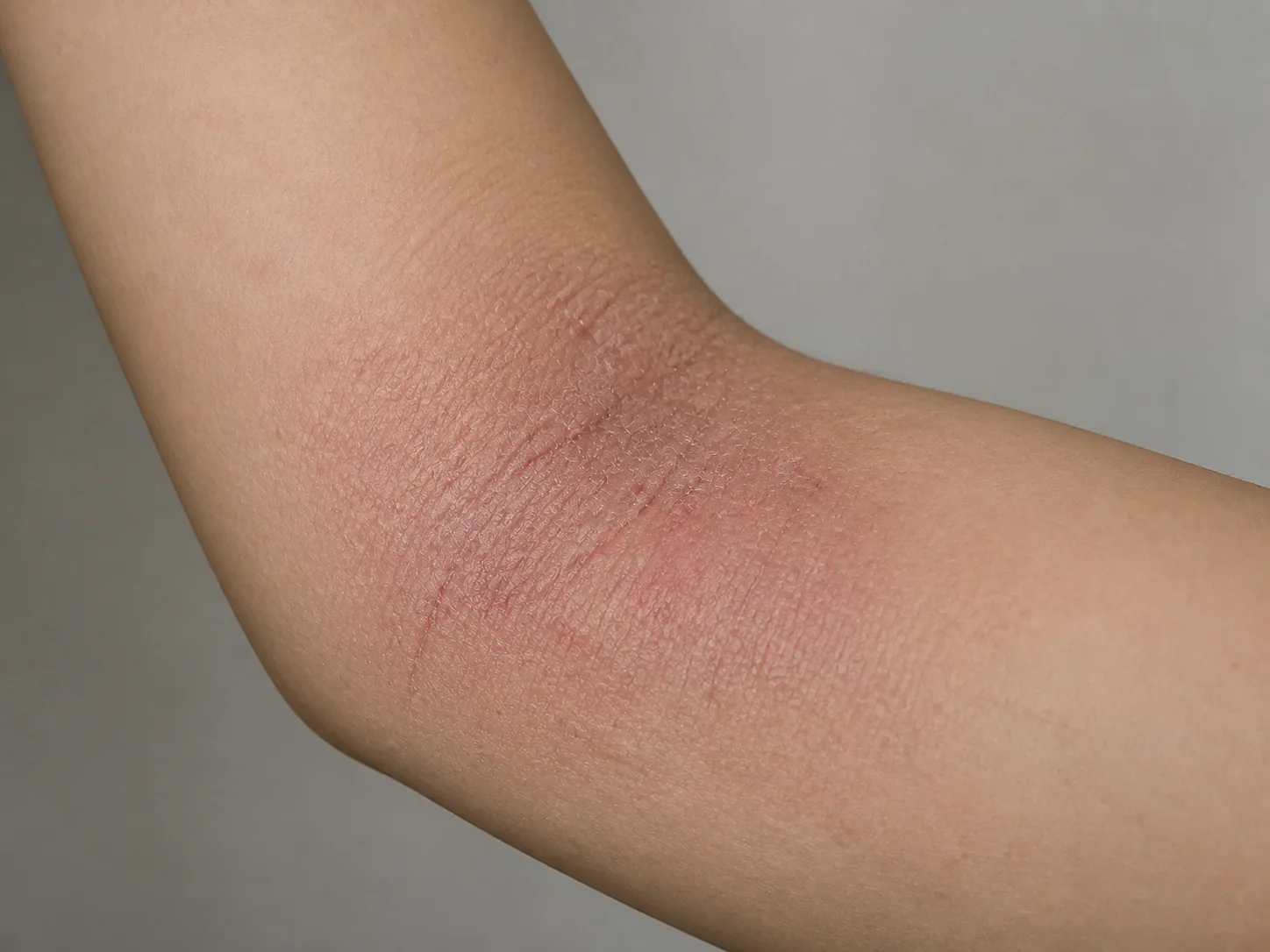
In pediatric atopy, skin folds such as the inner elbows and behind the knees may become more prominent as the child grows. Record nighttime itching and scratch wounds together.
Conceptual reference · American Academy of Dermatology, Atopic dermatitis overviewWhen planning herbal medicine treatment
For nummular eczema, the direction of Korean herbal medicine treatment is determined based on the currently prominent symptoms.
Rather than the round shape itself, we observe whether it is currently moist and hot, red and spreading rapidly, or thick and dry, and whether healing is delayed amidst lower body edema, digestive issues, or fatigue.
Pattern identification (Byeon-jeung) in Korean medicine is not about giving a different name to a disease. Multiple patterns can overlap in one person, and as the skin changes, for example, as oozing and heat decrease and dryness or cracking remain, the prescription is adjusted accordingly.
When the entire plaque is moist and scabbing recurs
- Primary skin observations
- We observe for oozing, yellow scabs, edema, pus, and pain.
- Overall body condition to check alongside skin
- We check if symptoms worsen after sweating, exposure to humidity, or overeating, and if the body feels heavy and bloated.
- Primary considerations for herbal medicine prescription
- After addressing infection, the focus is on clearing heat and resolving dampness to reduce moisture, heat, and oozing.
When new red, hot, round plaques appear
- Primary skin observations
- We observe for vivid redness, heat sensation, itching, and the speed at which new plaques form.
- Overall body condition to check alongside skin
- We ask about heat in the upper body and worsening of symptoms after exposure to heat, alcohol consumption, or lack of sleep.
- Primary considerations for herbal medicine prescription
- The focus is on nourishing the blood and clearing heat to reduce active skin heat and inflammation.
When old plaques become thick, crack, and itch at night
- Primary skin observations
- We observe for dryness across the plaque, thick skin texture, cracks, and scratch marks.
- Overall body condition to check alongside skin
- We check for dryness of the skin and mouth, sleep disturbance at night, and fatigue.
- Primary considerations for herbal medicine prescription
- Emphasis is placed on nourishing the blood and moisturizing dryness to aid the recovery of the skin barrier and skin health.
When calves are swollen and wounds heal slowly
- Primary skin observations
- We observe multiple plaques on the lower body, edema, pigmentation marks, and recovery time.
- Overall body condition to check alongside skin
- We ask about poor digestion, loose stools, afternoon fatigue, and a cold sensation in the lower body.
- Primary considerations for herbal medicine prescription
- We strengthen the spleen and stomach, fluid metabolism, and the recovery of Qi and blood to reduce recurrence and delayed healing.
How is the herbal medicine prescription adjusted?
- First, distinguish from tinea or psoriasis
We check the edges and center, perform fungal tests, and look for clues on the nails and scalp.
- Confirm whether it is a period of oozing or a period of drying and cracking
Even for the same plaque, the focus shifts between clearing heat and removing dampness, and moisturizing and recovery, depending on the stage.
- We examine new plaques, oozing, cracking, and the interval between recurrences together.
We compare the recovery progress on a monthly basis using photos and sleep records.
When should I consider Korean herbal medicine treatment?
- When coin-shaped plaques repeatedly appear on the same arm or leg, even if they subside after applying ointment
- When dryness, cracking, and itching persist for a long time after oozing and crusting
- When you have repeatedly undergone treatment for tinea (ringworm) and eczema, but the diagnosis and progress remain unclear
What will be asked during the medical evaluation?
- The first plaque to appear and the order in which they spread
- Whether the current primary symptoms are oozing and heat, or dryness and cracking
- Medications used, fungal tests, bathing habits, heating, and lower body edema
Things to prepare before the consultationPlease prepare photos of the overall skin changes and the edges, the date of first occurrence, changes in blisters, oozing, crusts, and scales, itching, sleep patterns, pain, heat, fever, and any topical agents used.
If pus, pain, or redness spreads rapidly, or if you have a fever, lesions inside the eyes or mouth, shortness of breath, or sudden facial swelling, please visit a dermatology clinic or seek emergency care first. After confirming that such urgent situations are not present, Baekrokdam provides herbal medicine treatment for chronic and recurring skin diseases.
Consult about the progress of nummular eczemaFrequently Asked Questions
Frequently Asked Questions about Nummular Eczema
How does nummular eczema develop?
Small spots or bumps merge to form very itchy circular or oval plaques, which may transition from blisters and oozing to crusting, cracking, and scaling.
Where does it mainly occur?
It is common on the arms and legs and may spread to the torso. While it can appear as a single plaque, it often manifests as multiple skin changes.
How is it different from tinea (ringworm)?
Both are circular and the center tends to clear, making it difficult to distinguish by appearance alone. A skin examination is performed, and selective tests are conducted if necessary.
If there is oozing, is it an infection?
Oozing can occur even in the early stages of skin changes, but if accompanied by yellow crusts, heat, edema, pain, or fever, an infection is promptly evaluated.
What is the exact cause of nummular eczema?
A single exact cause is not known. Severe skin dryness, minor injuries, contact hypersensitivity, and certain medications can act as triggers or aggravating factors, so we examine the circumstances before and after the onset.
Can nummular eczema develop at the site of an insect bite?
It can begin after skin damage such as cuts, insect bites, or abrasions. However, a definitive diagnosis is not made based solely on the fact that a circular skin change appeared after an injury.
How can I tell the difference between nummular eczema and tinea (ringworm)?
Both can be round and itchy, making them difficult to distinguish by photos alone. We differentiate them by examining the edges and the pattern of spread, and by performing dermatology tests if necessary.
References and update date
Doctor of Korean Medicine Choi Yeon-seung verified the content based on the official and professional materials below and updated it on 2026-08-23.
- NHS, Discoid eczemaStages of blisters, oozing, crusting, and scaling of circular or oval skin changes, and symptoms where infection is suspected
- MedlinePlus, Nummular eczemaItchy coin-shaped skin changes on the arms and legs, and spread to the torso, oozing, or crusting
- AAD, Nummular eczemaItchy, raised round skin changes and differential diagnosis between tinea and psoriasis
- AAD, Nummular eczema diagnosis and treatmentSkin examination, swab specimens for infection, skin biopsy, and patch tests if symptoms repeatedly fail to respond to treatment
- DermNet, Discoid eczemaSkin protection, avoiding irritants, moisturizing, topical steroids, and treatment for infection or severe cases
- AAD, Atopic dermatitis treatmentSkin barrier moisturizing, topical anti-inflammatory agents, and safety principles for infection treatment