Start with the topics you are curious about regarding facial flushing
Points to check first
Facial flushing: symptoms and when to seek prompt medical evaluation
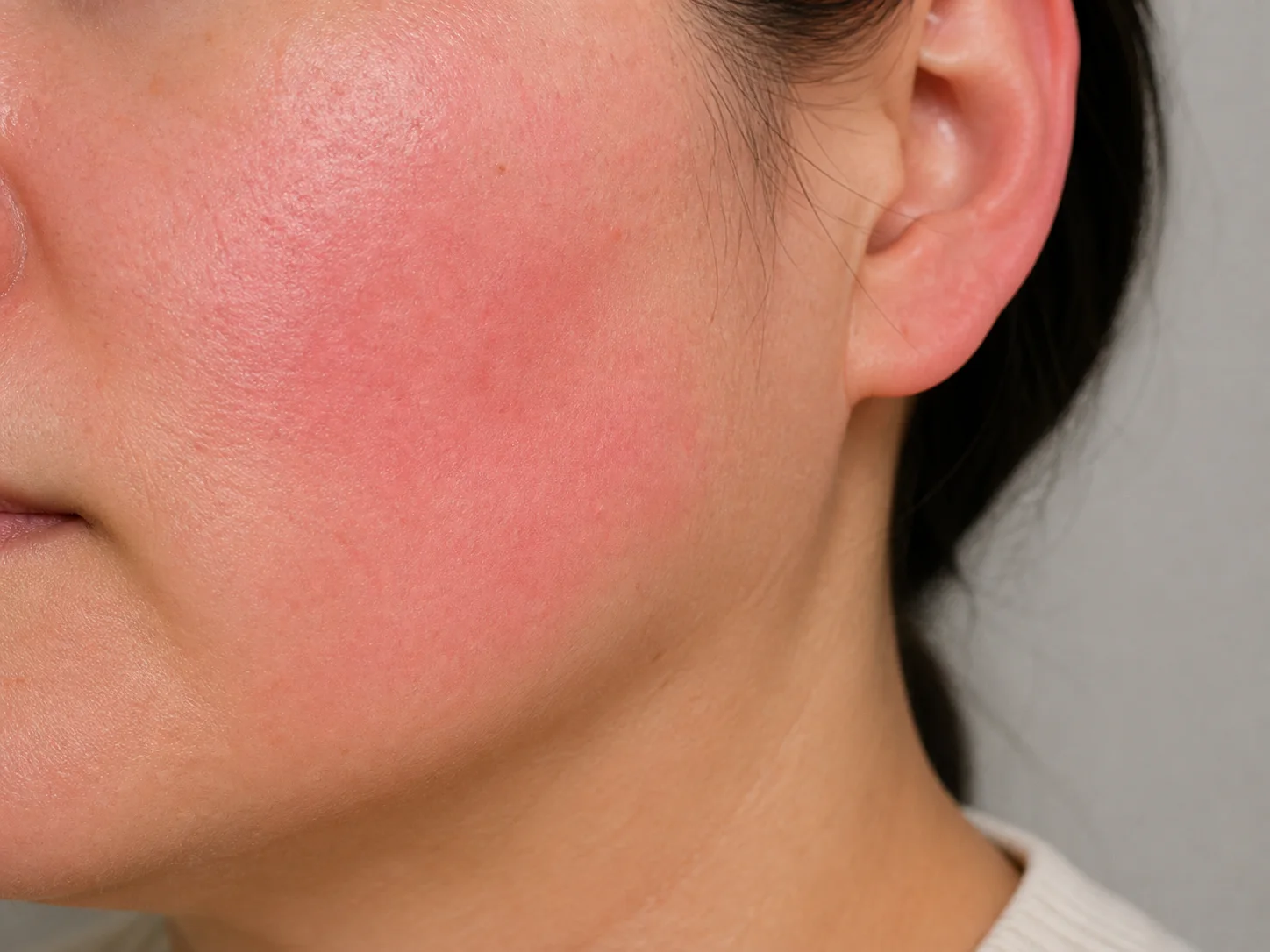
Facial flushing is a symptom where the skin suddenly becomes red, hot, or burning due to increased blood flow to the face, neck, and upper chest. It may appear briefly and disappear after emotional stress, exercise, heat, temperature changes, spicy food, or alcohol consumption. Rosacea is characterized by more frequent flushing centered on the cheeks, nose, forehead, and chin, persistent color changes to red, purple, or brown, and visible broken capillaries, accompanied by stinging, pain, and papules. Bloodshot eyes, dryness, a foreign body sensation, or eyelid swelling may also occur. Swelling of the lips or tongue, difficulty breathing, eye pain, photosensitivity, changes in vision, and sudden facial drooping, arm weakness, or slurred speech require immediate evaluation.
Distinguishing symptoms and urgency
Determine when to seek medical evaluation based on duration and skin, eye, and systemic symptoms
Rather than looking at redness alone, we observe skin, eye, and systemic changes that accompany the onset and recovery.
| Visible or Felt Changes | What to check | Priority action |
|---|---|---|
| Brief redness and heat after emotion, heat, or exercise | Temporary flushing | Record photos, triggers, and duration |
| Prolonged redness of cheeks and nose, visible capillaries, or papules | Possible rosacea-like changes | Dermatology evaluation |
| Eye redness, dryness, foreign body sensation, or eyelid swelling | Possible ocular rosacea | Dermatology and ophthalmology evaluation |
| Accompanied by diarrhea, wheezing, or hives | Possible other systemic causes | Prompt medical evaluation |
| Swelling of tongue or throat, difficulty breathing, or feeling of fainting | Possible anaphylaxis | Immediate emergency assistance |
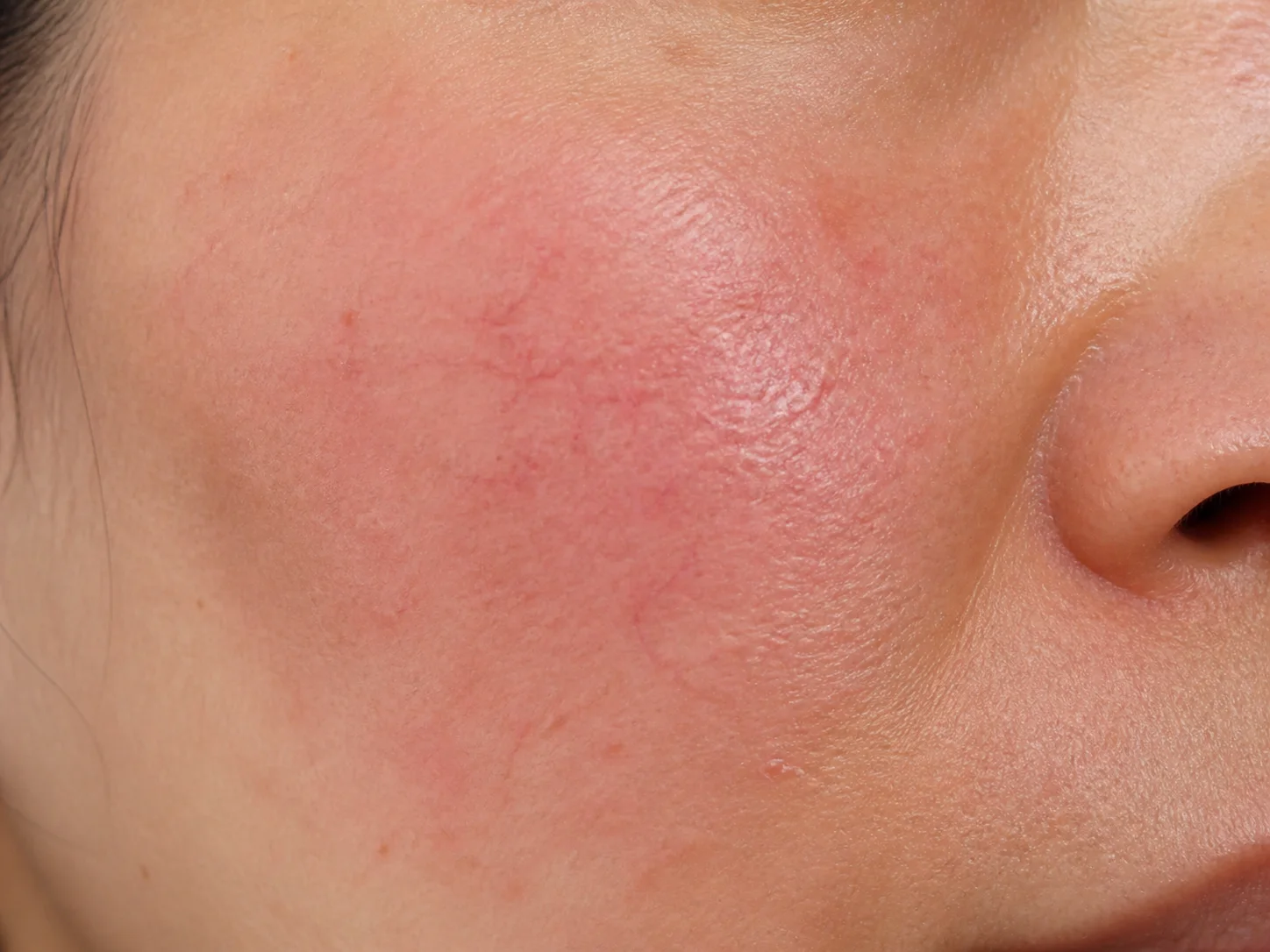
Redness in the center of the face and fine blood vessels that remain even when not triggered are different clues from temporary flushing. We check for rosacea along with papules, scaling, and eye symptoms.
Actual clinical photos and educational close-up examples are materials for comparing possible patterns and cannot be used for diagnosis alone. Mechanism diagrams have simplified complex processes.If these discomforts have recurred
For those whose faces flush during meetings and whose cheeks and nose remain red even after leaving work
Facial flushing covers a wide range, from momentary vascular reactions to persistent redness like rosacea, and heat sensations linked to menopause, tension, or medication. We first distinguish the type of flushing, then determine the direction of Korean herbal medicine treatment by observing scenarios where heat concentrates in the face, as well as differences in diet, sleep, digestion, and the cold/heat sensations in the hands and feet.
For those whose face and neck become red and hot after heat, tension, exercise, drinking, or spicy food
When the face and neck frequently flush and take a long time to subside after indoor/outdoor temperature differences, meals, exercise, or meetings
For those with persistent erythema, visible capillaries, breakouts, and recurring stinging on the cheeks and nose
When redness persists even after laser treatments or skincare management, and burning sensationthis repeats and cleansing or applying makeup feels burdensome
For those with flushing accompanied by bloodshot, dry, or painful eyes, or swelling of the lips and tongue
When facial heat sensations occur alongside cold hands and feet, digestive discomfort, palpitations, or changes in sleep
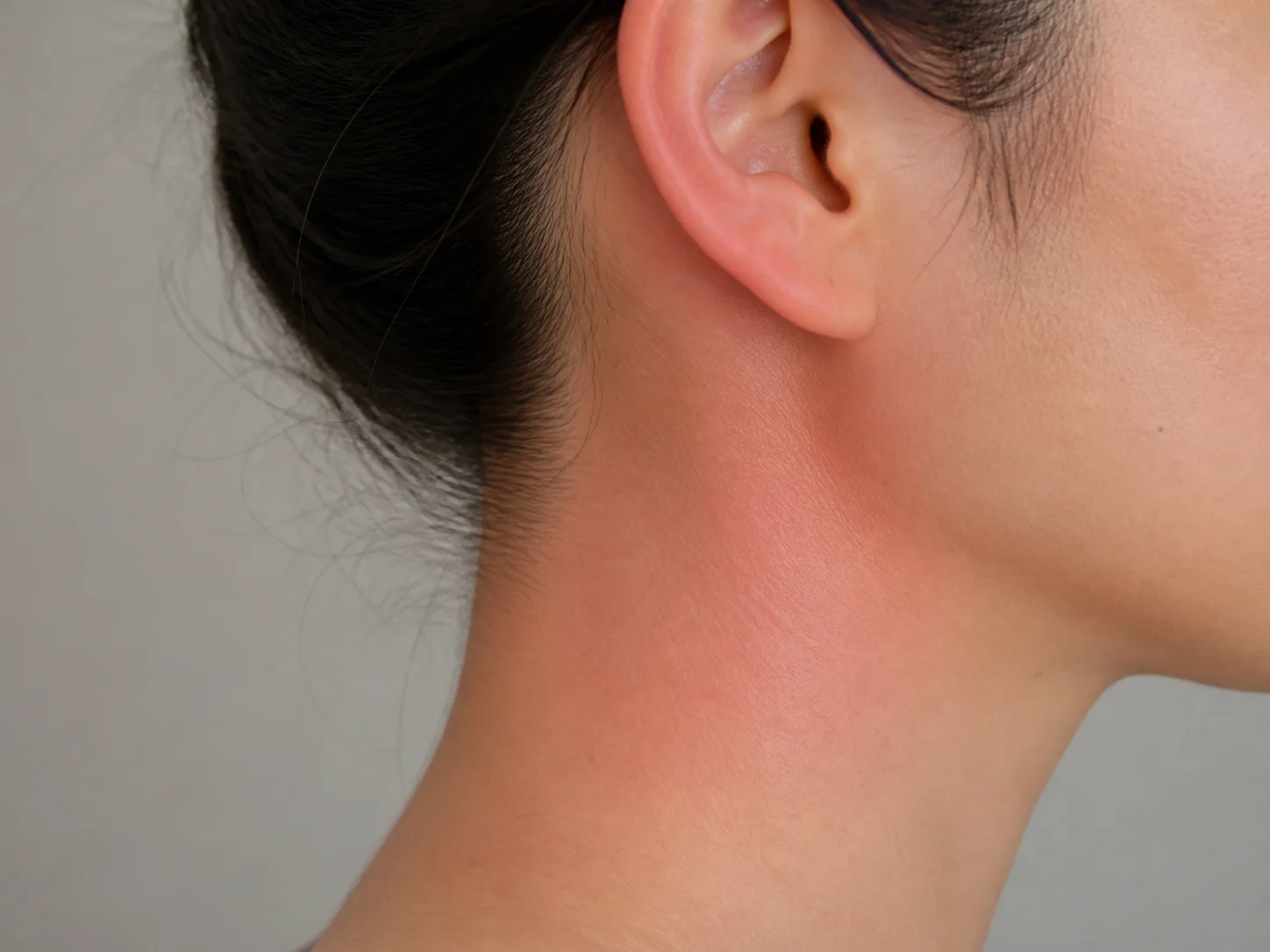
For emotional flushing, we record the time it takes for the redness to subside, as well as palpitations, sweating, and scenarios such as presentations or conversations, rather than focusing on breakouts or dead skin.
Points to distinguish first
How to distinguish facial flushing from similar-looking skin conditions
Rule out airway, eye, or neurological emergencies
We check for swelling, breathing difficulties, eye pain, vision changes, unilateral weakness, or changes in speech.
Check triggers, duration, skin, and eyes together
We connect photos with flushing, blood vessels,papuleseyes, and systemic symptoms.
Check how the impact on daily life changes after treating the cause
While maintaining treatment for the identified cause, we record the frequency, duration, burning sensation, and social discomfort.
Why does it keep getting worse?
Reasons why facial flushing persists or recurs
Please note how long it takes for the redness to subside after your face flushes
Recording the start time and the time it takes to return to your original skin color after temperature changes, meetings, exercise, or meals helps distinguish between temporary flushing and persistent erythema.
How to distinguish between surface skin heat and internal body heat
Check separately for the presence of papules, flaking, visible capillaries, or stinging during cleansing; whether the face feels hot while the hands, feet, and lower abdomen are cold; and whether pulsating sensations, sweating, or insomnia occur together.
Korean herbal medicine treatment is determined based on the actual patterns of recurring flushing
We identify conditions that consistently trigger flushing, such as spicy and hot meals, tension, menopause, or lack of sleep, to prioritize treatment focus among body heat, the autonomic nervous system, digestion, or the skin barrier.
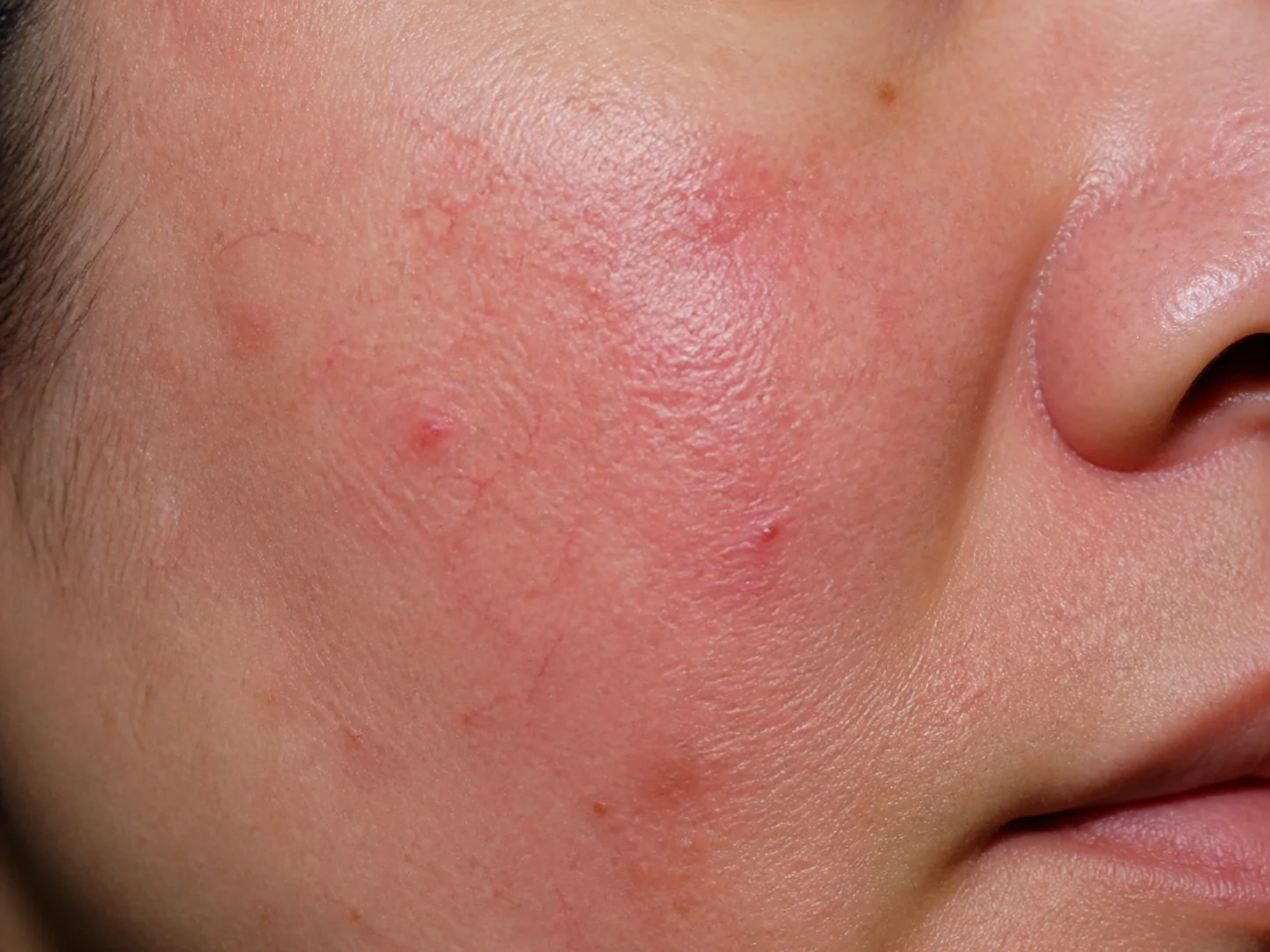
Persistent erythema and burning sensations in the center of the face, along with fine blood vessels, are used to distinguish this from acne, which is centered around comedones. Only the skin surface is shown in close-up, excluding the eyes.
Things to prepare before your visit
What photos and records should I prepare before the medical evaluation?
Please prepare photos of the flushing, records of triggers and duration, skin/eye/systemic symptoms, and any new medications or products used.
Observe how long the redness persists after the trigger has passed
Record photos and the exact time of onset, the peak of the symptoms, and the time of recovery.
Check both the color and the sensation of heat for each skin tone
Check for purple or brown color changes, as well as heat and burning sensations, in addition to redness.
Check which areas, cheeks, nose, forehead, or chin, are red and rough
Check for persistent color changes, visible capillaries, papules, or thickening of the skin.
Changes to monitor during treatment
What changes should I monitor during treatment?
The scenario when flushing begins, the time of peak redness, and the time it takes to subside
Please record when it started and how it has changed, including the dates. To make it easier to compare before and after, take photos of the same area from a similar distance and under similar lighting.
Whether redness, visible capillaries, papules, or flaking remain even after the trigger is gone, and whether there is eye discomfort
Please leave a brief note. Compare not only the visible changes but also whether your sleep, pain, and daily life have become less uncomfortable.
Changes in heat or cold in the hands and feet in relation to meals, alcohol, temperature, exercise, tension, menstruation, and sleep
Please also include the dates of any medications, ointments, or procedures you are currently using. This makes it easier to compare what led to improvement or worsening.
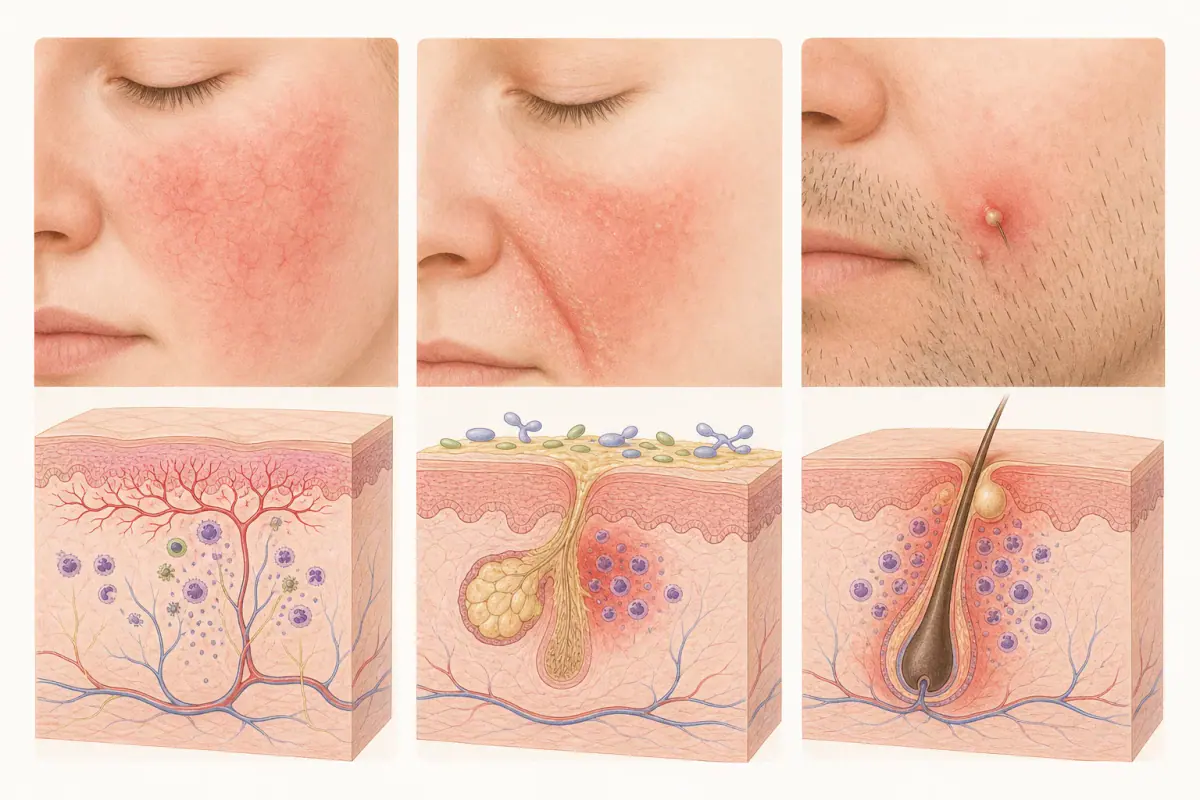
This is a simplified conceptual diagram showing that while rosacea, seborrheic dermatitis, and folliculitis may all appear red, the structures and distributions observed are different. This image does not determine a single cause for each disease.
Conceptual reference · AAD Rosacea: Causes · AAD Seborrheic dermatitis: CausesWhen planning herbal medicine treatment
For facial flushing, the direction of Korean herbal medicine treatment is determined based on the most prominent current symptoms
We do not simply lower heat for everyone just by looking at a red face. We adjust the focus of the prescription by observing whether the flushing occurs after meals or heat, whether it starts with tension and pulsating sensations, whether the skin and mouth dry out with heat rising in the afternoon or night, or whether the face is hot while the hands, feet, and abdomen are cold.
Pattern identification (Byeon-jeung) in Korean medicine is not about giving a different name to a disease. Multiple patterns can overlap in one person, and as the skin changes, for example, as oozing and heat decrease and dryness or cracking remain, the prescription is adjusted accordingly.
When redness persists for a long time after eating spicy, hot foods or drinking alcohol
- Primary skin observations
- We check if vivid flushing and heat in the cheeks and nose, or stinging during cleansing, become more pronounced after meals.
- Overall body condition to check alongside skin
- We ask about thirst, heartburn, bloating, sweating in the upper body, and worsening in hot environments.
- Primary considerations for herbal medicine prescription
- The focus is on heat-clearing regulation to lower the heat concentrating in the face and stomach without further drying out the skin.
When the ears and neck turn red after meetings, embarrassment, or anger
- Primary skin observations
- We compare your usual skin tone with the area of redness immediately after tension and the time it takes for the redness to subside.
- Overall body condition to check alongside skin
- We check for throbbing, tension in the neck and shoulders, difficulty falling asleep, and stress-related digestive discomfort.
- Primary considerations for herbal medicine prescription
- Focus is placed on recovering sleep and 'Sogan' and 'Haeul' (soothing the liver and relieving emotional stagnation) to lower surging heat and autonomic nerve overreaction.
When the skin feels hot, dry, and stinging in the afternoon and at night
- Primary skin observations
- We observe persistent light redness, fine flaking, and tightness or burning sensations after washing the face.
- Overall body condition to check alongside skin
- We ask if dry mouth and eyes, night sweats, shallow sleep, and afternoon heat sensations occur together.
- Primary considerations for herbal medicine prescription
- Rather than aggressive cooling, we combine heat regulation with 'Jaum' and 'Yunjyo' (nourishing yin and moisturizing dryness) to help recover deficient fluids and the skin barrier.
When the face is hot, but the hands, feet, and lower abdomen are cold
- Primary skin observations
- We observe the extent of heat concentrating in the face, ears, and neck, as well as rebound flushing after exposure to cold environments.
- Overall body condition to check alongside skin
- We check for coldness in the hands and feet, abdominal coldness, loose stools, temperature adaptation, and fatigue.
- Primary considerations for herbal medicine prescription
- Instead of only cooling the upper body, we simultaneously regulate the cold and heat balance between the upper and lower body, as well as digestion and circulation.
How is the herbal medicine prescription adjusted?
- First, we distinguish between temporary flushing and chronic skin diseases
If erythema, visible blood vessels, papules, flaking, or eye symptoms remain even after the trigger is gone, we first provide the necessary evaluations for conditions such as rosacea or dermatitis.
- We check for changes in overall body condition accompanying facial heat
Only the factors that actually recur, among diet, tension, menopause, sleep, or temperature, are reflected in the pattern identification (Byun-jeung).
- We compare frequency and recovery time rather than just the color
We observe the number of flushing episodes per day, the time of peak heat, the time it takes to return to the original skin tone, and changes in stinging sensations during face washing.
When should I consider Korean herbal medicine treatment?
- When the face and neck frequently flush and take a long time to cool down after indoor/outdoor temperature changes, meals, exercise, or meetings
- When redness and burning sensations recur even after laser treatments or skincare management, and when washing or applying makeup feels burdensome
- When facial heat occurs alongside cold hands and feet, digestive discomfort, throbbing, or changes in sleep
What will be asked during the medical evaluation?
- The situations when flushing begins, the time of peak redness, and the time it takes to subside
- Whether redness, visible blood vessels, papules, flaking, or eye discomfort persist even with rest
- Changes in warmth or coldness of hands and feet related to meals, alcohol, temperature, exercise, stress, menstruation, or sleep
Things to prepare before the consultationPlease prepare photos of the flushing, triggers and duration, skin/eye/systemic symptoms, and records of any new medications or products.
If pus, pain, or redness spreads rapidly, or if you have a fever, lesions inside the eyes or mouth, shortness of breath, or sudden facial swelling, please visit a dermatology clinic or seek emergency care first. After confirming that such urgent situations are not present, Baekrokdam provides herbal medicine treatment for chronic and recurring skin diseases.
Consult about facial flushing progressFrequently Asked Questions
Frequently Asked Questions about Facial Flushing
To what extent do facial flushing symptoms appear?
You may feel redness and heat not only on the face but also on the neck and upper chest.
How is rosacea-related flushing different?
Flushing centered on the cheeks and nose may recur frequently, and may be accompanied by persistent color changes, visible blood vessels, papules, stinging, and eye symptoms.
Is eye redness also related?
Rosacea can cause eye redness, dryness, a foreign body sensation, or eyelid swelling. Please seek immediate evaluation for pain, photosensitivity, or changes in vision.
When should I take photos?
Take photos under the same lighting at the start of the flushing, when it is most severe, and during recovery, ensuring both the face and neck are visible.
What are common causes of facial flushing?
Common triggers include emotions, exercise, heat, sudden temperature changes, spicy foods, and alcohol. If recurrent, we distinguish between rosacea, medication, and changes around menopause.
If my face turns red after taking medication, should I stop it immediately?
Do not discontinue medication arbitrarily. Record the medication name, dosage, and start time, then check with the prescribing clinician or pharmacist regarding the correlation and the need for adjustment.
What is the difference between rosacea and temporary flushing?
Clues for rosacea include recurrent or persistent erythema centered on the cheeks and nose, stinging, visible blood vessels, breakouts, or eye discomfort. This is distinguished through a dermatological examination.
References and update date
Doctor of Korean Medicine Choi Yeon-seung verified the content based on the official and professional materials below and updated it on 2026-08-23.
- AAD, Rosacea overviewDistinction between temporary flushing and persistent erythema, blood vessels, papules, and eye symptoms
- AAD, Rosacea diagnosis and treatmentSkin and eye examinations, and the appearance of rosacea symptoms and triggers
- NHS, RosaceaRecurrent flushing centered on the cheeks, nose, forehead, and chin, along with pain, blood vessels, and eye symptoms
- MedlinePlus, Skin blushing/flushingClinical clues based on emotions, exercise, heat, food, alcohol, medication, menopause, rosacea, and rare systemic diseases such as diarrhea
- AAD, Prevent rosacea flare-upsBasis for tracking and avoiding individual triggers such as sunlight, heat, alcohol, and spicy foods