Start with the topics you are curious about regarding Demodex
Points to check first
Demodex: Symptoms and when to seek prompt medical evaluation
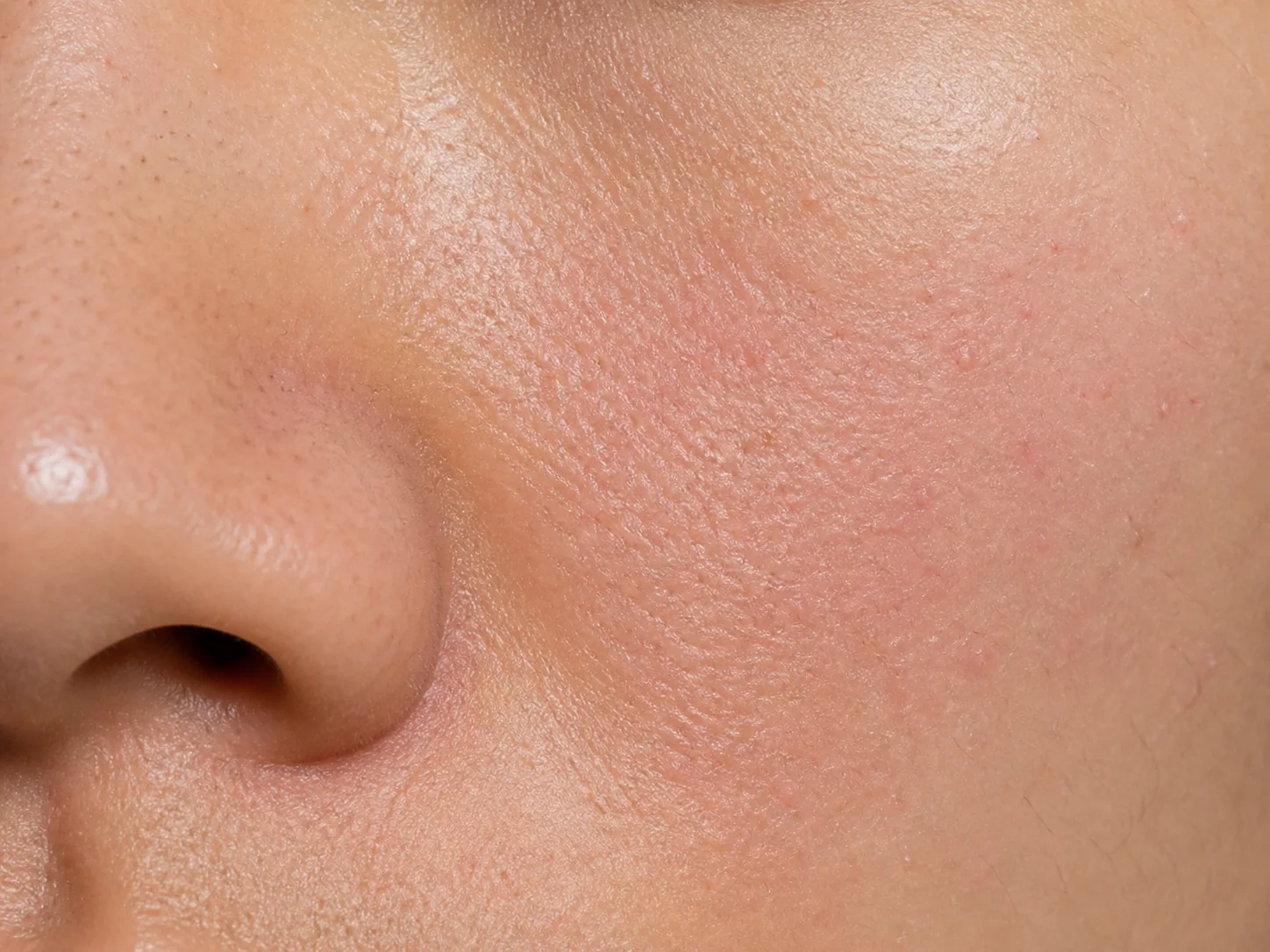
Because Demodex mites normally live in the facial and eyelash follicles of many adults, the mere fact that they are visible or detected does not necessarily mean they are causing symptoms. If they increase excessively and cause demodicosis, symptoms such as facial itching, burning sensation, sensitivity, erythema, skin as rough as grains of sand, and follicular scaling papulesor pustules may appear. If the eyelids are affected, itching, irritation, scaling, thickening, loss of eyelashes, or conjunctival irritation may occur; however, as these are similar to rosacea, eczema, acne, or other types of blepharitis, do not self-diagnose without a dermatology or ophthalmology examination.
Distinguishing symptoms and medical evaluation
Check the location of skin and eye symptoms along with acute changes
Next steps are determined by the combination of symptoms and the results of examinations and tests, rather than the mere presence of Demodex.
| Observed changes | Possible classification | Next action |
|---|---|---|
| Demodex confirmed only through tests or advertisements without any symptoms | Possible normal resident flora | Observe skin changes without using eradication products |
| Facial erythema, itching, follicular scaling, and rough texture | Demodicosis, rosacea, eczema, etc. | Dermatological examination and skin tests if necessary |
| Recurrent papules and pustules around the nose and cheeks | Differential diagnosis between demodicosis, rosacea, and acne required | Seek medical evaluation without squeezing or applying pesticides |
| Eyelid scaling, itching, and changes in eyelashes | Including blepharitis, ocular rosacea, etc. | Eyelid examination at an ophthalmology or dermatology clinic |
| Decreased vision, severe eye pain, or glare | Possible eye damage, such as to the cornea | Same-day ophthalmological evaluation |
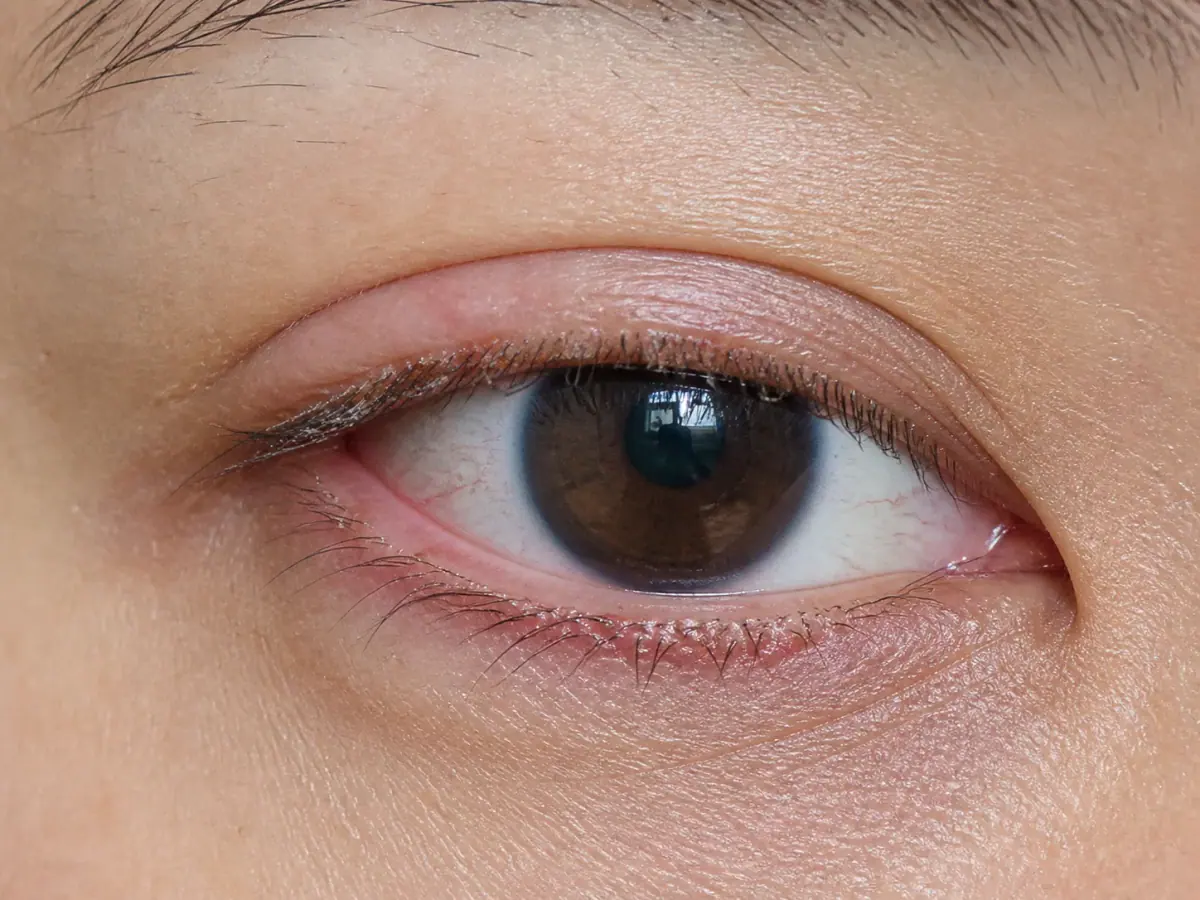
Scales at the eyelash roots can be seen in Demodex-related blepharitis, but they also resemble other types of blepharitis. Eye pain, light sensitivity, or changes in vision require an ophthalmological evaluation first.
Actual clinical photos and educational close-up examples are materials for comparing possible patterns and cannot be used for diagnosis alone. Mechanism diagrams have simplified complex processes.If these discomforts have recurred
For those concerned about Demodex mites due to facial itching and roughness even after cleansing
Demodex mites exist normally on the skin of many adults. Rather than a single number, we first check for follicular scalespapules on the face, the difference from rosacea or seborrheic dermatitis, and eyelid symptoms. If symptoms recur even after the cause is masked, we perform a pattern identification (Byeonjeung) considering sebum, damp-heat, skin barrier, digestion, sleep, and recovery power.
For those experiencing sudden redness, itching, and a sand-like roughness around the cheeks and nose
When rough skin texture, redness, and itching beside the nose recur even after calming down with Demodex management products or prescriptions
For those experiencing scales on the eyelid margins and discomfort due to itchy or irritated eyes
When treatments are inconsistent because you have not received an explanation as to whether the condition is rosacea, acne, seborrheic dermatitis, or demodicosis
For those who find it difficult to distinguish between rosacea, acne, eczema, and demodicosis through photos alone
When facial symptoms recur along with eyelid itching and scales at the eyelash roots
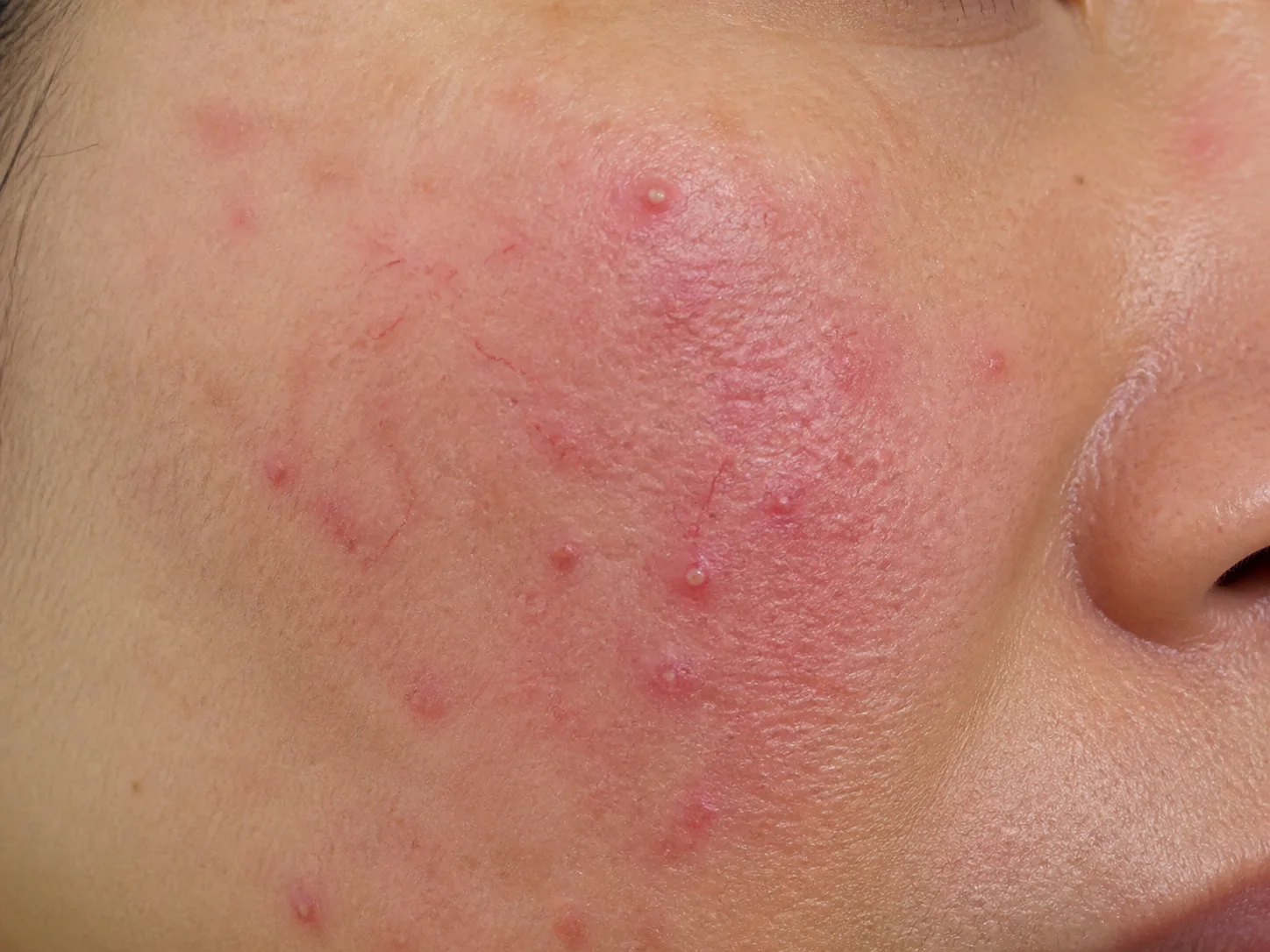
The papules and pustules of rosacea resemble acne, but the absence of comedones is a key clue. Actual differentiation is based on the distribution of lesions and their progress.
Points to distinguish first
How to distinguish Demodex from similar-looking skin diseases
If you have eye pain, impaired vision, or rapid skin changes, please seek medical evaluation first
Vision loss, severe eye pain, or rapidly spreading heat sensationpain and pus prioritize evaluation by an ophthalmologist or dermatologist over a consultation with Baekrokdam.
We do not determine the cause based solely on the result that Demodex mites were detected; we also check for other skin and eye diseases
Rather than looking only at Demodex detection, we differentiate between rosacea, eczema, acne, and blepharitis through the distribution of skin changes, dermoscopy, specimen testing, and eyelid examination.
We identify remaining discomfort even after diagnosis and necessary treatment.
While maintaining necessary dermatological and ophthalmological treatments, we record chronic itching, burning sensations, and sleep disturbances to set goals for Korean herbal medicine treatment.
Why does it keep getting worse?
Reasons why Demodex mites persist or recur
Distinguishing between 'presence of Demodex mites' and 'demodicosis'
Rather than the detection itself, we check if the rough skin texture beside the nose, follicular scales, uniform papules, and changes in the eyelid margins align with the symptoms.
Examining differences from rosacea, acne, and seborrheic dermatitis
The required treatment varies depending on whether the primary issue is persistent erythema and blood vessels, comedones, scaling in sebum-rich areas, or skin changes centered around the follicles.
Checking facial sebum, heat, and recovery conditions together
We look for clues for Korean herbal medicine treatment, such as whether oily and hot inflammation predominates, whether the skin becomes dry and stinging after frequent cleansing, or whether new papules increase following sleep issues, indigestion, or fatigue.
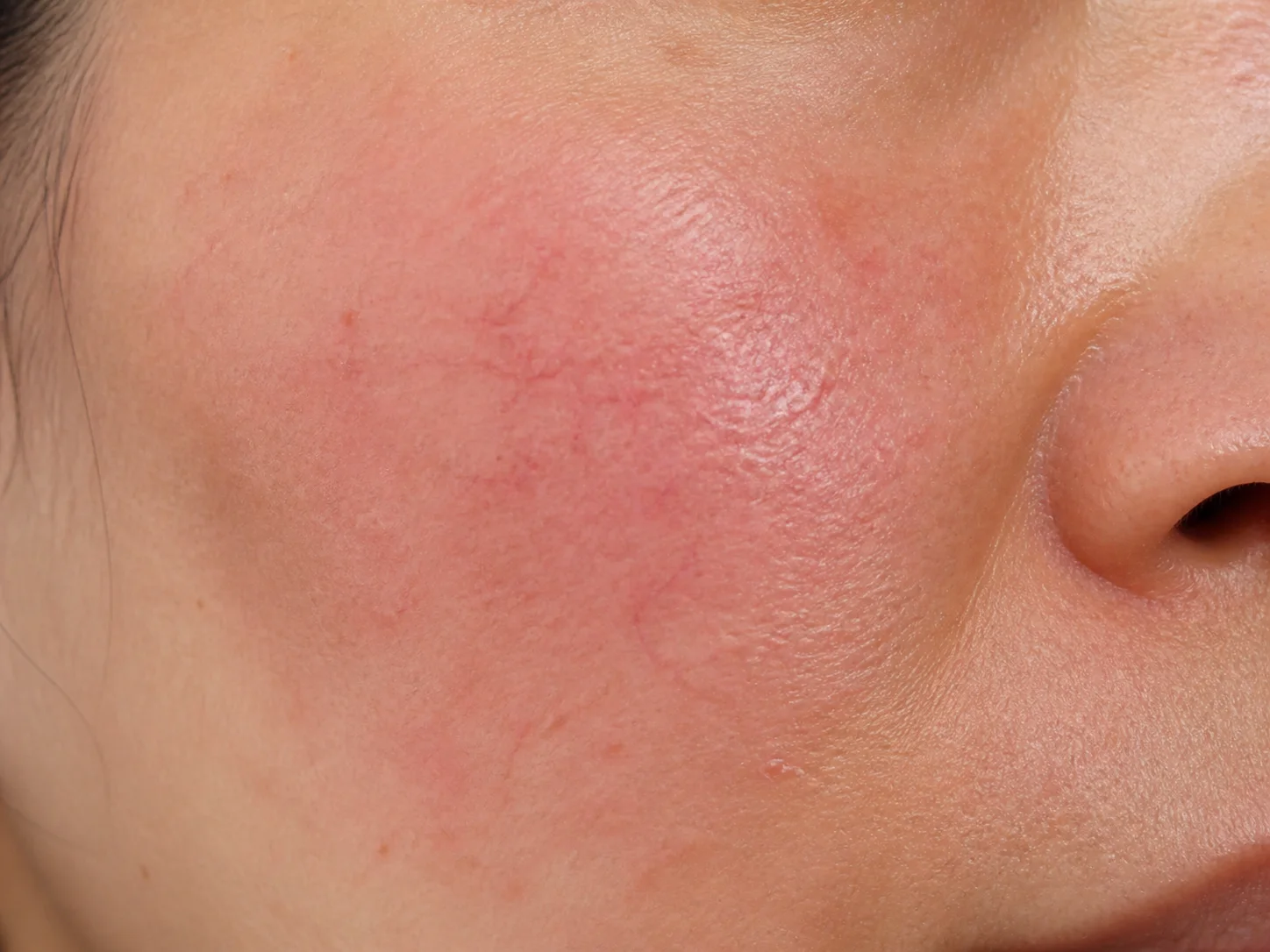
Redness in the center of the face and fine blood vessels that remain even when not triggered are different clues from temporary flushing. We check for rosacea along with papules, scaling, and eye symptoms.
Things to prepare before your visit
What photos and records should I prepare before the medical evaluation?
Please prepare photos of your face and eyelids taken under the same lighting, the start date and most severe locations, changes in itching, burning sensations, or vision, any new cosmetics or ointments used, and the results of dermatology and ophthalmology examinations.
Demodex mites exist even on skin without symptoms
Since they are commonly found in the facial follicles and sebaceous glands of adults, detection alone or magnified photos are not used to determine an infection or a condition requiring treatment.
Itching and burning sensations may occur alongside erythema
In demodicosis, the face may become sensitive, red, itchy, or burning, but these symptoms alone cannot pinpoint the cause.
Examining follicular scales and rough texture
Under consistent lighting, we record whether white scales are trapped in the follicles, if the skin feels rough like grains of sand, or if eczema-like scaling is visible.
Changes to monitor during treatment
What changes should I monitor during treatment?
Skin texture and distribution of follicular scales and papules on the sides of the nose, cheeks, and forehead
Please record when it started and how it has changed, including the dates. To make it easier to compare before and after, take photos of the same area from a similar distance and under similar lighting.
Demodex mite tests, products and medications used, the period of improvement, and the timing of recurrence
Please leave a brief note. Compare not only the visible changes but also whether your sleep, pain, and daily life have become less uncomfortable.
Eyelid scales, dry eyes, and changes following sebum production, cleansing, sleep, or digestion
Please also include the dates of any medications, ointments, or procedures you are currently using. This makes it easier to compare what led to improvement or worsening.
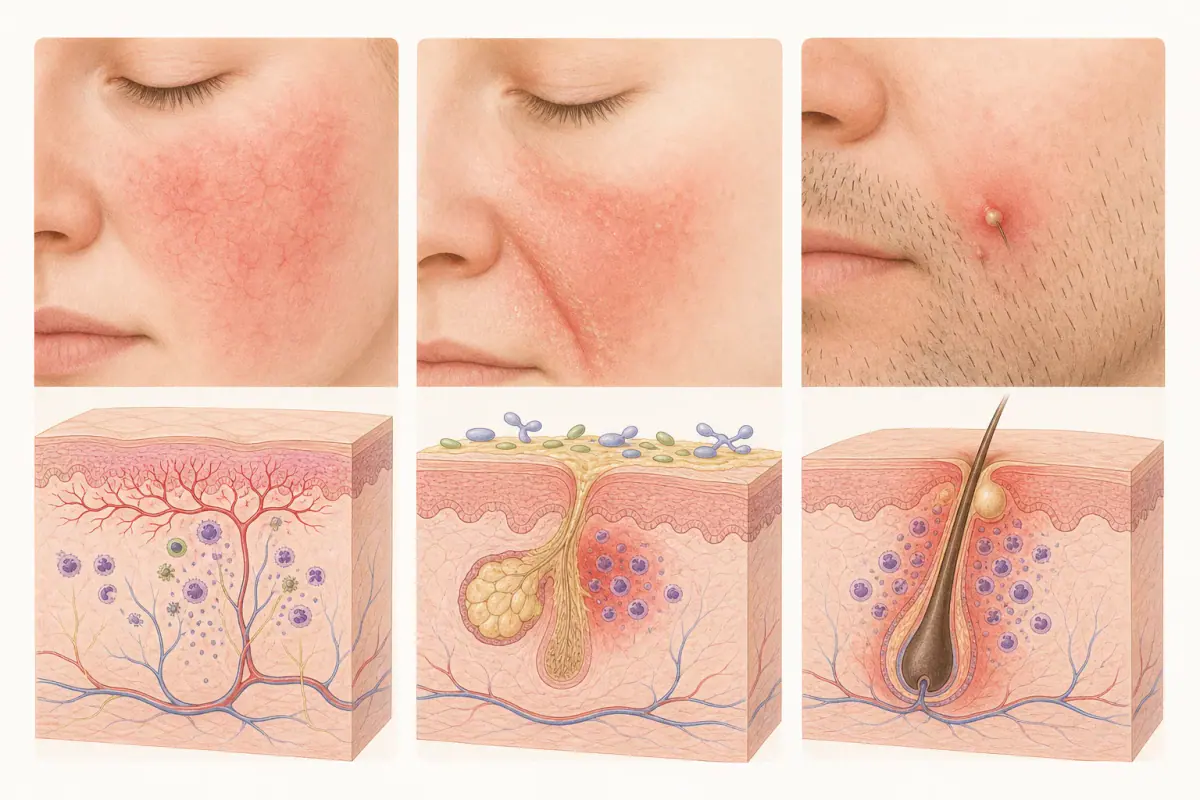
This is a simplified conceptual diagram showing that while rosacea, seborrheic dermatitis, and folliculitis may all appear red, the structures and distributions observed are different. This image does not determine a single cause for each disease.
Conceptual reference · AAD Rosacea: Causes · AAD Seborrheic dermatitis: CausesWhen planning herbal medicine treatment
Determining the direction of Korean herbal medicine treatment based on current prominent symptoms of Demodex mites
We do not approach this with a single prescription to eliminate Demodex mites. We categorize whether there are uniform red papules and abundant sebum, strong heat in the center of the face, significant dryness and stinging after excessive cleansing, or recurrence and slow recovery following fatigue and poor digestion.
Pattern identification (Byeon-jeung) in Korean medicine is not about giving a different name to a disease. Multiple patterns can overlap in one person, and as the skin changes, for example, as oozing and heat decrease and dryness or cracking remain, the prescription is adjusted accordingly.
When oily and uniform papules increase around the nose and cheeks
- Primary skin observations
- Check for follicular scaling, rough skin texture, and the distribution of red papules and small pustules.
- Overall body condition to check alongside skin
- Check for worsening after exposure to sebum, sweat, humidity, or after oily meals and alcohol, as well as a feeling of heaviness in the body.
- Primary considerations for herbal medicine prescription
- Focus on clearing heat and removing dampness to reduce the burden of sebum, damp-heat, and active inflammation.
When burning sensations and persistent erythema on the nose and cheeks are prominent
- Primary skin observations
- Distinguish between redness in the center of the face, fine blood vessels, follicular skin changes, and the presence of comedones.
- Overall body condition to check alongside skin
- Inquire about spicy and hot foods, heartburn, thirst, and heat in the upper body.
- Primary considerations for herbal medicine prescription
- Regulate heat concentrating in the face and stomach while differentiating from rosacea.
When the skin becomes dry, stinging, and develops fine scaling with frequent washing
- Primary skin observations
- Observe the extent of fine dead skin, tightness, scratch marks, and redness following the use of irritating products.
- Overall body condition to check alongside skin
- Check for dryness of the mouth and eyes, shallow sleep, fatigue, and frequent exfoliation.
- Primary considerations for herbal medicine prescription
- Focus on nourishing blood and moisturizing dryness to reduce excessive exfoliation and support the recovery of skin fluids and the skin barrier.
When new lesions continuously appear and take a long time to subside, even without severe suppuration
- Primary skin observations
- Observe whether small follicular papules persist and if red marks and rough texture remain for a long time.
- Overall body condition to check alongside skin
- Inquire about bloating, loose stools, loss of appetite, lack of sleep, and recurrence.
- Primary considerations for herbal medicine prescription
- Strengthen digestion and immune recovery to simultaneously reduce new skin changes and delayed healing.
How is the herbal medicine prescription adjusted?
- Prioritize identifying diseases with similar symptoms over detection results
Compare with rosacea, seborrheic dermatitis, acne, and other types of blepharitis, and coordinate necessary dermatological or ophthalmological evaluations.
- Distinguish between active papules and a damaged skin barrier
The timing requiring heat clearing and dampness removal is not treated with the same intensity as the timing requiring moisturizing and recovery.
- Observe how new breakouts, rough skin, and eyelid discomfort each change over time
Please track the number of new skin changes that appeared over the past week, as well as any stinging sensations during face washing or changes in scaling at the base of the eyelashes.
When should I consider Korean herbal medicine treatment?
- When rough skin texture, redness, or itching around the nose recurs, even after using demodex management products or prescriptions.
- When treatment is inconsistent because you have not received an explanation as to whether the condition is rosacea, acne, seborrheic dermatitis, or demodicosis.
- When facial symptoms recur along with itchy eyelids and scaling at the base of the eyelashes.
What will be asked during the medical evaluation?
- Skin texture and the distribution of follicular scaling and papules on the sides of the nose, cheeks, and forehead.
- Demodex test results, products or medications used, the period of improvement, and the point at which symptoms recurred.
- Changes in eyelid scaling and eye dryness following sebum production, cleansing, sleep, or digestion.
Things to prepare before the consultationPlease prepare photos of your face and eyelids taken under the same lighting, the start date, the location of the most severe symptoms, any changes in itching, burning sensations, or vision, any new cosmetics or ointments used, and the results of dermatology or ophthalmology examinations.
If pus, pain, or redness spreads rapidly, or if you have a fever, lesions inside the eyes or mouth, shortness of breath, or sudden facial swelling, please visit a dermatology clinic or seek emergency care first. After confirming that such urgent situations are not present, Baekrokdam provides herbal medicine treatment for chronic and recurring skin diseases.
Consult regarding demodex progressFrequently Asked Questions
Frequently Asked Questions about Demodex
If demodex mites are detected, does that mean I have demodicosis?
No. Demodex mites normally exist on the skin of many adults. We must consider the symptoms, physical examination, and, if necessary, a test to check the mite density.
What do demodex symptoms look like?
Facial itching, burning sensations, and erythema (redness) may appear, along with rough follicular scaling, papules, or pustules; itchy eyelids and scaling may also occur.
Can I distinguish it from rosacea or acne at home?
Since the symptoms and distribution overlap, it is difficult to confirm based on photos alone. Please visit a dermatology clinic for confirmation rather than squeezing the lesions or attempting self-treatment with acaricides.
If my eyelids are itchy and have scaling, is it because of demodex?
While this is seen in demodex-related blepharitis, there are other causes such as seborrheic dermatitis, allergies, bacteria, and ocular rosacea. An evaluation by an ophthalmologist or dermatologist is necessary.
Does everyone have demodex mites?
They exist in the facial follicles of most adults and generally do not cause symptoms.
Why does demodicosis occur?
It occurs when the demodex population increases excessively and is linked to skin or eyelid symptoms; weakened immunity or other skin diseases may be risk factors.
Does it occur due to poor hygiene?
It cannot be explained by poor hygiene alone, and aggressive cleansing can irritate the skin barrier.
References and update date
Doctor of Korean Medicine Choi Yeon-seung verified the content based on the official and professional materials below and updated it on 2026-08-23.
- DermNet, Demodex, demodicosisPossibility of normal commensal presence, facial follicle scaling, erythema, itching, and eyelid symptoms; differential diagnosis via skin tests and rosacea evaluation
- Cleveland Clinic, Demodex face mitesDemodex mites, which are mostly asymptomatic, and the burning sensation, itching, erythema, rough skin, pustules, and eye symptoms that occur during overproliferation, along with diagnostic methods
- PubMed, Standardized skin surface biopsy and direct microscopySampling characteristics of demodex mite density tests and the necessity of differential diagnosis from rosacea, dermatitis, etc.
- AAO EyeWiki, Demodex InfestationEyelid and eyelash findings, and the role of slit-lamp and eyelash microscopic examinations
- AAD, Rosacea signs and symptomsFlushing, persistent color change, blood vessels, papules, skin thickening, and eye symptoms