Differential Diagnosis of Facial Papules
Rosacea, Acne, Seborrheic Dermatitis, Demodicosis: What to look for first in a red face
Do not focus only on the cheeks; check the sides of the nose, eyebrows, scalp, eyelids, and comedones Check together whether it is present or absent.
Click on unfamiliar terms to see their meanings immediately.
persistent redness in the center of the face Erythema, comedones, and sebum-prone areas Keratin, and rough follicular skin texture may overlap. Rather than attributing everything to a single diagnosis, closely examine surface clues and expand the observation area to include the scalp and eyelids.
Points to check in the photos first
Even if they look similar, the dead skin, blisters, and borders may differ
We have provided both typical appearances and examples that look slightly different. Do not decide based on a single similar photo; compare how long symptoms like dead skin, wheals, comedones, or oozing have persisted in the same area.
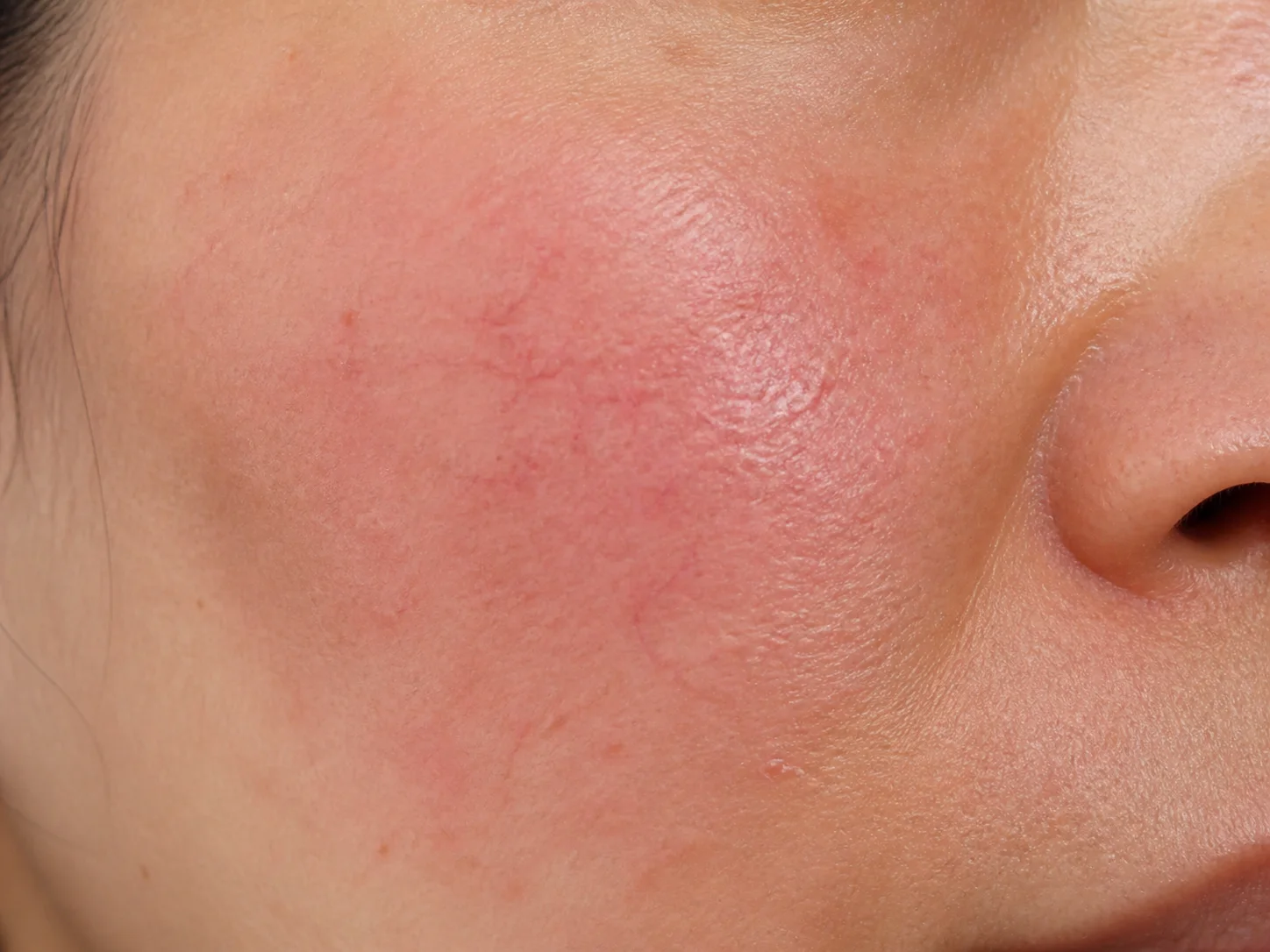
Redness in the center of the face and fine blood vessels that remain even when not triggered are different clues from temporary flushing. We check for rosacea along with papules, scaling, and eye symptoms.
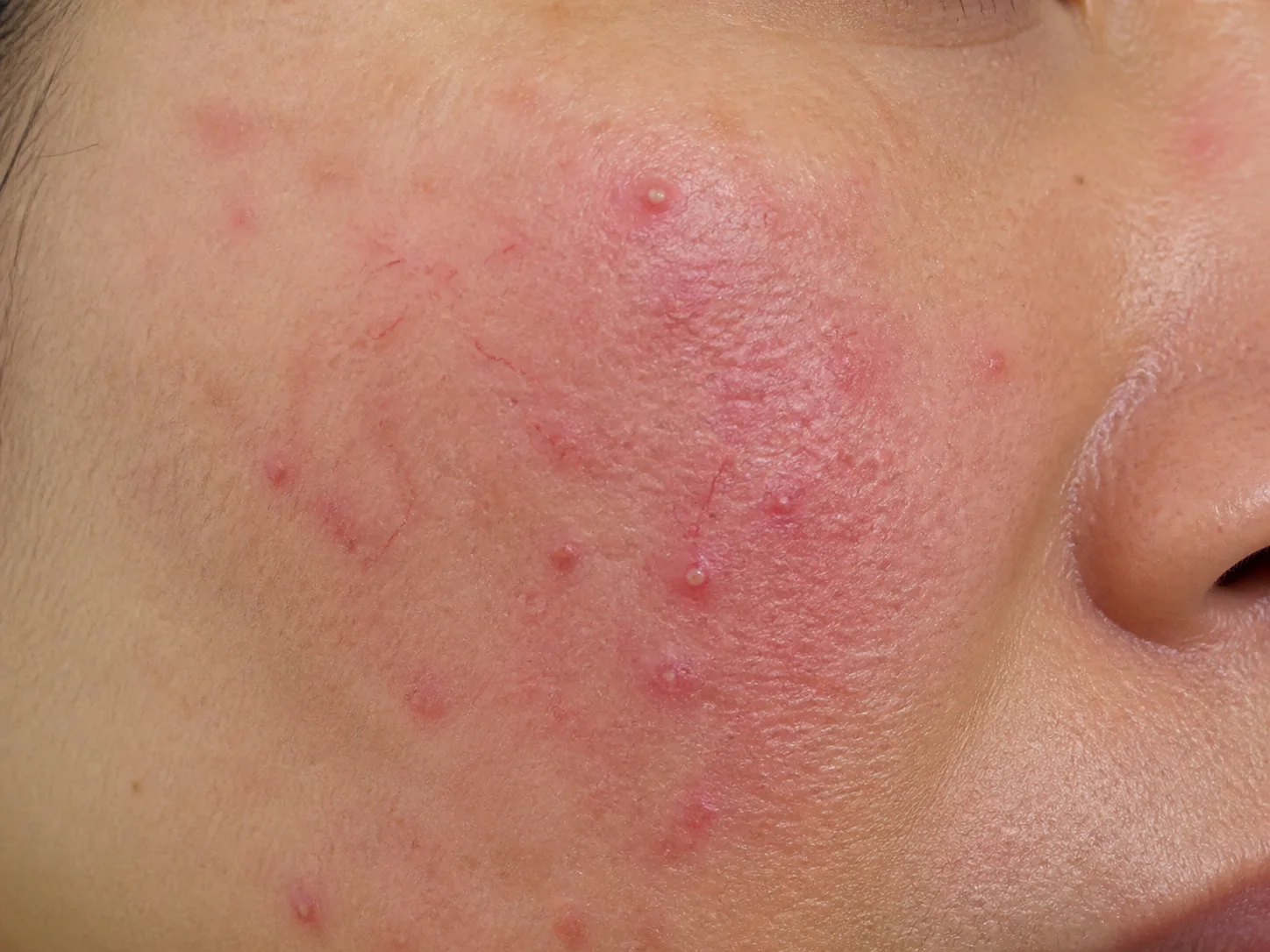
The papules and pustules of rosacea resemble acne, but the absence of comedones is a key clue. Actual differentiation is based on the distribution of lesions and their progress.
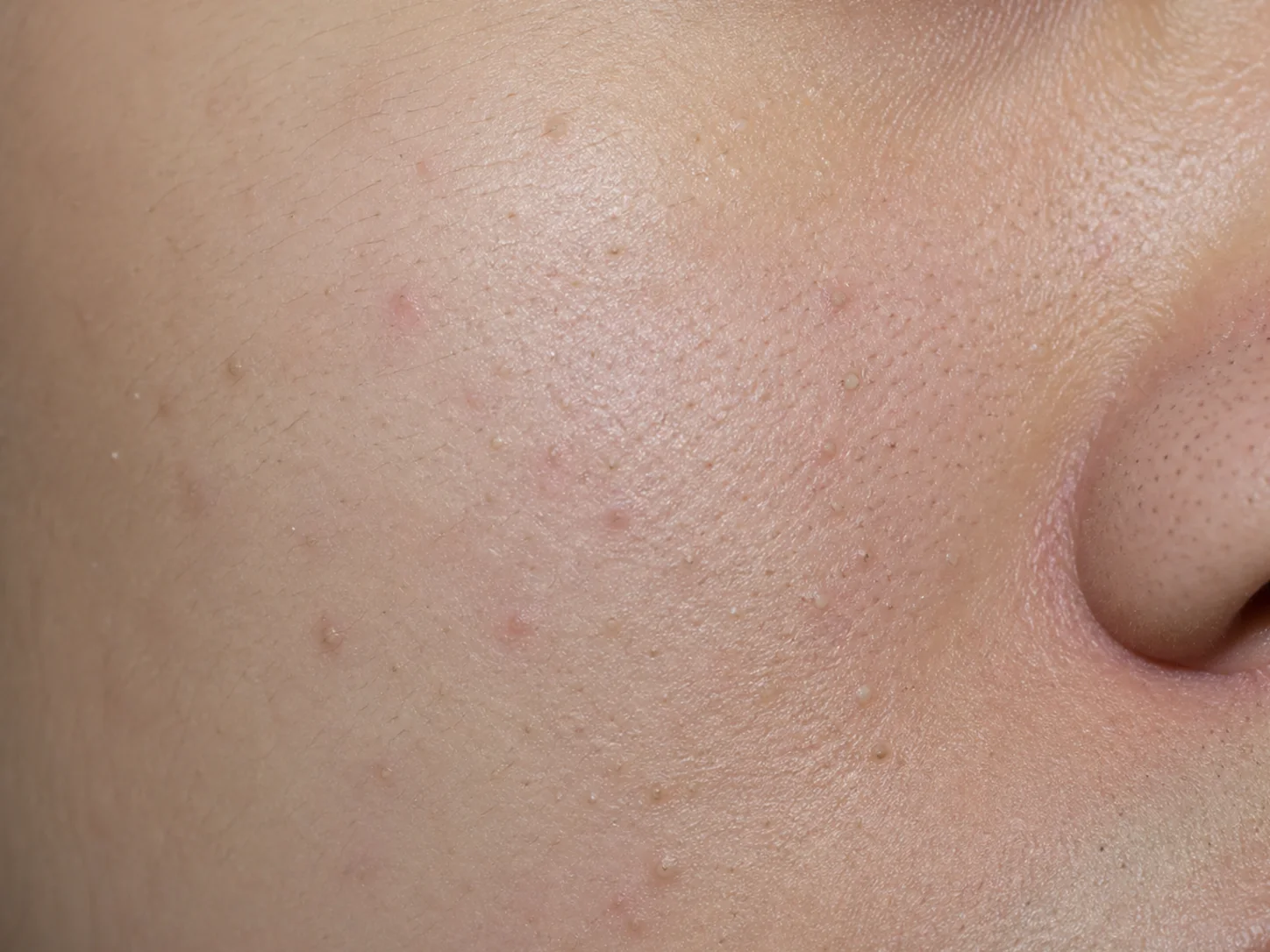
Comedones are important clues for distinguishing acne from rosacea or seborrheic dermatitis. Do not just compare red pimples; check if clogged pores are also visible.
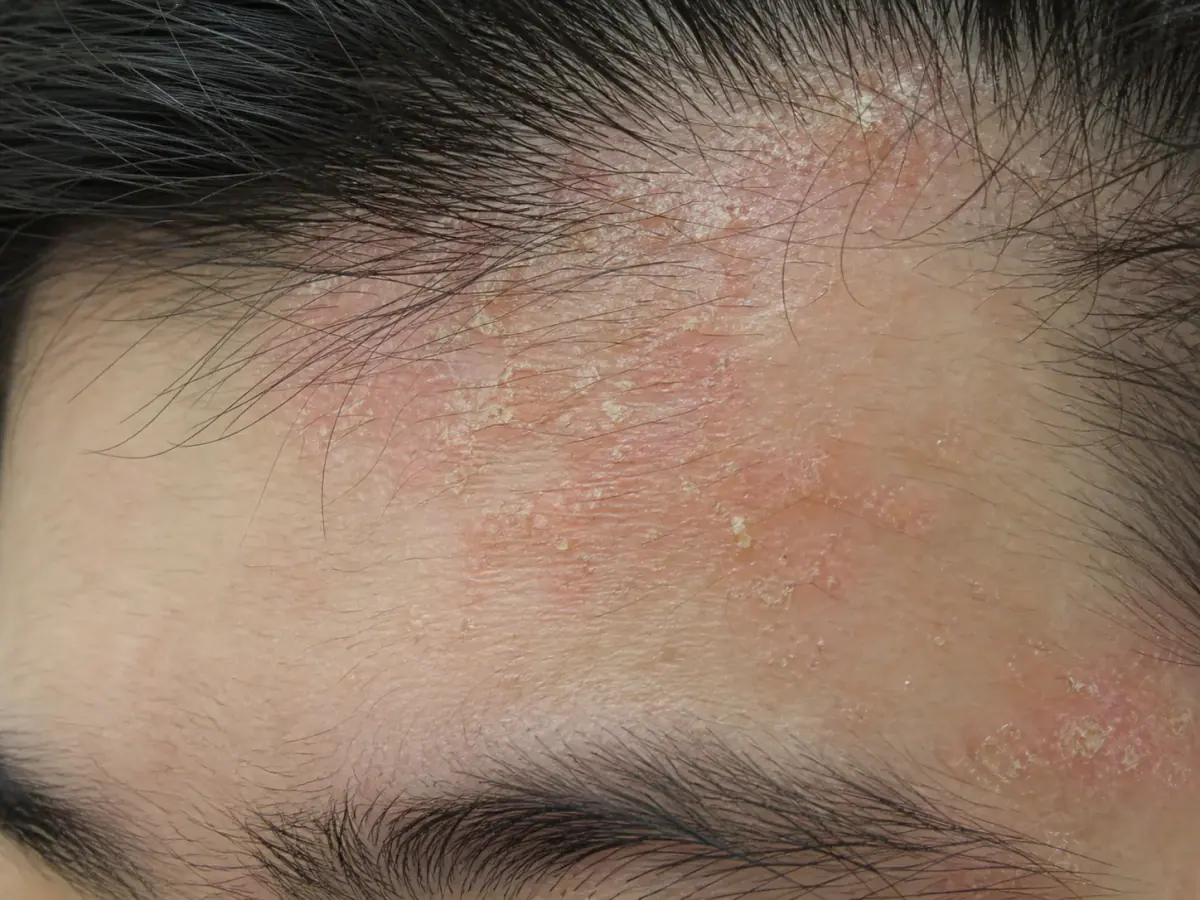
Seborrheic dermatitis is characterized by thin, greasy scales in areas with high sebum production, such as the scalp, eyebrows, and sides of the nose. We compare the surface with scalp psoriasis, which forms thick plaques.
| Points to check | Rosacea | Acne | Seborrheic Dermatitis | Demodicosis |
|---|---|---|---|---|
| Core Appearance | Persistent erythema, fine blood vessels, papules without comedones | Blackheads, whiteheads, and various types of inflammation | Redness in sebum-prone areas with oily or fine scales | Rough follicular skin texture, fine scales, uniform papules |
| Primary Location | Center of cheeks, nose, forehead, and chin | Face, chest, back | Scalp, eyebrows, sides of the nose, and ears | Sides of the nose, cheeks, forehead; eyelids possible |
| Sensation | Burning or stinging sensation | Tenderness, varies by lesion | Itching, dandruff | Itching, burning sensation, sand-like roughness |
| Differential clues | Flushing after heat, alcohol, or UV exposure | Risk of comedones and scarring | Scaling on the scalp or sebum-rich areas | Not diagnosed by detection alone |
The presence of comedones strongly suggests acne
Papules related to rosacea and demodicosis can look like acne, but blackheads and whiteheads are key indicators of acne. Please provide both side-lit and close-up photos so that comedones are not obscured.
Check the location of scaling and extend the observation to the eyelids
Greasy scales on the eyebrows, sides of the nose, and scalp are clues for seborrheic dermatitis; however, cylindrical scales at the base of the eyelashes and eye irritation require an eyelid evaluation, including other types of blepharitis.
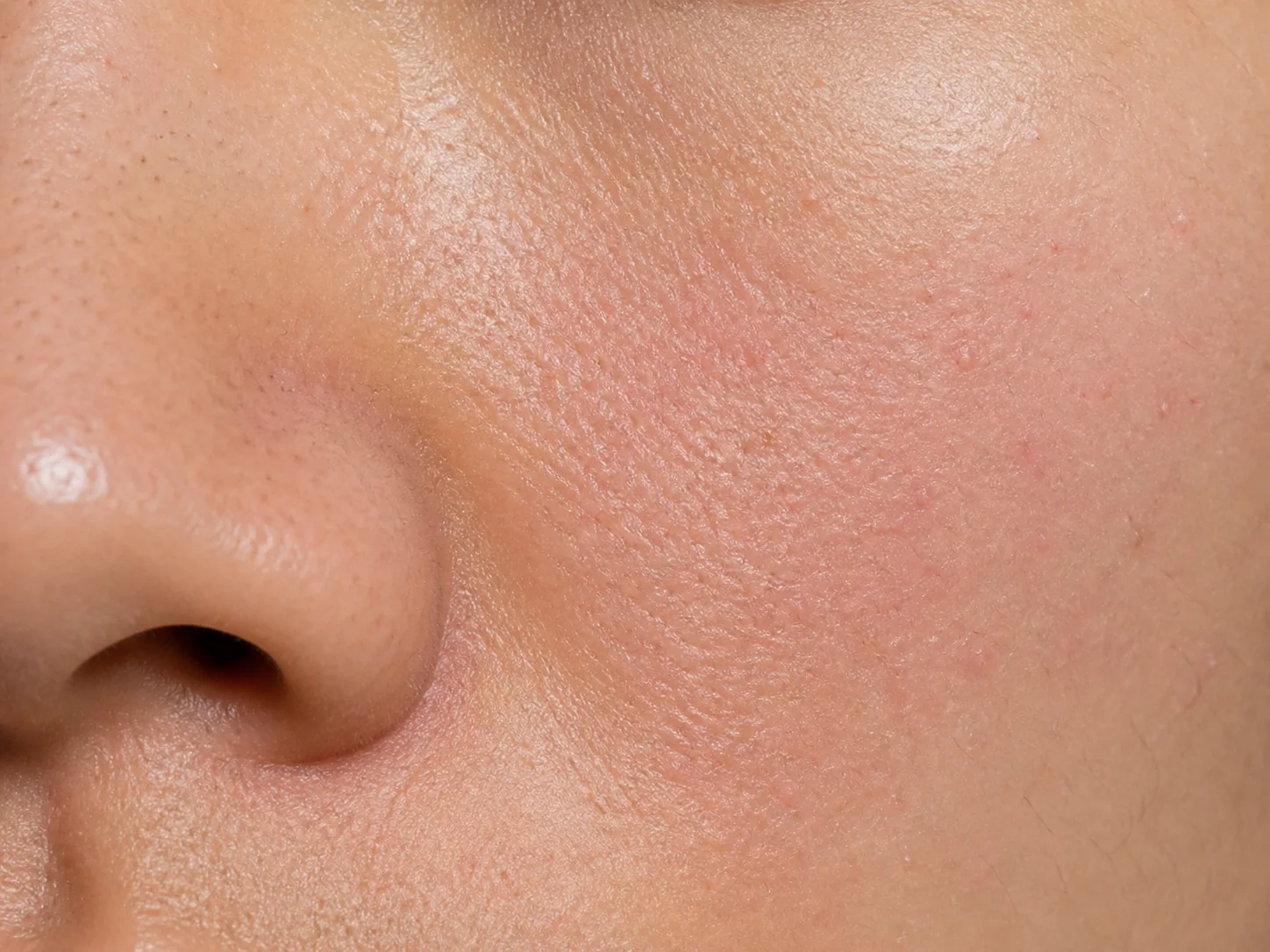
Demodex mites can exist on normal skin. A diagnosis is not made based on rough skin texture alone; it is determined by comparing the distribution and test results with rosacea, seborrheic dermatitis, and acne.
The presence of Demodex mites is not always the cause
Demodex mites can be present on the skin of healthy adults. Rather than relying on a single numerical value or magnified photo, a medical examination is used to determine if they align with current papules, scaling, and itching, or if rosacea, seborrheic dermatitis, or acne provide a more appropriate explanation.
Do not only magnify the cheeks; please examine the face, scalp, and eyelids together
Please take separate photos of the entire face, scaling on the sides of the nose and eyebrows, blackheads/whiteheads, and the eyelid margins. Also, please provide the names of any ointments and cosmetics you have used.
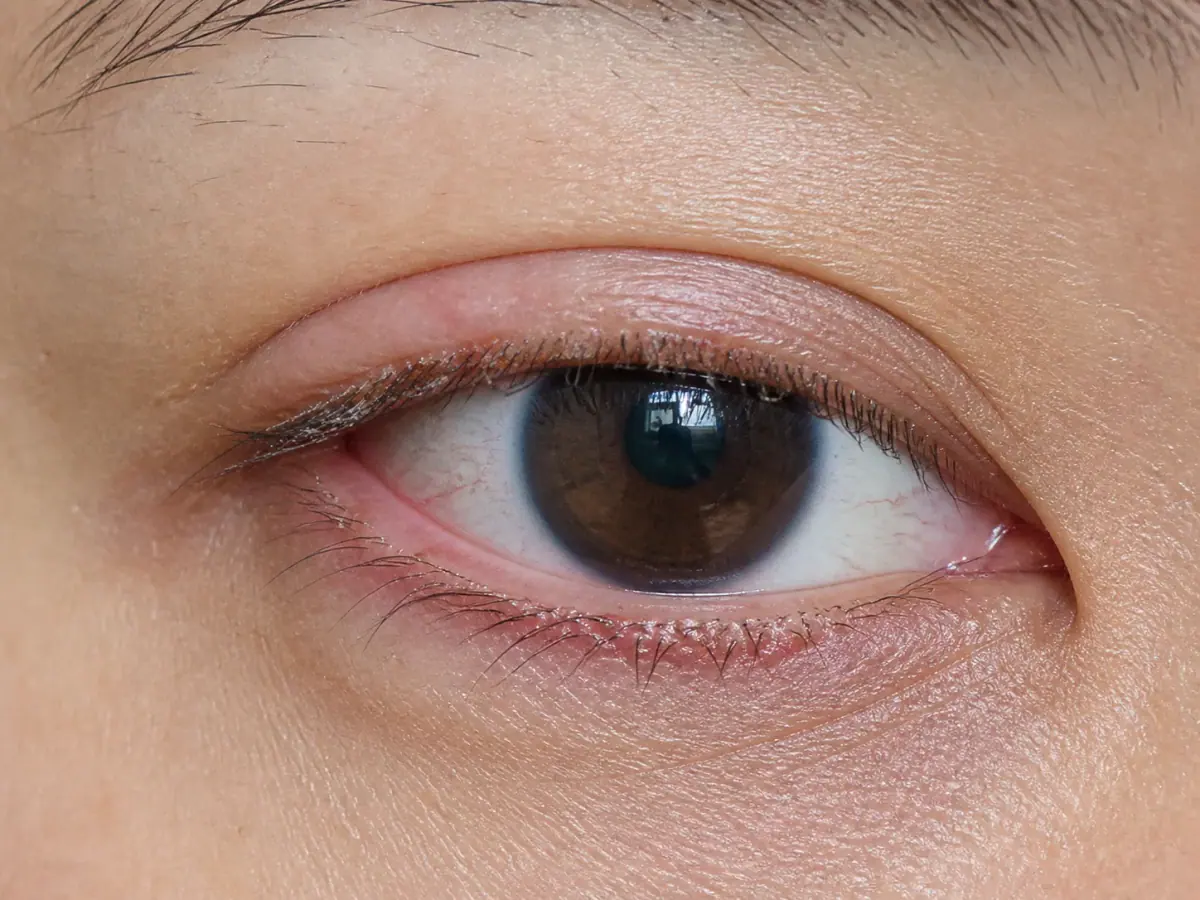
Scales at the eyelash roots can be seen in Demodex-related blepharitis, but they also resemble other types of blepharitis. Eye pain, light sensitivity, or changes in vision require an ophthalmological evaluation first.
Observe comedones, fine blood vessels, scaling in sebum-rich areas, follicular roughness, and eyelid scales side by side.
Next reading
Content to follow
Could facial redness, burning sensations, and small papules be rosacea?
How is it distinguished from acne, seborrheic dermatitis, and contact dermatitis?
Why is herbal medicine treatment important for recurring rosacea symptoms after using ointments?
Skin terms used in this differential guide
When herbal medicine treatment is the primary focus
We set the goals for herbal medicine treatment based on your previous treatments and when symptoms recurred
Redness and papules on the face and scalp can recur not only due to external exposure and local inflammation, but also in conjunction with heat sensations, stress, and sleep patterns. Based on differential diagnosis and previous treatments, Korean herbal medicine treatment focusing on managing the conditions that cause recurrence may be central.
We ask where it appeared and when it worsened again
We examine the duration of the flushing, the presence of capillaries, papules, pustules, and scales, as well as eye symptoms and reactions related to digestion, sleep, and tension.
We check if not only the itching, but also sleep and daily life are improving
We check how long the redness lasts, the number of new papules, the burning sensation, and the burden felt during face-to-face activities.
We set the goals for herbal medicine treatment by identifying the problems that need to be resolved first
If there are causes that require immediate priority, such as infection or rapid worsening, those treatments come first. Subsequently, for herbal medicine treatment, we determine the primary goal of recovery by examining current discomfort, recurring patterns, sleep, digestion, and fatigue, and coordinate the sequence with necessary dermatological treatments.
While reducing aggravating factors through lifestyle management, herbal medicine treatment determines the initial target by analyzing the pattern of lesions, sleep, digestion, and fatigue through pattern identification (Byeonjeung). Necessary skin treatments are continued in accordance with the progress.
Consult about treatmentEvidence and Update Information
This content was organized by Korean medicine doctor Choi Yeon-seung and updated on 2026-08-23.
- American Academy of Dermatology, Acne or rosacea?
- American Academy of Dermatology, Facial redness
- AAD, Rosacea signs and symptomsFlushing, persistent color change, blood vessels, papules, skin thickening, and eye symptoms