Papule Differentiation
Common Warts, Flat Warts, and Molluscum Contagiosum: Differences in Small Raised Lesions
When distinguishing between common warts, flat warts, and molluscum contagiosum, you must compare not only the size but also the surface roughness, central indentation, skin lines, and location where symptoms occurredthe order in which they spread. Especially for lesions on children and the face LesionHere are the differences to check before arbitrarily picking or squeezing them.
Click on unfamiliar terms to see their meanings immediately.
Rough and hard protrusions, flat skin-colored papulesor pearly papules with a central indentation must be distinguished, even if they look similar. The location, such as the hands, feet, face, or a child's torso, is also an important clue.
Points to check in the photos first
Even if they look similar, the dead skin, blisters, and borders may differ
We have provided both typical appearances and examples that look slightly different. Do not decide based on a single similar photo; compare how long symptoms like dead skin, wheals, comedones, or oozing have persisted in the same area.
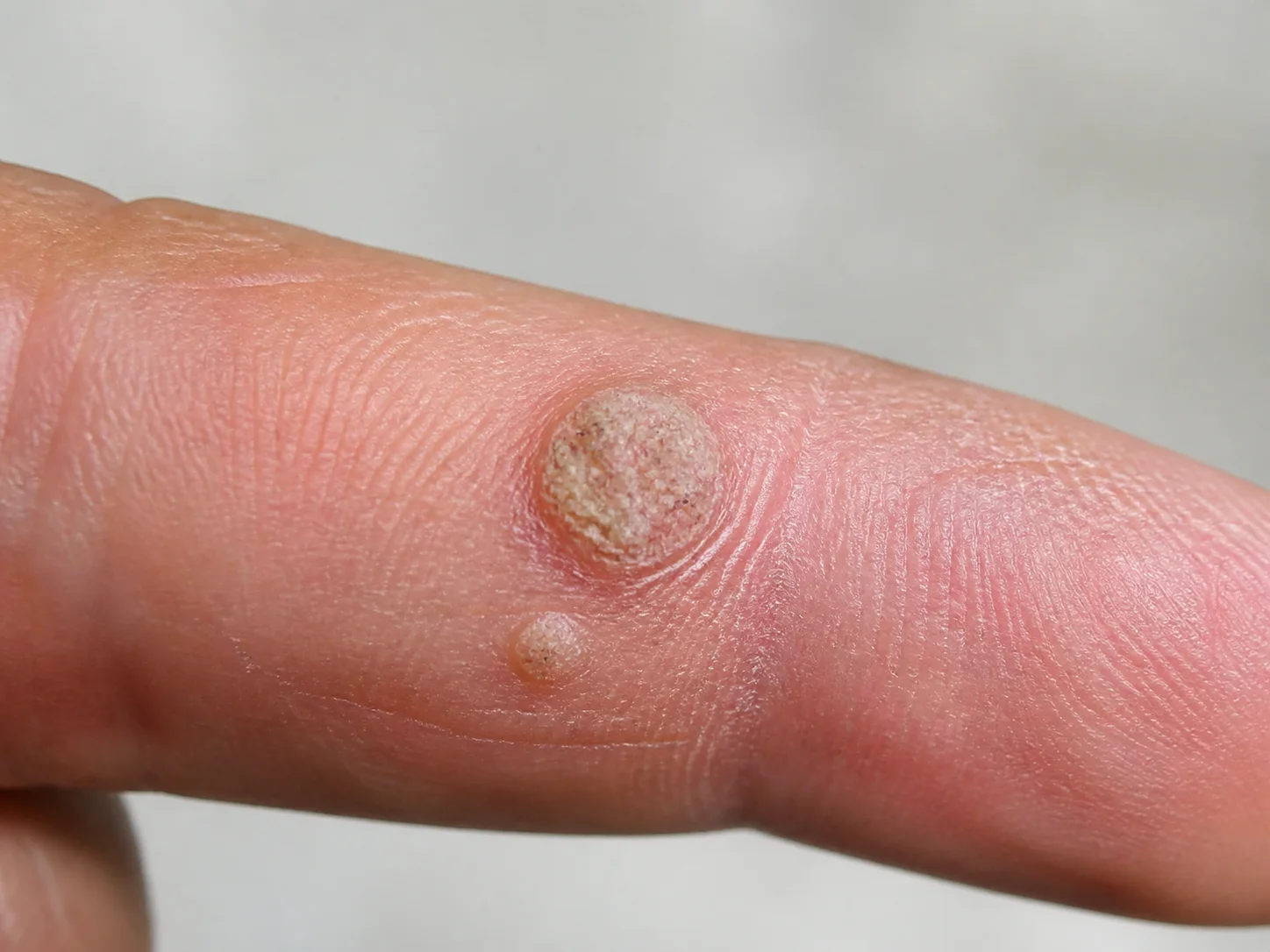
Common warts often cause the skin texture to break and the surface to rise roughly. Unlike calluses, we examine the direction of pain when pressed, the presence of black dots, and whether they are spreading to surrounding areas.
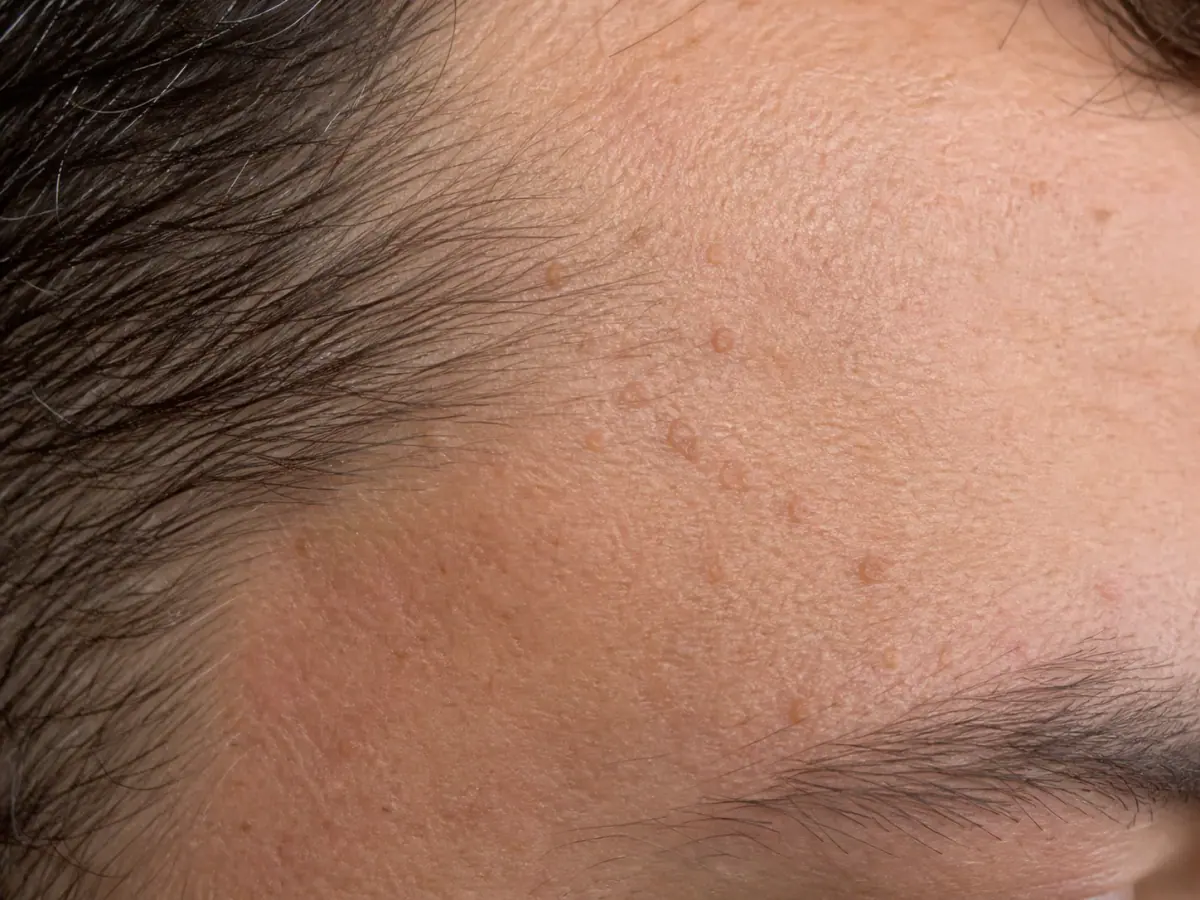
Flat warts may appear as clusters of flat papules that are skin-colored or light brown. Compare the surface height and direction of spreading with acne comedones or milia.
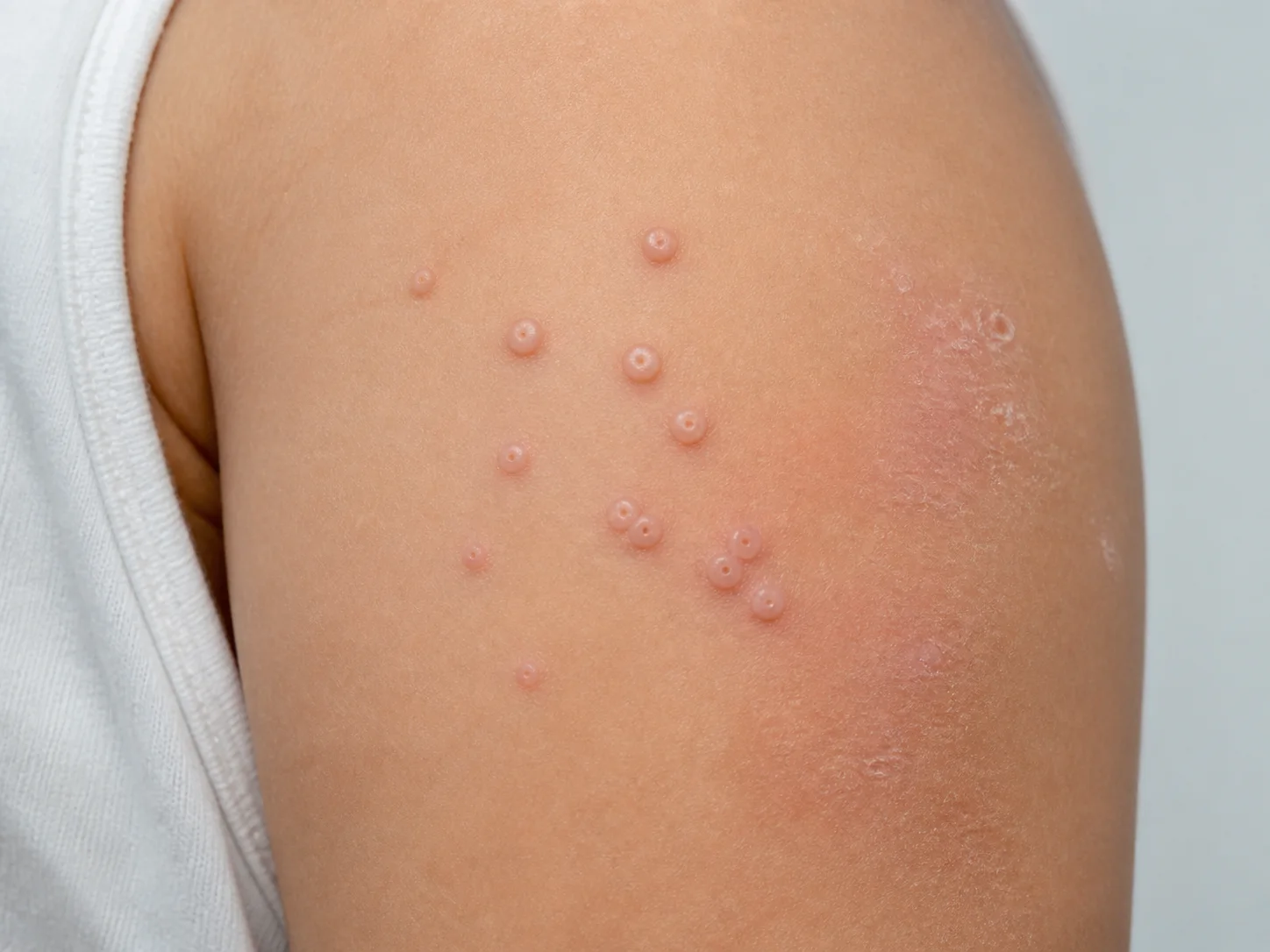
A smooth dome shape with a slight central indentation is a clue for molluscum contagiosum. If surrounding eczema and scratch marks are present, the speed of spread is also evaluated.
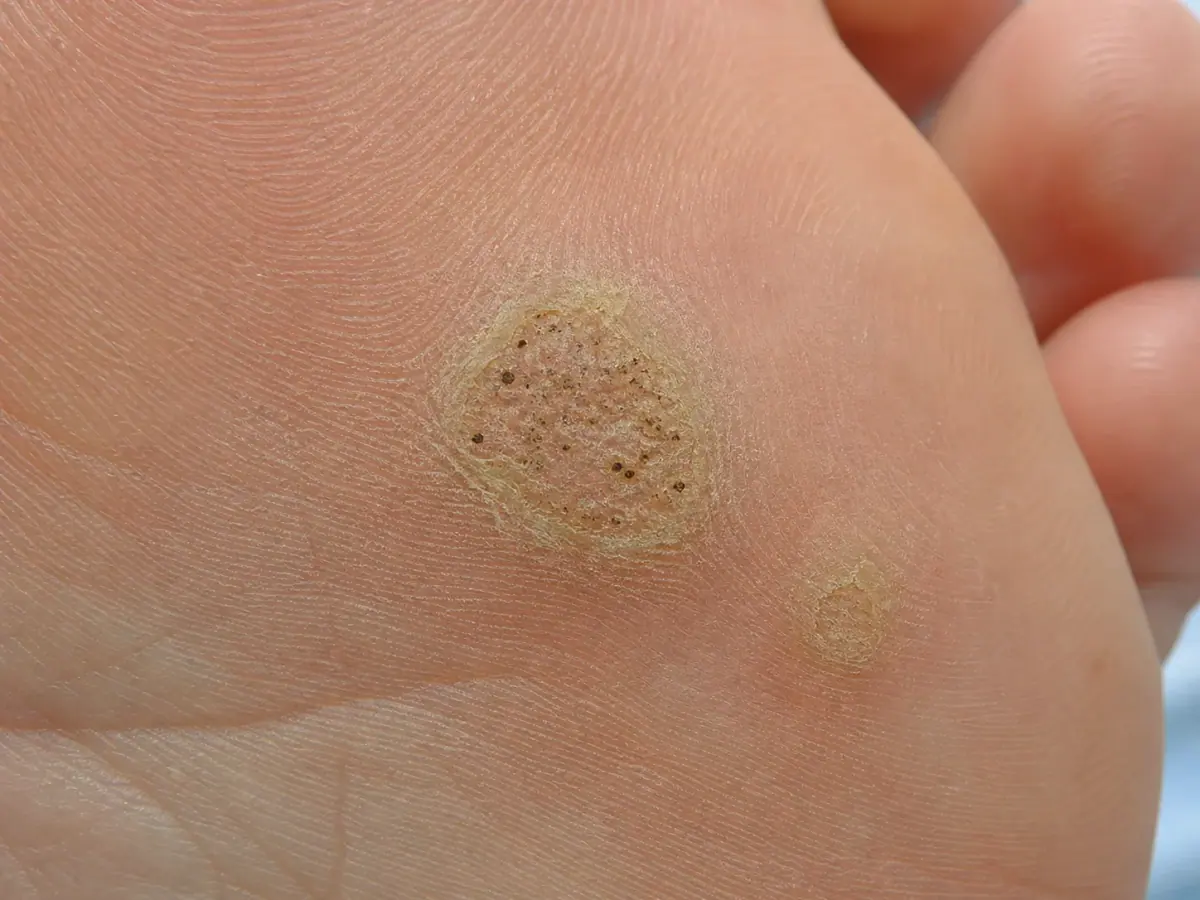
Warts on the sole can grow inward rather than outward due to body weight and may look like calluses. We compare whether the skin lines continue through the lesion and if there is pain when pinched from the side.
| Points to check | Common wart | Flat wart | Molluscum contagiosum |
|---|---|---|---|
| Surface | Rough, hard, and keratotic | Small, flat, and generally smooth | Round, smooth, and glossy |
| Center | May contain black dots | No distinct central indentation | The center may be indented like a navel |
| Common locations | Fingers, around nails, soles of the feet | Face, back of hands | Children's elbow creases, torso |
| Things to check together | Skin lines and pressure pain | Increase along the direction of shaving or scratching | Surrounding eczema and scratching |
If the surface is rough and skin lines are interrupted, consider a common wart
Common warts have thick surface keratin and may show small black dots. On the soles of the feet, they become flat like calluses due to body weight, so we check for pain when pressed from above, pain when pinched from the side, and whether the skin lines continue.
Compare small papules on the face with comedones and milia
Flat warts may appear as multiple small, flat papules that are skin-colored or light brown. Clues include whether they are centered in the pores like acne comedones, whether they are white and hard like milia, and whether new lesions have increased along the direction of shaving or scratching.
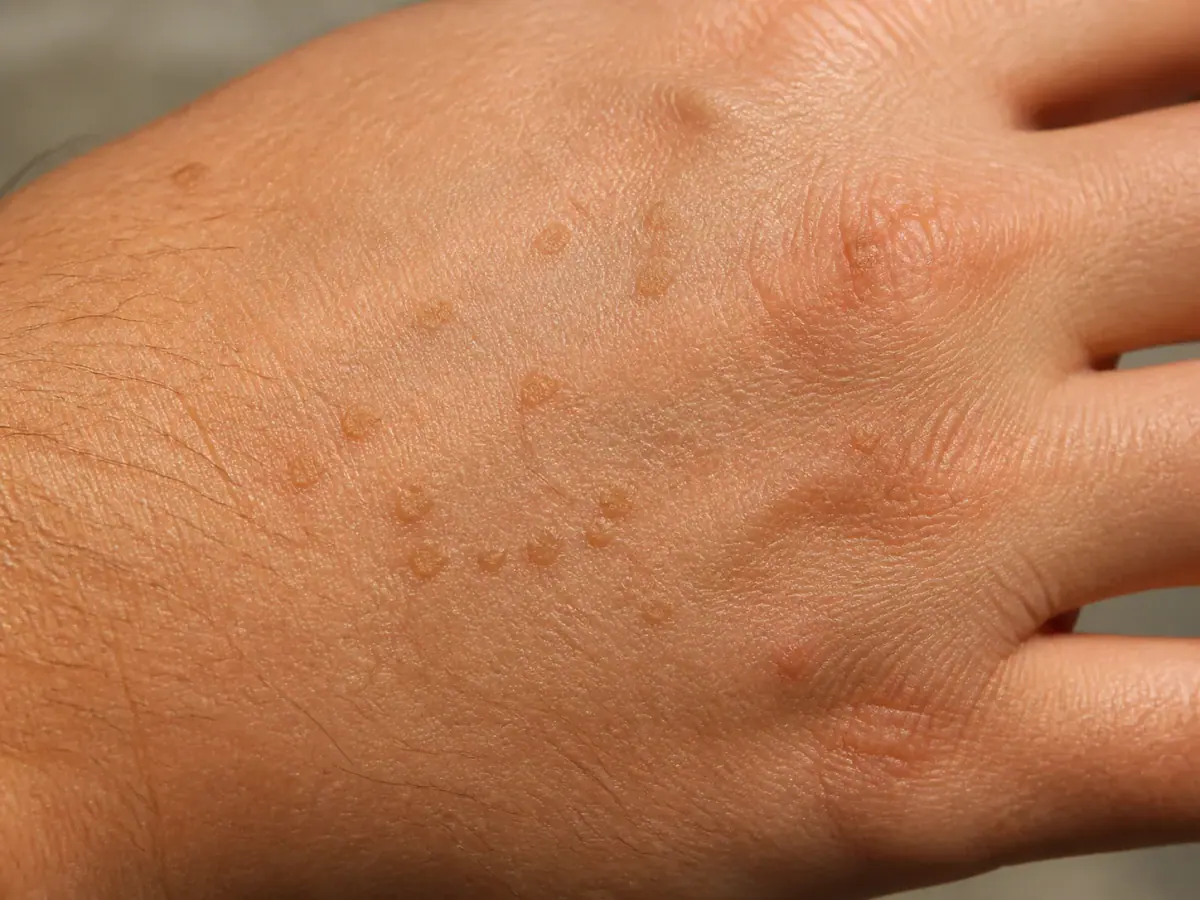
Flat warts on the back of the hand may increase along the direction of scratching. We check the date they suddenly increased along with any areas that were picked or shaved.
Check for round papules with a central indentation along with surrounding eczema
Molluscum contagiosum is common in children and may show a central depression. If the surrounding skin is itchy and becomes red like eczema, it can easily spread through scratching; therefore, we record not only the number of lesions but also the itchiness and the state of the skin barrier.
Please take photos of the first bump that appeared and the order in which they spread
Please take photos that clearly show whether the surface is rough, if the center is indented, and if the skin lines continue. Please also let us know which bump appeared first and the order in which new ones increased.
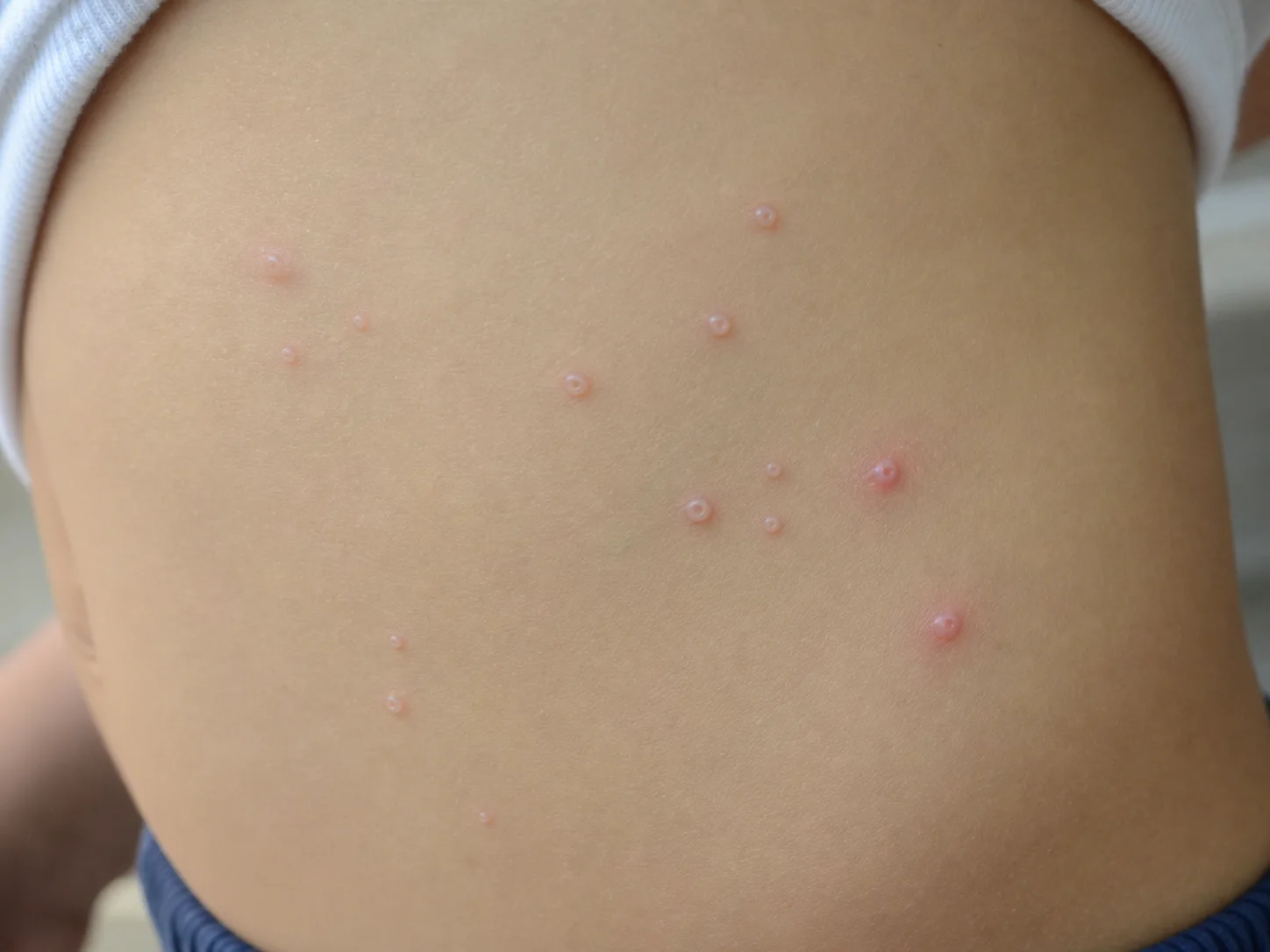
Even within the same group of papules, observing the central depression and surface gloss helps distinguish them from flat warts or folliculitis. An actual diagnosis is confirmed through a medical examination.
Do not group them under the single term 'wart'; check the surface roughness, central indentation, skin lines, and the order of appearance.
Next reading
Content to follow
Are rough, hard, raised skin changes warts?
How do I distinguish them from corns, flat warts, or molluscum contagiosum?
When new warts appear even after treatment, what does Korean medicine focus on?
Skin terms used in this differential guide
When herbal medicine treatment is the primary focus
We set the goals for herbal medicine treatment based on your previous treatments and when symptoms recurred
For viral papules, infectivity and the need for standard treatment must be confirmed first. In cases where they spread repeatedly or new skin changes appear after treatment, Korean herbal medicine treatment focusing on overall systemic recovery may be considered while continuing the current treatment for skin changes.
We ask where it appeared and when it worsened again
We check the surface and number of skin changes, the pattern of spreading, the possibility of immune deficiency, sleep, fatigue, and the progress of previous treatments.
We check if not only the itching, but also sleep and daily life are improving
We compare the speed and range of new skin changes, whether they spread due to scratching, and the recovery of the treated areas.
We set the goals for herbal medicine treatment by identifying the problems that need to be resolved first
If there are causes that require immediate priority, such as infection or rapid worsening, those treatments come first. Subsequently, for herbal medicine treatment, we determine the primary goal of recovery by examining current discomfort, recurring patterns, sleep, digestion, and fatigue, and coordinate the sequence with necessary dermatological treatments.
While reducing aggravating factors through lifestyle management, herbal medicine treatment determines the initial target by analyzing the pattern of lesions, sleep, digestion, and fatigue through pattern identification (Byeonjeung). Necessary skin treatments are continued in accordance with the progress.
Consult about treatmentEvidence and Update Information
This content was organized by Korean medicine doctor Choi Yeon-seung and updated on 2026-08-23.
- American Academy of Dermatology, Warts
- Centers for Disease Control and Prevention, Molluscum contagiosum
- American Academy of Dermatology, Warts: Signs and symptomsEvidence of wart shape, color, black vascular dots, and types (common, plantar, flat, filiform, genital), as well as symptoms of pain, itching, and bleeding