Molluscum Contagiosum: Start with your questions
Points to check first
Molluscum Contagiosum: Symptoms and when to seek prompt medical evaluation
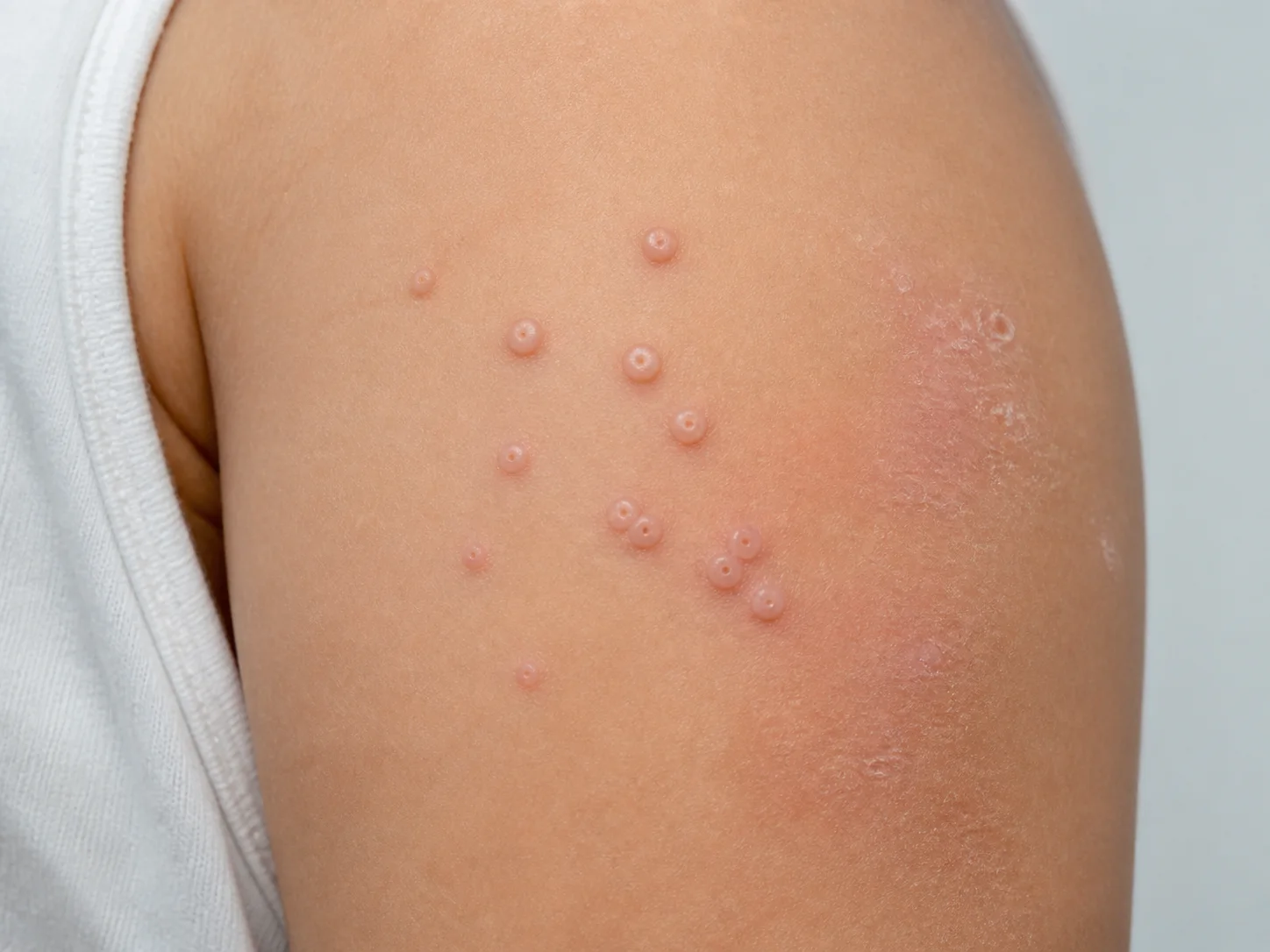
Molluscum contagiosum typically presents as small, firm, pearly bumps on the skin with a characteristic navel-like depression in the center and a visible white core. They are generally painless, but may become red, swollen, or itchy if scratched or if inflammation occurs. People with weakened immunity may develop larger or more numerous bumps. If they appear on the genitals or around the eyes, or are accompanied by severe redness, pain, pus, or fever, do not wait and seek medical evaluation immediately.
Medical evaluation speed by symptom
Categorizing by the shape of papules, presence of infection or immune deficiency, and sensitive areas
We examine not only the shape of the papules but also the number, location, inflammation, and overall systemic condition.
| Observed changes | Possible Meaning | Action to Take Now |
|---|---|---|
| Small, firm, pearly papules with central indentation | Typical appearance of molluscum contagiosum | Record photos and number of lesions |
| Itching, redness, or swelling | Accompanied by scratching or inflammation | Do not touch and monitor progress |
| Large or numerous lesions, rapid spread | Evaluation including immune status required | Dermatology consultation |
| Pus, severe pain, or fever | Secondary infection or other conditions | Prompt medical evaluation |
| Molluscum contagiosum around genitals or eyes | Differential diagnosis and site-specific safety required | Do not remove them yourself; seek medical evaluation |
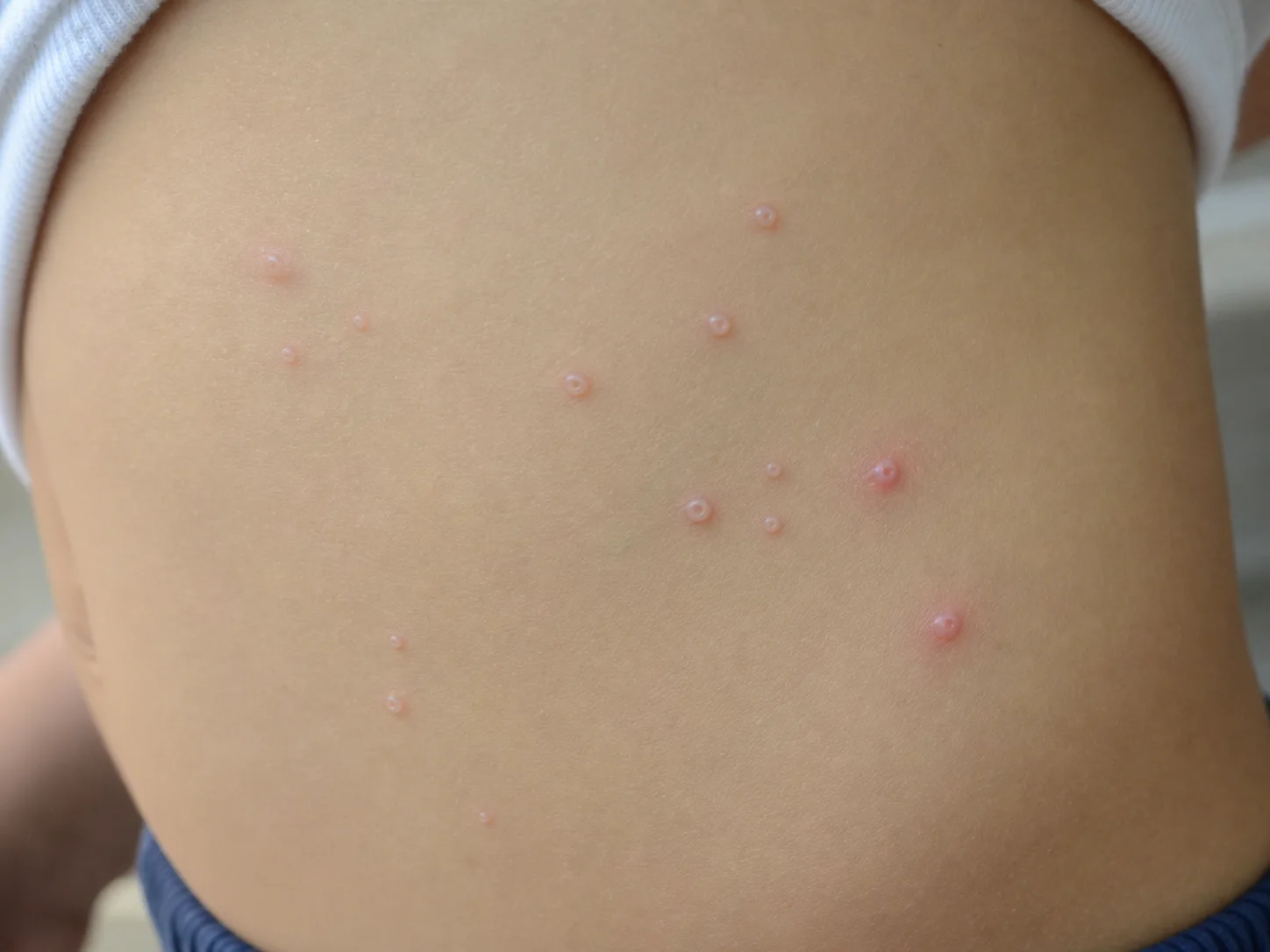
Even within the same group of papules, observing the central depression and surface gloss helps distinguish them from flat warts or folliculitis. An actual diagnosis is confirmed through a medical examination.
Actual clinical photos and educational close-up examples are materials for comparing possible patterns and cannot be used for diagnosis alone. Mechanism diagrams have simplified complex processes.If these discomforts have recurred
To parents who noticed several small, concave bumps on their child's arm during morning washing
Molluscum contagiosum is common in children and may disappear naturally, but in some cases, it spreads rapidly due to scratching caused by surrounding eczema and severe itching. After confirming the presence of central depression papulesand screening for symptoms suspected of infection, we evaluate the skin barrier and recovery capacity together.
For those wondering if small pearly bumps are molluscum contagiosum because they are spreading or increasing in number
surrounding eczema and itching when scratching every night and the number of molluscum lesions increases
For those who developed similar bumps around an area after scratching eczema
when new papules continue to appear on the inner arms or torso even after removal
For those wondering if it is okay to self-remove papules on adult genitals or shaved areas
when wound recovery is slow along with atopic skin and Recurrenceoccurs
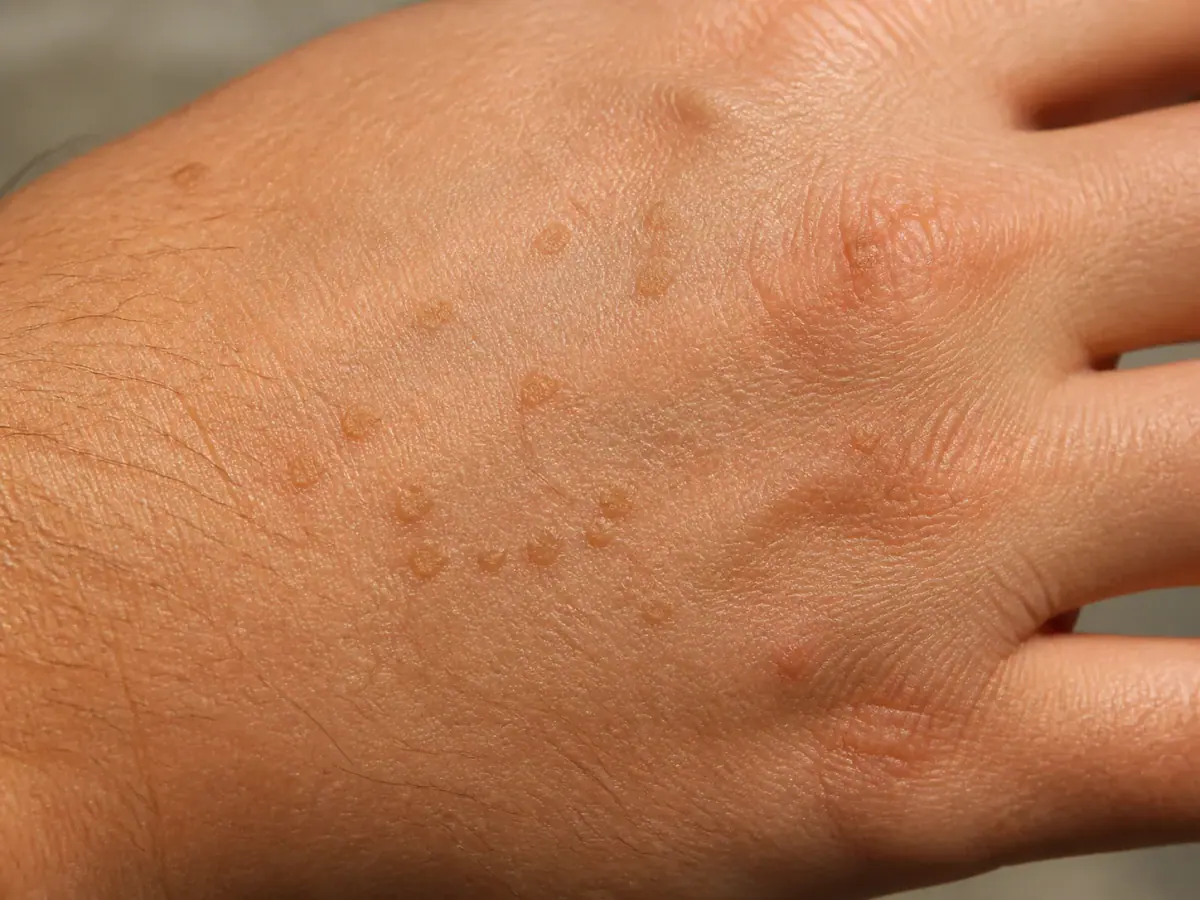
Flat warts on the back of the hand may increase along the direction of scratching. We check the date they suddenly increased along with any areas that were picked or shaved.
Points to distinguish first
How to distinguish molluscum contagiosum from similar-looking skin conditions
Molluscum contagiosum typically presents as small, firm, pearly bumps on the skin with a belly-button-like central depression and a white center. They are generally painless, but if scratched or if inflammation occurs, they may become red, swollen, or itchy. People with weakened immunity may develop larger or more numerous lesions. Please seek medical evaluation if they appear on the genitals or around the eyes, or if they are accompanied by severe redness, pain, pus, or fever.
Please check for infection and sensitive areas
First, check for the presence of pus, heat sensation, or fever, and whether the lesions have appeared around the genitals or eyes.
Check if the bumps have a central indentation or if they are spreading to new areas.
Compare photos to track the number, size, and spread of molluscum contagiosum, as well as any new bumps that appeared after scratching or shaving.
After differential diagnosis, examine accompanying skin discomfort.
While identifying the path of spread for molluscum contagiosum, Korean herbal medicine treatment also considers whether recurring itching, surrounding eczema, and scratching habits are influencing each other.
Why does it keep getting worse?
Reasons why molluscum contagiosum persists or recurs
Distinguish the appearance from flat warts and folliculitis
Check for a smooth dome shape with central depression, and the distribution on the torso and in the child's skin folds.
Observe not only the number of bumps but also if the surrounding skin has become red due to itching and scratching.
The treatment goal is to break the cycle where new papules increase in areas that were scratched and wounded due to itching.
Check the child's sleep, sweating, digestion, and recovery together
Perform pattern identification to see how the skin changes following nighttime itching, sweat and heat, frequent colds, or loss of appetite.
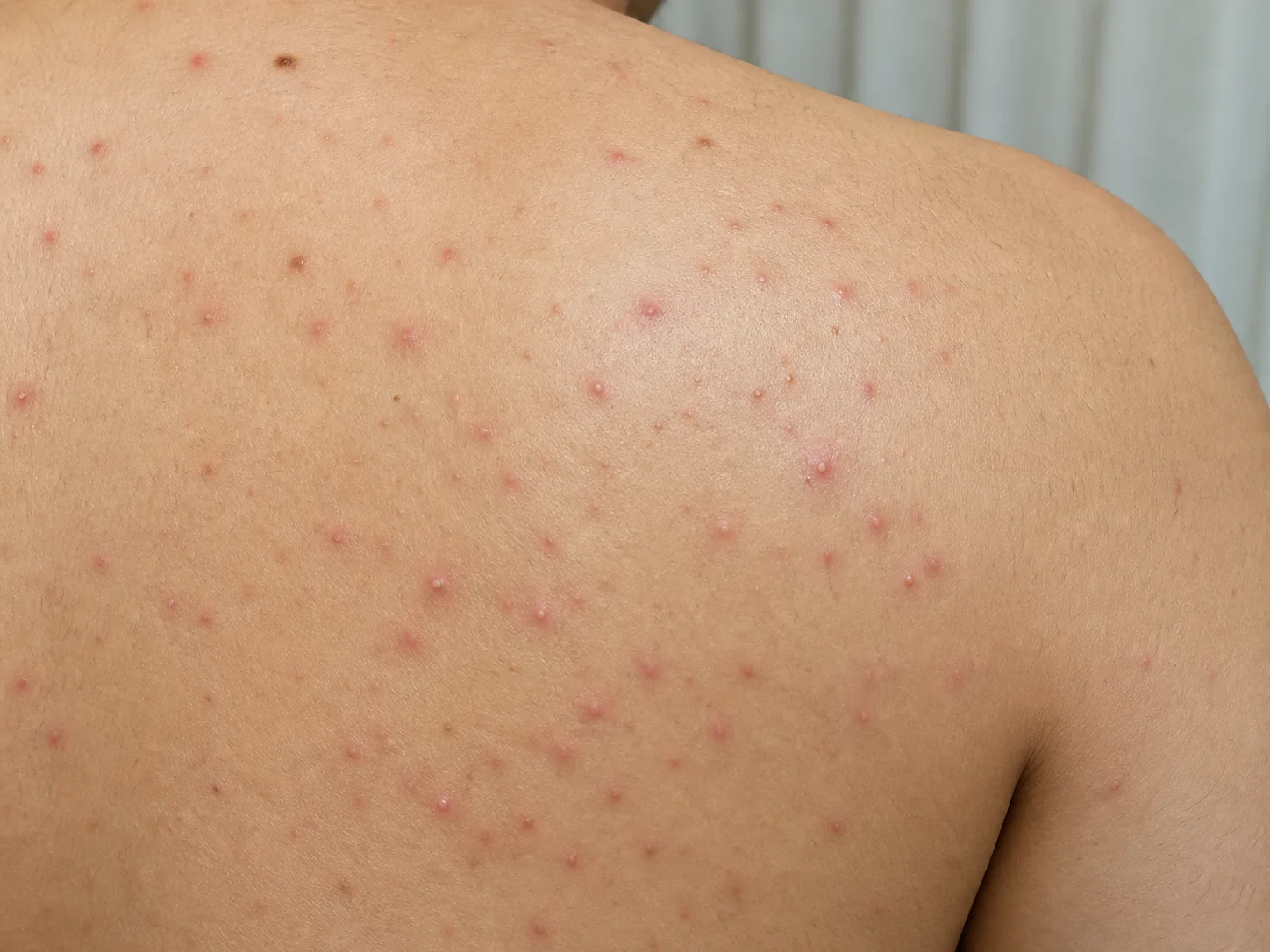
A key clue for folliculitis is that lesions develop around hair follicles and are relatively similar in size. We distinguish this from acne, which presents with comedones, by analyzing distribution, friction, and shaving habits.
Things to prepare before your visit
What photos and records should I prepare before the medical evaluation?
Please prepare photos of the molluscum contagiosum taken by date, as well as records of the number, size, location, redness, itching, pain, pus, presence of eczema, and whether there is immune deficiency.
Check for a central indentation
Observe whether the center of the pearly papule is concave and shows a white core.
Record the number and location
Compare photos by date to see the initial area of appearance and any new molluscum contagiosum that developed around it.
Do not squeeze them yourself
Squeezing or scratching molluscum contagiosum can increase the risk of spreading, infection, and scarring.
Changes to monitor during treatment
What changes should I monitor during treatment?
Photos of molluscum contagiosum that appeared within the last month and images showing the central indentation
Please record when it started and how it has changed, including the dates. To make it easier to compare before and after, take photos of the same area from a similar distance and under similar lighting.
Times of scratching and presence of surrounding eczema or oozing
Please leave a brief note. Compare not only the visible changes but also whether your sleep, pain, and daily life have become less uncomfortable.
Changes in sweat, sleep, appetite, bowel movements, and post-cold symptoms
Please also include the dates of any medications, ointments, or procedures you are currently using. This makes it easier to compare what led to improvement or worsening.
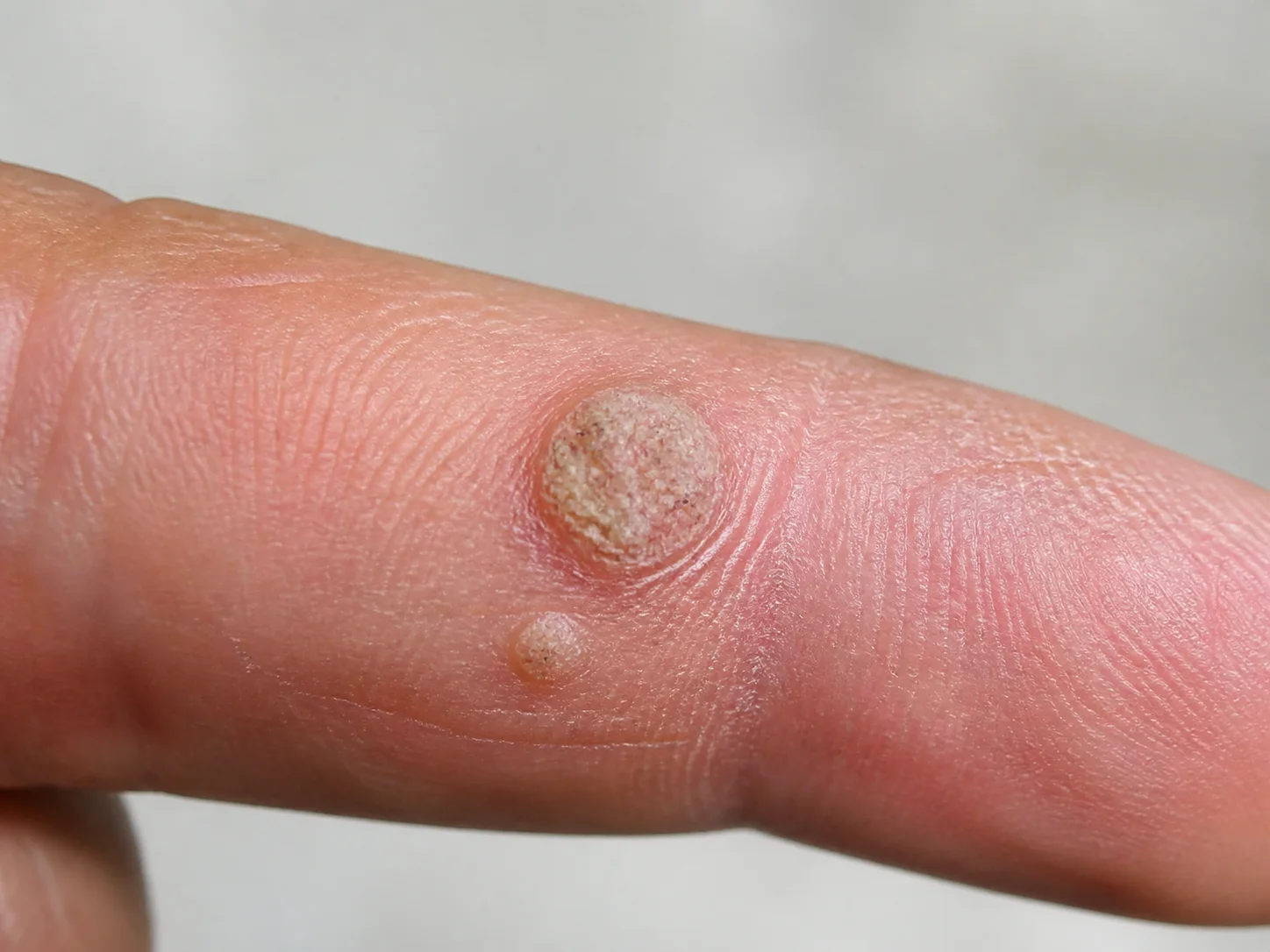
Common warts often cause the skin texture to break and the surface to rise roughly. Unlike calluses, we examine the direction of pain when pressed, the presence of black dots, and whether they are spreading to surrounding areas.
When planning herbal medicine treatment
Molluscum contagiosum: Determining the direction of Korean herbal medicine treatment based on current prominent symptoms
We distinguish the papules themselves from the surrounding skin. We check if they are red and spreading rapidly, if dry eczema and scratching are central, if they cluster in areas of sweat and moisture, or if recovery is slow following frequent fatigue and colds.
Pattern identification (Byeon-jeung) in Korean medicine is not about giving a different name to a disease. Multiple patterns can overlap in one person, and as the skin changes, for example, as oozing and heat decrease and dryness or cracking remain, the prescription is adjusted accordingly.
When the area around the papules is red and spreading rapidly
- Primary skin observations
- We check for new papules, redness, scratch marks, and the presence of discharge or pus.
- Overall body condition to check alongside skin
- We check if there was a sudden increase following a fever, cold, or exposure to heat.
- Primary considerations for herbal medicine prescription
- After first addressing symptoms suspected of infection, the focus is placed on reducing active heat and itching.
When the skin is dry and there is scratching every night
- Primary skin observations
- We examine dryness, dead skin, scratch wounds between papules, and eczema in skin folds.
- Overall body condition to check alongside skin
- We ask if the patient wakes up during the night, has dry skin or mouth, and feels fatigued.
- Primary considerations for herbal medicine prescription
- Emphasis is placed on nourishing the blood and moisturizing dryness to help relieve itching and restore the skin barrier.
When papules cluster in sweaty skin folds
- Primary skin observations
- We examine moisture, erosion, and the density of papules in the folds of the arms, knees, and on the torso.
- Overall body condition to check alongside skin
- We check for decreased appetite, loose stools, a feeling of heaviness in the body, and worsening after sweating.
- Primary considerations for herbal medicine prescription
- We simultaneously regulate skin moisture and the recovery of the spleen and stomach.
When symptoms persist for a long time following frequent colds and fatigue
- Primary skin observations
- We check if wounds or scabs are slow to heal and if new molluscum contagiosum bumps continue to appear.
- Overall body condition to check alongside skin
- We ask about energy levels, appetite, sleep, and the speed of recovery following the illness.
- Primary considerations for herbal medicine prescription
- Rather than excessively focusing only on reducing heat, we reinforce the recovery of energy and immunity.
How is the herbal medicine prescription adjusted?
- We examine the bumps with central indentations along with the surrounding red and itchy skin.
We verify the appearance of the molluscum contagiosum; however, pus, pain, or heat sensations are prioritized for medical evaluation.
- Prescriptions that vary depending on the reason scratching begins
We identify the axis connecting itchiness and spreading among heat, dryness, sweat, and fatigue.
- We check the number of bumps, nighttime scratching, and wound recovery together.
We check not only the number of newly formed molluscum contagiosum bumps but also whether sleep and surrounding eczema have improved.
When should I consider Korean herbal medicine treatment?
- When scratching occurs every night due to surrounding eczema and itchiness, and molluscum contagiosum increases
- When new papules continue to appear on the torso or in the folds of the arms even after removal
- When wound recovery is slow and recurrence occurs along with atopic skin
What will be asked during the medical evaluation?
- Photos taken within the last month showing newly formed molluscum contagiosum and their centrally concave appearance
- Scratching times and surrounding eczema or discharge
- Changes in sweat, sleep, appetite, bowel movements, and status after a cold
Things to prepare before the consultationPlease prepare photos of the molluscum contagiosum taken by date, as well as information on the number, size, location, redness, itchiness, pain, pus, eczema, and whether there is a decline in immunity.
If pus, pain, or redness spreads rapidly, or if you have a fever, lesions inside the eyes or mouth, shortness of breath, or sudden facial swelling, please visit a dermatology clinic or seek emergency care first. After confirming that such urgent situations are not present, Baekrokdam provides herbal medicine treatment for chronic and recurring skin diseases.
Consult about molluscum contagiosum progressFrequently Asked Questions
Frequently Asked Questions about Molluscum Contagiosum
What is the typical appearance of molluscum contagiosum?
The typical appearance is a small, firm, pearly papule with a central indentation like a navel.
Is molluscum contagiosum painful?
Generally, there is no pain, but if scratched or if inflammation occurs, it may become red, swollen, or itchy.
Is medical evaluation necessary if there are many large molluscum contagiosum bumps?
In a state of lowered immunity, molluscum contagiosum can be larger and more numerous, so a dermatology evaluation is necessary.
Can I pop them at home?
We do not recommend popping or scratching them yourself, as there is a risk of spreading, infection, and scarring.
How are molluscum contagiosum spread to others?
They can be spread through direct skin-to-skin contact with an infected person or by sharing items such as towels and clothes contaminated with the virus. Keep the affected areas covered and use personal items separately.
If new bumps appear even without scratching, does it mean my immunity is weak?
Immune deficiency cannot be determined solely by the fact that molluscum contagiosum has increased. Since there can be a time gap between initial exposure and discovery, we evaluate the size, extent, presence of eczema, and any medications being taken.
Is atopic dermatitis the direct cause of molluscum contagiosum?
The direct cause is the poxvirus. A skin barrier compromised by atopy and the act of scratching can create a background that increases the risk of infection and autoinoculation (self-spreading).
References and update date
Doctor of Korean Medicine Choi Yeon-seung verified the content based on the official and professional materials below and updated it on 2026-08-23.
- CDC, Molluscum clinical overviewPearlescent papules with central indentation, inflammatory changes, and multiple skin changes associated with immune deficiency
- AAD, Molluscum diagnosis and treatmentClinical diagnosis and evaluation of the number, location, eczema, genital involvement, and immune status of skin changes
- CDC, About Molluscum ContagiosumPoxvirus as the cause, transmission via direct contact, contaminated items, and autoinoculation, and evidence of risk factors such as eczema and immune deficiency
- American Academy of Dermatology, Molluscum contagiosum: Who gets and causesSpread due to skin or personal item contact, scratching, and shaving, and evidence of risk context regarding the skin barrier and immune status
- American Academy of Dermatology, Warts: Signs and symptomsEvidence of wart shape, color, black vascular dots, and types (common, plantar, flat, filiform, genital), as well as symptoms of pain, itching, and bleeding