Folliculitis: Start with your questions
Points to check first
Folliculitis: Symptoms and when to seek prompt medical evaluation
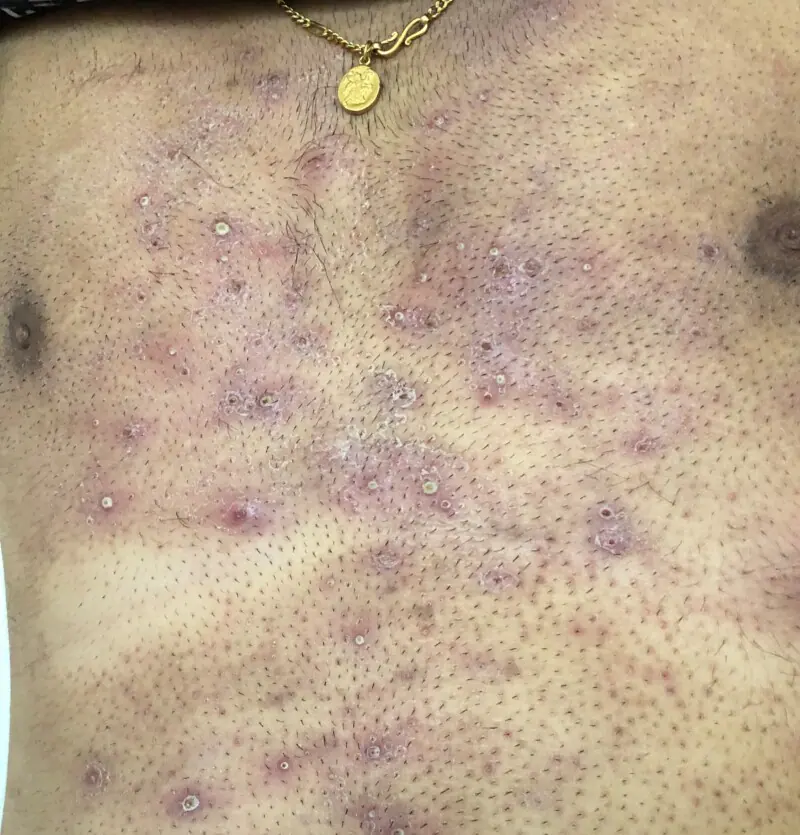
Folliculitis presents as small red pimples or pus-filled pustuleIt is typical for these to appear in clusters. The area around the skin changes may be red, itchy, or burning, and may be painful when pressed; scabs may form after a pustule bursts. Shallow folliculitis remains as small papules or pustules, but if it deepens, it may appear as a large, hard, painful boil or a carbuncle where several boils are connected, increasing the risk of scarring and hair loss. If redness and pain suddenly spread, or if fever, chills, or body aches occur, the spreading infection is promptly evaluated.
Symptom Classification
The order of medical evaluation is determined by the depth, level of pain, and how quickly it spreads
Cases are divided into small pustules, deep boils, and spreading infections.
| Appearance | Additional Checks | Priority action |
|---|---|---|
| Small red papules centered around hair follicles | Itching · friction · shaving | Stop irritation · record progress |
| Pus-filled pustules and scabs | Pain · recurrence · distribution | Examination · cause evaluation |
| Large, deep, painful lumps | Pus · connection between multiple skin changes | prompt medical evaluation |
| Rapidly spreading redness, fever, chills | Body aches, facial swelling | Immediate infection evaluation |
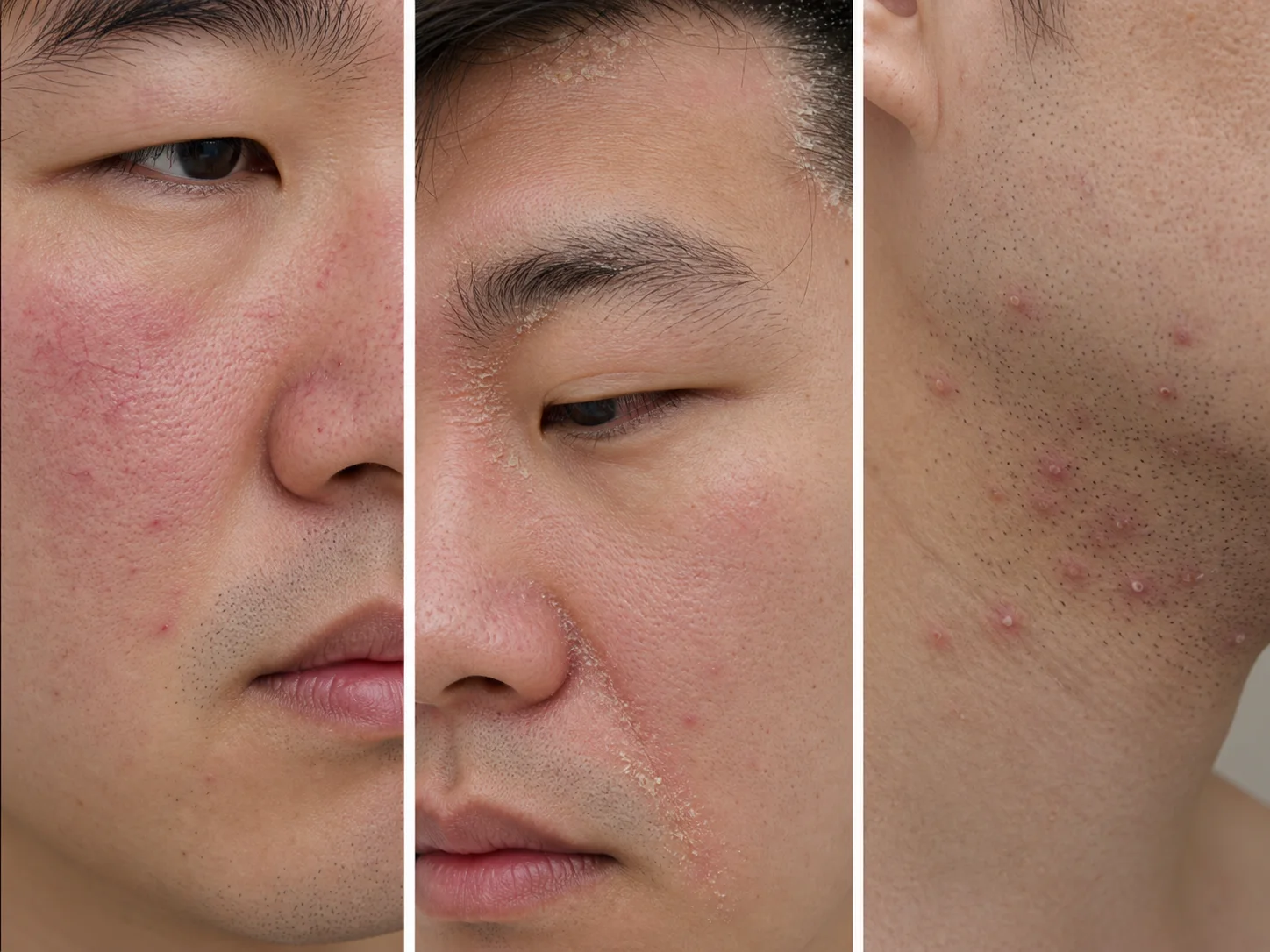
This is a reproduction image intended to explain the surface clues of three different conditions side-by-side. It is not a photograph showing the actual condition or before-and-after treatment of a single person.
Actual clinical photos and educational close-up examples are materials for comparing possible patterns and cannot be used for diagnosis alone. Mechanism diagrams have simplified complex processes.If these discomforts have recurred
For those who develop pus-filled pimples in every hair follicle on the chin after shaving in the morning
There are cases where the same pustules continuously reappear on the chin, scalp, back, or buttocks, remaining quiet only while taking medication before festering again. We first distinguish infection from other skin changes, then examine the sebum, heat, sweat, friction, and recovery capacity that cause the recurrence.
For those with clusters of itchy pustules of similar size on the back, chest, or buttocks
When new pustules recur in the same area even after subsiding with antibiotics or antifungal treatment
For those who suddenly develop a rash in areas touching workout clothes or swimwear
When scars and brown marks continuously form due to skin changes on the scalp, chin, back, or buttocks
For those concerned by deep, painful skin changes or rapidly spreading redness
When new skin changes appear every week despite reducing shaving, exercise, or friction
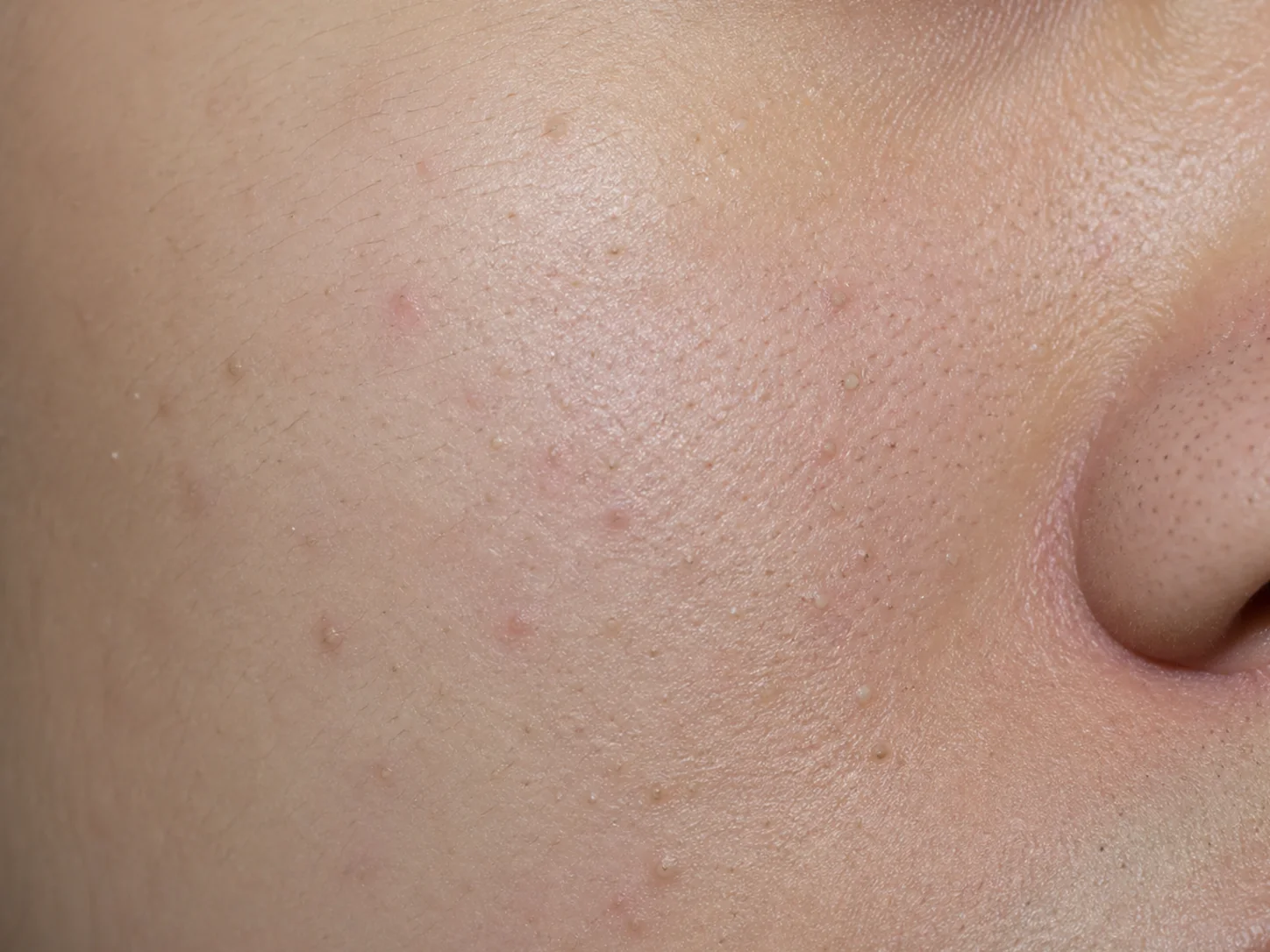
Comedones are important clues for distinguishing acne from rosacea or seborrheic dermatitis. Do not just compare red pimples; check if clogged pores are also visible.
Points to distinguish first
Folliculitis: How to distinguish it from similar-looking skin diseases
Identifying spreading infections
We first check for fever, chills, spreading redness, deep pain, boils, or facial swelling.
Examining the center, depth, and exposure of the hair follicle
papules·We observe pustules, scabs, and changes following shaving, friction, or humid heat on the same timeline.
Identifying conditions that cause recurrence after subsidence
While ensuring necessary infection treatment and drainage are not missed, we record the location and interval of recurring new pustules, as well as changes in sweat, friction, sebum, and sleep to set the goals for Korean herbal medicine treatment.
Why does it keep getting worse?
Reasons why folliculitis persists or recurs
Identifying the cause first, even if it looks like acne
We do not start Korean herbal medicine without confirming whether it is a pustule with a hair in the center, an ingrown hair after shaving, or a fungal infection.
Checking both the rate of new occurrences and the rate of recovery
Rather than a single existing skin change, we view the number of new occurrences per week and how long red marks and scars persist as key indicators for Korean herbal medicine treatment.
Examining sebum, heat sensation, sweat, and recovery status
We check if it occurs after wearing workout clothes, shaving, or sitting for long periods, and whether the skin's heat sensationsweat is excessive, or if suppuration and failure to heal occur following fatigue, sleep issues, digestive discomfort, or underlying diseases to adjust the prescription.
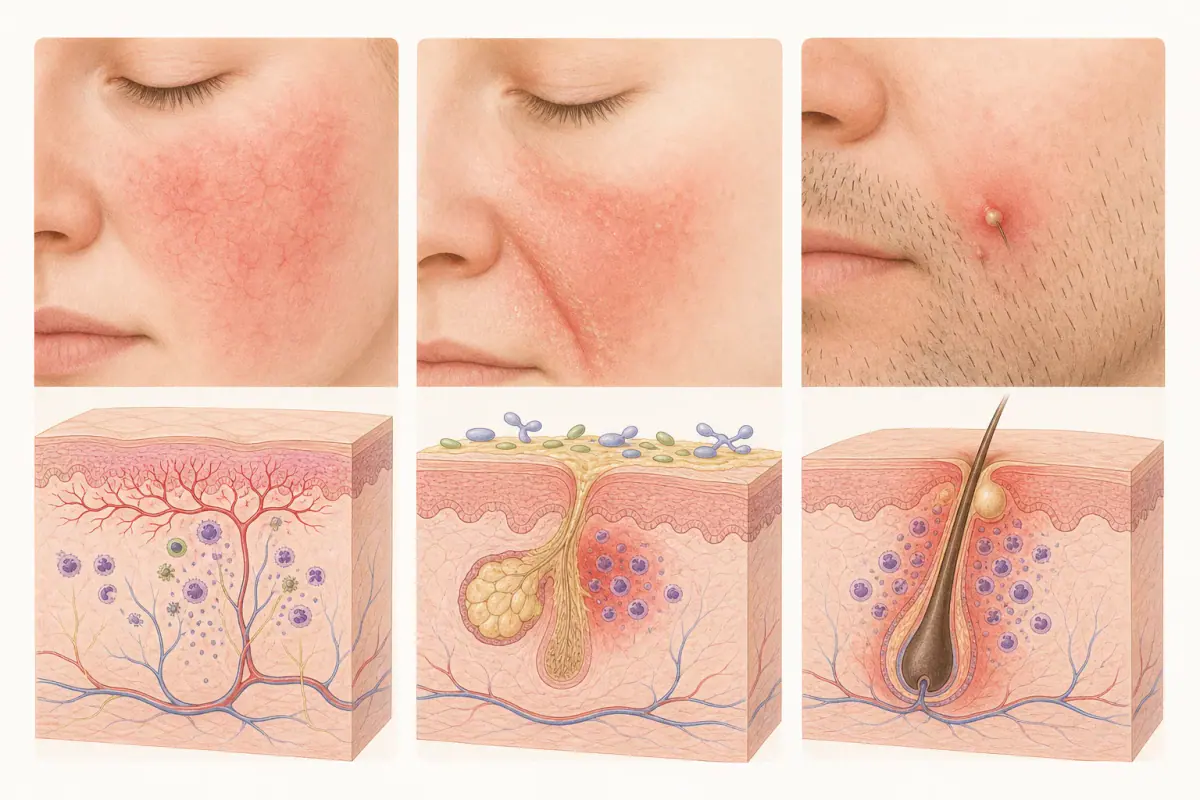
This is a simplified conceptual diagram showing that while rosacea, seborrheic dermatitis, and folliculitis may all appear red, the structures and distributions observed are different. This image does not determine a single cause for each disease.
Conceptual reference · AAD Rosacea: Causes · AAD Seborrheic dermatitis: CausesThings to prepare before your visit
What photos and records should I prepare before the medical evaluation?
Please prepare photos of skin changes, and information on the onset, location, papules, pustules, scabs, itching, pain, spreading, fever, and exposure to shaving or friction.
Small pimples may cluster together
We check if multiple red papules of similar size appear in hair-bearing areas.
Pustules may burst and form scabs
Record whether yellowish or brownish scabs remain after the pus-filled tip bursts on its own.
It may be different even if it looks like acne
We compare comedones, the distribution of skin changes, and exposure to shaving or friction during the examination.
Changes to monitor during treatment
What changes should I monitor during treatment?
Number of new pustules and painful skin changes in the last 7 days
Please record when it started and how it has changed, including the dates. To make it easier to compare before and after, take photos of the same area from a similar distance and under similar lighting.
Names of antibiotics or antifungals used and the timing of recurrence after discontinuation
Please leave a brief note. Compare not only the visible changes but also whether your sleep, pain, and daily life have become less uncomfortable.
Changes following shaving, exercise, sweat, clothing friction, sleep, or digestion
Please also include the dates of any medications, ointments, or procedures you are currently using. This makes it easier to compare what led to improvement or worsening.
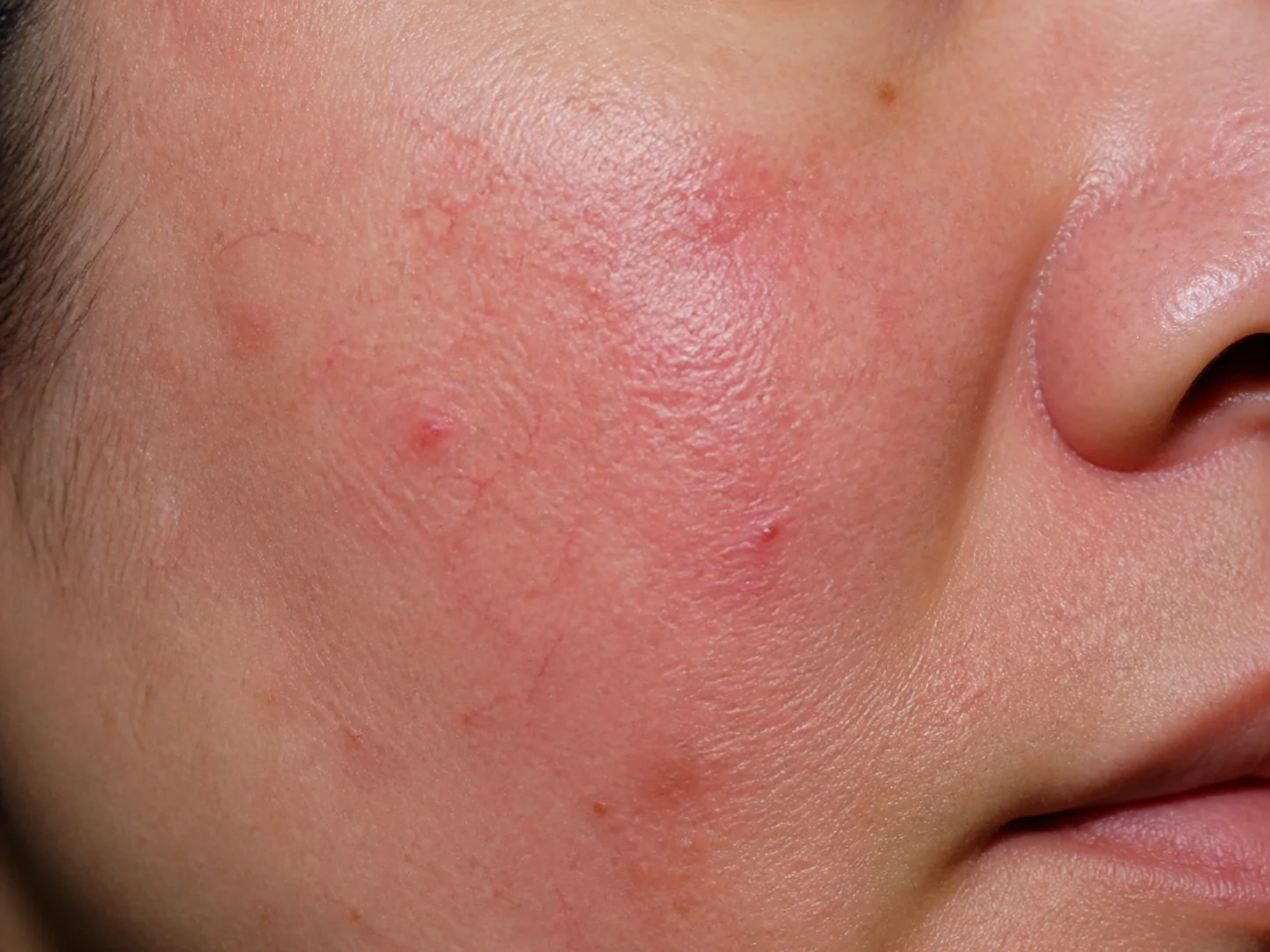
Persistent erythema and burning sensations in the center of the face, along with fine blood vessels, are used to distinguish this from acne, which is centered around comedones. Only the skin surface is shown in close-up, excluding the eyes.
When planning herbal medicine treatment
For folliculitis, the direction of herbal medicine treatment is determined based on your current prominent symptoms.
First, we distinguish between acne, pseudofolliculitis, fungal folliculitis, and deep infections. Then, we prescribe treatment by observing whether there are many yellow and painful pustules, whether redness is concentrated on the face and scalp, whether it recurs in humid lower body areas like the groin, or whether pustules form more easily and heal slowly when you are fatigued.
Pattern identification (Byeon-jeung) in Korean medicine is not about giving a different name to a disease. Multiple patterns can overlap in one person, and as the skin changes, for example, as oozing and heat decrease and dryness or cracking remain, the prescription is adjusted accordingly.
When yellow pustules, discharge, and tenderness are strong
- Primary skin observations
- We observe the yellow pustules at the center of the follicles, surrounding redness, heat, pain, and the speed at which new skin changes appear.
- Overall body condition to check alongside skin
- We check for excessive sweating, worsening after consuming greasy foods or alcohol, and feelings of body heaviness or bloating.
- Primary considerations for herbal medicine prescription
- Emphasis is placed on clearing heat, detoxifying, and removing dampness to reduce the burden of active inflammation and damp-heat.
When red pustules are concentrated on the face and scalp
- Primary skin observations
- We observe red, small pustules along the hairline, scalp, jaw, and neck, as well as the severity of itching and heat.
- Overall body condition to check alongside skin
- We ask if there is worsening due to upper body heat, facial sebum, scalp sweat, or lack of sleep.
- Primary considerations for herbal medicine prescription
- We adjust sebum and sweat responses focusing on nourishing the blood and clearing heat to lower skin heat and inflammation concentrated in the upper body.
When it recurs in the groin, buttocks, or thighs
- Primary skin observations
- We observe pustules, discharge, itching, odor, and pigmentation in areas affected by tight clothing or prolonged sitting.
- Overall body condition to check alongside skin
- We check if this overlaps with lower body sweat and moisture, bowel or bladder discomfort, and worsening after exercise.
- Primary considerations for herbal medicine prescription
- We lower the dampness and heat residing in the lower body and reduce the environment for recurrence along with friction and ventilation management.
When new pustules constantly appear and heal slowly, even if they do not become severely suppurated
- Primary skin observations
- We observe whether small pustules persist, red marks and scars remain for a long time, and whether they recur in the same spot.
- Overall body condition to check alongside skin
- We ask if skin recovery is slow after frequent infections, accompanied by chronic fatigue, lack of sleep, or poor digestion.
- Primary considerations for herbal medicine prescription
- Rather than only continuously lowering inflammation, we reinforce Qi, digestion, and immune recovery to simultaneously reduce the occurrence of new skin changes and delayed healing.
How is the herbal medicine prescription adjusted?
- We first identify skin changes that correspond to the depth of infection
We distinguish between deep boils with rapidly increasing pain, fungal folliculitis, ingrown hairs after shaving, and acne.
- The location of pustules and the direction of heat and sweat are reflected in the prescription
We determine the dominant axis among upper body blood-heat, systemic damp-heat, lower body damp-heat, or impaired recovery.
- We examine the rate of new occurrences alongside existing skin changes
Prescriptions are adjusted by comparing the number of pustules, tenderness, wound healing time, and the recurrence interval after exercise or shaving over a one-week period.
When should I consider Korean herbal medicine treatment?
- When new pustules repeatedly appear in the same area even after subsiding with antibiotics or antifungal treatment
- When scars and brown spots continue to increase due to skin changes on the scalp, chin, back, or buttocks
- When new skin changes appear every week despite reducing shaving, exercise, or friction
What will be asked during the medical evaluation?
- The number of new pustules and painful skin changes that occurred in the last 7 days
- The names of antibiotics or antifungals used and the point at which symptoms recurred after stopping them
- Changes following shaving, exercise, sweating, clothing friction, sleep, or digestion
Things to prepare before the consultationPlease prepare photos of the skin changes, and information regarding the onset, location, papules, pustules, scabs, itching, pain, spreading, fever, and exposure to shaving or friction.
If pus, pain, or redness spreads rapidly, or if you have a fever, lesions inside the eyes or mouth, shortness of breath, or sudden facial swelling, please visit a dermatology clinic or seek emergency care first. After confirming that such urgent situations are not present, Baekrokdam provides herbal medicine treatment for chronic and recurring skin diseases.
Consult about folliculitis progressFrequently Asked Questions
Frequently Asked Questions about Folliculitis
What does folliculitis look like?
Small red papules or pustules centered around hair follicles may appear in clusters, and red borders, itching, or pain may occur.
Is folliculitis itchy?
Itching or burning sensations may occur, and deeper skin changes exhibit more prominent tenderness and pain.
How is folliculitis different from acne?
Whether it is centered on the follicle, the presence of comedones, distribution, and exposure to shaving or friction are all evaluated during the examination.
When should I seek prompt medical evaluation?
Prompt evaluation is required for deep boils, rapid spreading, fever, chills, body aches, or facial swelling.
Why does folliculitis occur?
Bacteria or fungi may penetrate damaged or blocked hair follicles, or ingrown hairs may cause inflammation.
Can shaving cause folliculitis?
Since shaving can damage hair follicles and cause ingrown hairs, we examine the relationship between skin changes and the timing of shaving.
Can it be caused by workout clothes?
Friction from tight clothing that traps sweat and heat can damage the hair follicles.
References and update date
Doctor of Korean Medicine Choi Yeon-seung verified the content based on the official and professional materials below and updated it on 2026-08-23.
- AAD, FolliculitisAcne-like papules centered on the follicle, red borders, itching, and pain
- MedlinePlus, FolliculitisRash, itching, pustules, and scabs around the follicles in areas such as the neck and groin
- Cleveland Clinic, FolliculitisFolliculitis diagnosis methods and the scope of medical evaluation for recurrence or spreading
- Mayo Clinic, Folliculitis Diagnosis and TreatmentMedication by severity and recurrence, drainage of large boils, and testing for non-responsiveness
- AAD, Rosacea signs and symptomsFlushing, persistent color change, blood vessels, papules, skin thickening, and eye symptoms