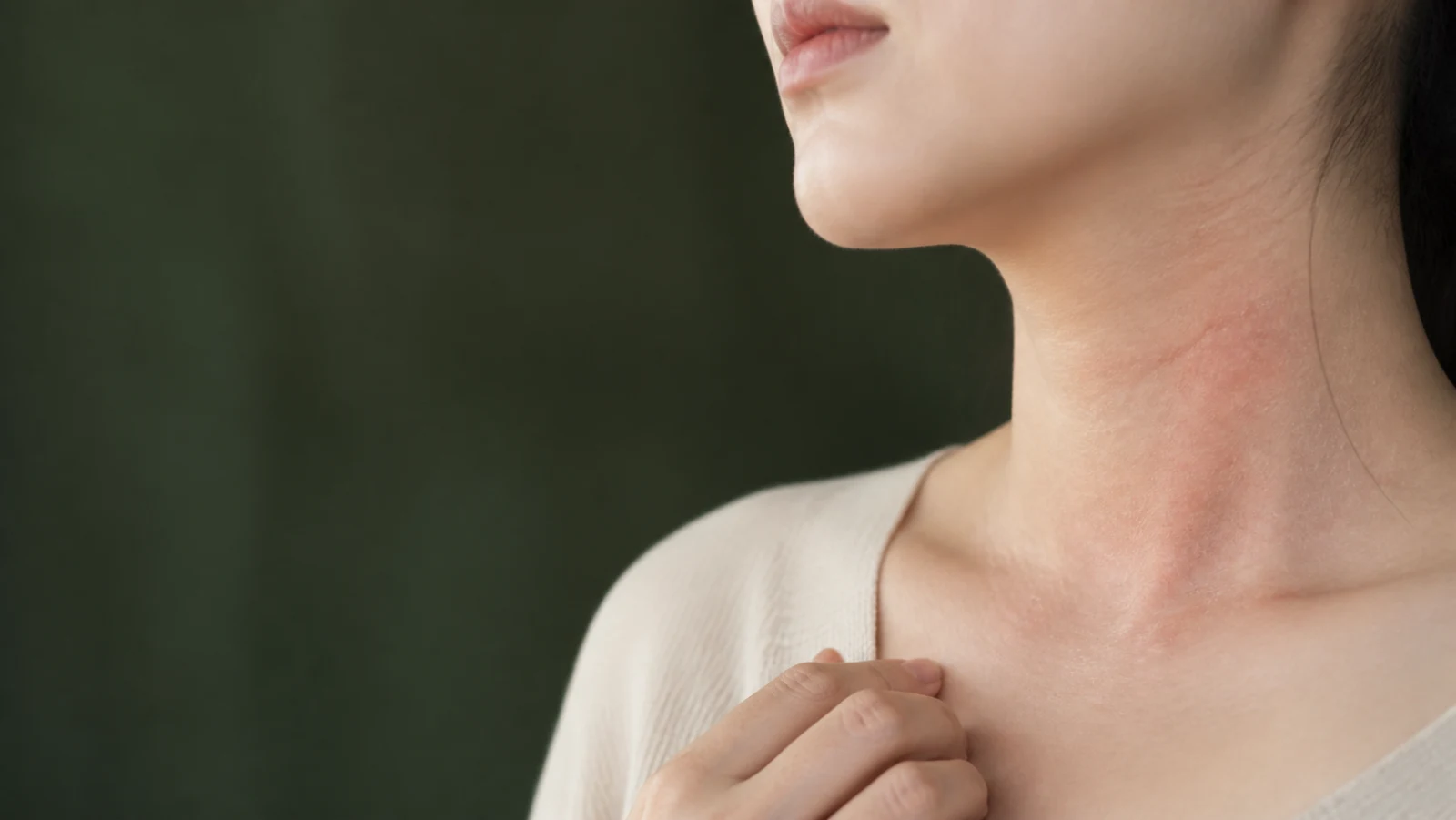
Face and neck atopic dermatitis: Start with the topics you are curious about
Points to check first
Face and neck atopic dermatitis: Symptoms and when to seek prompt medical evaluation
Atopic dermatitis of the face and neck is characterized by dryness and itchingrecurring distribution around the eyes and neck, but it can resemble rosacea (marked by persistent redness, blood vessels, and papules in the center of the face), contact dermatitis (with clear boundaries where new cosmetics were applied), or seborrheic dermatitis (with oily scales near the eyebrows and sides of the nose). Rather than changing multiple products at once, we check the pattern of skin changes along with the start date of the products used.
Points to check on your skin right now
How to differently observe itching, affected areas, skin surface, and symptoms suspected of infection
Do not look for redness alone; check for roughness when touched, oozing, crusting, and sleep disturbance together.
| Visible and Perceived Changes | Possible Meaning | Priority action |
|---|---|---|
| Dryness, scaling, and scratch marks following severe itching | Possible adult atopic dermatitis pattern | Record affected areas, time of day, and photos |
| Recurrence on hands, feet, neck, elbow creases, behind knees, and around eyes | Common distribution in adults | Differentiate from other contact or skin diseases |
| Thick, leathery skin and color changes | Result of prolonged scratching and rubbing | Evaluate itching and sleep disturbance |
| Golden crusts, pus, pain, and heat sensation | Possible bacterial skin infection | Skin medical evaluation on the same day |
| Sudden clustered blisters, pain, and fever | Possible eczematous herpes | Immediate urgent evaluation |
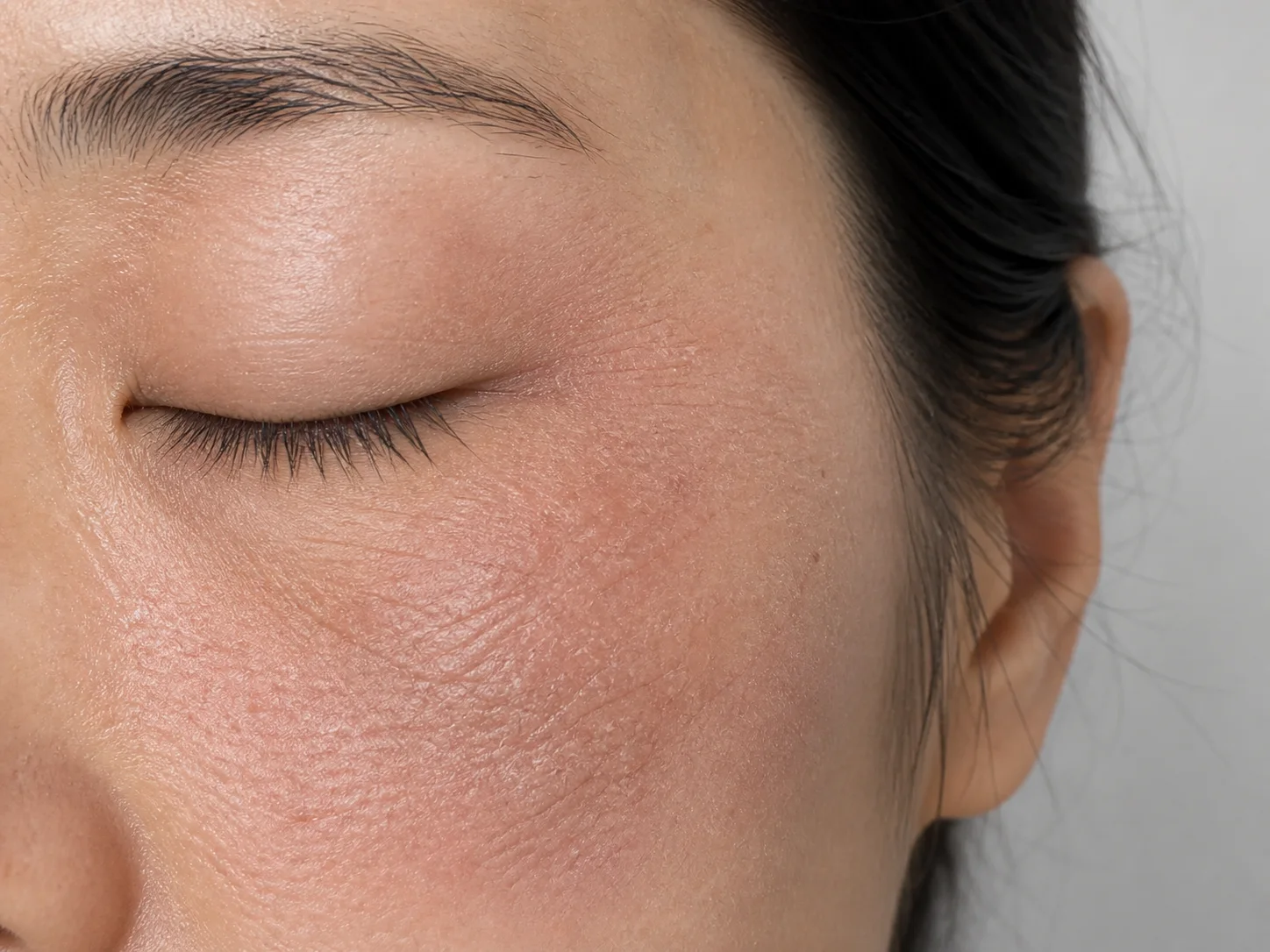
For eyelid eczema, we check not only products applied directly to the eye area but also nail or hair dye products and the overall distribution of atopic dermatitis. Causes are not confirmed by photos alone.
Actual clinical photos and educational close-up examples are materials for comparing possible patterns and cannot be used for diagnosis alone. Mechanism diagrams have simplified complex processes.If these discomforts have recurred
For those who experience stinging and redness even with face washing, makeup, or the touch of a collar
Because the skin on the face and neck is thin and frequently exposed, a single approach, such as only reducing heat or only moisturizing dryness, may be insufficient. We identify whether the current heat sensation and stinging, or long-term dryness andlichenification Among them, we first identify the factor that most disrupts daily life.
For those who feel burdened by social interactions because the skin around the eyes and neck has become dry and thickened
topical agentsWhen the eyes, cheeks, and neck become red and itchy again in the same order after pausing the use of ointment
For those whose redness increases after using masks, cosmetics, or sweating, but who do not know what to stop using
When the stinging sensation after washing the face or sweating lasts a long time, even after reducing the use of cosmetics
For those who want to examine if facial heat sensation, coldness in the hands and feet, sleep, and digestion are all unstable
When you wish to simultaneously regulate facial heat sensation, nighttime itching, sleep, and digestion
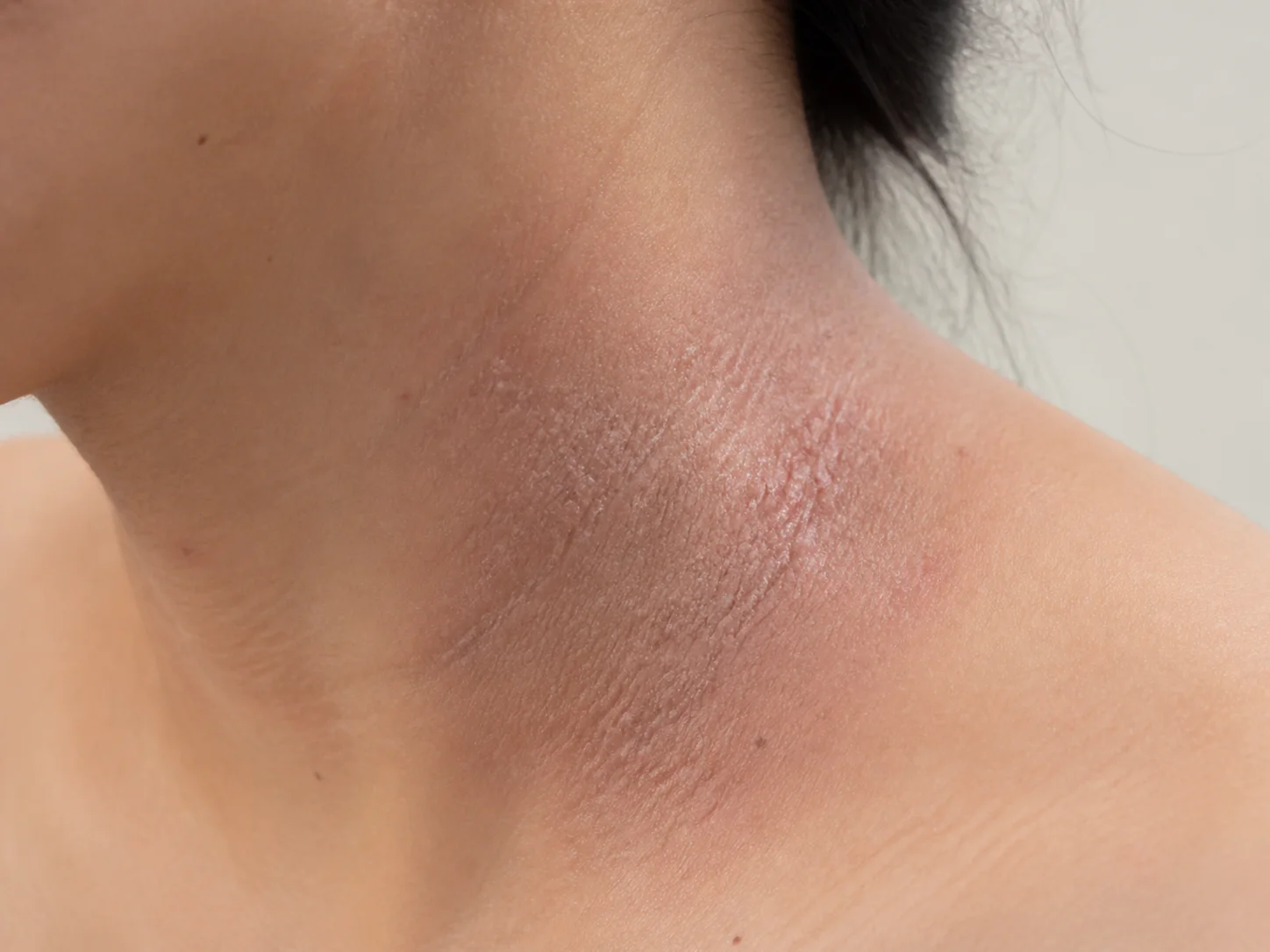
In adults, discoloration and lichenification (thickening of the skin) can remain in areas subject to frequent friction, such as the neck. We compare the surface of the lesion and the surrounding skin rather than the entire face.
Points to distinguish first
Atopic dermatitis of the face and neck: How to distinguish it from similar-looking skin conditions
First, check if scabs, pus, blisters, and heat have occurred together
We check for pain, heat sensation, swelling, pus, sudden clustered blisters, and fever to identify situations requiring urgent medical evaluation for infection.
Connect itching with skin color, surface, and affected areas
We look beyond just redness to check for dryness, scaling, cracking, thickening, distribution around the hands, wrists, and eyes, and disruption of nighttime sleep.
Observe when the itching recurs and how long it takes to feel relieved
Even while continuing dermatology treatments, if itching recurs and interferes with your sleep or work, Korean medicine treatment can address those remaining discomforts.
Why does it keep getting worse?
Reasons why atopic dermatitis of the face and neck persists or recurs
We examine facial heat sensation along with stinging and dryness after washing the face
We adjust the proportion of heat-clearing and moisturizing treatments based on whether the skin flushes after sweating, showering, or drinking, and whether it feels tight and cracks after washing.
Please also tell us about things you have hidden or avoided due to your skin
We measure treatment results by whether the stinging sensation when applying makeup, shaving, or wearing masks and collars decreases, and whether the avoidance of going outdoors is reduced.
We observe whether sleep, digestion, and fatigue levels also change on days when the skin condition is severe
We do not attribute all systemic discomfort to the skin; only conditions where a recurring temporal relationship with the worsening of the face and neck is found are reflected in the pattern identification (Byun-jeung).
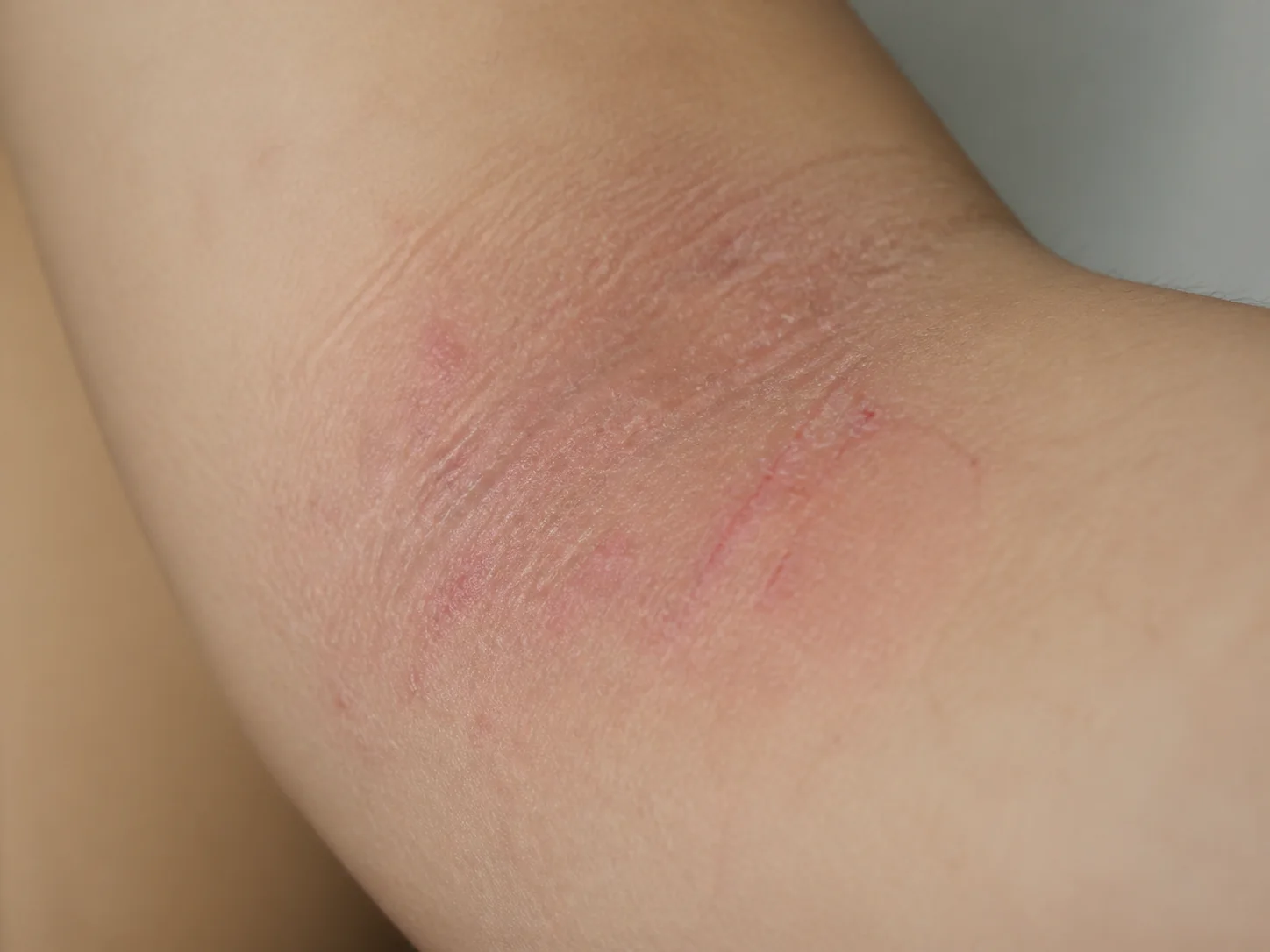
We examine dryness, fine flaking, skin texture, and scratch marks in the folding areas. Contact dermatitis or infections with similar appearances are distinguished through progress monitoring and examination.
Things to prepare before your visit
What photos and records should I prepare before the medical evaluation?
Please prepare skin photos taken under the same lighting, the timing of itching and sleep disturbances, affected areas, presence of discharge or scabs, color changes, current skin medications, and exposure factors.
Whether it becomes itchy, dry, and thickened
Atopy can leave changes such as dryness around the eyes and neck, scratch marks, and a more prominent skin texture.
Whether burning sensations, blood vessels, and papules are the primary symptoms
If the center of the face remains red for a long time without comedones and burns after heat stimulation, it is considered alongside rosacea.
Whether it overlaps with the boundary where a new product touched
Contact dermatitis is distinguished when the timing of contact with cosmetics, fragrances, hair dyes, or masks aligns with the location of the rash.
Changes to monitor during treatment
What changes should I monitor during treatment?
Usage date of each product and the time when stinging began
Please record when it started and how it has changed, including the dates. To make it easier to compare before and after, take photos of the same area from a similar distance and under similar lighting.
Time it takes for redness to return to normal after heat or sweat
Please leave a brief note. Compare not only the visible changes but also whether your sleep, pain, and daily life have become less uncomfortable.
Dryness, lichenification of the eye area and neck, and nighttime itching
Please also include the dates of any medications, ointments, or procedures you are currently using. This makes it easier to compare what led to improvement or worsening.
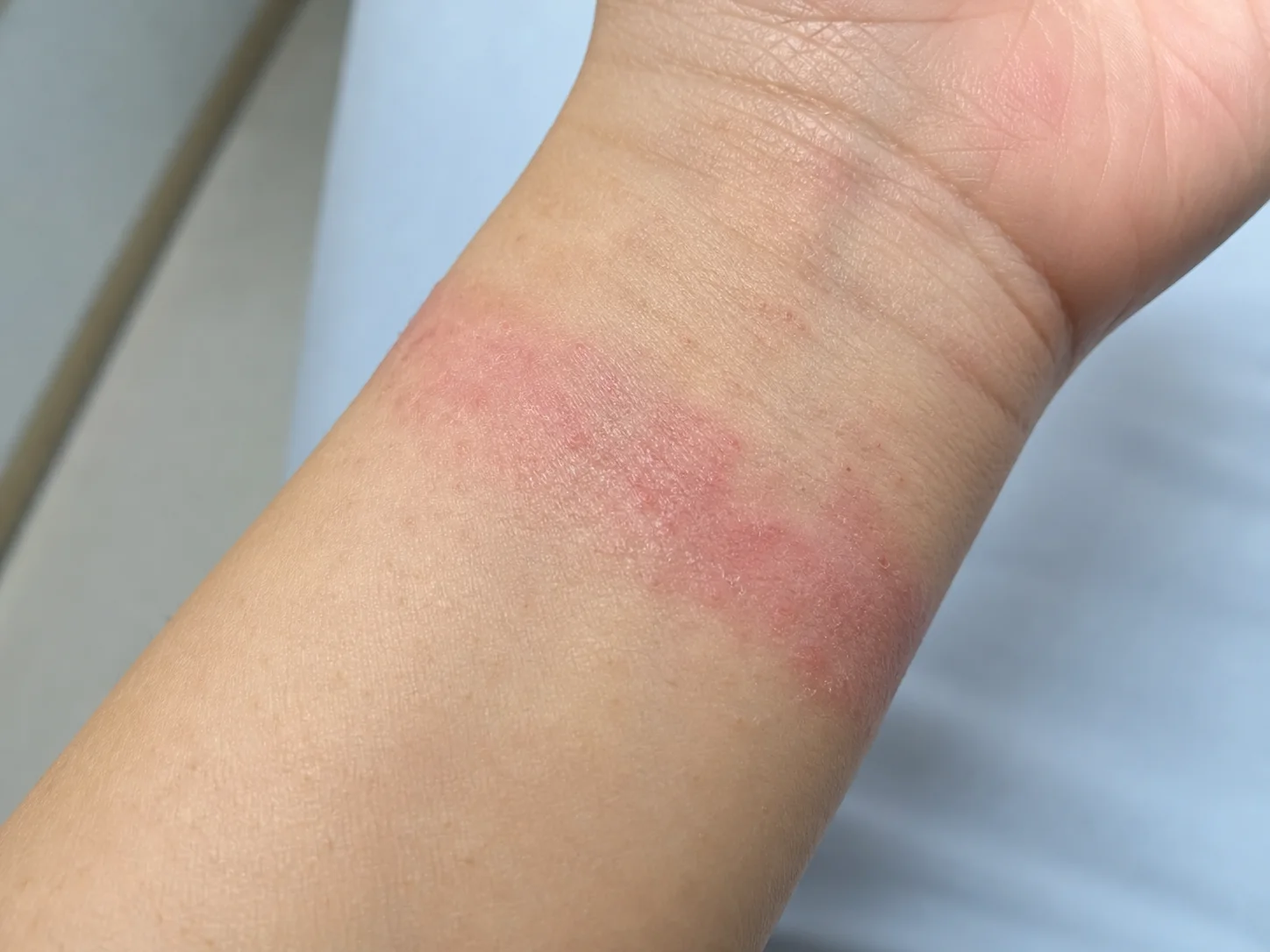
Even if the boundary is not perfectly straight, whether the rash overlaps with the area of contact, such as from a watch, band, or adhesive, serves as a clue. The date the product was changed is also verified.
When planning herbal medicine treatment
Atopic dermatitis of the face and neck: the direction of herbal medicine treatment is determined based on current prominent symptoms
Even for the same atopic dermatitis of the face and neck, the direction of herbal medicine treatment is determined by observing current skin changes and whether sleep, digestion, and fatigue are also changing.
Pattern identification (Byeon-jeung) in Korean medicine is not about giving a different name to a disease. Multiple patterns can overlap in one person, and as the skin changes, for example, as oozing and heat decrease and dryness or cracking remain, the prescription is adjusted accordingly.
When redness, heat, oozing, and swelling are prominent
- Primary skin observations
- We observe the redness, heat sensation, oozing, and the speed of spreading in skin changes of atopic dermatitis of the face and neck.
- Overall body condition to check alongside skin
- We check if itching increases and sleep is disrupted after exposure to heat, sweat, or humid environments.
- Primary considerations for herbal medicine prescription
- We first reduce the burden of active inflammation, damp-heat, and intense itching.
When the skin is dry, thickened, and cracks even with minor irritation
- Primary skin observations
- We check if dead skin, lichenification, cracking, and discoloration persist for a long time, even if there is little discharge.
- Overall body condition to check alongside skin
- We ask about tightness after washing, nighttime itching, and whether wound healing is delayed.
- Primary considerations for herbal medicine prescription
- We increase the focus on nourishing the blood, moisturizing dryness, and restoring the skin barrier.
When swelling, dampness, digestive issues, and fatigue occur on the same day during activity
- Primary skin observations
- We check if blurred boundaries, damp dead skin, or swelling persist for a long time.
- Overall body condition to check alongside skin
- We check if bloating, loose stools, and heavy fatigue repeatedly overlap with the worsening of the skin.
- Primary considerations for herbal medicine prescription
- Rather than just drying the skin, we simultaneously look at the recovery of the spleen, stomach, and fluid metabolism.
When heat sensations and itching surge after tension or lack of sleep
- Primary skin observations
- Rather than the shape of skin changes, we look at the time of day when redness and scratching suddenly increase.
- Overall body condition to check alongside skin
- We check if feelings of oppression, upper body heat, and poor sleep start before the skin symptoms.
- Primary considerations for herbal medicine prescription
- We add a focus on regulating body heat and tension responses to reduce the extent of worsening and the delay in recovery.
How is the herbal medicine prescription adjusted?
- We first examine the symptoms that are currently most uncomfortable
Face and neck atopy is primarily characterized by dryness, itching, and recurring distribution around the eyes and neck. However, it can resemble rosacea (characterized by persistent redness, visible blood vessels, and papules in the center of the face), contact dermatitis (with clear boundaries where new cosmetics touched the skin), or seborrheic dermatitis (with oily scales near the eyebrows and sides of the nose). Rather than changing multiple products at once, it is recommended to check the shape of skin changes alongside the start date of each product.
- We also ask about changes in your overall body condition that occurred on the same day as the skin changes
Treatment results are measured by whether stinging during makeup, shaving, mask use, or contact with collars decreases and whether the avoidance of going outdoors is reduced.
- We adjust the prescription at the next visit according to the changes in symptoms
We observe whether stinging after cleansing and going outdoors lasts for a shorter time, whether new rashes around the eyes and neck and nighttime scratching decrease, and whether the intervals between days requiring topical medication become longer.
When should I consider Korean herbal medicine treatment?
- When the eye area, cheeks, and neck become red and itchy again in the same order after pausing the use of topical medication
- When stinging after cleansing and sweating lasts a long time even after reducing the use of cosmetics
- When you wish to simultaneously manage facial heat sensation, nighttime itching, sleep, and digestion
What will be asked during the medical evaluation?
- Usage date of each product and the time when stinging began
- Time it takes for redness to return to normal after heat or sweat
- Dryness, lichenification of the eye area and neck, and nighttime itching
Things to prepare before the consultationPlease prepare skin photos taken under the same lighting, the timing of itching and sleep disturbances, affected areas, presence of discharge or scabs, color changes, current skin medications, and exposure factors.
If pus, pain, or redness spreads rapidly, or if you have a fever, lesions inside the eyes or mouth, shortness of breath, or sudden facial swelling, please visit a dermatology clinic or seek emergency care first. After confirming that such urgent situations are not present, Baekrokdam provides herbal medicine treatment for chronic and recurring skin diseases.
Consult about the progress of atopic dermatitis of the face and neckFrequently Asked Questions
Frequently asked questions about atopic dermatitis of the face and neck
Which areas are most commonly affected by adult atopic dermatitis?
The hands, feet, creases of the arms, behind the knees, neck, face, and around the eyes are common. In cases where it recurs only on the hands, it is differentiated from conditions such as contact dermatitis.
Is it a symptom to feel itchier at night and be unable to sleep?
Severe itching can disrupt sleep and fuel a vicious cycle of scratching. Please record the number of times you wake up at night and the skin changes in the morning to help evaluate the treatment.
Why does atopic skin become thick?
Repeated scratching and rubbing over a long period can cause skin lines to thicken and the skin to become leathery. Itching control and skin barrier treatment are necessary.
If discharge and scabs appear, does it mean the atopic dermatitis has worsened?
While these can appear during atopic flare-ups, golden-colored scabs, pus, pain, heat, or swelling may indicate a possible infection and require prompt medical evaluation.
What causes adult atopic dermatitis?
A single exact cause is unknown. It is viewed as a combination of skin barrier changes, immune inflammation, genetic predisposition, and environmental exposure.
Can atopic dermatitis suddenly develop in adulthood?
It can start in adults, or symptoms from childhood can reappear. However, dermatitis starting in adulthood must be differentiated from other conditions, such as contact dermatitis, through a medical examination.
If an allergy test is positive, does that mean the substance is the cause?
A positive test result alone does not confirm the cause of current dermatitis. We interpret the results alongside the distribution of the skin rash and whether the same symptoms recur after actual exposure.
References and update date
Doctor of Korean Medicine Choi Yeon-seung verified the content based on the official and professional materials below and updated it on 2026-08-23.
- AAD, Atopic dermatitis symptomsItching, dryness, scaling, oozing, and chronic thickening, differences by adult distribution and skin tone, and symptoms suspected to be skin infection
- NHS, Atopic eczemaItchy, dry, or cracked skin; patterns by skin tone; oozing, pus, pain, heat, and urgent warnings for eczema herpeticum
- NIAMS, Atopic DermatitisUnknown causes, the complex interaction of skin barrier, immune, genetic, and environmental factors, and the itch-scratch-damage cycle
- American Academy of Dermatology, Atopic dermatitis diagnosis and treatmentThe role of skin examination, symptoms, family history, and selective skin biopsies
- NIAMS, Atopic Dermatitis: Diagnosis, Treatment, and Steps to TakeMedical history regarding sleep, previous treatments, and exposure to irritants, along with skin examination and selective blood or tissue biopsies
- American Academy of Dermatology, Adult atopic dermatitis topical therapy guidelineRecommendations for moisturizing, topical corticosteroids, and calcineurin inhibitors for adult atopic dermatitis