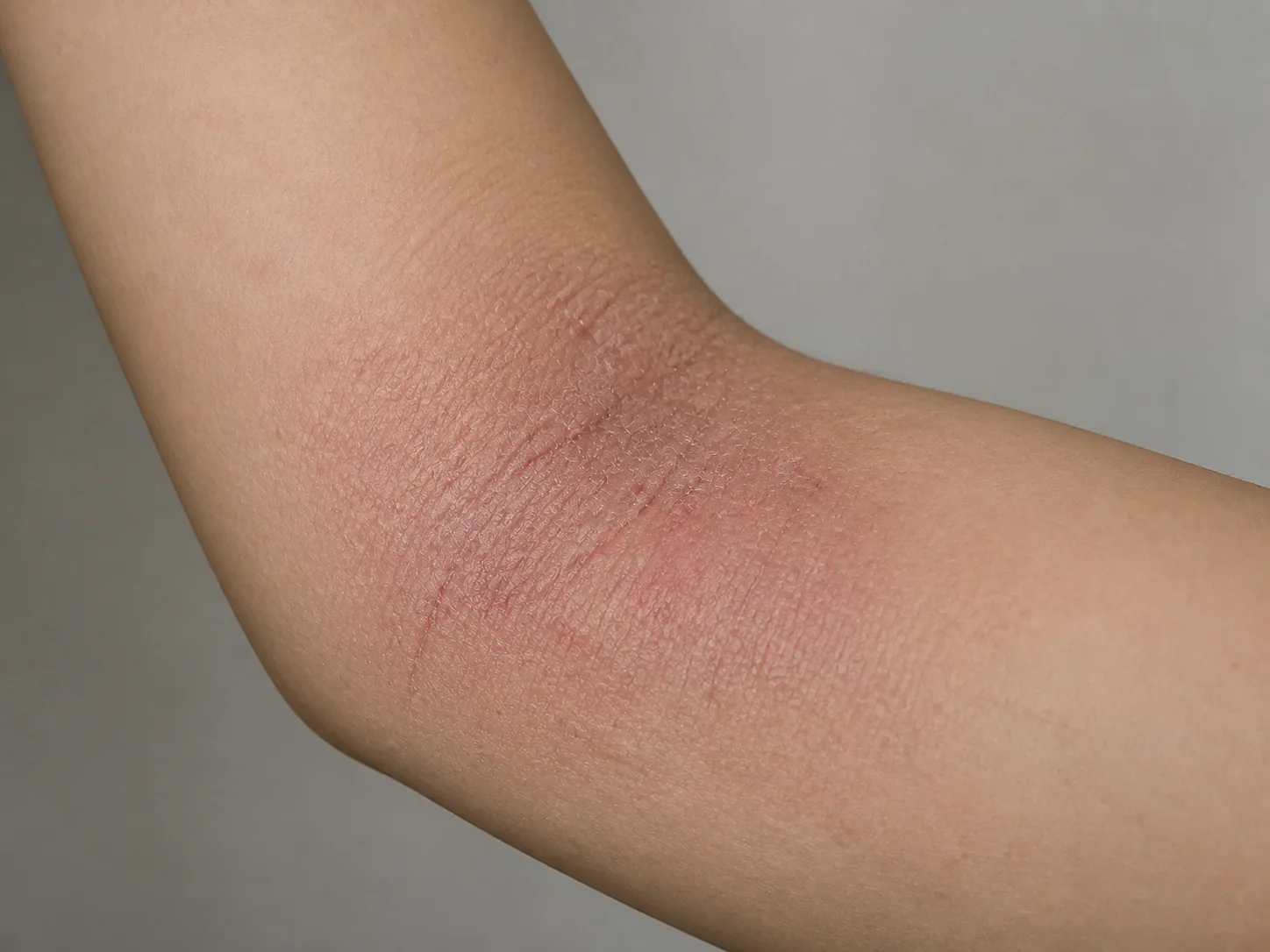
Pediatric atopic dermatitis: Start with the topics you are curious about
Points to check first
Pediatric atopic dermatitis: Symptoms and when to seek prompt medical evaluation
Pediatric atopic dermatitis is not diagnosed by a single photo or a single allergy test. In infancy, it may be prominent on the face and torso, and as the child grows, in flexural areas such as the elbows and behind the knees. Therefore, we consider the age of onset, recurring locations, and night itchingsleep, as well as the family's history of atopy. If there is pain, oozing, pus, or fever from scratched wounds, we first check for infection.
Test selection
We begin with a skin examination and proceed to additional tests only if necessary
Tests are selected based on the clinical presentation of atopic dermatitis and the possibility of other skin diseases.
| Current Situation | Primary Evaluation | Role of Testing | Next Step |
|---|---|---|---|
| Typical dryness, itching, and recurring rashes | Skin examination and symptom history | Determining atopic patterns and severity | Skin care and treatment plan |
| Rashes are less visible on the day of the visit | Photos, progress, and sleep records | Supplementing the timeline of exacerbation and remission | Follow-up examination |
| Atypical appearance or insufficient response to treatment | Diagnostic Re-evaluation | Differential diagnosis of other causes of rash | Selective blood or tissue biopsy |
| Pain, heat sensation, scabbing, pus, fever | Infection Evaluation | Identification of acute complications | Prompt treatment |
| Clustered blisters, pitted skin changes, spreading around the eyes | Herpetic eczema evaluation | Identification of emergency skin or eye complications | Immediate medical evaluation |
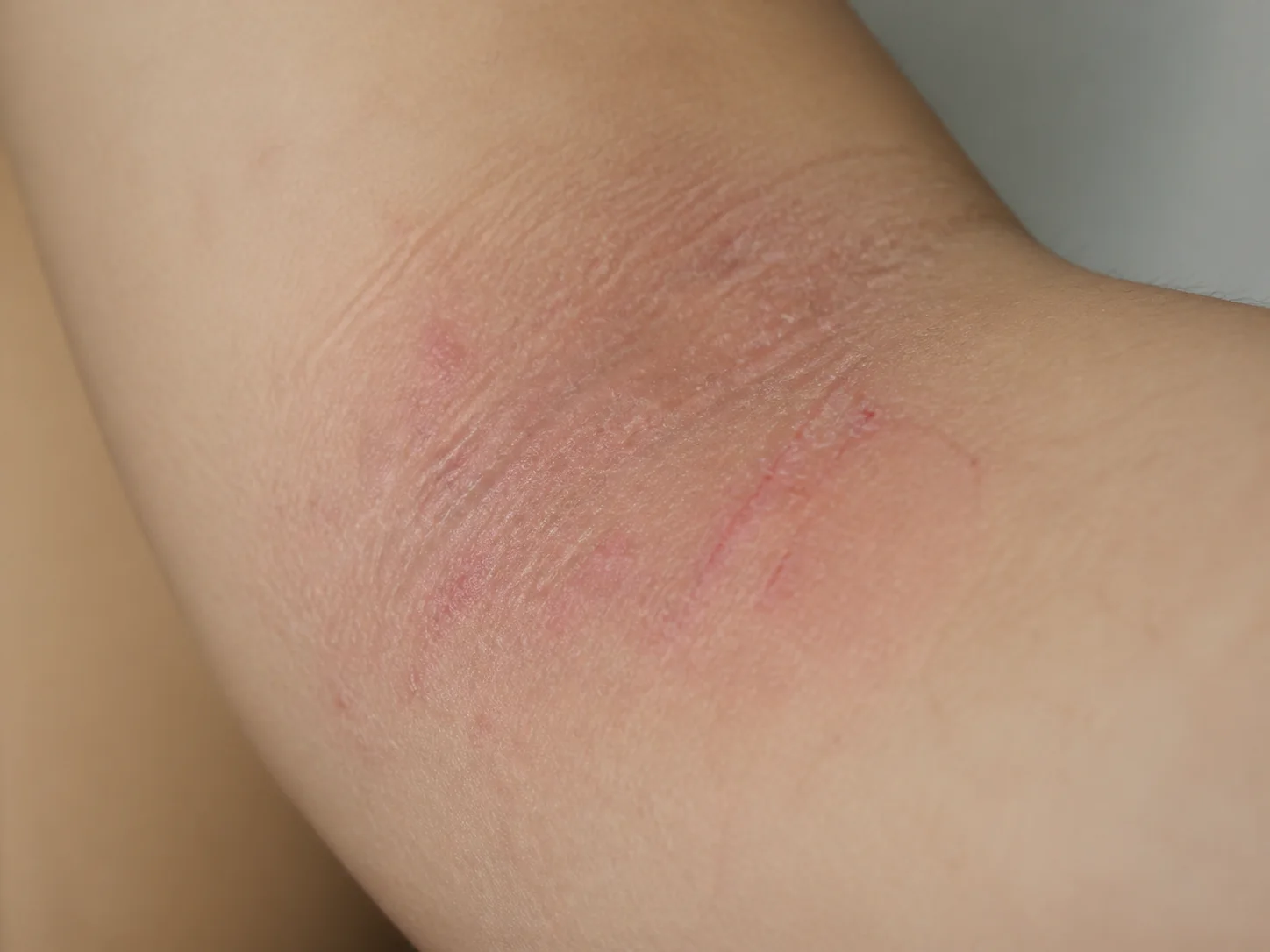
We examine dryness, fine flaking, skin texture, and scratch marks in the folding areas. Contact dermatitis or infections with similar appearances are distinguished through progress monitoring and examination.
Actual clinical photos and educational close-up examples are materials for comparing possible patterns and cannot be used for diagnosis alone. Mechanism diagrams have simplified complex processes.If these discomforts have recurred
To guardians worried about disrupted sleep, even more than their child's skin
If the child is comfortable for a few days after applying ointment, but scratches the flexural areas again after sweating, a cold, or fatigue skin barrierwe evaluate not only the itching but also sleep, body heat, digestion, and recovery speed according to the child's age.
Children who wake up frequently by scratching their elbows or behind their knees after falling asleep
prescription topical agentsWhen the condition improves upon applying the ointment, but the child scratches the same flexural areas again after pausing the ointment use
Children whose condition improves but recurs in the same spot after sweating, seasonal changes, or a cold
When the sleep of both the child and the guardian is disrupted due to itching
Guardians who wish to reorganize the history through photos and progress before attributing the cause to a single food item
When you want to lengthen the interval between recurrences after sweating, seasonal changes, a cold, or fatigue
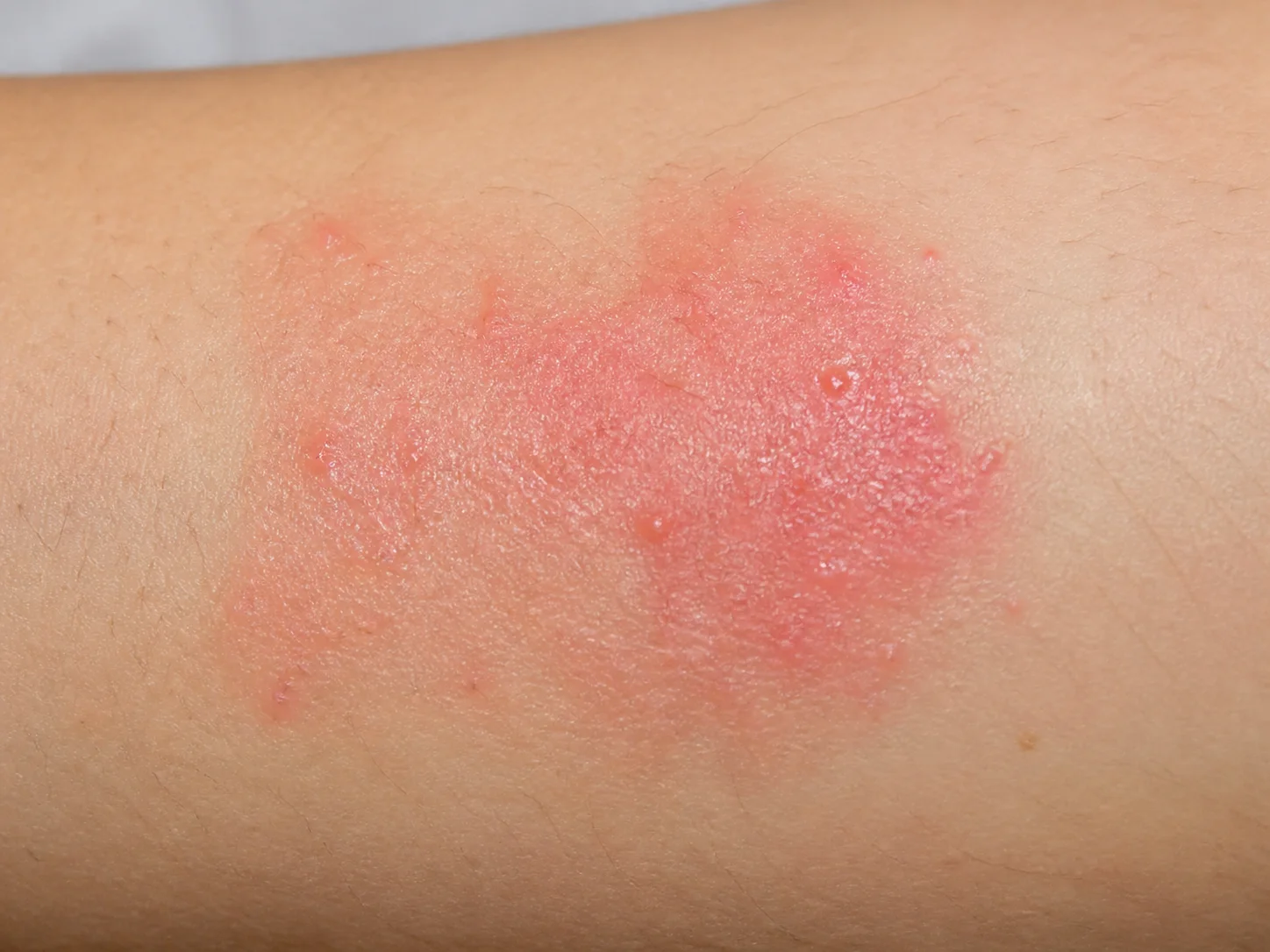
During the acute phase, not only redness but also small blisters, oozing, and peripheral scaling may be visible. If pus, heat, or pain overlap, we first check for infection.
Points to distinguish first
How to distinguish pediatric atopic dermatitis from similar-looking skin conditions
First, we check for the presence of pain, pus, heat, or clustered blisters
We first check for pain, heat sensation, oozing, pus, fever, clustered vesicles, and spreading around the eyes.
We examine where it occurred and how it recurred, along with the test results
We link photos, sleep patterns, exposure to irritants, and treatment response to the physical examination and selected test results.
We examine remaining itching, dryness, and sleep discomfort even after diagnosis and treatment
We track changes in itching, sleep, and daily functioning while maintaining dermatological treatment.
Why does it keep getting worse?
Why pediatric atopic dermatitis persists or recurs
During treatment, we check if waking up and scratching at night has decreased
We do not only compare skin color; we look at the frequency of scratching after falling asleep, new wounds in the morning, and changes in the child's concentration and mood the following day.
We examine oozing skin differently from skin that has become dry and thickened due to prolonged scratching.
When the skin is red and moist, we prioritize reducing heat and inflammation; when it has thickened from prolonged scratching, we prioritize hydration and barrier recovery.
We also observe whether the child's diet and energy levels change in tandem with the worsening of the skin.
We only increase the proportion of spleen-strengthening and recovery in the prescription when appetite, bowel movements, recovery after a cold, sweating, and skin deterioration actually fluctuate together.
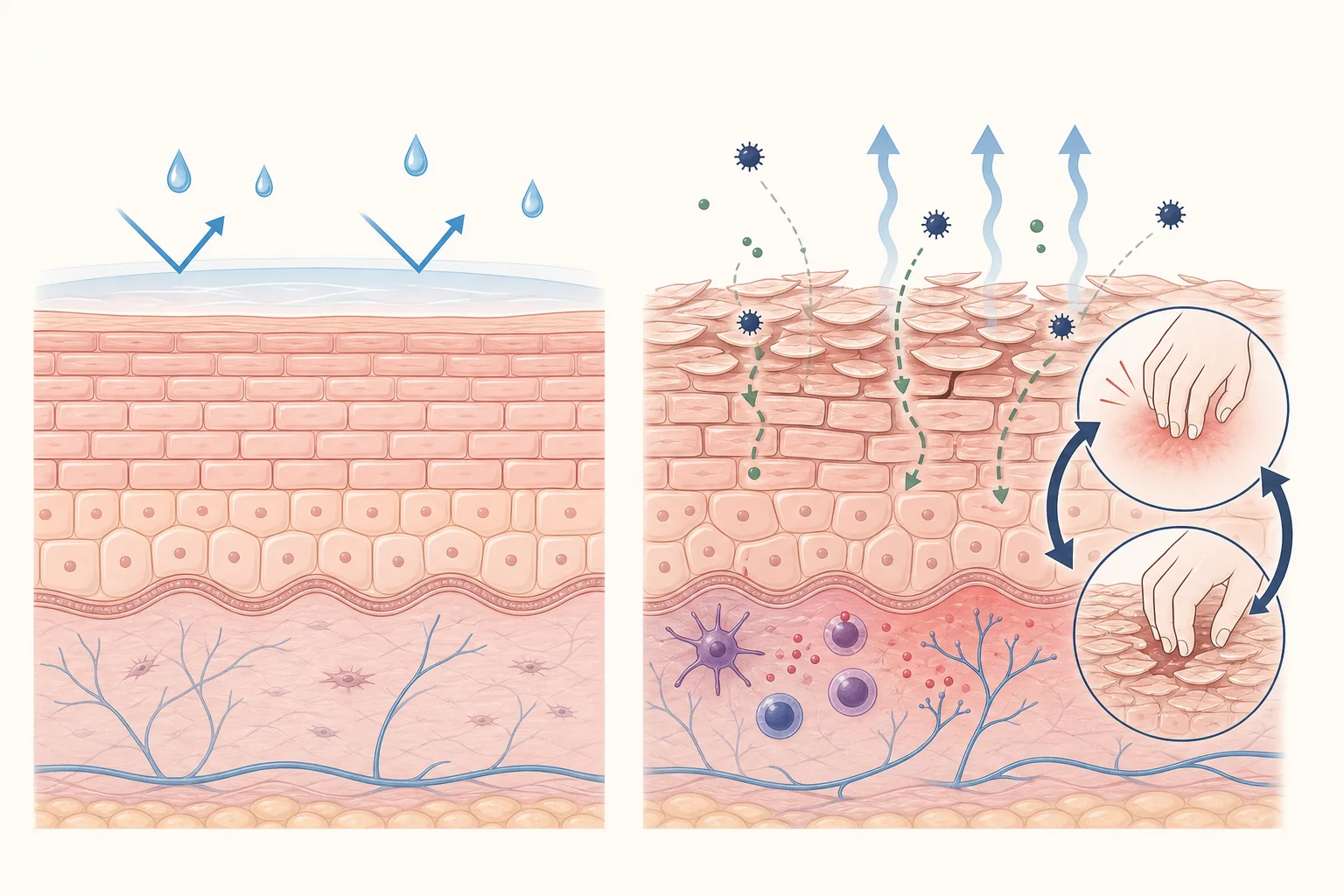
This is a simplified concept showing that when the barrier that retains moisture is disrupted, dryness and exposure to irritants increase, and itching and scratching can further damage the barrier.
Conceptual reference · NIAMS Atopic DermatitisThings to prepare before your visit
What photos and records should I prepare before the medical evaluation?
Please prepare photos of the skin during flare-ups and improvement, records of itching and sleep, family history of atopic dermatitis, exposure to irritants, and the moisturizers, external agents, and test results used.
Symptoms may begin on the face and torso.
In young infants, dry and red rashes on the cheeks, face, and torso may be noticed first.
As the child grows, skin folds become more prominent.
We check if the skin texture thickens due to repeated scratching in the crooks of the arms, behind the knees, and around the wrists and ankles.
Record scratching and sleep patterns rather than just skin color.
Even on days when redness is faint, if the child scratches in their sleep or if blood scabs increase, the condition may still be active.
Changes to monitor during treatment
What changes should I monitor during treatment?
Number of times awakened at night and new wounds in the morning
Please record when it started and how it has changed, including the dates. To make it easier to compare before and after, take photos of the same area from a similar distance and under similar lighting.
Photos of the same area during both good and bad periods
Please leave a brief note. Compare not only the visible changes but also whether your sleep, pain, and daily life have become less uncomfortable.
The timing relationship between sweating, bathing, moisturizing, colds, and skin deterioration
Please also include the dates of any medications, ointments, or procedures you are currently using. This makes it easier to compare what led to improvement or worsening.
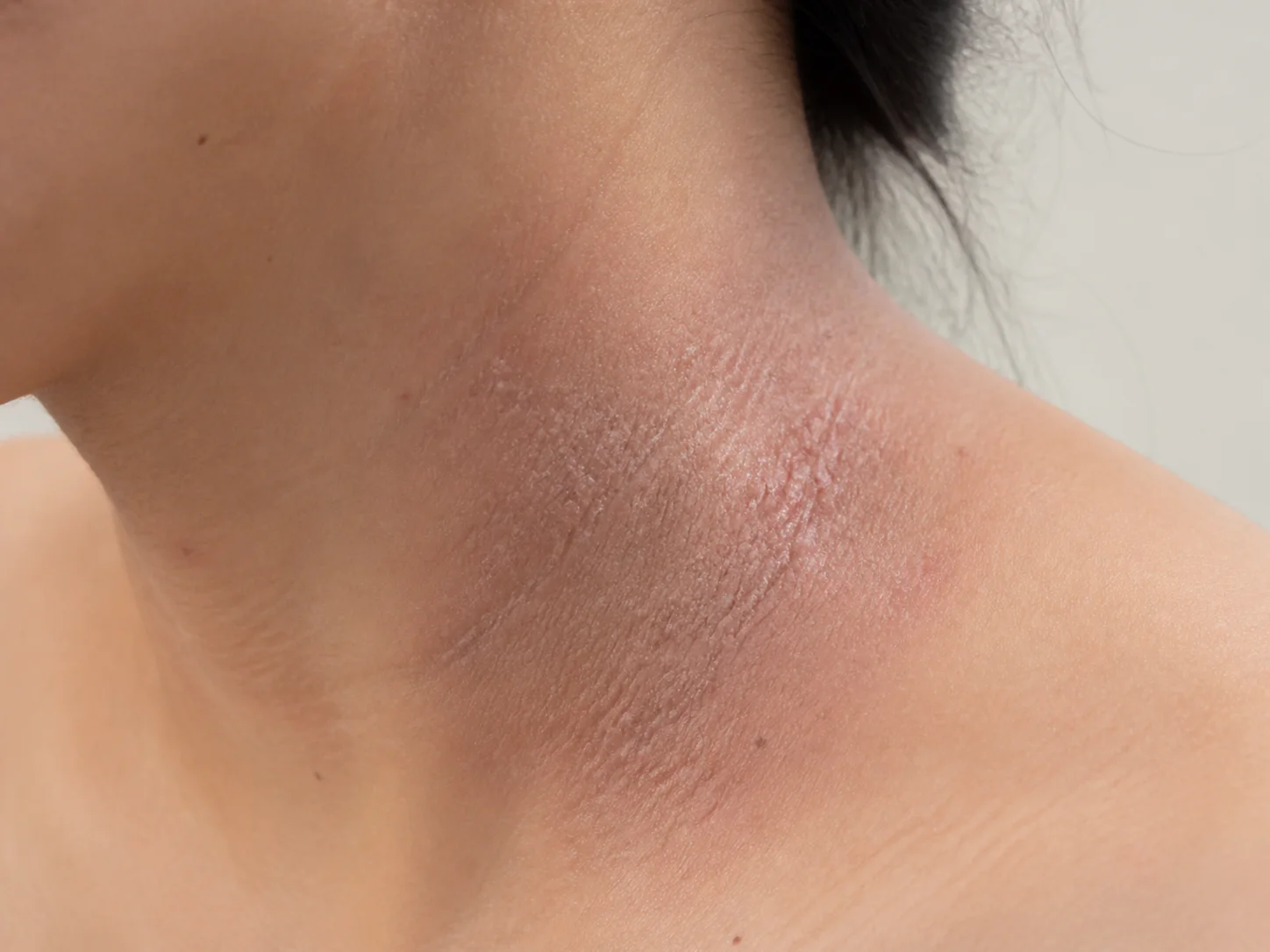
In adults, discoloration and lichenification (thickening of the skin) can remain in areas subject to frequent friction, such as the neck. We compare the surface of the lesion and the surrounding skin rather than the entire face.
When planning herbal medicine treatment
For pediatric atopic dermatitis, the direction of Korean herbal medicine treatment is determined based on the current prominent symptoms.
Even for the same case of pediatric atopic dermatitis, the direction of Korean herbal medicine treatment is decided by observing current skin changes and whether sleep, digestion, and fatigue change accordingly.
Pattern identification (Byeon-jeung) in Korean medicine is not about giving a different name to a disease. Multiple patterns can overlap in one person, and as the skin changes, for example, as oozing and heat decrease and dryness or cracking remain, the prescription is adjusted accordingly.
When redness, heat, oozing, and swelling are prominent
- Primary skin observations
- We observe the redness, heat, oozing, and the speed of spreading in the skin changes of pediatric atopic dermatitis.
- Overall body condition to check alongside skin
- We check if itching increases and sleep is disrupted after exposure to heat, sweat, or humid environments.
- Primary considerations for herbal medicine prescription
- We first reduce the burden of active inflammation, damp-heat, and intense itching.
When the skin is dry, thickened, and cracks even with minor irritation
- Primary skin observations
- We check if dead skin, lichenification, cracking, and discoloration persist for a long time, even if there is little discharge.
- Overall body condition to check alongside skin
- We ask about tightness after washing, nighttime itching, and whether wound healing is delayed.
- Primary considerations for herbal medicine prescription
- We increase the focus on nourishing the blood, moisturizing dryness, and restoring the skin barrier.
When swelling, dampness, digestive issues, and fatigue occur on the same day during activity
- Primary skin observations
- We check if blurred boundaries, damp dead skin, or swelling persist for a long time.
- Overall body condition to check alongside skin
- We check if bloating, loose stools, and heavy fatigue repeatedly overlap with the worsening of the skin.
- Primary considerations for herbal medicine prescription
- Rather than just drying the skin, we simultaneously look at the recovery of the spleen, stomach, and fluid metabolism.
When heat sensations and itching surge after tension or lack of sleep
- Primary skin observations
- Rather than the shape of skin changes, we look at the time of day when redness and scratching suddenly increase.
- Overall body condition to check alongside skin
- We check if feelings of oppression, upper body heat, and poor sleep start before the skin symptoms.
- Primary considerations for herbal medicine prescription
- We add a focus on regulating body heat and tension responses to reduce the extent of worsening and the delay in recovery.
How is the herbal medicine prescription adjusted?
- We first examine the symptoms that are currently most uncomfortable
Childhood atopic dermatitis is not diagnosed by a single photograph or a single allergy test. In infancy, it may appear on the face and torso, and as the child grows, it often becomes prominent in flexural areas such as the elbow and knee creases; therefore, the age of onset, recurring locations, nighttime itching, and family history of atopy are all considered. If there is pain, oozing, pus, or fever at the site of scratch wounds, infection is checked first.
- We also ask about changes in your overall body condition that occurred on the same day as the skin changes
When the skin is red and moist, we prioritize reducing heat and inflammation; when it has thickened from prolonged scratching, we prioritize hydration and barrier recovery.
- We adjust the prescription at the next visit according to the changes in symptoms
We monitor whether the number of nights the child sleeps through without scratching increases, whether new wounds and oozing decrease, and whether the interval before skin folds become rough again lengthens.
When should I consider Korean herbal medicine treatment?
- When the skin improves with prescribed topical medication but the child scratches the same skin folds again after pausing the medication
- When itching disrupts the sleep of both the child and the guardian
- When you wish to extend the interval between recurrences triggered by sweating, seasons, colds, or fatigue
What will be asked during the medical evaluation?
- Number of times awakened at night and new wounds in the morning
- Photos of the same area during both good and bad periods
- The timing relationship between sweating, bathing, moisturizing, colds, and skin deterioration
Things to prepare before the consultationPlease prepare photos of the skin during flare-ups and improvement, records of itching and sleep, family history of atopic dermatitis, exposure to irritants, and the moisturizers, external agents, and test results used.
If pus, pain, or redness spreads rapidly, or if you have a fever, lesions inside the eyes or mouth, shortness of breath, or sudden facial swelling, please visit a dermatology clinic or seek emergency care first. After confirming that such urgent situations are not present, Baekrokdam provides herbal medicine treatment for chronic and recurring skin diseases.
Consult about the progress of childhood atopic dermatitisFrequently Asked Questions
Frequently Asked Questions about Childhood Atopic Dermatitis
Which test is used to confirm a diagnosis of atopic dermatitis?
Diagnosis is generally made by synthesizing the appearance and distribution of the skin, the pattern of itching and recurrence, and the patient's medical history. There is no single blood test for confirmation.
Can I come for a consultation on a day when my skin looks better?
Yes, you can. It is helpful to prepare photos from when the condition was severe, as well as records of when it started and recurred, itching and sleep patterns, and your response to treatment.
When is a skin biopsy performed?
Medical staff may choose a biopsy when the appearance of the skin is atypical or when other skin diseases need to be ruled out.
Should I stop using ointment before atopic dermatitis tests?
Do not stop using it on your own. Inform the clinic of the name, application area, and duration of the topical agents used, and follow the specific instructions of the testing institution.
Should I continue applying moisturizer for atopic dermatitis even after the skin improves?
Yes. Even if the skin appears less dry, consistent use helps manage the skin barrier and the interval between recurrences.
How long should I apply topical steroids?
This varies depending on the area, the strength of the product, and the severity of the condition. Follow the prescribed amount and duration, and do not increase or stop the treatment on your own.
When should phototherapy or systemic treatment be considered?
A dermatologist will review these options if the condition persists extensively despite sufficient moisturizing and topical treatment, or if there is significant impairment to sleep, school, or work.
References and update date
Doctor of Korean Medicine Choi Yeon-seung verified the content based on the official and professional materials below and updated it on 2026-08-23.
- American Academy of Dermatology, Atopic dermatitis diagnosis and treatmentThe role of skin examination, symptom inquiry, and selective skin biopsy
- NIAMS, Atopic Dermatitis: Diagnosis, Treatment, and Steps to TakeMedical history, exposure to irritants, skin examination, and selective blood or tissue biopsies
- NHS, Atopic eczemaContinuous moisturizing, local steroids, and symptoms suspected to be infection or pompholyx (dyshidrotic eczema)
- AAD, Atopic dermatitis symptomsItching, dryness, scaling, oozing, and chronic thickening, differences by adult distribution and skin tone, and symptoms suspected to be skin infection
- NIAMS, Atopic DermatitisUnknown causes, the complex interaction of skin barrier, immune, genetic, and environmental factors, and the itch-scratch-damage cycle