Changes in Hands, Feet, and Nails
Distinguishing Psoriasis, Dyshidrosis, and Athlete's Foot When Hands and Feet Crack and Nails Change
Take full shots of both hands and both feet, and close-up shots of blisters or cracking Take a close-up shot, and photograph 4 or more fingernails and toenails under the same lighting.
Click on unfamiliar terms to see their meanings immediately.
Psoriasis of the palms and soles is characterized by thick plaques with distinct borders and deep cracks, while nail psoriasis is indicated by pitted nails, oil-drop discoloration, and nail lifting. Small, deep blisters are characteristic of pompholyx, and fine Keratinscaling that is more dominant on one side may suggest a fungal infection such as athlete's foot.
Points to check in the photos first
Even if they look similar, the dead skin, blisters, and borders may differ
We have provided both typical appearances and examples that look slightly different. Do not decide based on a single similar photo; compare how long symptoms like dead skin, wheals, comedones, or oozing have persisted in the same area.
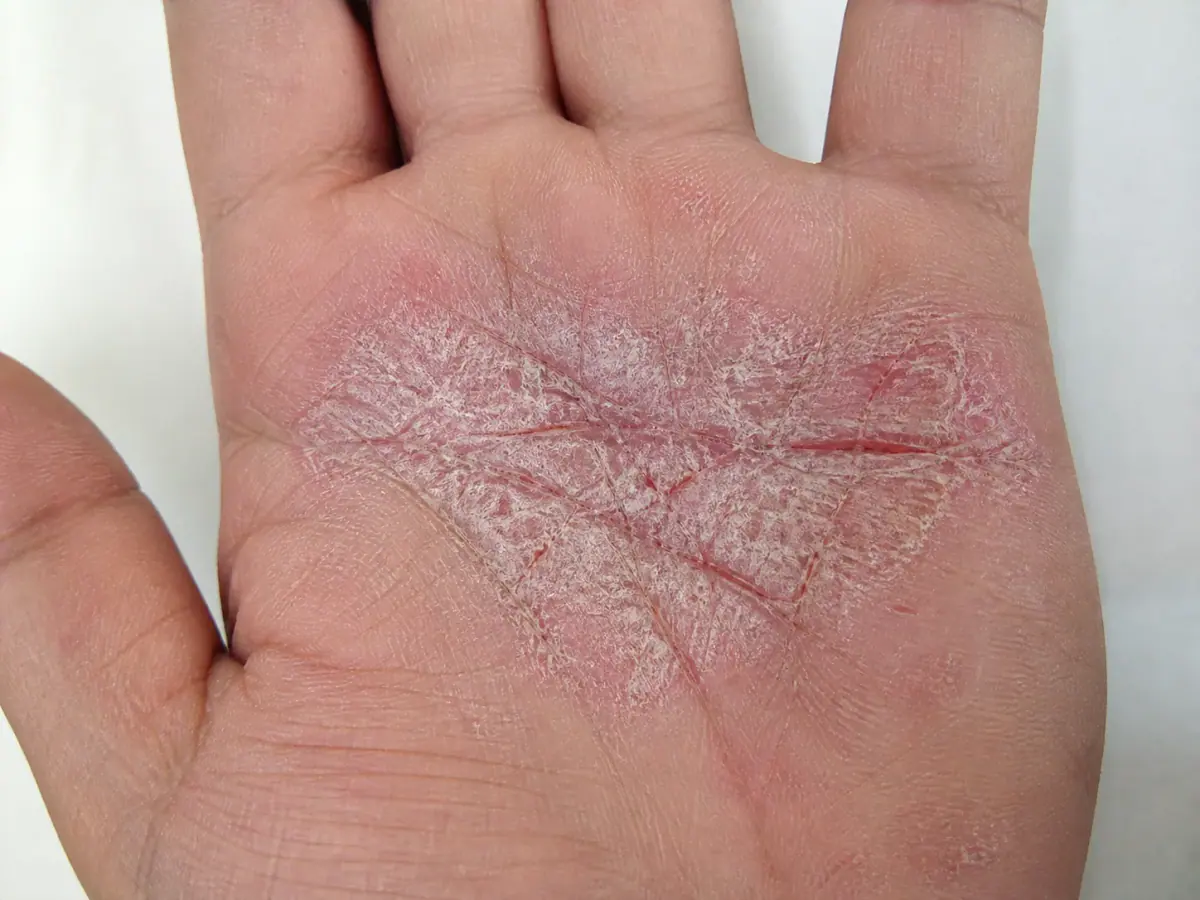
Palmoplantar psoriasis significantly interferes with walking, gripping, and working with water, even if the affected area is small. We compare bilateral distribution, fungal tests, and nail clues with hand eczema and tinea manuum.
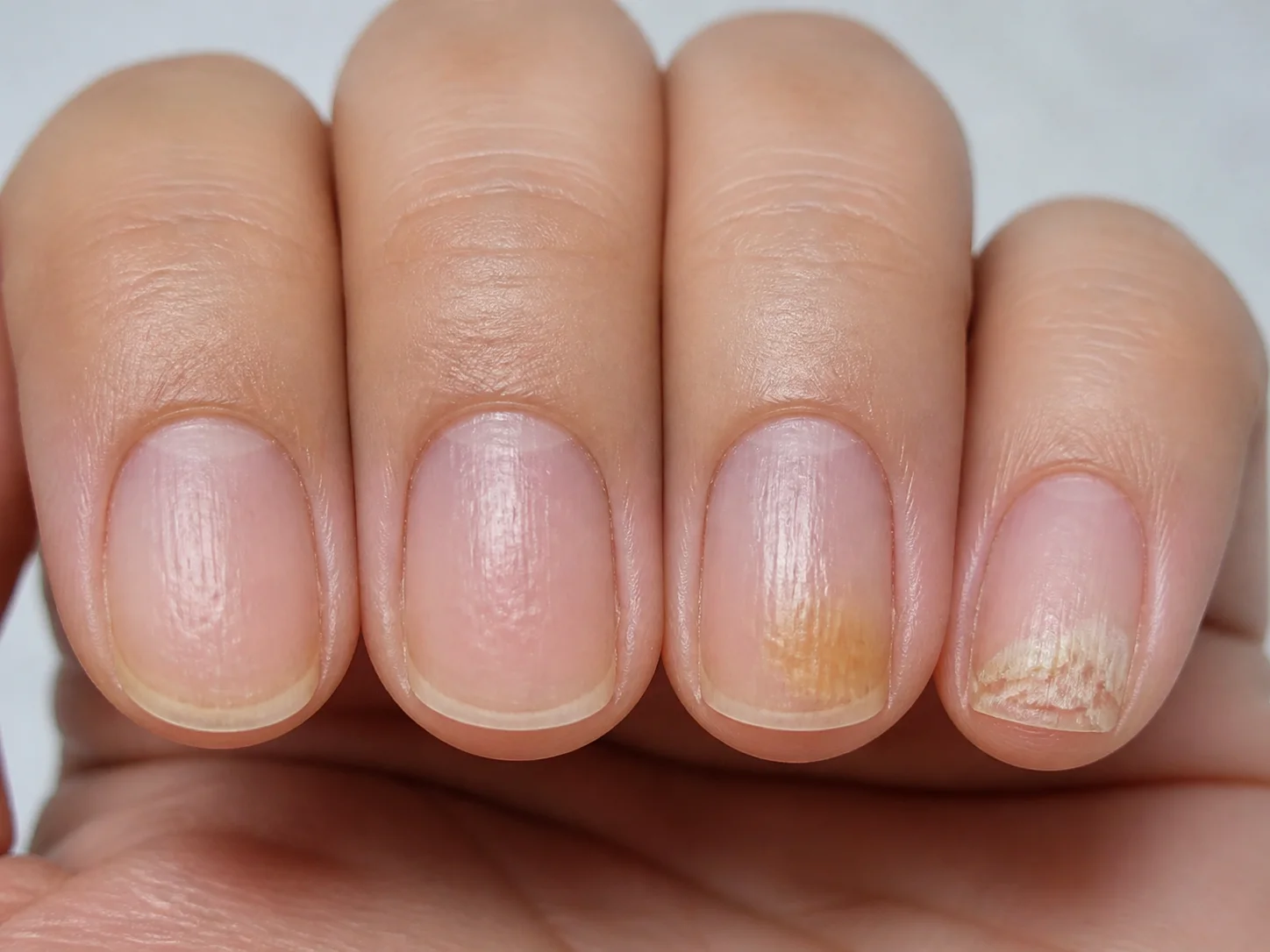
Pitting, oil-drop discoloration, and lifting are clues for nail psoriasis, but fungal infections and trauma can appear similar. Joint pain and swelling are also checked.
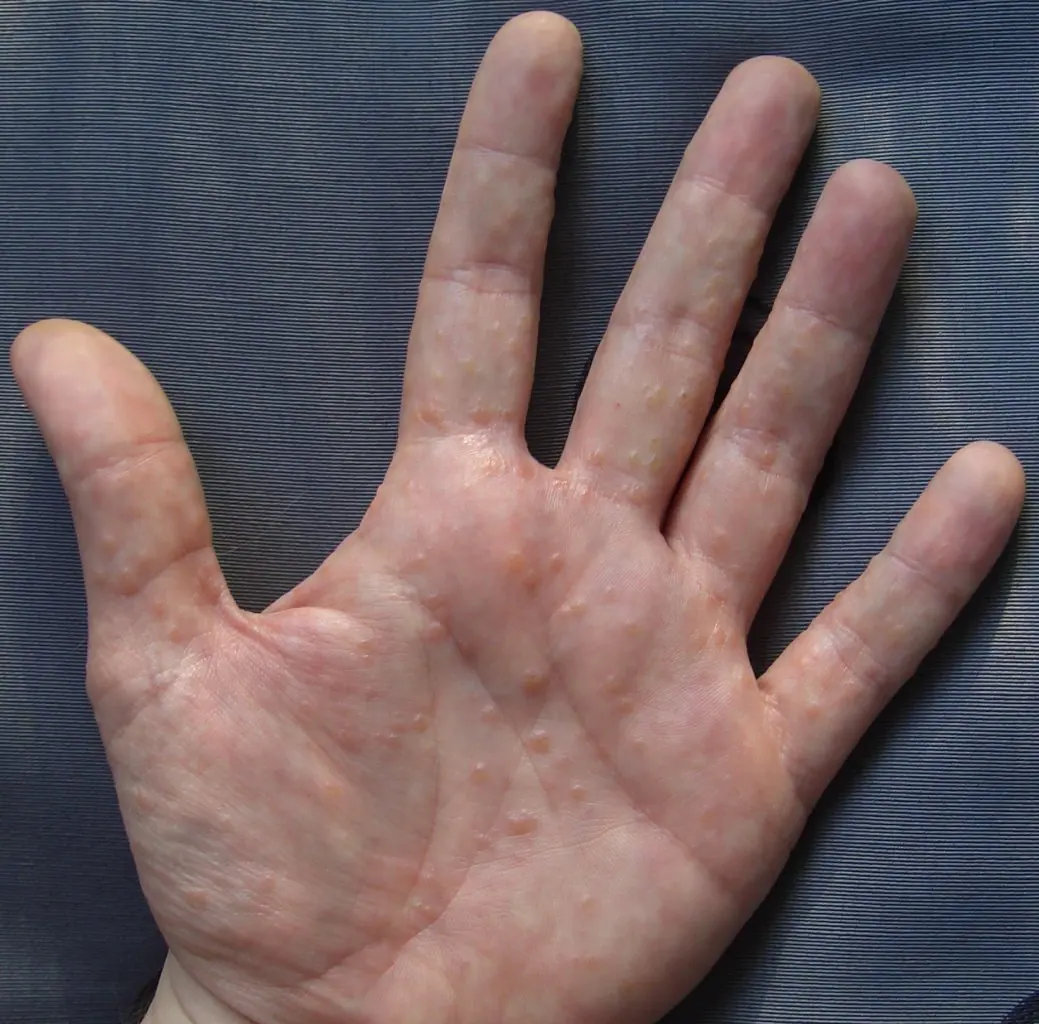
Palms, sides of fingers, small and deep blisters, itching. Differentiate from athlete's foot and contact dermatitis
Photo: Inwe~commonswiki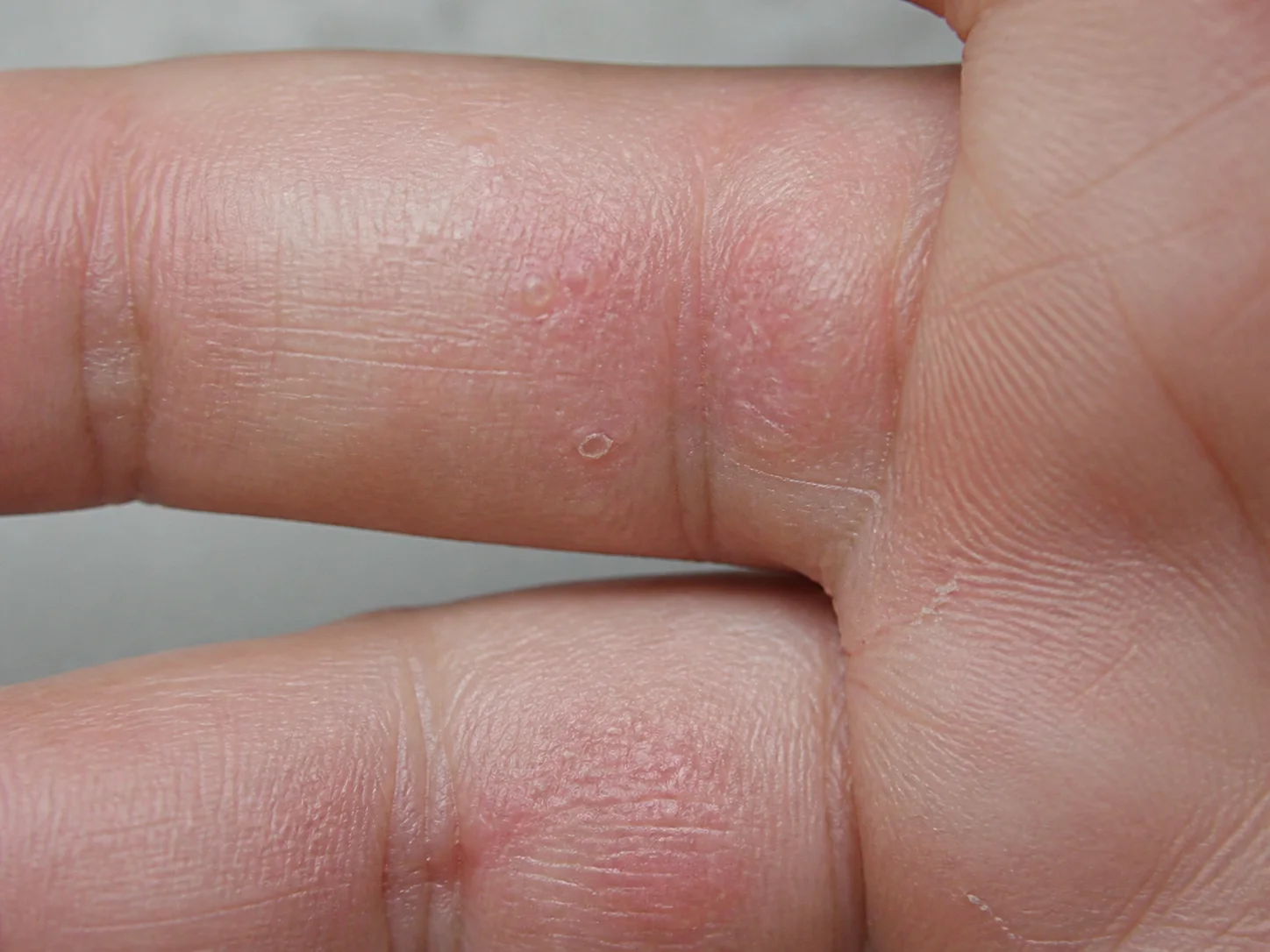
Small, deep blisters on the sides of the fingers or palms are important clues for pompholyx. Since it can overlap with athlete's foot or contact dermatitis, we examine whether it is severe on only one side and consider exposure factors.
| Points to check | Palm, Sole, and Nail Psoriasis | Dyshidrosis | Hand and Foot Fungus (Athlete's Foot) |
|---|---|---|---|
| Skin | Symmetrical thick scaly plaques with distinct borders, cracks in pressure areas | Small, deep blisters followed by peeling on the sides of fingers, palms, or soles | Fine scaling on one hand or sole, maceration between toes |
| Fingernails and toenails | Pitting, oil-drop discoloration, lifting, and crumbling | Possible changes around the nails following repeated inflammation | Thickening, discoloration, and crumbling; fungal confirmation required |
| Areas to examine together | Scalp, elbows, knees, joints | Sweat, nickel, season, stress | Athlete's foot and one hand, family or shared environments |
| Verification | Examination, differentiation from nail fungal infection | Check lesion stage and exposure | Consider skin and nail fungal tests |
Compare the appearance of multiple nails rather than just one
Psoriatic pitting and oil-drop discoloration can overlap with fungal thickening, and both conditions may coexist. We examine the onset time for each nail along with any areas of skin psoriasis.
Ask whether blisters or thick plaques appeared first
Dyshidrosis is characterized by cycles of small, deep blisters and peeling, whereas palmoplantar psoriasis often centers on thick plaques with distinct borders and recurrent cracking.
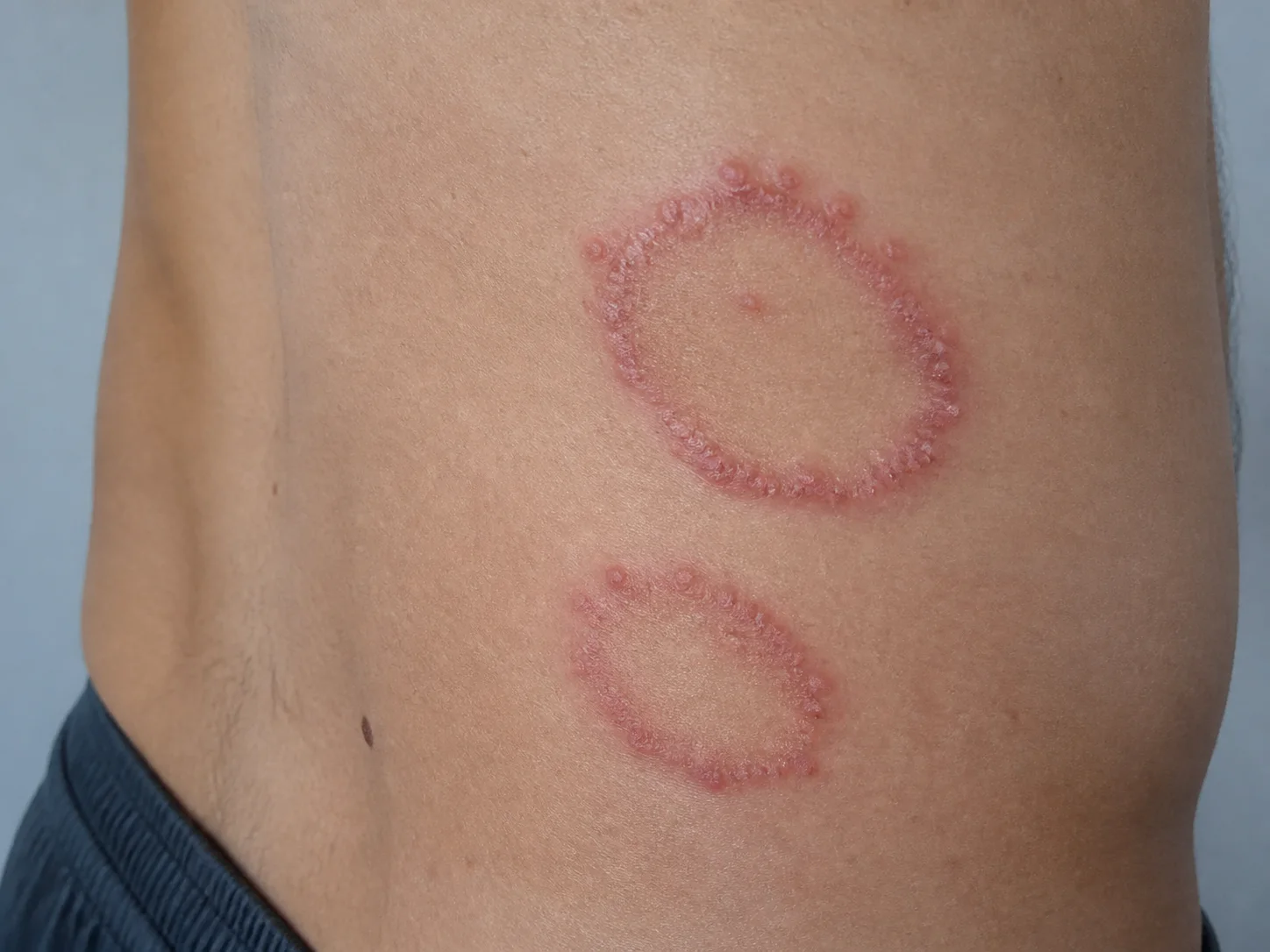
Tinea corporis is characterized by a ring-shaped pattern where redness and scaling are more active on the outer edge than in the center. We confirm the need for infection treatment after differentiating it from nummular eczema or pityriasis rosea.
Check for pain and joint mobility
Pain from cracking when walking, limitations in hand use, morning finger stiffness, and joint swelling may increase treatment priority more than the surface area shown in photos.
Please take photos of both hands, both feet, and multiple nails
Please note whether blisters or cracking occurred first, and if you have athlete's foot, scalp scaling, or joint pain. For nails, do not just zoom in on one; take photos where multiple nails are visible together.
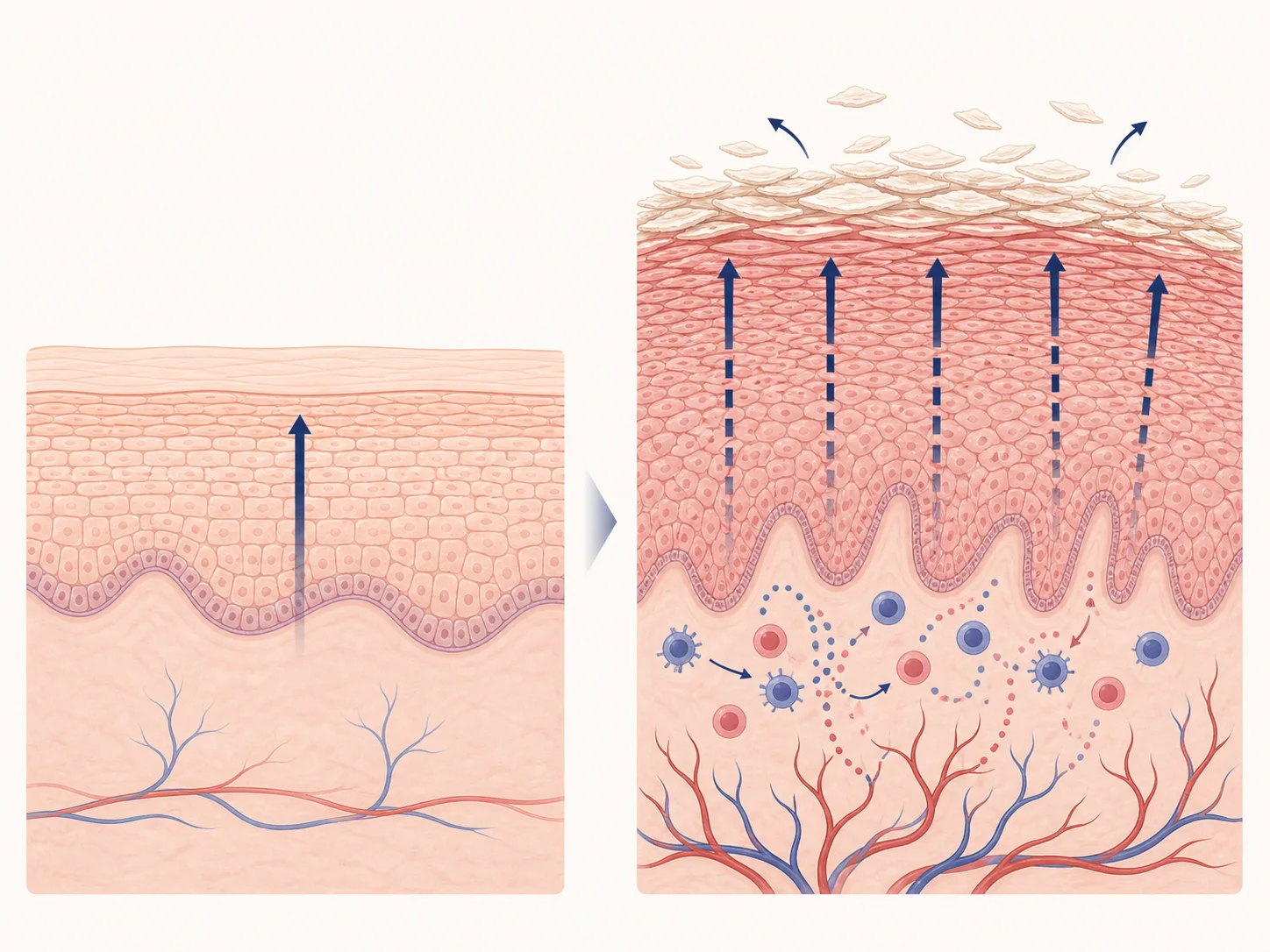
This is a simplified concept showing how overactivation of the immune system contributes to the rapid increase of skin cells, inflammation, and the accumulation of scales.
Please note if both sides are similar, whether blisters or cracking came first, and any changes in multiple nails, athlete's foot, the scalp, or joints.
Next reading
Content to follow
Can cracking of the palms and soles or pitting of the nails be psoriasis?
How is psoriasis distinguished from pompholyx or athlete's foot in terms of tests and appearance?
What is the goal of Korean herbal medicine treatment for psoriasis that interferes with hand and foot function?
Skin terms used in this differential guide
When herbal medicine treatment is the primary focus
We set the goals for herbal medicine treatment based on your previous treatments and when symptoms recurred
Psoriasis can follow a chronic course where skin changes improve and then worsen again, and the burden varies by area, such as the scalp, nails, or skin folds. While continuing existing treatments, herbal medicine treatment can become the primary focus to manage the recurring patterns and overall systemic condition together.
We ask where it appeared and when it worsened again
We examine the redness and thickness of the scales, the distribution of skin changes, sensations of heat or dryness, and symptoms related to sleep, digestion, fatigue, and joints.
We check if not only the itching, but also sleep and daily life are improving
We compare the occurrence of new skin changes, scaling and cracking, nail changes, joint discomfort, and daily functional abilities.
We set the goals for herbal medicine treatment by identifying the problems that need to be resolved first
If there are causes that require immediate priority, such as infection or rapid worsening, those treatments come first. Subsequently, for herbal medicine treatment, we determine the primary goal of recovery by examining current discomfort, recurring patterns, sleep, digestion, and fatigue, and coordinate the sequence with necessary dermatological treatments.
While reducing aggravating factors through lifestyle management, herbal medicine treatment determines the initial target by analyzing the pattern of lesions, sleep, digestion, and fatigue through pattern identification (Byeonjeung). Necessary skin treatments are continued in accordance with the progress.
Consult about treatmentEvidence and Update Information
This content was organized by Korean medicine doctor Choi Yeon-seung and updated on 2026-08-23.
- DermNet, Nail psoriasis
- DermNet, Psoriasis of the palms and soles
- American Academy of Dermatology, Psoriasis: Signs and symptomsPlaque, guttate, pustular, and erythrodermic psoriasis, and nail/joint symptoms