Small rashes spread across the torso
Sudden Rashes on the Torso: How to Distinguish Guttate Psoriasis, Pityriasis Rosea, and Tinea Corporis?
The very first Lesion Keep a close-up photo of a single lesion, photos of the overall distribution on the torso, and a record of when any sore throat, medication use, or skin changes in family members or pets occurred.
Click on unfamiliar terms to see their meanings immediately.
small and thin scalesGuttate psoriasis, where small rashes spread all at once; Pityriasis rosea, where multiple patches extend along skin lines after a large primary plaque; and Tinea, where active edges expand outward, all have different sequences between the first lesion and the subsequent spread.
Points to check in the photos first
Even if they look similar, the dead skin, blisters, and borders may differ
We have provided both typical appearances and examples that look slightly different. Do not decide based on a single similar photo; compare how long symptoms like dead skin, wheals, comedones, or oozing have persisted in the same area.
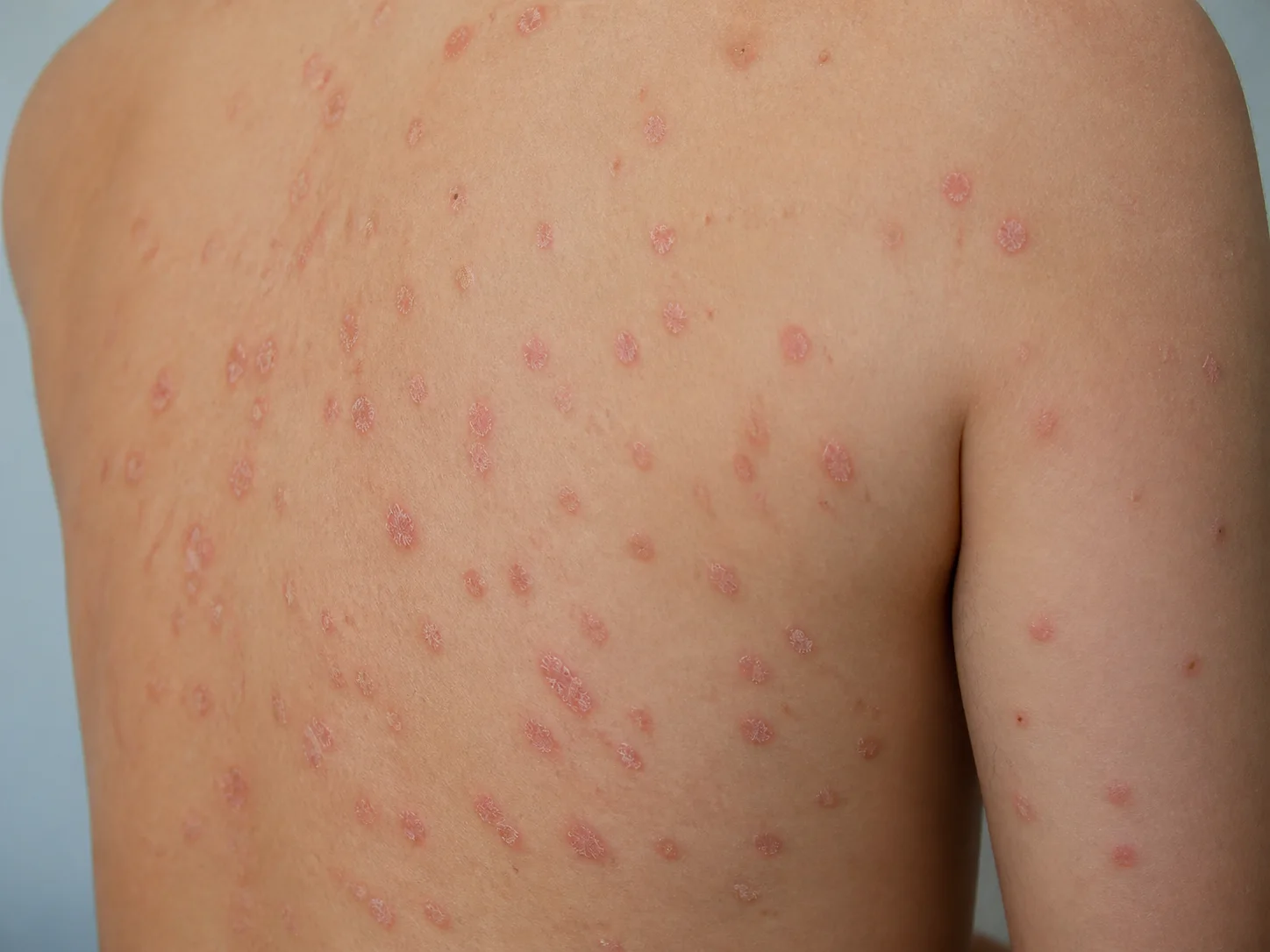
This pattern involves the sudden appearance of many small, thin lesions rather than large plaques. We screen for the onset after an infection as well as other systemic rashes such as pityriasis rosea or drug eruptions.
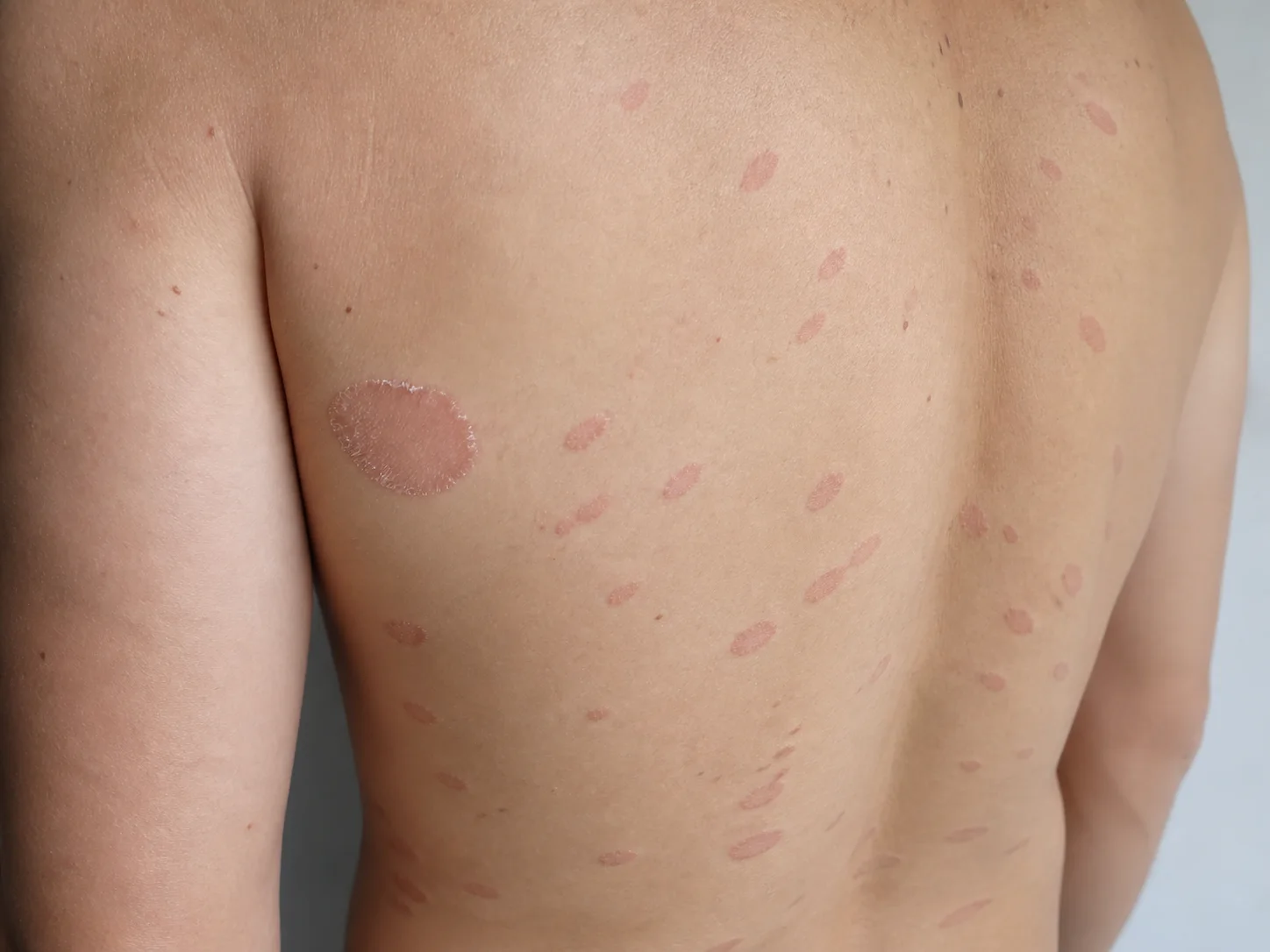
In pityriasis rosea, oval spots may spread along the skin lines of the torso. Since it can look similar to tinea, drug eruptions, or psoriasis, we also examine the order in which the spots appeared.
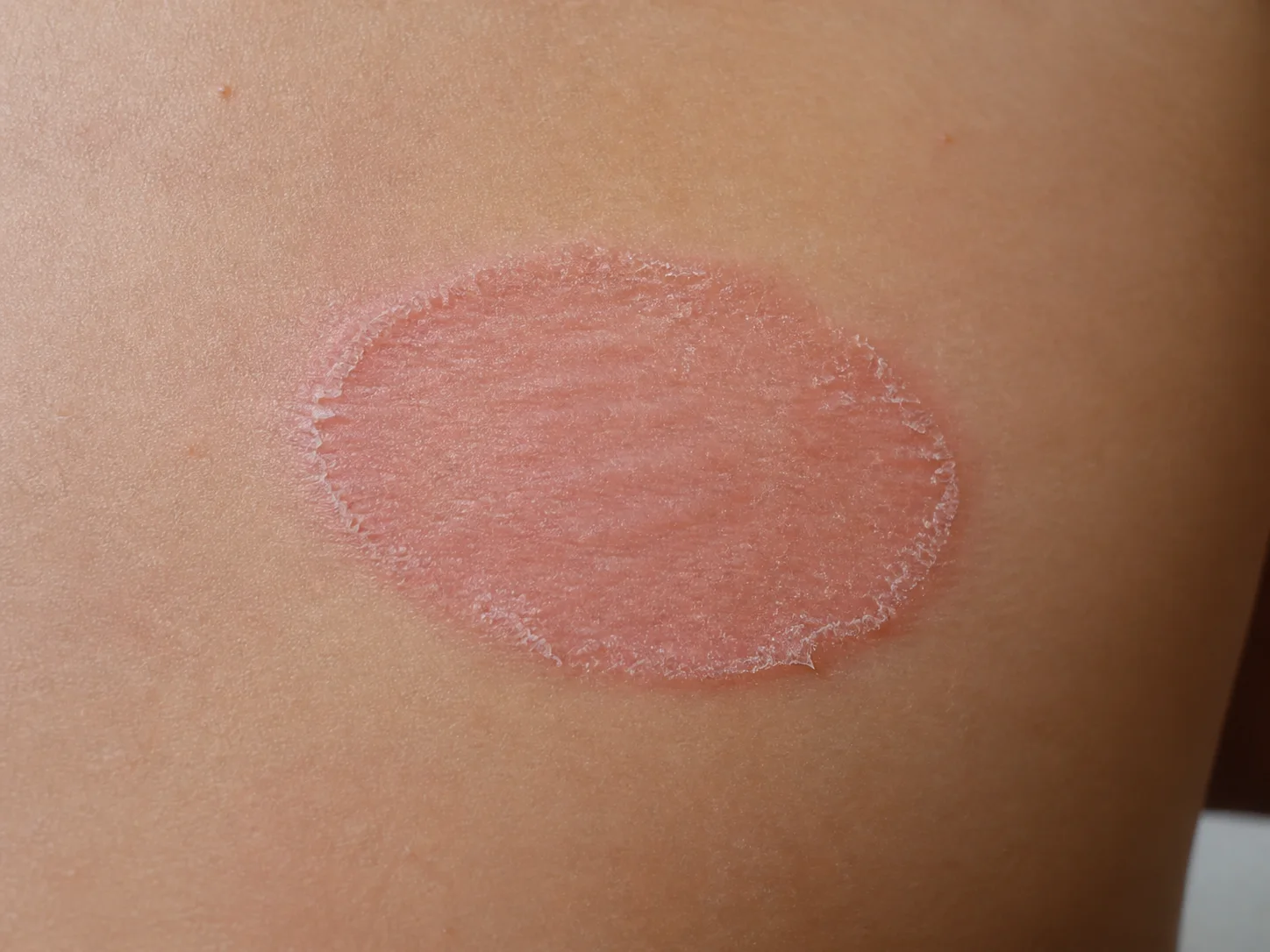
The progression where a large herald patch appears a few days before other spots serves as a clue. Please record the order in which they first appeared rather than providing a single photo.
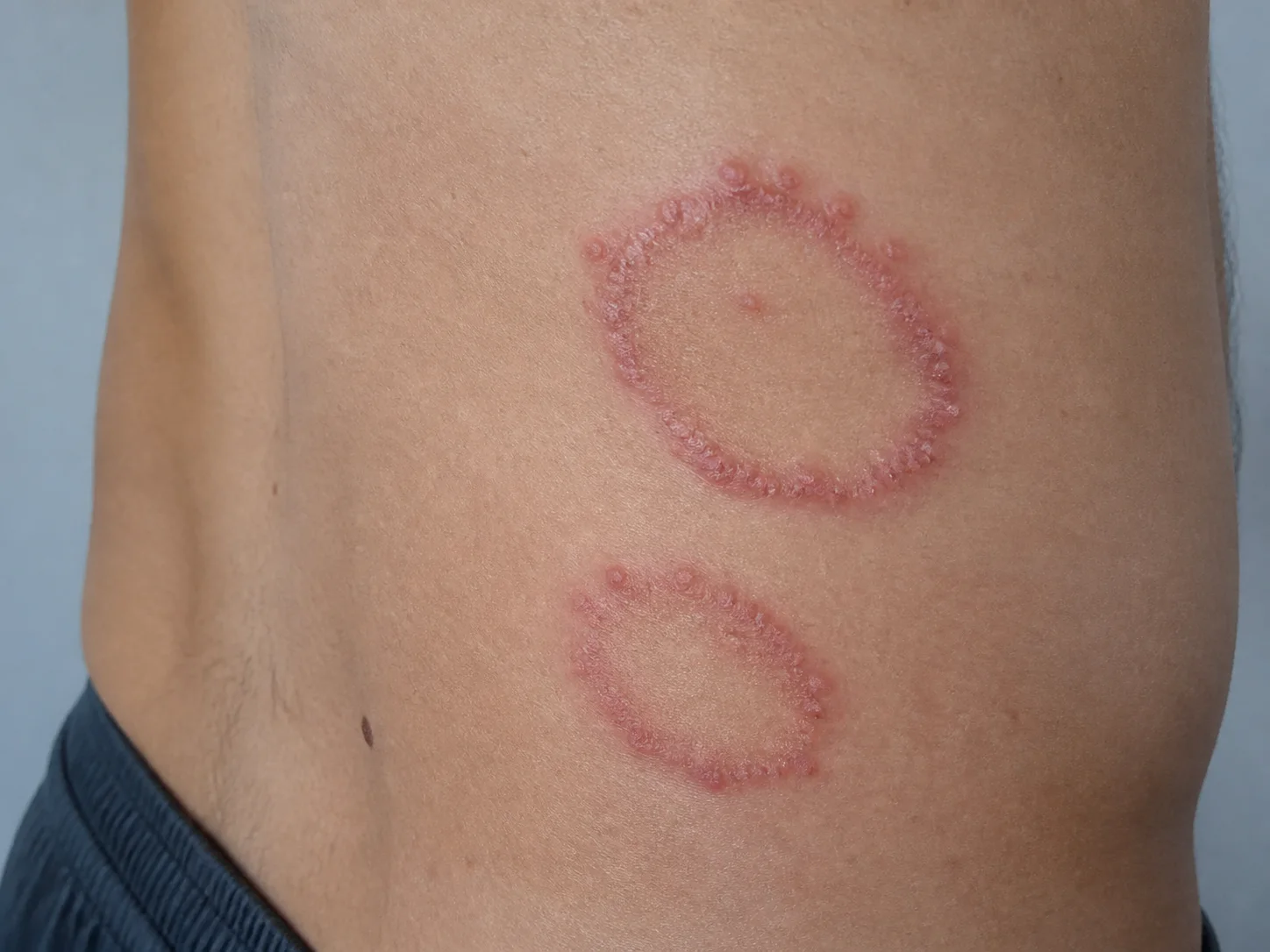
Tinea corporis is characterized by a ring-shaped pattern where redness and scaling are more active on the outer edge than in the center. We confirm the need for infection treatment after differentiating it from nummular eczema or pityriasis rosea.
| Points to check | Guttate Psoriasis | Pityriasis rosea | Tinea corporis |
|---|---|---|---|
| Onset and Distribution | Numerous small drop-shaped lesions suddenly appear on the torso and limbs | Multiple plaques following the skin lines of the torso after a large primary plaque | One or more rings gradually expanding outward |
| Scales | Thin scales on top of each small lesion | Possible thin scales in a ring shape facing inward | Active scaling at the edges, while the center may be relatively faint |
| Prior Clues | May occur after a throat infection, but not always | Interval between the first large spot and the subsequent spread | Contact with family, pets, or gym facilities; dominance on one side |
| Verification | History of psoriasis, nail changes, or throat symptoms | Differential diagnosis of atypical rashes such as drug eruptions or syphilis | Skin scraping for bacterial culture test if necessary |
Look for the first lesion that appeared, rather than the largest one
The herald patch of pityriasis rosea, the initial ring of tinea, or guttate psoriasis that appears suddenly in multiple spots, the chronological order is a crucial clue. Photos with dates are helpful.
Observe the overall body distribution and the border of a single lesion separately
Full-body shots show skin texture and symmetry, while close-up shots show whether scaling is inside the plaque or on the outer edge. Both photos must be viewed together to properly compare the shapes.
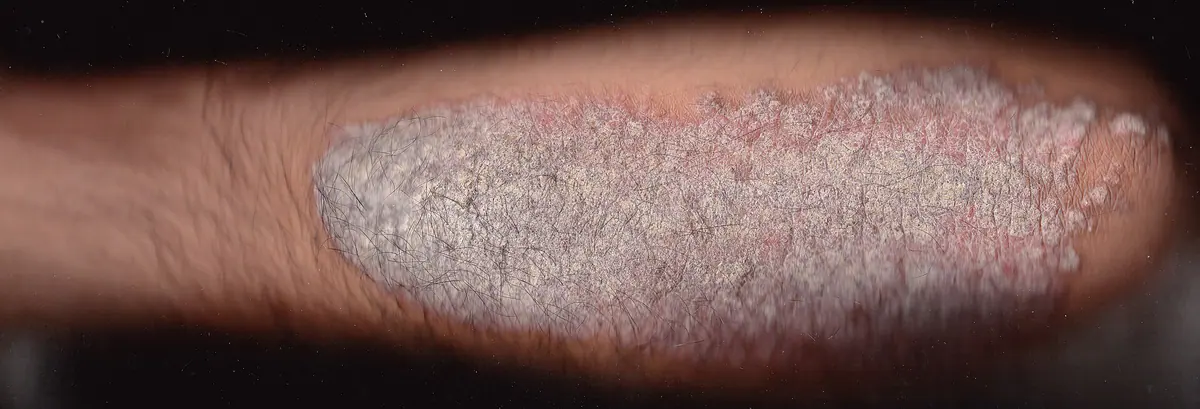
Distinct borders · Thick scales · Plaque-like shape. Comparison of nail and joint symptoms with chronic eczema
Photo: MediaJetSeek medical evaluation again if it spreads to the palms, soles, or inside the mouth, or if you have fever and pain
If changes occur on the palms, soles, or inside the mouth, or if the rash spreads across the body after taking new medication, or if there is fever or pain, it is necessary to check for other infections, drug eruptions, or inflammatory diseases. Please seek medical evaluation again if the condition lasts longer than expected.
Please take photos of the first spot that appeared and the entire torso
Please take photos of the date the first spot appeared, the order in which it spread across the torso, and the edges of the rings. Also, please note any recent sore throats, medications taken, and any skin changes in family members or pets.
Organize the date of the first lesion, the overall body distribution, the border of a single lesion, and recent throat symptoms, medications, and contact history.
Next reading
Content to follow
If small red dots spread across the torso after an infection, is it guttate psoriasis?
How do you distinguish it from pityriasis rosea and tinea (ringworm)?
How does Korean herbal medicine treatment view a course where symptoms spread suddenly and then recur?
Skin terms used in this differential guide
When herbal medicine treatment is the primary focus
We set the goals for herbal medicine treatment based on your previous treatments and when symptoms recurred
Psoriasis can follow a chronic course where skin changes improve and then worsen again, and the burden varies by area, such as the scalp, nails, or skin folds. While continuing existing treatments, herbal medicine treatment can become the primary focus to manage the recurring patterns and overall systemic condition together.
We ask where it appeared and when it worsened again
We examine the redness and thickness of the scales, the distribution of skin changes, sensations of heat or dryness, and symptoms related to sleep, digestion, fatigue, and joints.
We check if not only the itching, but also sleep and daily life are improving
We compare the occurrence of new skin changes, scaling and cracking, nail changes, joint discomfort, and daily functional abilities.
We set the goals for herbal medicine treatment by identifying the problems that need to be resolved first
If there are causes that require immediate priority, such as infection or rapid worsening, those treatments come first. Subsequently, for herbal medicine treatment, we determine the primary goal of recovery by examining current discomfort, recurring patterns, sleep, digestion, and fatigue, and coordinate the sequence with necessary dermatological treatments.
While reducing aggravating factors through lifestyle management, herbal medicine treatment determines the initial target by analyzing the pattern of lesions, sleep, digestion, and fatigue through pattern identification (Byeonjeung). Necessary skin treatments are continued in accordance with the progress.
Consult about treatmentEvidence and Update Information
This content was organized by Korean medicine doctor Choi Yeon-seung and updated on 2026-08-23.
- DermNet, Guttate psoriasis
- DermNet, Psoriasis
- American Academy of Dermatology, Psoriasis: Signs and symptomsPlaque, guttate, pustular, and erythrodermic psoriasis, and nail/joint symptoms