Chronic recurrent pompholyx: Start with the topics you are curious about
Points to check first
Chronic recurrent pompholyx: Symptoms and when to seek prompt medical evaluation
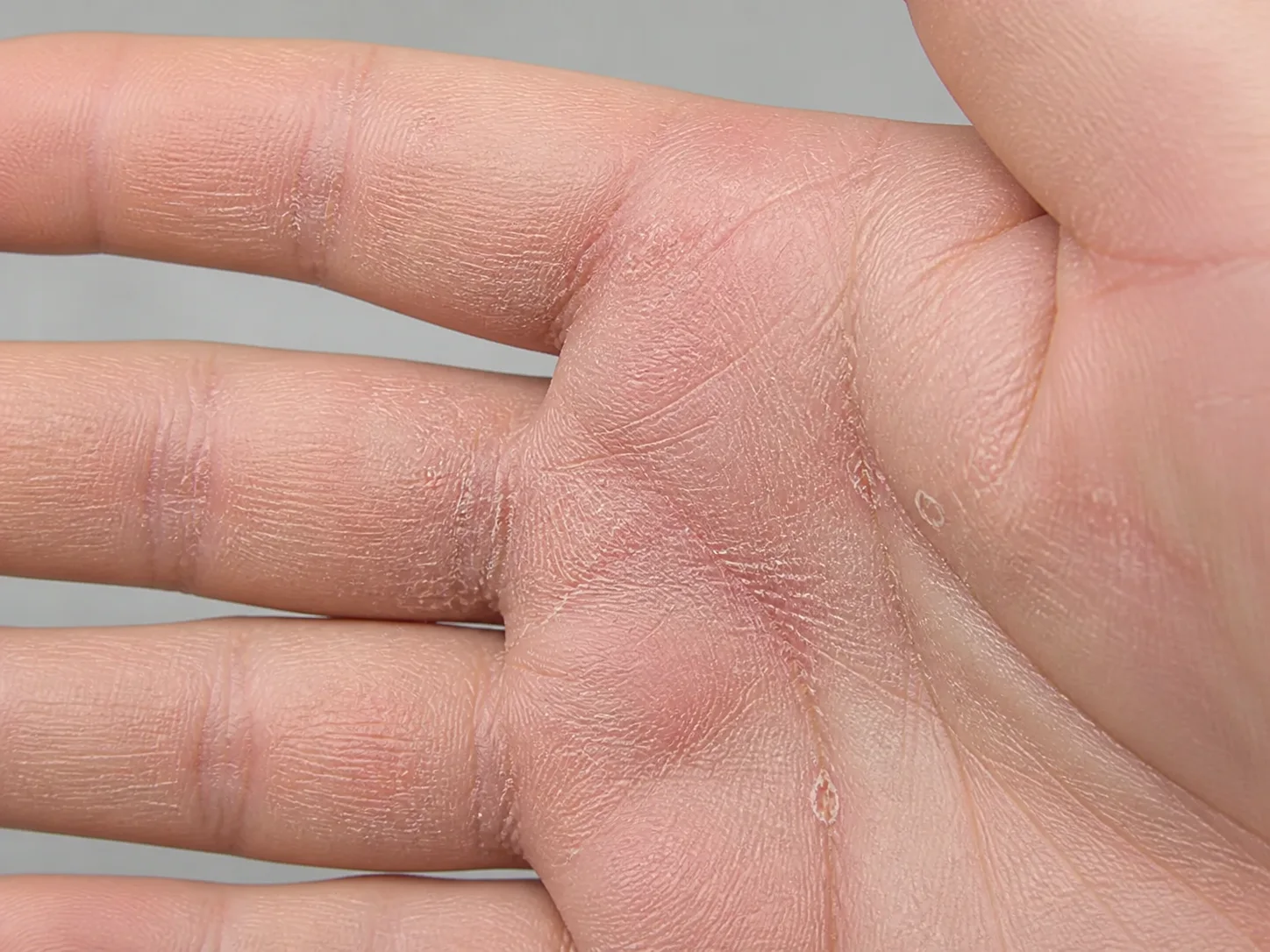
Chronic recurrent pompholyx involves small vesiclesThe active phase where vesicles form, the phase where they burst or dry, and the recovery phase where skin peels in circles and cracks can repeat and overlap. Looking at a photo from a single point in time can be confused with hand eczema or athlete's foot; therefore, you must continuously record the sensation before vesicles appear, the number of vesicles per day, and the date when peeling and cracking end to identify the recurrence cycle.
Symptom stages and next steps
Small vesicles, recovery phase cracks, and suspected infection symptoms are examined differently
Do not confirm a diagnosis based on appearance alone; check the location, recurrence cycle, pain, and heat sensation together.
| Current Appearance | Points to Check | Next action |
|---|---|---|
| Deep, small vesicles on the sides of fingers or palms | Whether severe itching or burning occurred first | Do not scratch or pop; seek a dermatology diagnosis |
| Blisters merge to form a large blister | Whether it is difficult to use hands/feet or to walk | Seek prompt medical evaluation if the area is large or pain is severe |
| Peeling, dryness, or deep cracks following blisters | Whether new blisters continue to appear | Moisturize, avoid irritation, and re-evaluate treatment |
| Yellow crusts, pus, spreading erythema, and heat sensation | Whether pain, swelling, or fever are present | Seek prompt medical evaluation to check for infection |
| Persistent scaling or blisters on only one foot | Nail changes · Dead skin between toes | Examination for other conditions such as athlete's foot |
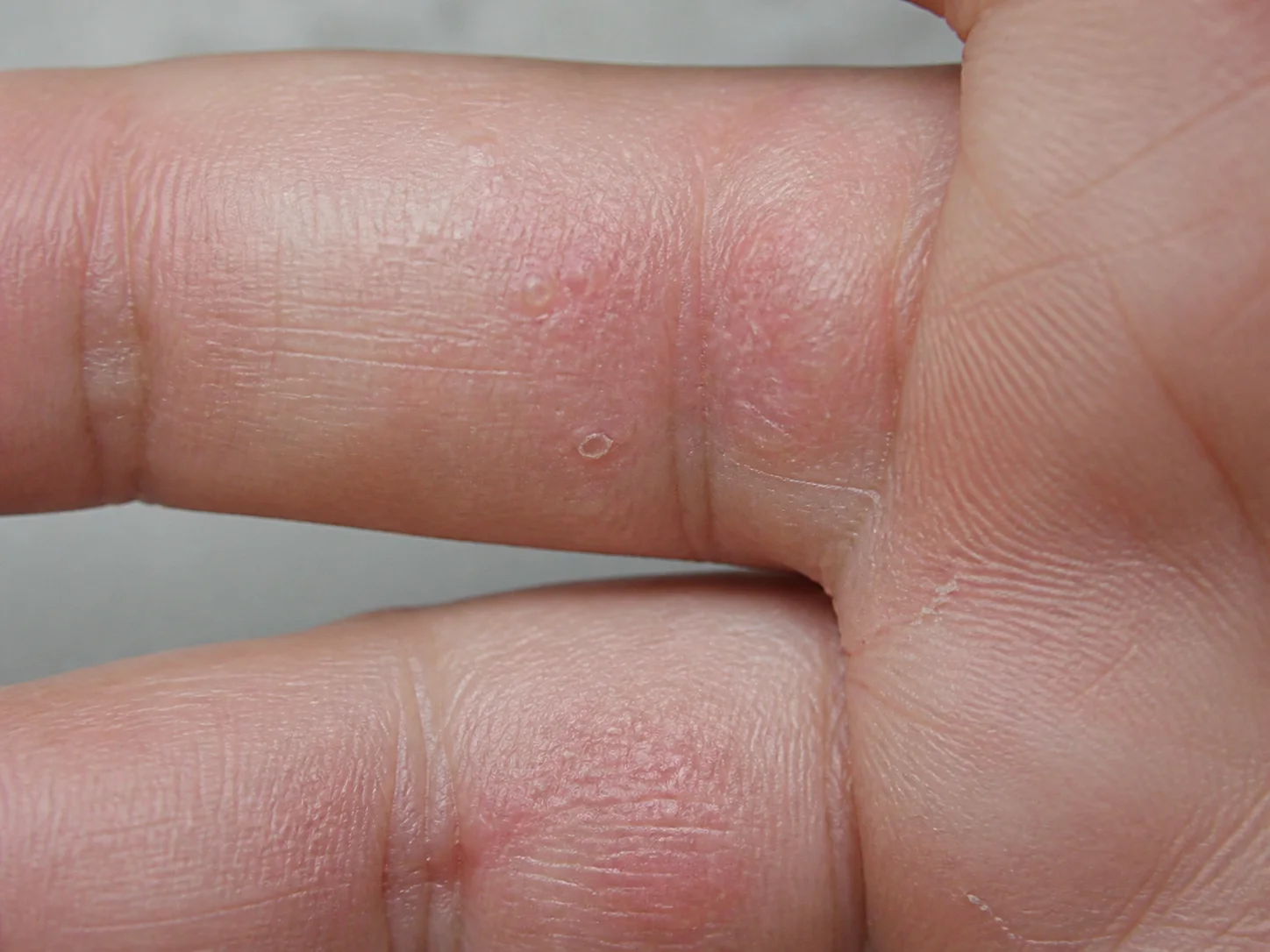
Small, deep blisters on the sides of the fingers or palms are important clues for pompholyx. Since it can overlap with athlete's foot or contact dermatitis, we examine whether it is severe on only one side and consider exposure factors.
Actual clinical photos and educational close-up examples are materials for comparing possible patterns and cannot be used for diagnosis alone. Mechanism diagrams have simplified complex processes.If these discomforts have recurred
For those whose next cycle overlaps before new blisters disappear
During the active phase, we focus on heat, moisture, and new blisters; during the recovery phase, we focus on peeling andcrackingand the skin barrier, and we do not fix the proportion of the same prescription. The goal is not just to dry out a single set of blisters, but to increase the comfortable interval between episodes.
Those who repeat blisters, peeling, and cracking every few weeks
When pompholyx repeats blisters, peeling, and cracking for several months or more
Those who have new blisters appearing on other hands or feet while one hand is drying
topical agentswhen it dries only while using the treatment and the next cycle begins quickly after pausing the treatment
Those who want to increase the number of comfortable days and the recurrence interval rather than the days of ointment use
When you want to increase the comfortable interval while maintaining your normal use of hands and feet
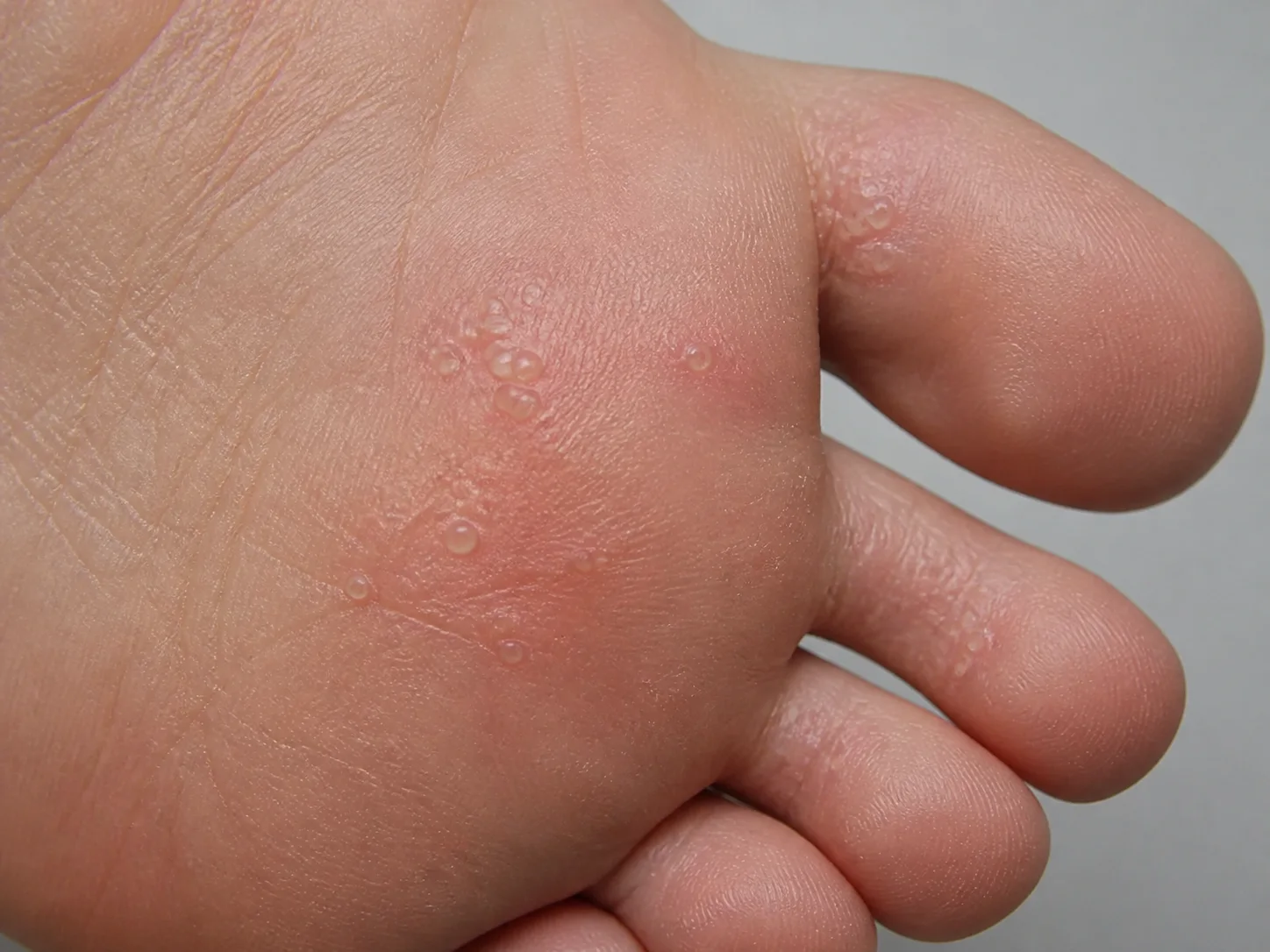
Deep blisters from dyshidrotic eczema of the feet must be distinguished from athlete's foot or shoe-contact dermatitis. We examine the distribution between toes, around nails, and on both feet.
Conceptual reference · American Academy of Dermatology, Dyshidrotic eczemaPoints to distinguish first
How to distinguish chronic recurrent dyshidrotic eczema from similar-looking skin conditions
First, check if there is pain, suppuration, heat, or blisters of a different shape
Check for unilateral distribution, pus, heat, fever, large blisters, or changes in mucosal skin, and do not delay necessary dermatological examinations and treatment.
Distinguish between when new blisters appear and when the skin peels and cracks
Specifically identify the current skin stage by recording itching before blisters, the number of new blisters, and cracking and pain after they dry.
Check the interval between new blisters and the days when your hands and feet feel less uncomfortable
Do not arbitrarily stop using prescribed topical medications; observe if the number of days without new blisters changes in relation to sleep, typing, water-related work, or walking.
Why does it keep getting worse?
Reasons why chronic recurrent dyshidrotic eczema persists or reappears
Herbal medicine prescriptions may differ depending on whether blisters are appearing or if the skin is dry and cracking
When discharge stops during the active phase requiring heat-clearing and dampness-removing, the focus shifts toward nourishing the blood, moisturizing dryness, and restoring the skin barrier.
Please let us know if changes in sleep, digestion, or fatigue occurred before the skin condition worsened
Only conditions that repeat on the same day as precursors, such as sweating, tension, lack of sleep, or digestive discomfort, are included in the pattern identification.
Treatment is adjusted by observing the interval at which new blisters appear
Rather than a single moment in a photo, we look at whether the number of days with new blisters, the end of cracking, or comfortable days is changing.
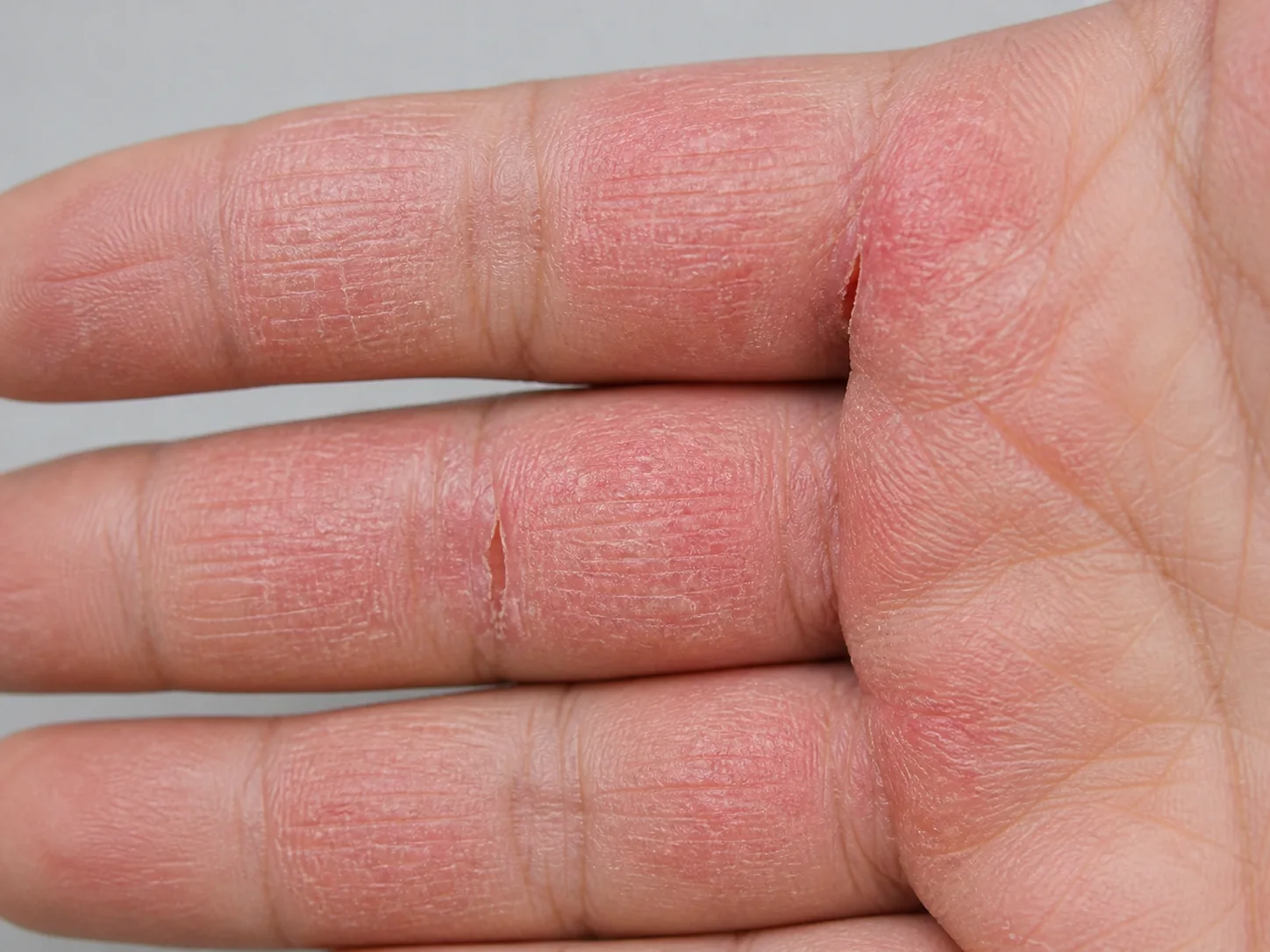
In hand eczema, dryness, scaling, and cracking may be more prominent than deep blisters. We look for clues related to water work, exposure to cleansers, dyshidrotic eczema, and tinea manuum.
Conceptual reference · American Academy of Dermatology, Hand eczemaThings to prepare before your visit
What photos and records should I prepare before the medical evaluation?
Please prepare the date and photos of the area where blisters first appeared, nighttime itching, presence of discharge or pus, exposure to water, detergents, gloves, or sweat, and your current topical medications and medical evaluation results.
Precursors
Record the time when tingling, burning, or itching first began.
Active blister phase
Observe the number of new blisters appearing per day, their location on the hands and feet, heat, and sweating.
Peeling and cracking phase
Count the number of days from when the blisters dry until the peeling and cracking have finished.
Changes to monitor during treatment
What changes should I monitor during treatment?
Number of days for one cycle, from the prodromal stage to the recovery of cracks
Please record when it started and how it has changed, including the dates. To make it easier to compare before and after, take photos of the same area from a similar distance and under similar lighting.
Daily number of new blisters and days of topical medication use
Please leave a brief note. Compare not only the visible changes but also whether your sleep, pain, and daily life have become less uncomfortable.
Relationship between the start date and sleep, tension, sweat, and digestion
Please also include the dates of any medications, ointments, or procedures you are currently using. This makes it easier to compare what led to improvement or worsening.
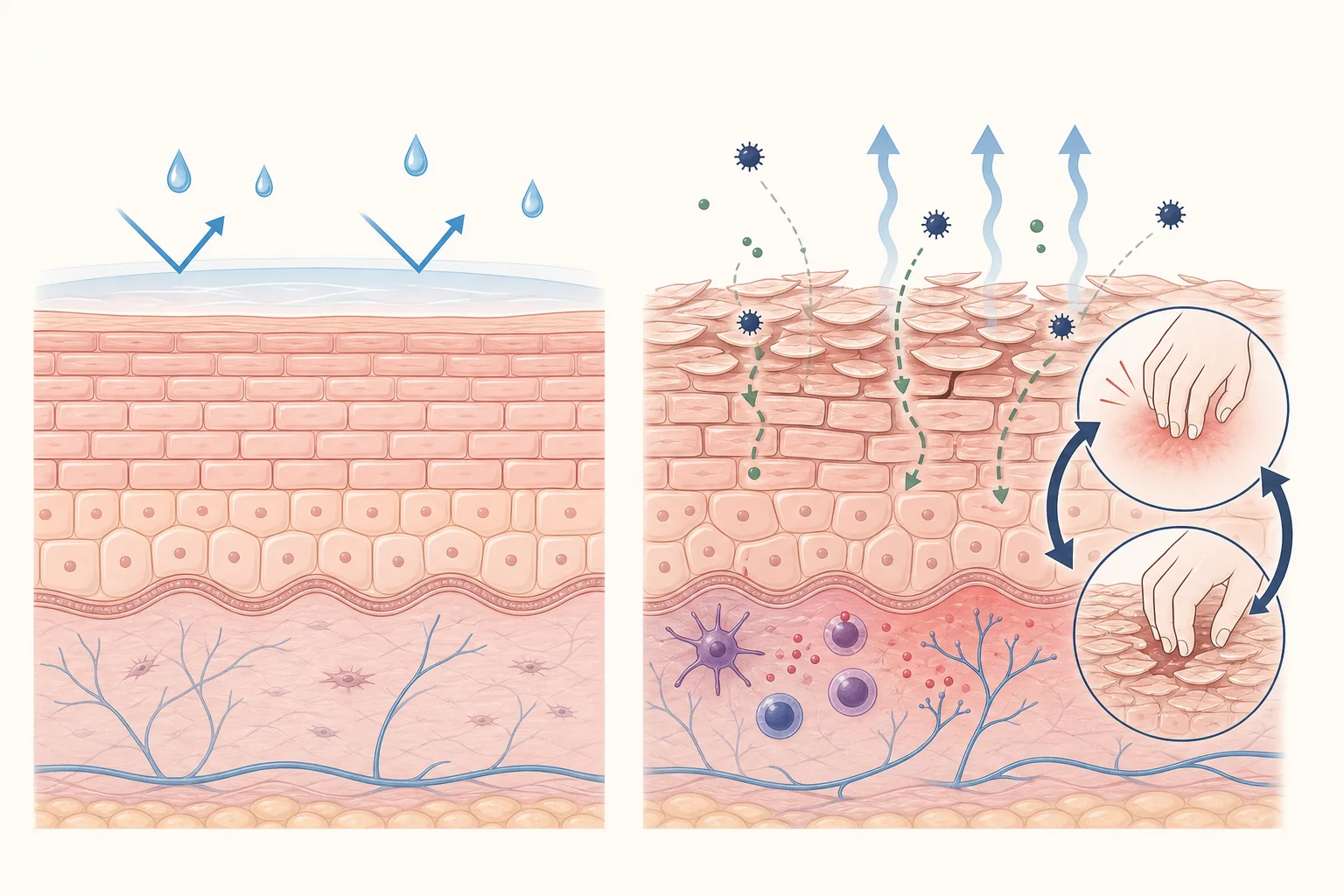
This is a simplified concept showing that when the barrier that retains moisture is disrupted, dryness and exposure to irritants increase, and itching and scratching can further damage the barrier.
Conceptual reference · NIAMS Atopic DermatitisWhen planning herbal medicine treatment
For chronic recurrent dyshidrosis, the direction of herbal medicine treatment is determined based on the current prominent symptoms
Even for the same case of chronic recurrent dyshidrosis, the direction of herbal medicine treatment is determined by observing current skin changes and whether changes in sleep, digestion, and fatigue occur simultaneously.
Pattern identification (Byeon-jeung) in Korean medicine is not about giving a different name to a disease. Multiple patterns can overlap in one person, and as the skin changes, for example, as oozing and heat decrease and dryness or cracking remain, the prescription is adjusted accordingly.
When redness, heat, oozing, and swelling are prominent
- Primary skin observations
- We examine the redness, heat sensation, discharge, and the speed of spreading in the skin changes of chronic recurrent dyshidrosis.
- Overall body condition to check alongside skin
- We check if itching increases and sleep is disrupted after exposure to heat, sweat, or humid environments.
- Primary considerations for herbal medicine prescription
- We first reduce the burden of active inflammation, damp-heat, and intense itching.
When the skin is dry, thickened, and cracks even with minor irritation
- Primary skin observations
- We check if dead skin, lichenification, cracking, and discoloration persist for a long time, even if there is little discharge.
- Overall body condition to check alongside skin
- We ask about tightness after washing, nighttime itching, and whether wound healing is delayed.
- Primary considerations for herbal medicine prescription
- We increase the focus on nourishing the blood, moisturizing dryness, and restoring the skin barrier.
When swelling, dampness, digestive issues, and fatigue occur on the same day during activity
- Primary skin observations
- We check if blurred boundaries, damp dead skin, or swelling persist for a long time.
- Overall body condition to check alongside skin
- We check if bloating, loose stools, and heavy fatigue repeatedly overlap with the worsening of the skin.
- Primary considerations for herbal medicine prescription
- Rather than just drying the skin, we simultaneously look at the recovery of the spleen, stomach, and fluid metabolism.
When heat sensations and itching surge after tension or lack of sleep
- Primary skin observations
- Rather than the shape of skin changes, we look at the time of day when redness and scratching suddenly increase.
- Overall body condition to check alongside skin
- We check if feelings of oppression, upper body heat, and poor sleep start before the skin symptoms.
- Primary considerations for herbal medicine prescription
- We add a focus on regulating body heat and tension responses to reduce the extent of worsening and the delay in recovery.
How is the herbal medicine prescription adjusted?
- We first examine the symptoms that are currently most uncomfortable
Chronic recurrent dyshidrotic eczema involves a repeating and sometimes overlapping cycle: an active phase where small blisters appear, a phase where they burst or dry out, and a recovery phase where the skin peels in circles and cracks. Since a single photo can be confused with hand eczema or athlete's foot, you must continuously record the sensations felt before blisters appear, the number of new blisters per day, and the date when peeling and cracking end to identify the recurrence cycle.
- We also ask about changes in your overall body condition that occurred on the same day as the skin changes
Among sweat, tension, lack of sleep, and digestive discomfort, only the conditions that repeat on the same day as the prodromal symptoms are included in the pattern identification.
- We adjust the prescription at the next visit according to the changes in symptoms
The goal is to shorten the active blistering period, accelerate the recovery of peeling and cracking, and increase the number of comfortable days until the next prodromal stage.
When should I consider Korean herbal medicine treatment?
- When dyshidrosis repeats blisters, peeling, and cracking for several months or more
- When the skin dries only while using topical medication and the next cycle begins quickly after pausing the medication
- When you wish to increase the interval of comfortable days while continuing to use your hands and feet
What will be asked during the medical evaluation?
- Number of days for one cycle, from the prodromal stage to the recovery of cracks
- Daily number of new blisters and days of topical medication use
- Relationship between the start date and sleep, tension, sweat, and digestion
Things to prepare before the consultationPlease prepare the date and photos of the area where the blisters first appeared, information on nighttime itching, presence of discharge or pus, exposure to water, detergents, gloves, or sweat, and your current topical medications and medical evaluation results.
If pus, pain, or redness spreads rapidly, or if you have a fever, lesions inside the eyes or mouth, shortness of breath, or sudden facial swelling, please visit a dermatology clinic or seek emergency care first. After confirming that such urgent situations are not present, Baekrokdam provides herbal medicine treatment for chronic and recurring skin diseases.
Consult about the progress of chronic recurrent dyshidrosisFrequently Asked Questions
Frequently Asked Questions about chronic recurrent dyshidrosis
Where do dyshidrosis blisters mainly occur?
Small, deep blisters mainly appear on the palms, sides of the fingers, soles, and toes. If they spread widely to other areas or persist on only one side, other conditions are checked.
Do dyshidrosis symptoms remain after the blisters disappear?
As the blisters dry, the skin may peel, become dry, or develop deep cracks. If this repeats, the skin may thicken, and pain may occur when using the hands and feet.
Is it an infection if there is discharge from pompholyx blisters?
Discharge alone does not confirm an infection, but if there are yellow crusts, pus, spreading redness with heat, pain, or fever, a bacterial infection must be promptly checked.
Is pompholyx caused by excessive sweating?
While excessive sweating and damp hands or feet can worsen the condition, blocked sweat glands are not the confirmed cause.
Could a metal allergy be the cause?
Hypersensitivity to nickel or cobalt may be involved. A dermatologist evaluates the relationship between exposure and recurring symptoms.
Is stress the cause?
Stress may be a factor in worsening or triggering the condition, but a patient's emotions alone are not viewed as the sole cause.
Should I also check for athlete's foot?
If foot peeling and itching occur together, testing is considered to determine if it is a reaction related to a fungal infection.
References and update date
Doctor of Korean Medicine Choi Yeon-seung verified the content based on the official and professional materials below and updated it on 2026-08-23.
- American Academy of Dermatology, Dyshidrotic eczema: Signs and symptomsEvidence of symptoms including severe itching and small fluid-filled blisters on hands and feet, peeling, dryness, and cracking after 3 to 4 weeks, and suspicion of recurrence and skin infection
- NHS, PompholyxClinical boundaries for infection involving itchy blisters on hands and feet that merge into larger blisters, followed by dryness, cracking, yellow-green pus, and yellow-brown crusts
- AAD, Causes of dyshidrotic eczemaUncertainty of the exact cause, hypersensitivity to metals or products, and risks associated with moisture, sweating, and infection
- Mayo Clinic, Dyshidrosis symptoms and causesContext of hand and foot blisters worsened by hypersensitivity, stress, metals, and moisture
- American Academy of Dermatology, Dyshidrotic eczema: Diagnosis and treatmentPhysical examination of hand and foot skin, checking blister fluid, medical history regarding occupation/hobbies, and patch testing